How 24/7 unmanned stores create value in Convenience store chains & small-format grocery.

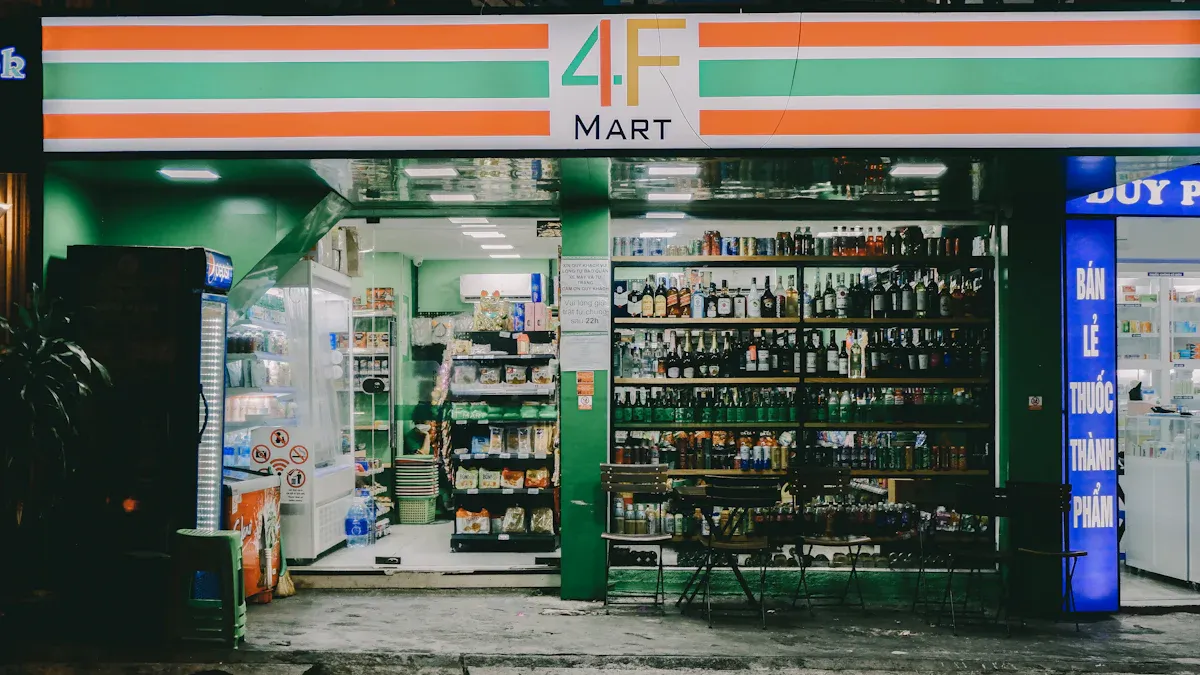
24/7 unmanned stores change how you experience convenience store chains and small-format grocery. You get continuous access to goods without waiting for staff. AI and automation drive these stores, making shopping faster and smarter. You enjoy benefits like lower costs and quicker service.
Year | CAGR (%) | |
|---|---|---|
2023 | 4.18 | N/A |
2024 | 4.96 | N/A |
2031 | 16.53 | 18.7 |
AI improves convenience with automated checkouts, smart inventory, and personalized service.
Automation cuts labor tasks, so you see better stock and cleaner aisles.
AI-powered systems increase customer satisfaction and make your visits easier.
You see these benefits growing as more convenience store chains invest in AI for their stores.
Key Takeaways
24/7 unmanned stores provide instant access to products, allowing you to shop anytime without waiting in lines.
AI and automation reduce labor costs significantly, enabling businesses to save money and increase profits.
Smart inventory management with IoT and RFID ensures shelves are always stocked, improving customer satisfaction.
Personalized shopping experiences through AI enhance customer loyalty and increase repeat visits.
Advanced security measures, including AI cameras, keep shoppers safe and protect their personal information.
AI-Powered Autonomous Retail Technologies
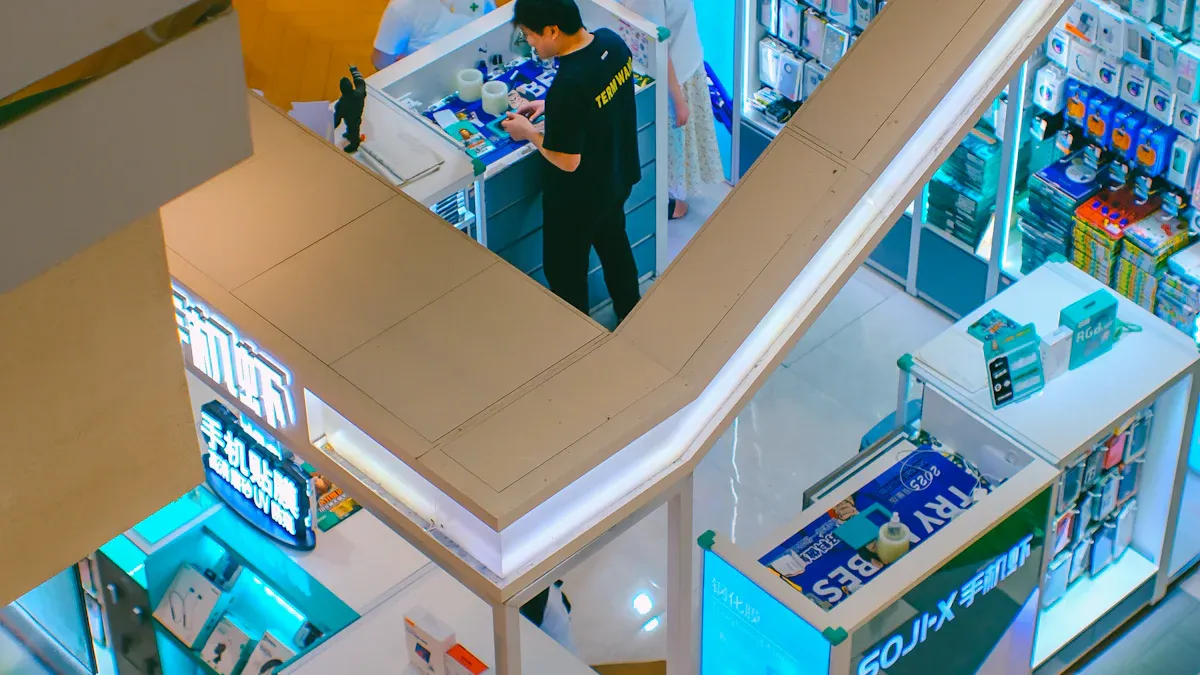
You see ai-powered autonomous retail changing how you shop in autonomous stores. These stores use ai and automation to run without staff. You get faster service and better security. You notice checkout-free systems, smart inventory management, and advanced security working together to make your experience smooth.
Automated Checkout and Payment
You walk into autonomous stores and pick up what you need. Checkout-free systems let you pay without scanning each item. Ai-powered autonomous retail uses computer vision and machine learning algorithms to recognize products instantly. You see smart cart systems that scan items as you add them. Real-time data processing makes transactions quick. You spend less time waiting and more time shopping. Ai-powered autonomous retail makes checkout-free systems possible in autonomous stores.
Computer vision tracks items without barcodes.
Machine learning improves product recognition.
Real-time data updates your purchase and inventory.
Ai-powered self-checkout speeds up your visit.
Smart cart systems scan products as you shop.
Smart Inventory with IoT and RFID
You notice shelves always stocked in autonomous stores. Ai-powered autonomous retail uses IoT and RFID to manage inventory. RFID tags give each product a digital identity. You see inventory updates in real time. Automation creates fill lists and invoices without manual work. You save time and stores save money. Ai-driven demand forecasting helps stores restock before items run out. Smart inventory management keeps products fresh and available.
Feature | Description |
|---|---|
RFID devices log goods movements and send data to headquarters instantly, ensuring up-to-date stock levels. | |
Automation of inventory | The system generates fill lists and invoices automatically, reducing manual inventory tasks. |
Cost efficiency | Eliminates the need for overtime or shutdowns for inventory counts, saving operational costs. |
RFID tags help quick identification.
Smart shelf management supports seamless checkout-free systems.
Automatic restocking suggestions use real-time inventory tracking.
Continuous monitoring keeps products fresh.
AI Cameras and Security
You feel safe in autonomous stores because ai-powered autonomous retail uses ai cameras for security. Smart surveillance systems watch for risks and suspicious activities. Real-time intelligence helps stores respond fast. Ai-powered autonomous retail reduces theft and improves security and loss prevention. You see live video feeds and instant notifications. Ai monitors many areas at once, so there are no blind spots. Automated theft detection sends alerts right away. Behavioral analysis lowers false alarms and keeps you safe.
Smart surveillance gives deep insights from real-time data.
Ai identifies risks and suspicious activities.
Real-time intelligence enables quick responses.
Live video feeds help fast decision-making.
Instant notifications improve security.
Ai-powered autonomous retail enhances video surveillance for loss prevention.
Proactive monitoring leads to real-time alerts.
Ai focuses on high-risk individuals.
Ai monitors multiple areas and eliminates blind spots.
Automated theft detection sends immediate alerts.
Behavioral analysis reduces false alarms.
You see ai-powered autonomous retail making autonomous stores safer, faster, and more efficient. Ai, automation, checkout-free systems, and smart inventory work together to create a better shopping experience.
Value of 24/7 Unmanned Stores for Retailers
Lower Labor Costs
You see a big change in your business when you use 24/7 unmanned stores. Labor costs drop fast. You do not need as many workers to run your small-format grocery. AI takes over tasks like checkout, scheduling, and inventory. You can cut labor costs by up to 70% compared to traditional retail. This means you keep more profit and spend less on wages.
You use AI to automate scheduling and inventory management, which can reduce staffing needs by up to 50%.
Labor costs make up about 14% of total sales in convenience stores, so automation helps you save money.
You notice better stock availability and less time spent on restocking, which boosts operational efficiency.
You find that lower labor costs make 24/7 unmanned stores a smart choice for small-format grocery. You can open more locations and serve more customers without hiring extra staff.
Operational Efficiency
You want your stores to run smoothly all day and night. AI and automation help you reach this goal. You use real-time monitoring to track inventory and sales. You spot which products sell best and which need restocking. This helps you avoid empty shelves and wasted goods.
Enhanced inventory management lets you optimize stock and minimize waste.
You use AI analytics to make sure popular items stay available.
Automation creates fill lists and invoices, so you do not need to count items by hand.
You also see that 24/7 unmanned stores can use energy-efficient lighting and cooling systems. This reduces your environmental impact and lowers your operating costs. You can use sustainable materials in your store design to help the planet and save money.
Tip: When you use automation and AI, you spend less time on manual tasks and more time growing your business.
Data Insights for Growth
You collect a lot of data from your 24/7 unmanned stores. This data helps you understand your customers and improve your business. You see what people buy, when they shop, and how they move through your store. You use this information to adjust your product selection and store layout.
Evidence Type | Description |
|---|---|
Autonomous retail systems collect data on shopping habits to adjust inventory and improve experience. | |
Operational Efficiency | Automated solutions help stores lower costs and enhance service quality for customers. |
Market Demand for Innovation | The expansion of unmanned stores is driven by consumer demand for convenience and efficiency. |
You use data to make better decisions. You can change your marketing strategies and offer products that match customer needs. You also see that enhanced data analytics help you increase sales and improve profitability. Small-format grocery stores benefit from these insights because you can react quickly to trends.
Evidence Type | Description |
|---|---|
Reduced Labor Costs | Unmanned stores significantly lower staffing expenses, enhancing profitability. |
Elimination of Last-Mile Delivery | By removing delivery costs, unmanned stores can operate more efficiently and profitably. |
Enhanced Data Analytics Capabilities | Improved data usage allows retailers to better understand consumer habits, leading to increased sales. |
Low Overhead Costs | Unmanned stores can be established in various locations, including rural areas, reducing operational costs. |
Potential for Job Creation | While some jobs may be lost, new roles in management and customer service may emerge. |
Increased Convenience for Consumers | Urban commuters value the efficiency and convenience of unmanned stores, driving potential sales. |
Product Selection Impact | The type of products offered affects profitability, with fresh groceries yielding higher margins. |
You see that 24/7 unmanned stores help you grow your business. You use data to make smart choices, improve your service, and stay ahead in the retail market.
24/7 Access and Customer Experience

Convenience and Speed
You want to shop quickly and easily. 24/7 access lets you visit stores any time, day or night. You do not need to wait for opening hours or stand in long lines. AI makes transaction convenience possible by powering self-service kiosks and mobile payment systems. You scan items as you shop and pay instantly. This saves you time and gives you more freedom.
The North American market for unmanned stores is growing fast. Customers like contactless shopping and automation. You find that convenience and speed make you visit stores more often. You feel satisfied because you get what you need without delay. In busy places like business districts, hospitals, and ports, you see stores that meet your needs for quick snacks, drinks, and supplies.
Factor | Description |
|---|---|
Advanced Technologies | Self-service and automated checkout make shopping smoother. |
Demand for Instant Service | You get quick service, so you spend less time in the store. |
Reduction of Manual Tasks | Fewer cashiers mean you check out faster. |
Digitalization | Digital tools help you find food and pay easily. |
Customers prefer quick and easy shopping experiences.
Unmanned stores allow for immediate service without waiting in line.
Self-service technology and mobile payments enhance speed.
You see that convenience is not just about speed. It is also about access convenience. You can shop when you want, and you get instant service. AI helps stores keep shelves stocked and checkout lines short. You enjoy a smooth customer experience every time you visit.
Personalized Shopping with AI
You want shopping to feel personal. AI gives you personalized shopping experiences by learning what you like. You get offers and rewards that match your habits. When you sign up for loyalty programs, you see more benefits. AI helps stores send you special deals and suggestions. You feel valued as a customer.
For example, Walgreens uses AI to tailor rewards for each customer. You notice that your sign-up completion rate goes up by 23%. You make your first purchase faster, and you return to the store more often. Companies using AI for customer experience see up to a 25% increase in customer retention.
KPI | Improvement |
|---|---|
Sign-up completion rate | +23% |
First-purchase conversion | +18% |
Time-to-first-transaction | -35% |
AI provides personalized offers that match customer preferences, enhancing their shopping experience.
A seamless shopping experience reduces friction, encouraging repeat visits.
Exclusive loyalty programs foster a sense of belonging, increasing customer retention.
You see that personalized shopping experiences make you want to come back. AI helps stores know what you need and when you need it. You get faster service and better deals. This makes your customer experience more enjoyable and rewarding.
Safety and Trust
You care about safety and trust when you shop. AI helps stores keep you safe with smart cameras and real-time monitoring. You see alerts for unusual events and quick responses to problems. Stores use data encryption and secure payment systems to protect your information. You feel safe knowing that your privacy matters.
Region | Regulatory Framework Overview |
|---|---|
European Union | The EU uses a unified system with EASA, focusing on safety and privacy. Stores must register and follow strict rules. |
United States | The U.S. uses step-by-step rules, allowing new technology while keeping safety first. Operators need special waivers for some activities. |
China | China allows fast growth with fewer restrictions, especially for projects that match national goals. This approach helps stores open quickly but raises some safety and privacy concerns. |
Effective surveillance through network cameras for full visibility and real-time monitoring.
Real-time monitoring with camera analytics that send alerts for unusual events.
Data encryption and secure payment systems to address cybersecurity concerns.
AI integration for threat detection and rapid response.
Access control via debit card readers or apps for registered users.
Retailers protect your privacy with strong policies and secure systems. You trust stores that keep your personal information safe. AI helps stores respond quickly to threats and keep you secure. You feel confident shopping in unmanned stores because you know your safety comes first.
You see that 24/7 access, AI, and automation work together to improve convenience, personalize your shopping, and keep you safe. Stores adapt to your needs and give you a better customer experience every time you visit.
Trends and Challenges in Unmanned Retail
Market Growth and Adoption
You see unmanned retail growing fast around the world. Many countries now invest in this technology to make shopping easier and safer. The market size for unmanned stores is set to rise from $66.23 billion in 2024 to $82.56 billion in 2025. By 2029, it could reach $202.65 billion. This shows a strong CAGR of over 24%. You notice that Germany already has more than 500 unmanned stores. Other regions lead in adoption for different reasons:
Region | Segment Focus | |
|---|---|---|
North America | Strong retail infrastructure, high digital technology adoption, urban centers | Catering to on-the-go needs of commuters and urban dwellers with essentials and snacks. |
Asia-Pacific | Rapid urbanization, growing middle class, high mobile penetration for smart tech | Widespread adoption, especially in urban areas and residential complexes for daily necessities. |
You see innovations like ai-driven predictive analytics and deep learning making these stores smarter. These advancements help with prevention of theft and improve customer safety.
Implementation Barriers
You may face challenges when you try to bring unmanned stores to your business. Some barriers include:
Perceived business risks from labor shortages and supply chain issues.
Lack of robust IT infrastructure makes it hard to use advanced ai.
You might think you need special technical expertise to manage ai systems.
Some people believe customers will not accept autonomous shopping.
Challenge | Description |
|---|---|
Implementing unmanned store technology requires a significant upfront investment. | |
Regulatory Barriers | Data privacy, security, and employment regulations may affect market expansion. |
You also need to handle prevention of fraud and ensure smooth operations. New ai-powered network cameras and deep learning technologies can help with prevention, but you must train your team to use these innovations.
Privacy and Regulation
You must protect customer privacy when you use ai in unmanned stores. Retailers need to follow privacy laws and manage large amounts of personal data. You should set clear collection policies, limit how you process data, and create schedules for data retention. Conducting privacy impact assessments helps you find and fix any gaps in your prevention strategies.
Customers worry about how ai can identify them from small bits of data.
Many feel uneasy about ai monitoring their behavior or emotions.
Some find personalized pricing unsettling, especially older shoppers.
You must also follow strict rules for age-restricted products. Failing to check age can lead to violations and harm customers. Privacy laws differ by country, so you need to stay updated on regulations in every market where you operate.
You see 24/7 unmanned stores changing retail with ai and automation. These stores give you fast service, lower costs, and a safer shopping experience. Ai helps you manage inventory, personalize offers, and improve customer satisfaction. You notice more stores using ai for frictionless checkout and smart supply chains. Experts expect more cashier-less stores, robots, and drones in the future. If you want to succeed, choose a busy location, invest in ai, and keep listening to your customers.
Key Benefit | Action Step |
|---|---|
Ai-powered inventory management | Use ai to keep shelves stocked |
Frictionless checkout | Add ai for faster payments |
Personalized shopping experiences | Let ai tailor offers for shoppers |
FAQ
How do unmanned stores keep you safe?
AI cameras watch for suspicious activity. You get alerts if something goes wrong. Stores use secure payment systems to protect your information. You feel safe because technology responds quickly to threats.
Can you shop at unmanned stores any time?
Yes, you can visit these stores 24/7. You do not need to wait for opening hours. You get instant access to snacks, drinks, and groceries whenever you need them.
What happens if you need help in an unmanned store?
You find help buttons or touchscreen kiosks in most stores. You can contact support staff through video calls. Some stores use chatbots to answer your questions.
Tip: Look for the help icon on the kiosk if you need assistance.
How do unmanned stores know what you like?
AI tracks your shopping habits. You get personalized offers based on your purchases. Stores use loyalty programs to reward you for repeat visits.
Feature | Benefit |
|---|---|
Personalized deals | Save money on favorites |
Loyalty rewards | Earn points for shopping |
Are unmanned stores more expensive?
No, you often pay the same or less. Stores save money on labor and pass those savings to you. You get competitive prices and special deals through apps.
See Also
Comparing Micromarkets And Smart Stores In Global Retail
The Emergence Of 24-Hour Vending Cafes: Innovation And Convenience
Understanding Walgreens Self-Checkout: Benefits And Hurdles In Retail
How Time Out Corner Stores Transform Urban Convenience Shopping
