How to run A/B tests on assortment and layout in Convenience store chains & small-format grocery autonomous stores.

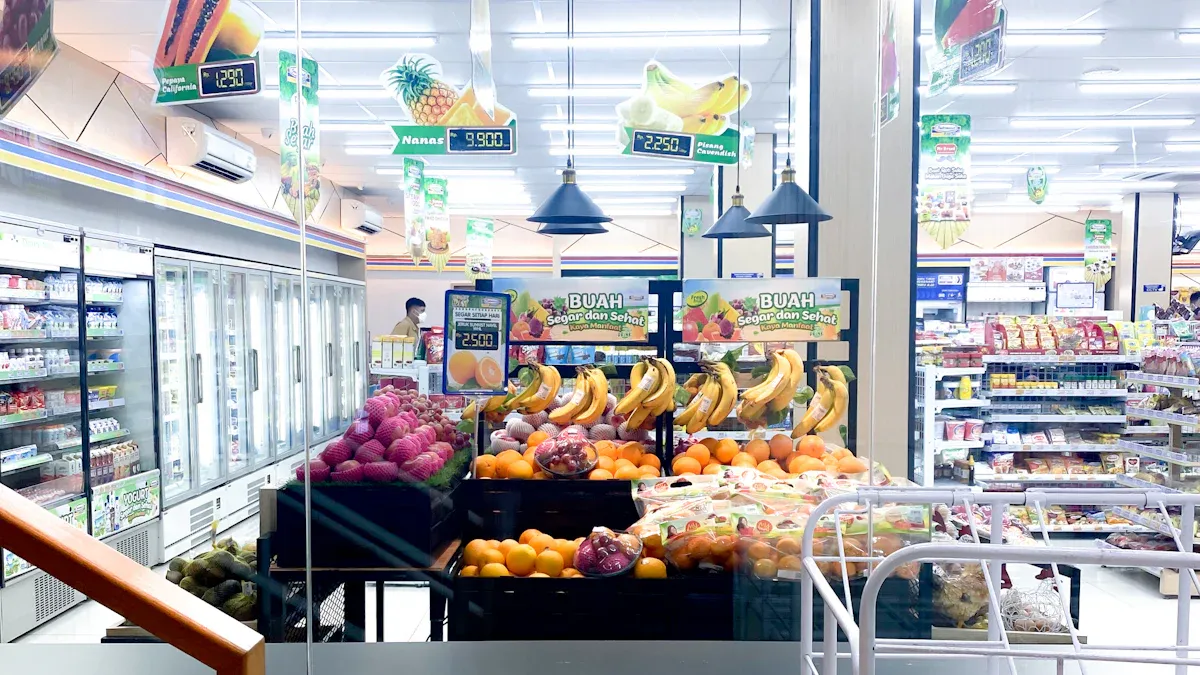
You run a/b tests in retail stores by setting clear goals, measuring conversion, and using data-backed insights. You change one variable, such as assortment or store layout, and track how customers respond. You analyze product placement to enhance customer experience and maximize conversions. Testing helps you boost revenue, make data-driven decisions, and see potential roi. You compare expected roi to actual results, then adjust stores to improve outcomes.
Key Takeaways
A/B testing helps you compare different store layouts or product assortments to see what works best for your customers.
Start with clear goals and measurable KPIs to guide your A/B tests and track success effectively.
Test only one variable at a time to ensure you know what change impacts customer behavior.
Use reliable data collection tools to analyze results and ensure your findings are statistically significant.
Share your A/B testing results with your team to foster a culture of continuous improvement and learning.
A/B Testing in Retail Stores

What Are A/B Tests?
A/B tests let you compare two versions of something in your store to see which one works better. In retail, you might change a product display or try a new layout. You then measure which version helps you reach your goals. You can use a/b testing to test many things. For example:
You can try different ways to show promotions, like changing the words on a discount sign, to see which one brings in more customers.
You can swap out products in your assortment to find out which mix sells best.
You can adjust the layout of your store based on how customers move around, using video analytics to track their paths.
A/b tests help you make choices based on real data, not just guesses. You learn what works best for your store and your customers.
Why A/B Testing Matters for Convenience Stores
A/b testing gives you a safe way to try new ideas in your stores. You can test a new product or layout in one location before rolling it out everywhere. This approach helps you avoid costly mistakes and lets you see the potential roi before making big changes.
Here are some reasons why you should use a/b testing in retail:
You can measure the impact of changes before you spend money on a full rollout.
You lower the risk of making decisions that do not help your business.
You keep improving your store by learning what your customers like.
You use data to plan your assortment and adapt to new trends.
You build a habit of in-store testing, which helps you stay ahead in retail.
Tip: Start small with your tests. Use what you learn to make better decisions and keep your stores growing.
How to Run an A/B Test Step by Step
Define Goals and Hypotheses
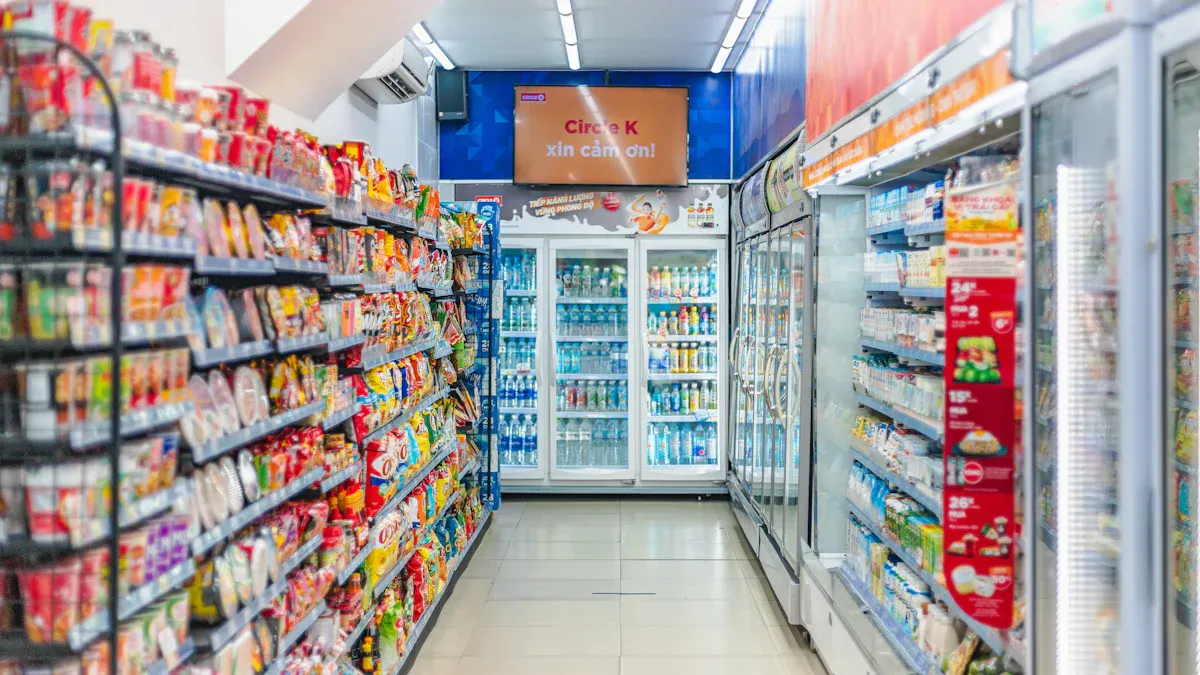
You need to start every a/b testing project with clear goals. Think about what you want to achieve in your retail store. Do you want to increase sales, improve customer flow, or boost the visibility of certain products? Set key performance indicators (KPIs) that match your objectives. For example, you might track sales per square foot or the number of customers who buy a promoted item.
Next, create testable statements called hypotheses. These should predict how a change in assortment or layout will affect your KPIs. Write your hypotheses in a way that you can measure. For example, you might say, "If I move the snack display near the checkout, sales of snacks will increase by 10%." Prioritize your hypotheses based on what matters most to your business. Test and validate each one using a/b tests and data analysis.
Tip: Always tie your goals to specific metrics. This makes it easier to measure success and learn from your results.
Steps to define goals and hypotheses:
Formulate and prioritize your hypotheses.
Test and validate your ideas with data.
Select Test and Control Groups
You must choose your test and control groups carefully. These groups help you compare results and see if your changes work. In retail, you can use different stores or sections within a store as your groups. Make sure the groups are as similar as possible. Look at factors like age, gender, income, shopping behavior, and location. This helps you avoid bias and get accurate results.
Factor Type | Examples |
|---|---|
Demographics | Age, gender, income |
Behavior | Past purchases, browsing habits |
Location | Regional market differences |
Pick groups that match on these factors. This way, you know that any changes in performance come from your test, not from outside differences.
Test One Variable at a Time
When you run a/b tests, focus on one variable. Change only one thing, such as the placement of a product or the design of a sign. This makes your analysis clear and simple. If you change more than one thing, you will not know which change caused the result.
Testing one variable removes confusion from your data.
You can see exactly what your customers respond to.
You get reliable results that you can use to make decisions.
Note: Isolating one variable in your testing helps you attribute performance changes to the right factor.
Collect and Analyze Data
Good data collection and analysis are the heart of a/b testing. Use reliable analytics tools to track how each version performs. Make sure your data is clean and accurate. Tie your experiments to specific KPIs, such as sales, basket size, or customer dwell time.
You need to run your tests long enough to get meaningful results. This is called statistical significance. It means your results are not just due to chance. Most experts use a p-value of less than 0.05. This means there is less than a 5% chance that your results happened randomly.
Best practices for data collection and analysis:
Best Practice | Description |
|---|---|
Use Reliable Analytics Tools | Track and record how each version performs against chosen metrics. |
Ensure Statistical Significance | Run tests long enough to ensure results are not due to chance and are representative of the audience. |
Document and Learn | Keep a record of tests, hypotheses, results, and learnings to inform future tests. |
Define specific metrics to categorize your results.
Use customer data platforms for clean and actionable data.
Apply statistical analysis to identify winning variations with confidence.
To check for statistical significance, follow these steps:
Set a null hypothesis (no effect) and an alternative hypothesis (your expected effect).
Choose a significance threshold, usually p=0.05.
Run your test and collect data.
Calculate the p-value.
Decide if you can reject the null hypothesis.
Tip: Always document your process and results. This helps you learn and improve your in-store testing over time.
By following these steps, you will know how to run an a/b test that gives you clear answers. You will make better decisions for your retail business, improve roi, and keep your customers happy.
Best Practices for A/B Tests in Physical Retail
Scheduling and Timing
You should plan your a/b testing around the right time of year. Seasonal trends and peak shopping periods can change how customers act in your retail store. For example, the holiday season often brings a big jump in sales and conversions. The table below shows how these periods can affect your results:
Impact Type | Description |
|---|---|
Financial Impact | The holiday season drives 30% more e-commerce revenue than non-holiday months. |
Consumer Behavior | Conversions rise by 34% during the holiday season compared to the previous month. |
During busy times, you may see more people respond to price-based, urgency-based, or scarcity-based incentives. You should segment your data to account for these trends. This helps you understand if your test results come from your changes or just from the season.
Avoiding Bias and External Factors
You need to control for bias and outside factors in your a/b testing. Choose test and control stores that match in demographics and conditions. This helps you isolate the effect of your changes. Watch out for sampling errors and participant attitudes. You can use these methods to reduce bias:
Compare a test store with a carefully selected control store.
Match stores by age, gender, and income.
Isolate tests from outside events or account for them in your analysis.
Segment your data to spot seasonal trends.
Define clear hypotheses and pick the right metrics.
When you control for these factors, your results will be more accurate. This leads to better decisions for retail store operations.
Sharing Results and Continuous Improvement
Share your a/b testing results with your team in a clear way. Start with a short summary of what you learned. Use charts and bullet points to show key findings. Explain what the results mean for your retail strategy. Give clear next steps, like rolling out the winning idea or running more tests.
You should also use in-store testing to keep improving. Track metrics like sales, customer satisfaction, and foot traffic. Test new layouts or assortments often. This approach helps you find what works best and boosts roi over time. Regular testing and sharing results build a culture of learning in retail store operations.
Tip: Use storytelling and visuals to make your results easy to understand and act on.
Lessons from Ecommerce A/B Testing
Applying Digital Insights to Physical Stores
You can learn a lot from ecommerce a/b testing. Online stores use data to test different layouts, product placements, and promotions. You can bring these strategies into your retail store. For example, you can use computer vision and deep learning to monitor shelves and track planogram compliance. This technology helps you test product placements and layouts without moving physical items. You can create virtual shelves and run a/b tests to see which arrangement works best.
When you want to run a/b testing in your store, follow these steps:
Decide what you want to learn, such as which product placement increases sales.
Pick your test environment. You can use a real store, a simulation, or a virtual shelf.
Design a shelf layout that looks like your store.
Choose products and set them up for testing.
Find participants who match your target customers.
Run the test and watch how people interact with products.
Study the data to find patterns in customer behavior.
You can also use heatmaps to see which areas of your store get the most attention. This helps you optimize layouts and improve customer engagement. By using these digital insights, you make your retail store smarter and increase roi.
Data-Driven Culture in Retail
Building a data-driven culture helps you get the most from a/b testing. You need to collect and study customer data to understand what shoppers want. Use a modern data platform to gather information from many sources. This gives you real-time insights for your retail operations.
Focus on these key elements:
Collect customer data to learn about needs and preferences.
Use a platform that brings together data from different places.
Value data-driven decision making at every level of your organization.
Make sure you manage and protect your data.
A test and learn mindset is important for success. Encourage your team to work together and share ideas. Open communication helps everyone design and run better tests. When you focus on continuous learning, you help your team grow new skills. This approach keeps your retail store competitive and ready for change.
Tip: Make testing a regular part of your store operations. Share results and encourage everyone to learn from each experiment. A test and learn culture leads to better decisions and stronger results.
To run effective a/b testing in convenience and autonomous stores, you should:
Regularly review ROI and use advanced analytics to understand customer behavior.
Experiment with new ideas and monitor key metrics for improvement.
Share results with your team to drive continuous improvement.
Area | How Data Drives Improvement |
|---|---|
Inventory Management | IoT sensors help prevent stockouts and improve cash flow. |
Customer Insights | Analytics tools reveal preferences for better decision-making. |
Supply Chain | Sales data guides smarter procurement and inventory management. |
Start small, keep testing, and share what you learn to build a culture of improvement.
FAQ
How do you choose which variable to test first in a/b testing?
You should start with the variable that affects your store’s main goal. For example, if you want to increase sales, test product placement or assortment first. Focus on changes that can give you quick and clear results.
Can you run a/b testing in multiple stores at once?
Yes, you can run a/b testing in several stores. Make sure each store matches in size, customer type, and location. This helps you compare results fairly and learn which changes work best across different places.
What tools help you collect data for a/b testing in retail?
You can use point-of-sale systems, video analytics, and customer tracking software. These tools help you measure sales, foot traffic, and customer behavior. Choose tools that give you accurate and easy-to-understand data.
How long should you run a/b testing in a convenience store?
You should run a/b testing long enough to see clear patterns. Most tests last from two weeks to one month. Check your data often to make sure you have enough information to make a decision.
What is the biggest mistake to avoid in a/b testing?
Do not test too many variables at once. Change only one thing at a time. This helps you know which change caused the result. Always keep your groups as similar as possible.
See Also
Comparing Micromarkets And Smart Stores In Global Retail
Understanding Corner Store Essentials And Their Importance
Launching A Low-Cost AI-Driven Corner Store Successfully
Examining Walgreens Self-Checkout: Benefits And Retail Hurdles
