How Much Can a Convenience Store Really Save with AI? An ROI Deep Dive


You might wonder how much AI can help your store. Recent data shows stores earn $3.71 for every dollar spent on generative AI. Imagine saving $10,000 or more each year just by improving staffing and reducing waste. These numbers show real cost savings. You will see how AI changes your bottom line with clear examples and data.
Key Takeaways
AI can save convenience stores significant money, with an average return of $3.71 for every dollar spent on AI.
Using AI for staffing can reduce labor costs by 5-15%, ensuring you have the right number of employees at busy times.
AI helps manage inventory better, cutting waste and spoilage, which can save stores up to $1.5 million annually.
Dynamic pricing powered by AI can increase revenue by 10-15% and improve profit margins by up to 20%.
Investing in AI leads to faster payback periods, often within 12 to 18 months, allowing stores to reinvest savings quickly.
AI Cost Savings Areas

AI transforms how you manage your convenience store. You can see cost savings in many areas by using data and automation. The table below shows where AI makes the biggest impact:
AI Application | Cost Savings Impact |
|---|---|
Labor Management | Optimizes staff scheduling based on sales trends |
Inventory Forecasting | Reduces errors by up to 50% and lost sales by 65% |
Waste Minimization | Decreases spoilage and overstocking |
Staffing and Labor Optimization
You can use AI to predict busy times and slow periods. This helps you schedule the right number of employees. AI-powered scheduling tools analyze sales data and foot traffic. Many stores report labor cost reductions of 5-15%. In retail, you may see savings of up to 15% because AI adjusts staffing for changing demand. This means you avoid overstaffing and reduce overtime costs.
Inventory and Waste Reduction
AI helps you track inventory in real time. It uses data to forecast demand and automate orders. This reduces overstocking and spoilage. Some stores have seen an 18% drop in shrinkage and saved up to $1.5 million with better inventory management. AI-driven demand planning also means you have the right products at the right time, which cuts waste and lost sales.
AI-driven demand planning optimizes inventory across locations.
Real-time visibility reduces errors and waste.
Automated replenishment keeps shelves stocked and fresh.
Loss Prevention
AI-driven video analytics and real-time monitoring help you spot theft and fraud quickly. These systems send alerts when they detect suspicious activity. Stores using AI for loss prevention see fewer losses and better security. For example, Sam’s Club uses AI to check receipts and carts, which reduces shrinkage and protects profits.
AI-Powered Pricing Strategies
AI-powered pricing uses data to set the best prices for your products. Dynamic pricing adjusts prices based on demand, competition, and inventory levels. This can lift revenue by 10-15% and boost profit margins by up to 20%. You also cut markdowns by 5-10%. With smarter pricing, you stay competitive and increase your cost savings.
Metric | Average Uplift |
|---|---|
Revenue Lift | 10-15% |
Profit Margin Increase | Up to 20% |
Markdown Reduction | 5-10% |
Customer Engagement
AI improves how you connect with customers. It uses data to predict what shoppers want and helps you offer personalized deals. Stores using AI see customer satisfaction scores rise by 12-20%. AI also helps you plan store layouts and adjust staffing in real time, making shopping easier and more enjoyable.
Metric | Improvement |
|---|---|
Customer Satisfaction Increase | 20% |
Anticipating Customer Needs Improvement | 20% |
Average Customer Satisfaction Score | 12% |
Tip: When you use AI to enhance customer engagement, you build loyalty and encourage repeat visits, which leads to more savings and higher profits.
AI ROI Calculation
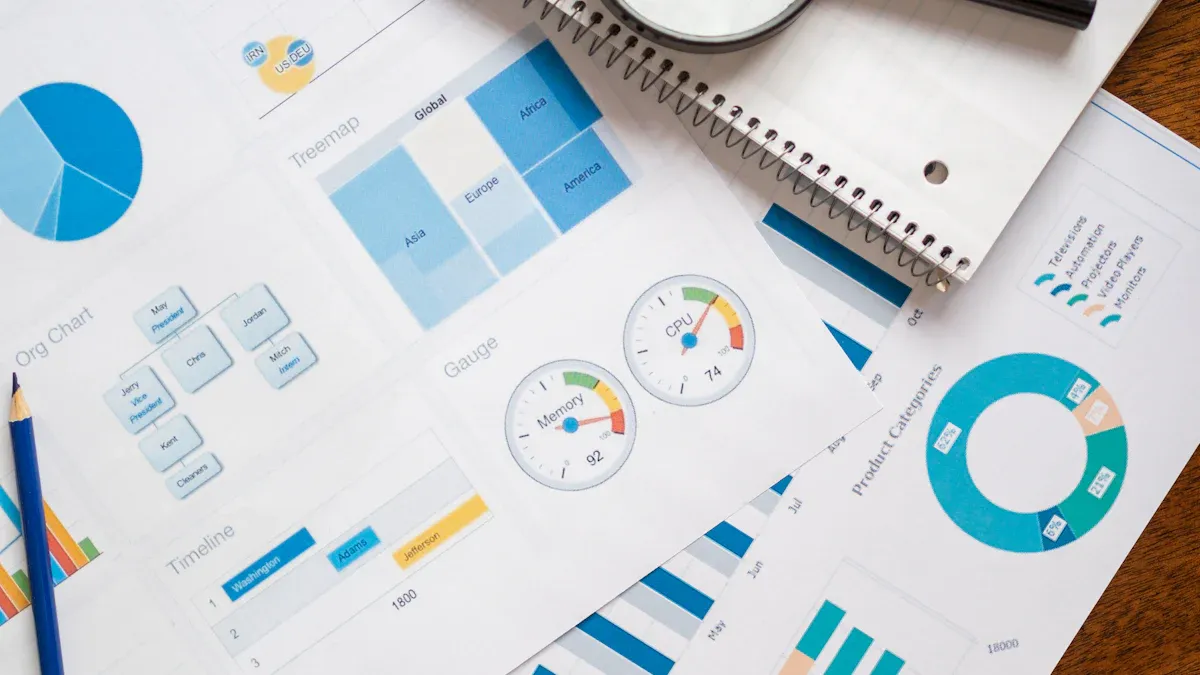
You want to know if your investment in AI will pay off. ROI, or return on investment, helps you measure the value you get from artificial intelligence in your c-store. You can use ROI to compare the money you spend with the money you save or earn. This section will show you the key metrics, a simple method, and a real example to help you calculate ROI for your store.
Key Metrics for ROI
You need to track the right numbers to measure ROI. These metrics help you see how AI changes your business. The table below explains the most important metrics for c-stores:
Metric | Description |
|---|---|
Payback Period | Shows how fast your investment starts making a profit. |
Measures how much you cut expenses like labor and shrinkage after using AI. | |
Sales Uplift | Tracks the increase in sales after you add new technology. |
Customer Acquisition Cost (CAC) | Checks how quickly your spending on new customers pays off compared to other stores. |
You should watch these metrics to see the full impact of AI. For example, the average payback period for AI in c-stores is only 14 months. This is much faster than the 2-3 years you might wait with older technology. Quick returns let you use your savings to invest in more AI tools.
Step-by-Step ROI Method
You can follow these steps to calculate ROI for your c-store:
Set your baseline with clear metrics
Write down your current numbers for sales, costs, and customer data. This gives you a starting point.Define your AI solution
List what the AI will do for your store. Will it help with staffing, inventory, or pricing?Measure the benefits
Look at how much you save or earn after using AI. Check cost savings, sales uplift, and operational savings.Add up all costs
Include software, training, and setup costs. Make sure you count everything.Calculate ROI over time
Use this formula:ROI = (Total Benefits – Total Costs) / Total CostsCheck your ROI after 6 months, 1 year, and 2 years. This shows both short-term and long-term results.
Tip: Use analytics to track your progress. Analytics help you see where you save money and where you can improve.
Sample ROI Calculation
Let’s look at a simple example for a single c-store:
You spend $10,000 on an AI system for inventory and staffing.
In the first year, you save $8,000 in labor costs and $6,000 from less waste.
Your sales go up by $4,000 because you have the right products in stock.
Your total benefit is $18,000 ($8,000 + $6,000 + $4,000).
Your total cost is $10,000.
Now, use the ROI formula:
ROI = ($18,000 – $10,000) / $10,000 = 0.8 or 80%
This means you get an 80% ROI in the first year. For every dollar you spend, you get $1.80 back. Some stores see even higher returns. Industry data shows an average of $3.71 for every $1 invested in generative AI. This high ROI comes from strong operational savings, better analytics, and higher sales.
You can see that artificial intelligence helps you reach your goals faster. With a short payback period and clear operational savings, you can grow your c-store business and stay ahead of the competition.
AI ROI Case Studies
Small Store Example
You can see big results even if you run a single convenience store. Imagine you add AI for inventory tracking and checkout. You notice fewer empty shelves and less waste. You also see shorter lines at the register. One store used automated inventory tracking and cut stockouts and waste. The owner saved time because they did not need to check shelves by hand. With automated checkout, customers spent less time waiting. This led to more sales each day.
Implementation Area | Outcome Metrics | Cost Savings/ROI |
|---|---|---|
Inventory Optimization | Improved customer satisfaction | |
Automated Checkout | 30-50% reduction in wait times | 15% increase in customer throughput |
Note: When you use AI for inventory and checkout, you save money and make shopping easier for your customers.
Multi-Location Chain Example
If you manage several stores, AI can help you even more. You can use AI to track inventory across all locations. This helps you avoid overstock and keep popular items in stock. Many chains use customer loyalty data to send better promotions. This brings more shoppers back to your stores. One chain saw a 15% drop in overstock and higher sales because of better inventory turnover. Targeted promotions from loyalty programs increased customer retention.
Implementation Area | Outcome Metrics | Cost Savings/ROI |
|---|---|---|
Automated Inventory Tracking | Fewer stockouts and less waste | Time savings in manual tracking |
Customer Insights via Loyalty | Better targeted promotions, higher returns | Increased customer retention |
Industry Benchmarks
You can compare your results to industry leaders. Many retailers see a 10-15% increase in revenue after using AI. Top stores cut overstock by 15% with better stock accuracy. On average, stores get $3.70 back for every $1 spent on AI. Some top performers see returns as high as $10.30 for every dollar.
AI-driven sales growth: 10-15% revenue increase
Reduction in overstock: up to 15%
Average ROI: $3.70 per $1 invested
Top ROI: up to $10.30 per $1 invested
Tip: You can use these benchmarks to set goals and measure your own AI success.
AI Implementation Costs and Considerations
Typical Costs
You need to understand the main costs before you invest in AI for your store. These costs include software, integration, training, and ongoing maintenance. The table below shows the typical cost ranges for each category:
Cost Category | Estimated Cost Range |
|---|---|
Data Management Infrastructure | $5,000 - $15,000 annually |
25-40% of total budget | |
Training and Onboarding | 10-15% of budget |
Ongoing Maintenance | 15-20% annually |
Custom AI Development | $100,000 - $500,000 initial |
Specialized Advertising Platforms | $588 - $11,988 first year |
You see that integration can take up a large part of your budget. Custom AI development costs more, but you may not need it for basic store operations. Ongoing maintenance keeps your system running smoothly.
Integration and Training
You must connect AI tools to your current systems. This step can increase your initial cost, but it helps you get better results over time. Staff training is important for using AI tools well. One training session does not create lasting skills. Ongoing training works best and helps your team stay up to date.
Evidence | Description |
|---|---|
Integration Importance | Robust integration improves long-term ROI, even if it raises initial cost. |
Ongoing Training | Continuous training boosts operational results and ROI. |
Change Management | Good change management helps your team use AI effectively. |
Training should be accessible and fit different roles.
Change management helps your staff accept new technology.
Tip: Invest in ongoing training to maximize your return and keep your team confident.
Factors Impacting ROI
Several factors affect how quickly you see returns from AI. Store size and technology maturity play a role. Data quality speeds up AI learning. Integration complexity can slow down implementation. Change management helps your team adapt faster. Phased rollouts often bring earlier returns. Executive support keeps your project on track.
High-quality data improves AI performance.
Simple integration speeds up results.
Strong leadership ensures successful adoption.
Note: You can boost your ROI by focusing on these factors and planning your AI rollout carefully.
Maximizing AI Efficiency and ROI
Best Practices
You can boost efficiency and ROI in your store by following a few proven steps. Start small with ai-enabled dynamic pricing or merchandising tools. This approach helps your team adjust without feeling overwhelmed. Use AI to automate routine tasks, such as inventory checks and returns management. Automation reduces human error and lets your staff focus on customer engagement. You will see improved operational efficiency and higher sales productivity—some stores report up to a 40% increase.
AI forecasting tools give you real-time insights for stocking decisions. You no longer need to guess what to order. These data-driven insights help you lower stress and improve profit margins. When you use ai-enabled dynamic pricing, you can adjust prices based on demand and inventory. Dynamic pricing algorithms make your store more competitive and cost-effective. Over 50% of retail tasks are now automatable, which means you can save time and money.
Tip: Use real-time data to track sales and inventory. This helps you make quick decisions and respond to trends.
Common Pitfalls
You should watch out for common mistakes when adding AI to your store. The table below shows the main pitfalls and how you can avoid them:
Common Pitfall | Description | How to Avoid It |
|---|---|---|
Lack of a clear AI strategy | Many retailers experiment without aligning AI initiatives with business goals. | Start with a comprehensive AI roadmap that defines how AI will support your business objectives. |
Poor data quality | Inaccurate data leads to poor insights and customer experiences. | Implement robust data governance to ensure data accuracy and reliability. |
Integration challenges with legacy systems | Outdated systems may hinder AI deployment and scalability. | Create a flexible architecture for smooth integration with existing systems. |
Cost concerns | Upfront costs can be significant, making AI hard to justify. | Explore scalable AI solutions with incremental investment options. |
Talent shortages | Lack of in-house expertise can delay AI adoption. | Invest in upskilling employees and consider partnerships with external AI providers. |
Ethical and compliance risks | AI can lead to legal issues if not managed properly. | Establish clear guidelines for data handling and regularly audit AI models for fairness. |
Over-reliance on AI solutions | Expecting AI to solve every problem can lead to wasted resources. | Use AI strategically in areas where it provides clear benefits, rather than as a catch-all solution. |
Scalability challenges | AI systems may struggle to scale with business growth. | Plan for scalability from the start and choose flexible AI solutions. |
Failure to manage change | Poor communication can lead to low adoption rates. | Implement a structured change management plan to engage employees and communicate benefits effectively. |
You can avoid these pitfalls by planning ahead and using ai-enabled dynamic pricing only where it brings clear benefits. Real-time insights and real-time data help you track progress and adjust quickly. Focus on cost reduction and improved customer experiences to get the most from your investment.
You can unlock real value by using AI in your convenience store. Many stores see cost reductions between 20% and 31%. VenHub reports 31% lower business costs. The table below shows how quickly you can gain value:
Metric | Value |
|---|---|
Cost reduction | 20% to 31% |
Payback period | 12 to 36 months |
Value gained | High |
You save time, cut errors, and boost efficiency. Robots can replace teams, and RFID sensors reach 99.8% accuracy. When you use the ROI calculation method, you see the true value of your investment. For example, saving 8 hours per week at $40 per hour gives you $16,640 in annual value. With a tool cost of $1,800 and setup at $1,125, your net ROI can reach $13,715—a 469% return. Try a pilot project to see this value for yourself. Use these steps to measure your value and grow your business.
FAQ
How fast can you see ROI from AI in your store?
You can often see ROI within 12 to 18 months. Some stores report savings in just a few months. Track your results monthly to measure progress.
Do you need technical skills to use AI tools?
Most AI tools for stores have user-friendly dashboards. You do not need to code. Training helps you and your team use the features easily.
What is the biggest cost when starting with AI?
Integration with your current systems usually costs the most.
Training and ongoing support also add to your budget.
Start with a clear plan to manage these costs.
Can AI help small stores, or only big chains?
AI works for both. You can start with simple tools like inventory tracking or dynamic pricing. Many small stores see quick wins and strong savings.
See Also
Understanding AI-Driven Corner Stores: Essential Insights for Retailers
Launching a Cost-Effective AI-Enhanced Corner Store Successfully
The Future of Retail: Embracing AI-Driven Store Innovations
Exploring AI-Enhanced Vending Machines: Advantages for Today's Retail
Revolutionizing Online Store Management with AI E-Commerce Solutions
