Using AI to monitor store performance metrics in Convenience store chains & small-format grocery.

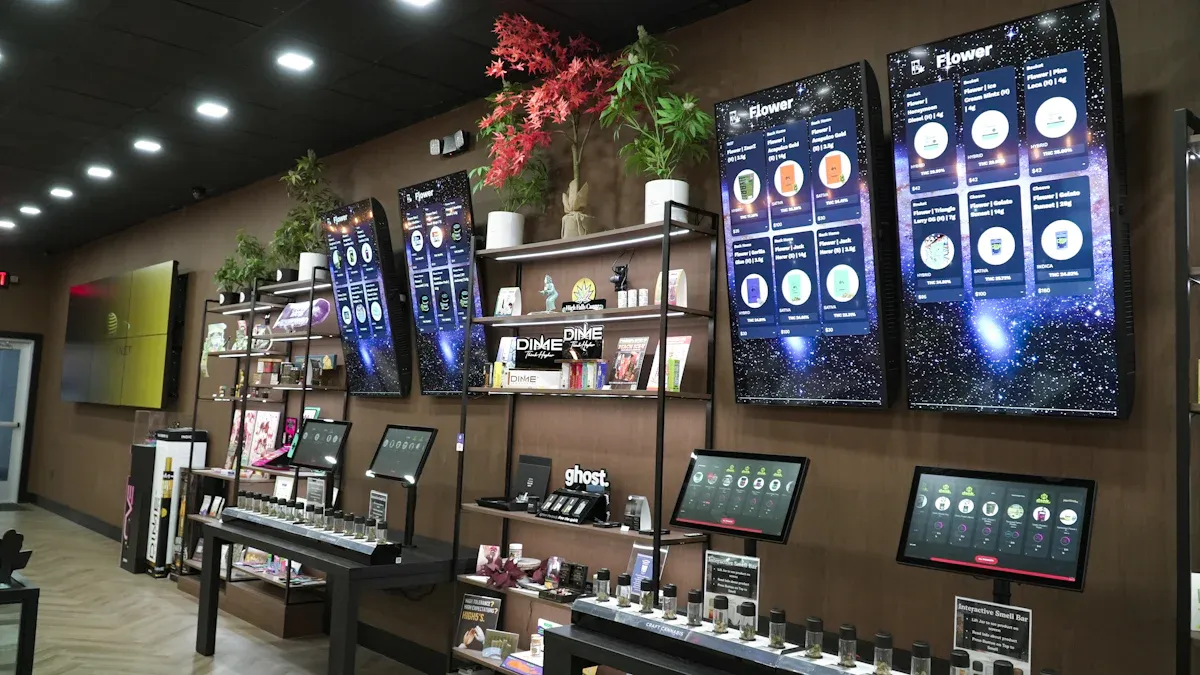
AI is changing how you monitor store performance in convenience stores and small-format groceries. Today, you can use smart tools to track what works and what needs improvement. Many store owners notice that AI-driven layout optimization helps boost customer engagement and sales, which leads to better profits. You also get a real edge over competitors in the busy online and on-demand grocery world. These AI solutions are now easier to access, so even smaller stores can benefit from advanced technology.
Key Takeaways
AI tools help monitor store performance in real-time, allowing for quick decisions on inventory and sales.
Effective inventory management through AI reduces stockouts and waste, leading to happier customers and increased profits.
Personalized promotions driven by AI enhance customer engagement and loyalty, resulting in higher sales.
AI-powered security systems protect stores from theft and fraud, ensuring a safer shopping environment.
Implementing AI can lead to significant cost savings and operational efficiency, benefiting stores of all sizes.
Key Performance Metrics
Sales and Revenue
You want to know how your store is doing, right? Sales and revenue metrics give you a clear picture. Here’s a handy table that shows what you should track:
Metric | Description |
|---|---|
Total transaction values across registers over a given timeframe. | |
Gross Profit Margin | Percentage of sales revenue kept after paying for goods sold. |
Inventory Turnover | How fast you sell and replace inventory. |
Average Transaction Value | Average amount spent by customers per visit. |
Customer Retention Rate | Percentage of repeat customers compared to all unique customers each year. |
You can also look at sales per employee and customer retention rate. These numbers help you see if your team connects with shoppers and if people keep coming back.
Inventory and Stock Levels
Keeping the right amount of stock matters a lot. If you run out, customers leave unhappy. If you have too much, you lose money. Here are the top metrics:
Inventory Turnover Rate: Shows how quickly you sell and restock items.
Gross Margin by Product: Tells you which products make the most profit.
Backorders: Counts how often you run out of items.
Stockouts: Tracks when you can’t meet demand.
Shrinkage Percentage: Measures losses from theft or mistakes.
Good inventory management means less waste and fresher products. That keeps customers happy and helps you monitor store performance.
Customer Traffic and Behavior
You need to know how many people visit and what they do. Automated systems like sensors and cameras give you real-time data. These tools help you spot busy times and see how shoppers move around. When you understand customer flow, you can place products in the best spots and improve your layout.
Promotion Effectiveness
Promotions can boost sales if you measure them right. Look at:
Average basket size
Promotion lift
Click-through rate (CTR)
Loyalty opt-ins
Promotional ROI
Basket uplift
Personalized offers and loyalty programs encourage repeat visits and bigger baskets.
Operational Efficiency
Operational efficiency shows how well your store runs. Here’s a quick table:
Metric | Definition | How to Calculate |
|---|---|---|
Gross Margin | Profit after direct costs of products sold | (Total Revenue - COGS) / Total Revenue |
Labor Cost % of Revenue | Staff cost as a percent of revenue | Total Labor Costs / Total Revenue |
Average Order Value | Typical spend per transaction | Total Revenue / Total Orders |
Better efficiency means you save money and serve customers faster.
AI to Monitor Store Performance
Real-Time Data and Forecasting
You want to know what’s happening in your store right now, not just yesterday. AI gives you that power. You can track sales, inventory, and customer traffic as they happen. Smart shelves tell you when stock runs low. Advanced analytics help you predict what customers will buy next week. You can even use demand signal monitoring to spot trends from weather or social media.
Here’s a quick look at how AI helps you monitor store performance in real time:
Description | |
|---|---|
Smart Shelves | Track stock in real-time to ensure optimal inventory levels. |
Advanced Analytics | Process multiple data streams for accurate demand forecasting. |
Demand Signal Monitoring | Captures real-time demand signals from sources like weather and social media. |
Automated Forecast Updates | Adjusts forecasts automatically as new data becomes available, improving accuracy. |
Traffic Pattern Analysis | Analyzes store traffic and average purchase sizes to optimize staffing and inventory. |
You can use these tools to make quick decisions. For example, if a storm is coming, you can stock up on essentials before customers rush in. You don’t have to guess anymore. AI helps you stay ahead.
Inventory Optimization
Running out of popular items frustrates customers. Overstocking leads to waste. AI helps you find the right balance. You can use AI-driven forecasting to plan inventory better and reduce errors. Stores using AI see up to 30% fewer stockouts. Walmart achieved 95% forecast accuracy and 30% fewer stockouts. H&M cut unsold items by 25%, which is good for the environment.
Check out these results:
Evidence Description | Impact |
|---|---|
AI-driven forecasting can cut supply chain errors by half. | Improved inventory planning and reduced stockouts. |
Stores using AI have up to 30% fewer stockouts. | Increased product availability. |
Walmart achieved 95% forecast accuracy and 30% fewer stockouts. | Less excess inventory. |
H&M’s AI system helped cut unsold items by 25%. | Environmental benefits. |
Walmart had 16% fewer empty shelves and turned over inventory 10% faster. | Enhanced inventory turnover. |
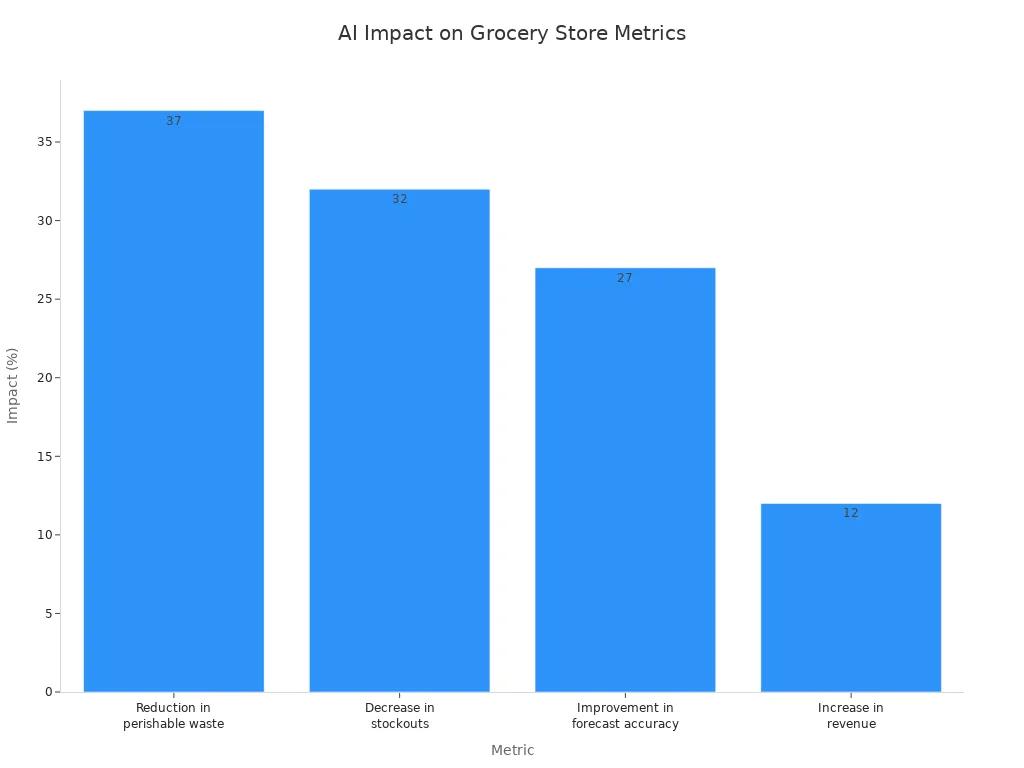
AI platforms also help you reduce food waste and improve product availability, especially in meat and seafood. Real-time analytics let you respond to local demand quickly. Here’s what happens when you use AI to monitor store performance:
Metric | Impact |
|---|---|
Reduction in perishable waste | 37% |
Decrease in stockouts | 32% |
Improvement in forecast accuracy | 27% |
Increase in revenue | 12% |
You can avoid common problems like inaccurate demand forecasting, operational inefficiencies, and high fresh product waste. AI helps you keep shelves stocked with what customers want and cut down on spoilage.
Fraud Detection and Security
You want your store to be safe. AI-powered security systems watch for suspicious behavior and alert you right away. These systems use digital signage, facial recognition, and visual deep learning to spot self-checkout fraud. They can track customers and analyze hand movements to make sure items are scanned correctly. Some systems reach fraud detection rates as high as 99%.
Here’s how AI keeps your store secure:
Real-time suspicious activity alerts
Customer tracking
Facial recognition technology
Visual deep learning for self-checkout fraud prevention
AI monitors store areas for suspicious behavior. Digital signage alerts staff about potential threats. Customer trajectory tracking helps you find blind spots. Hand movement analysis and barcode validation catch mistakes or theft at checkout.
AI-enhanced cameras recognize and track individuals. If someone tries to leave without paying, the system triggers an alarm or notifies staff. These cameras spot abnormal behaviors like loitering or hiding items and send alerts instantly. You can identify repeat offenders as they enter the store. AI matches cart contents to receipts at exits, stopping theft before it happens.
Tip: The National Retail Federation reported a 93% increase in shoplifting incidents from 2019 to 2023. AI-powered security helps you fight this growing problem.
Personalized Promotions
You want customers to feel special. AI helps you deliver personalized promotions based on shopping habits. Recommendation engines analyze snack-buying histories and suggest products shoppers love. Platforms like Kroger Precision Marketing use loyalty data to send personalized offers, boosting engagement.
Here’s what AI can do for your promotions:
Analyze loyalty data to deliver personalized offers
Provide relevant product suggestions, reducing decision fatigue
Gamify digital coupon programs to reward spending on favorite products
Target ads to individual shoppers, increasing loyalty
Major retailers like Tesco and Carrefour use AI to foster customer loyalty. Kroger’s digital coupons get three times higher redemption rates than generic offers. Personalized grocery shopping with AI boosts satisfaction scores by 25%. Strategic cross-selling through AI recommendations increases average basket values by 15-30%.
You can use AI to monitor store performance and create promotions that keep customers coming back. When shoppers feel recognized, they spend more and visit more often.
Benefits of AI in Store Operations
Efficiency and Cost Savings
You want your store to run smoothly and save money. AI helps you do both. When you use smart systems, you can cut costs and boost profits. Many stores see big savings each year. Take a look at this table to see how AI impacts your bottom line:
Metric | Annual Value Impact |
|---|---|
Total ROI | |
Inventory Optimization | $200,000–$300,000 |
Dynamic Pricing and Bundling | $300,000–$500,000 |
Labor Efficiency | $100,000 |
Personalized Loyalty Programs | $200,000 |
You can use AI to monitor store performance and spot ways to save money. Smart pricing and better inventory planning help you keep more cash in your pocket.
Reduced Waste and Energy Use
AI makes your store greener. You can cut down on waste and lower energy bills. Here’s how AI helps:
Demand forecasting helps you stock just the right amount, so food doesn’t spoil.
Optimized supply chains keep products fresh during delivery.
Smart bins track waste levels and help you plan pickups.
Automated sorting makes recycling easier.
Route optimization saves fuel and reduces emissions.
You help the planet and save money at the same time.
Enhanced Customer Experience
You want shoppers to feel happy every time they visit. AI helps you learn what customers like and gives them special offers. Stores use AI to personalize promotions and make checkout faster. You can greet regulars by name and suggest products they love. When you use AI, you create a store that feels friendly and easy to shop in.
Tip: Happy customers come back more often and spend more money.
Faster Decision Making
AI gives you answers fast. You don’t have to guess what to do next. Smart tools show you real-time sales and inventory trends. You get suggestions for promotions and ways to boost sales. AI can even help with vendor management and automate invoices. Some stores use AI assistants that act like business partners, offering advice and insights.
7-Eleven uses AI to personalize products and improve delivery.
Refuel Operating Co. uses analytics for quick decisions.
Circle K relies on AI for smart checkout and task management.
You make better choices and keep your store running smoothly.
Challenges and Getting Started
Integration and Cost
You might think adding AI to your store sounds simple, but it brings some real challenges. You need to connect new AI tools with your current systems. Sometimes, this means updating your hardware or software. Costs can rise if you have a bigger store or want to use more sensors and cameras. Take a look at some common hurdles:
Challenge Type | Description |
|---|---|
Product Recognition | AI can struggle to tell similar products apart, especially with lookalike packaging. |
Real-time Data Processing | Analyzing lots of data quickly needs strong computers and fast internet. |
System Integration | You may need to change your store’s tech setup to fit new AI tools. |
Dynamic Environment Adaptability | Stores change often, so AI must keep learning to stay accurate. |
Scale of Deployment | Bigger stores need more equipment, which means higher costs and more work. |
Customer Behavior Analysis | Teaching AI to understand all customer actions takes time and lots of data. |
Data Privacy and Security
You want to keep your customers’ trust. Shoppers worry about how you use their personal data. AI systems collect a lot of information, so privacy matters. Laws like GDPR and CCPA say you must be clear about how you use data. You need to protect customer info and stay honest about your AI tools.
Shoppers care about privacy when you use AI.
AI needs lots of customer data, which can raise concerns.
You must follow rules that require you to explain how you use data.
Staff Training and Change Management
Your team might feel nervous about new technology. You need to help them learn how AI works. Training makes everyone feel more confident. When you show your staff the benefits, they will use AI tools better. Change can be tough, but support and clear steps make it easier.
Tip: Hold short training sessions and answer questions to help your team adjust.
Steps to Implement AI
You can start small and grow your AI use over time. Here’s a simple path:
Find the biggest problems in your store that AI can help solve.
Get your team ready with training and clear rules for using AI.
Test AI with a small pilot project and see how it works.
Track results like faster processes, fewer mistakes, and happier staff.
If it works, use AI in more parts of your store and keep checking your progress.
You measure success by looking at how much faster you work, how many errors you cut, and how your team feels about the new tools. With the right steps, you can make AI work for your store.
You can boost your store’s performance with AI. Smart carts and autonomous checkout systems make shopping easier for your customers. Real-time monitoring helps you prevent losses and keep shelves organized. If you want to get started, try a pilot project or talk with a tech partner.
Autonomous checkout cuts down on lines and improves display space.
Smart carts make billing fast and accurate.
AI keeps an eye out for theft and alerts you right away.
Tip: AI works for stores of any size. You don’t need a huge budget to see real results.
FAQ
How much does it cost to start using AI in my store?
You can start small with basic AI tools for a few hundred dollars a month. Bigger systems cost more. Many companies offer free trials or pilot programs, so you can test before you commit.
Will AI replace my staff?
No, AI helps your team work better. It handles boring tasks like tracking inventory or spotting theft. Your staff can focus on helping customers and keeping the store running smoothly.
Is my customer data safe with AI?
You control your data. Good AI systems follow privacy laws and use strong security. Always pick trusted vendors and ask how they protect your information.
How long does it take to see results from AI?
Most stores notice changes in a few weeks. You might see faster checkouts, fewer stockouts, or better sales. Start with one area, then expand as you see success.
See Also
Understanding AI-Driven Convenience Stores: Essential Insights for Retailers
The Future of Retail: Embracing AI-Enhanced Store Concepts
Comparing Micromarkets and Smart Stores: Global Automated Retail Insights
Transforming Online Retail Management with AI-Driven E-Commerce Solutions
Modern Retail Advantages of AI-Enhanced Combo Vending Machines
