The Pros and Cons of AI Powered Self Checkout and Traditional Cashiers


Retailers and shoppers notice big differences between ai powered self checkout and traditional cashiers. Many people like self checkout because it makes buying things faster by about 30%. It also helps stores spend less money on workers. Stores do not need as many staff, but they lose more items to theft. Traditional cashiers give people steady jobs and help keep stores safer. But lines move slower with cashiers. Customers often wonder which way is better for their store. Look at the quick pros and cons below:
Feature | AI Self Checkout | Traditional Cashier |
|---|---|---|
Speed | Standard | |
Labor Cost | Lower | Higher |
Customer Preference | 77% | 23% |
Shrinkage Rate | 3.5% - 6.7% | 0.21% - 0.32% |
Staff Impact | Fewer checkout staff | Stable cashier jobs |
Which checkout style works best for your store?
Key Takeaways
AI powered self checkout makes buying things about 30% faster. This helps busy people shop more quickly.
Traditional cashiers give personal help to shoppers. They answer questions and help with special needs. This makes customers happier.
Self checkout systems can cause more theft in stores. Stores should teach workers to watch and help customers well.
Using both self checkout and traditional cashiers helps stores serve all kinds of shoppers. This also makes the store work better.
Stores need to train workers and fix machines often. This is important to get the most from both checkout systems.
Quick Pros and Cons Comparison
AI Powered Self Checkout: Advantages & Disadvantages
AI powered self checkout is new and interesting for stores. Many shoppers like these systems because they make shopping faster. People scan and pay for items by themselves. This means they do not need to wait in long lines. Stores use automated checkouts to help more people at once. This is helpful when the store is busy.
Here are the top advantages of ai powered self checkout:
Advantage | Description |
|---|---|
Customers finish shopping faster because transactions move quickly. | |
Enhanced User Experience | The screens and instructions are simple, so most people find the process easy and smooth. |
Error Detection | The system spots mistakes right away, so shoppers can fix problems before leaving the store. |
AI powered self checkout makes transactions fast and correct.
Shoppers get help right away if they need it.
The system finds mistakes quickly, so lines do not get stuck.
But these checkout systems have some problems too. Stores spend a lot of money to set up automated checkouts. Some people think the technology is hard to use. This is true if they do not use it often. The biggest problem is missed scans or theft. The system trusts customers to scan every item. Sometimes, items leave the store without being paid for. Staff cannot watch every shopper all the time. Losses can get bigger. Many stores see that self checkouts can make the loss rate twice as high as other systems.
Disadvantage | Description |
|---|---|
Stores pay a lot for smart carts, scanners, and software. | |
Potential for Theft | Some shoppers skip scanning items, which leads to more losses. |
Usability Issues | Not everyone feels comfortable using the technology. |
Need for Regular Maintenance | Stores must fix and update the machines often, which costs more money and time. |
The system needs shoppers to be honest, so theft can happen.
Staff cannot always see bad behavior right away.
Stores may spend more on fixing machines than they planned.
💡 Tip: Stores with ai powered self checkout should train staff to help customers and watch for problems. This can lower losses and make shopping better for everyone.
Traditional Cashiers: Pros & Cons
Traditional cashiers are still important in many stores. They help customers with every part of checkout. People who like talking to staff or need help with special items choose this way. Cashiers can fix problems, answer questions, and make sure every item is scanned.
Here are the main pros of traditional cashiers:
Cashiers give personal service and make shoppers feel welcome.
They spot mistakes or theft right away.
Stores keep better control over cash and items with human help.
Cashiers handle special cases, like coupons or returns, without trouble.
But traditional cashiers have some problems too. Handling cash by hand takes a lot of time. Stores spend more money on wages, training, and overtime. When the store is busy, lines get longer. Customers may feel annoyed. Security risks can go up if cash is not watched closely.
Drawback | Description |
|---|---|
Manual cash work slows down the process and takes staff away from other tasks. | |
Increased Overhead Costs | Stores pay more for extra staff, overtime, and secure cash handling. |
Security Risks | Cash left out or handled by hand can lead to theft or mistakes. |
Lack of Control and Visibility | Big stores may lose track of cash levels, which causes problems later. |
Negative Impact on Customer Experience | Long lines and slow service can make shopping less enjoyable. |
Manual checkout can slow down the store when it is busy.
Stores spend more on staff and keeping cash safe.
Customers may get tired of waiting in line.
🛒 Note: Many stores use both self checkout and traditional cashiers. This gives shoppers more choices and helps keep lines short.
Key Differences: AI Powered Self Checkout vs Traditional Cashiers
Speed & Efficiency
Speed is important to shoppers. People want to finish shopping fast, especially when stores are busy. AI powered self checkout helps customers move through lines faster. These machines let people check out about 30% quicker than traditional cashiers. The technology scans items right away and lets many people pay at once. Stores notice checkout is much faster during busy times.
Here’s a quick look at transaction speed:
Checkout Type | Transaction Speed Improvement |
|---|---|
AI Self Checkout | 30% faster |
Traditional Cashiers | Baseline speed |
Self checkout lanes keep lines short and help more people shop. Traditional cashiers work at a steady pace, but they slow down if shoppers need help. Stores that want to be more efficient often use self checkout when it is busy.
🕒 Tip: Stores with lots of shoppers can use self checkout to make lines move faster and help more people.
Basket Size Suitability
Basket size changes how well each checkout works. Self checkout is best for people with small baskets. Shoppers with just a few things can scan and pay quickly. The process feels easy and smooth. If baskets are big, self checkout can get slower. Shoppers may have trouble scanning many items or using coupons.
Traditional cashiers are better for big baskets. They scan items fast and fix problems right away. Cashiers know how to handle special deals, returns, and big orders. Stores with lots of shoppers buying many things often use cashiers for better efficiency.
Self checkout is good for small baskets and quick trips.
Traditional cashiers are better for big baskets and tricky purchases.
Stores can use both options to fit different shopping needs.
Shrinkage & Security
Shrinkage means lost items from theft or mistakes. Stores worry about this problem. Self checkout has higher shrinkage rates than cashier lanes. Sometimes, customers skip scanning items or try to trick the system. The technology cannot catch every problem.
Here’s a table showing shrinkage rates:
System Type | Shrink Rate (%) | Partial Shrink Rate (%) |
|---|---|---|
AI-Powered Self-Checkout | 6.7 | |
Traditional Cashiers | 0.21 | 0.32 |
Stores use many security tools to lower shrinkage at self checkout:
AI-powered cameras watch for missed scans and tell staff.
RFID tags track items from shelf to checkout.
POS systems flag risky items and use special barcode labels.
Stores do random receipt and bag checks at the door.
Security gates open only with a real receipt.
AI-driven theft detection finds suspicious scanning.
Weight sensors check baskets for missing items.
Stores train workers to spot theft and report it.
Traditional cashiers catch theft faster. They see every item and watch for tricks. Stores with expensive goods or lots of theft often use cashiers for better security and efficiency.
🚨 Note: Stores can lower shrinkage by using smart technology and trained staff together. This helps protect profits and keeps shopping safe.
AI Powered Self Checkout Overview
How AI Self Checkout Works
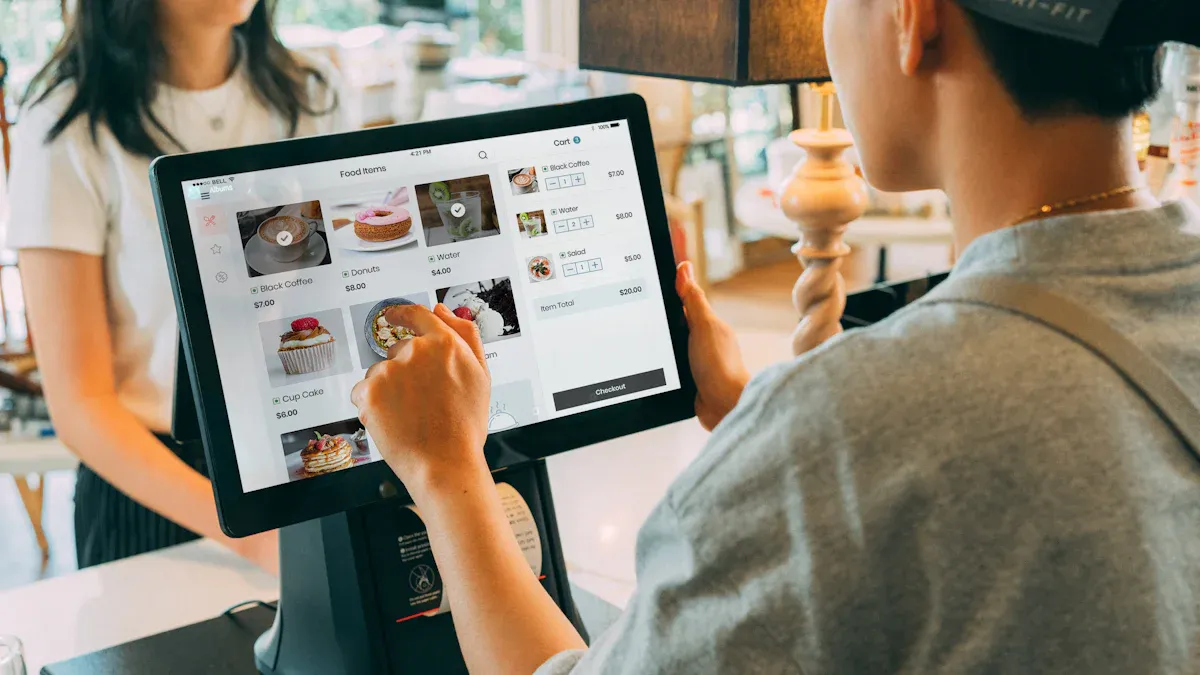
AI powered self checkout uses smart tools to help shoppers. Stores set up automated checkout systems with cameras and sensors. These systems use computer vision and machine learning. They scan items and know what people buy. Vision AI and tray recognition help the system see products and count them. The system checks orders right away. Some stores use human pose estimation. This lets the system see what shoppers pick up, even when the store is busy. For example, Amazon's Just Walk Out technology tracks what customers grab. It connects those items to their digital payments. Mashgin's checkout system finds products on a tray, even if they do not have barcodes. This makes checkout fast and correct.
Benefits for Stores & Shoppers
Automated checkouts help stores and shoppers in many ways. They make self checkout faster and cut down wait times. Shopping becomes easier and quicker. Shoppers finish paying faster, especially when the store is crowded. Stores work better because ai-powered systems help more people at once. These systems make transactions more accurate. They also help stores keep track of inventory with real-time data. Retailers can study how customers shop and change their plans to fit demand. Automated checkout systems make product management simple. They lower costs and stop items from running out by tracking inventory and reordering automatically.
🛒 Tip: Most grocery stores now have self-checkout systems. About 43% of shoppers like using them for a quicker trip.
Challenges & Limitations
Self checkouts still have some problems. Technical issues can slow things down or cause mistakes with products. Stopping theft is hard, since 52% of shrinkage at self checkouts happens by accident. Stores need ways to tell honest mistakes from stealing. Some people find it hard to learn how to use self checkout. Retailers use smart carts and real-time data to make things easier. AI recognition helps list products faster and cuts down on errors. But some shoppers still need help. Stores train staff to help with self checkout and keep things running well.
Traditional Cashiers in Retail
Checkout Process
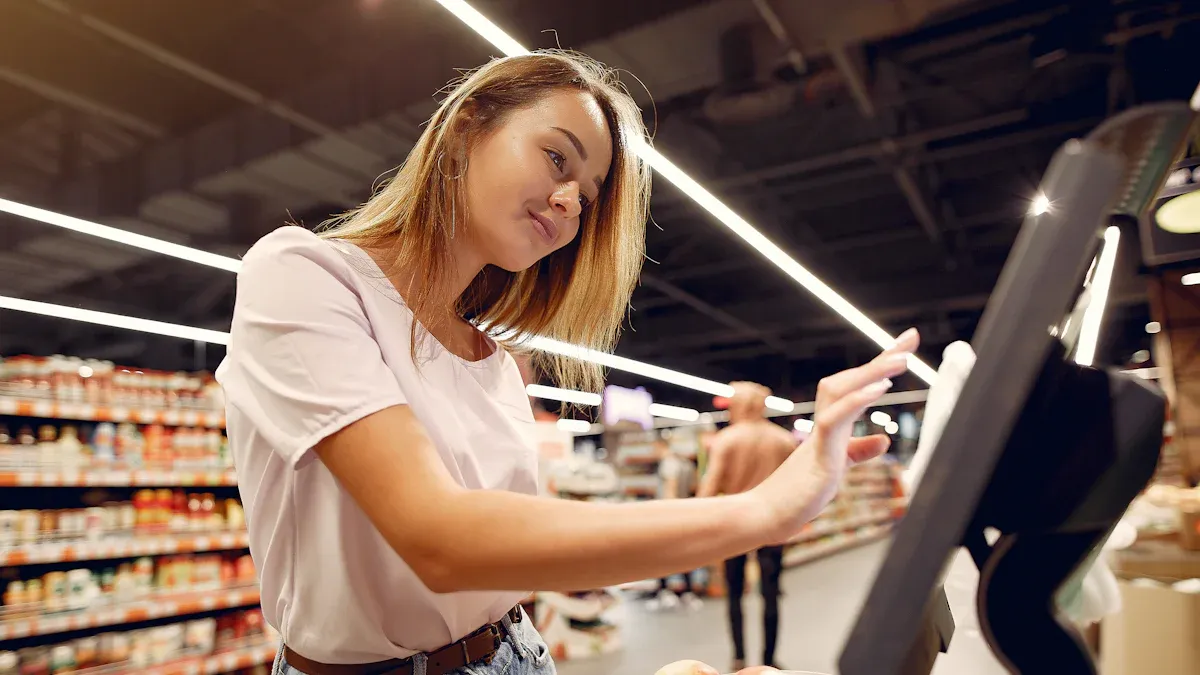
Traditional cashiers say hello and scan each item for shoppers. They take payments, give back change, and put items in bags. Many stores use traditional checkout for big buys and special needs. Cashiers look at coupons, help with returns, and answer questions. Shoppers often feel better when a person helps them. Cashiers can see mistakes fast and fix them before shoppers leave. This personal help keeps stores working well, even when it is busy.
Strengths of Human Cashiers
Traditional cashiers have many good skills for stores. They know how to handle payments fast and right. This means shoppers wait less and feel happy. Cashiers talk well with shoppers and are friendly. They stay calm, even when lines are long. They fix problems fast, so shoppers do not get upset. Cashiers keep learning new things, which shows they care and builds trust.
Here are some ways traditional cashiers make shoppers happier:
They finish payments fast and do not make mistakes.
They listen and talk clearly with shoppers.
They stay calm when it gets busy.
They fix problems right away.
They keep learning to do better.
😊 Tip: Stores that teach cashiers well often have happier shoppers and fewer mistakes at checkout.
Drawbacks & Limitations
Traditional cashiers have some hard parts, especially when stores are busy. They must work fast and not make mistakes. Sometimes, mistakes happen because things move quickly. Handling cash is hard when many people wait in line. If cashiers do not use time well, checkout can slow down and shoppers get upset. Cashiers must pay attention, but long hours make this tough.
Some common problems are:
Working fast and not making mistakes is hard.
Mistakes can happen when it is busy.
Handling cash is tough during busy times.
Shoppers get upset waiting in long lines.
Stores should help cashiers with good training and clear rules. This lowers mistakes and keeps checkout working well.
Customer Experience: Self Checkout vs Traditional Cashiers
Convenience & Speed
Lots of shoppers want shopping to be easy and quick. Self checkout lets people scan and pay by themselves. This way is usually faster, especially when stores are busy. Shoppers do not have to wait in long lines. They can finish shopping fast. Stores see wait times drop by about 30%. This makes shoppers happier and fits their wish for a quick trip. Traditional cashiers work at a regular speed, but lines can get long. Some people still like talking to a cashier. They choose this if they have many items or need help.
🕒 Shoppers who want a quick and simple trip often pick self checkout for a better experience.
Support & Problem Solving
Getting help is important for shoppers. Self checkout uses smart technology to find mistakes and help fix them fast. AI systems answer lots of questions at once and solve problems quicker than one cashier. This means less waiting and more happy shoppers. For example, AI-powered self checkout can make help come 50% faster. Traditional cashiers give personal help and fix tough problems, but it can take longer if the problem is hard. Some shoppers like talking to a person, while others want fast help from self checkout.
Self checkout gives quick answers and fixes problems fast.
Traditional cashiers give personal help and handle special cases well.
What shoppers like depends on the kind of help they want.
Accessibility
Accessibility is important for every shopper. Self checkout systems now have features to help people with disabilities. These features make shopping easier and help everyone feel good. Some common features are:
Feature | Description |
|---|---|
Raised dots for people who cannot see well. | |
High-contrast buttons | Buttons that are easy to see for people with low vision. |
Headphone jack | Audio help with sound you can change. |
Physical navigation buttons | Buttons that are easy to press for people who have trouble moving. |
Tactile controller | Special device for better control. |
Traditional cashiers can also help shoppers with special needs by giving personal help. Some people feel better with a person helping them. Others like doing things on their own with self checkout. What shoppers like depends on how much help and accessibility each system gives.
Staff & Operations Impact
Changing Roles
AI powered self checkout is making store jobs different. Cashiers still work in stores. Their jobs now help customers more. Some stores have self-checkout coaches. These workers help shoppers use the machines. They answer questions and give support. Staff do not scan items as much now. They talk with customers and fix problems. Workers help people feel welcome in the store. Employees feel safer and less worried. They do not need to watch every sale closely. Now, workers give real help instead of just taking payments.
Employees show customers how to use self checkout.
Staff spend time helping and talking with shoppers.
Self-checkout coach jobs make work better for staff.
Workers feel safer and less stressed at work.
Training Needs
Stores must teach workers new skills. Employees learn about digital tools and AI systems. Training now covers technology and customer service. Many stores use AI-powered platforms to train staff. These platforms give each worker a special learning plan. Microlearning modules help staff learn fast. These lessons are short and easy to remember. Ongoing training keeps workers ready for new changes. Employees also learn to use data from self checkout.
Digital skills and AI integration are important.
Special training helps staff learn quickly.
Microlearning makes learning new things simple.
Training all the time keeps workers prepared.
Employee Morale
Employee morale changes with AI self checkout. Some workers feel less worried. They do not handle every sale. Other workers feel stressed by new jobs. Milton Holland works at a supermarket. He says managing self checkout is hard. He feels like he does many jobs at once. The United Food and Commercial Workers union says self-service machines can lower job numbers. These machines can make jobs pay less. Some workers deal with unhappy customers. This can make them feel more stressed. Stores should help workers and listen to their worries. This keeps morale high.
😊 Tip: Stores that train and support workers help them feel good and confident.
Cost Analysis: Self Checkout vs Traditional Cashiers
Setup & Hardware Costs
Retailers notice setup costs are very different. AI powered self checkout costs a lot at first. Basic units cost between $3,000 and $8,000 each. Fancy models with AI, weight sensors, and RFID cost $10,000 to $20,000 or more. Some stores pay more than $25,000 for the newest machines. Software licensing adds $1,500 to $5,000 for each unit every year. Maintenance and support cost $500 to $3,000 per unit each year. Traditional cashier stations cost less, usually $2,000 to $5,000 for each lane. Stores spend less on machines but more on workers.
Cost Aspect | Price Range (USD) | Notes |
|---|---|---|
Basic Self-Checkout Units | $3,000 - $8,000 per unit | Standard retail units average $4,500 - $6,500 |
Advanced Self-Checkout | $10,000 - $20,000+ | AI, sensors, RFID; some exceed $25,000 |
Software Licensing | $1,500 - $5,000 annually | Per unit, recurring cost |
Maintenance & Support | $500 - $3,000 annually | Per unit, varies by location |
Maintenance & Operations
Stores must think about costs that keep coming. AI powered self checkout needs updates and repairs often. Software licensing and support add more costs every year. These systems help stores work better but need skilled staff to fix problems. Traditional cashiers need less tech help but cost more for wages, training, and benefits. Stores with lots of cashier lanes pay more for workers. Self checkout can help stores save on staff, but only if machines work well.
💡 Tip: Stores that plan for repairs and training have fewer problems and work better.
ROI by Store Type
Return on investment changes by store size and shoppers. Big stores often pick self checkout for better speed and lower worker costs. They get money back faster because lots of shoppers make things run better. Small stores may like traditional cashiers more. They spend less on machines and keep friendly service. Hybrid models use both systems for good balance and happy customers. Stores that choose the right checkout style get the best results.
Self checkout is best for busy stores that need speed.
Traditional cashiers work well for small shops that want good service.
Hybrid setups help stores save money and work better.
Overcoming Challenges in Self Checkouts
Security Solutions
Stores worry about safety with self checkout. Sometimes, people forget to scan items. Some people try to steal things. Stores use smart cameras to watch shoppers. Sensors help find problems fast. Staff check receipts at the door. Some stores use gates that open after you pay. Automated checkouts spot missed scans and tell workers. Stores train staff to help shoppers and look for theft. Using both technology and staff makes self checkouts safer.
Security Tool | How It Helps |
|---|---|
Cameras | Watch for missed items |
Receipt Checks | Stop unpaid items leaving |
Smart Gates | Block exit without payment |
Staff Training | Spot theft and help shoppers |
🚨 Safety is very important in busy stores. Automated checkouts work best with strong safety tools.
Technical Issues
Self checkouts can break or freeze sometimes. Shoppers get upset when machines do not work. Stores fix this by updating software often. Staff stay close to help with problems. Automated checkouts need cleaning and quick repairs. Stores keep extra parts ready to use. Workers learn how to restart machines. Fast help lets shoppers finish buying things. Stores watch for common problems and make systems better.
Update software often
Keep staff close to help
Clean machines daily
Fix problems quickly
🛠️ Stores that fix problems fast keep shoppers happy and lines moving.
Balancing Automation & Human Touch
Automated checkouts make shopping faster for many people. Some shoppers still want help from staff. Stores use self checkout and friendly workers together. Staff greet shoppers and answer questions. They help with coupons and special items. Automated checkouts handle easy purchases. Workers help when shoppers need extra support. This balance makes shopping easy for everyone. Stores listen to shoppers and change things to fit their needs.
Use self checkouts for quick buys
Keep staff ready for tough problems
Ask shoppers what works best
😊 A good mix of automated checkouts and human help makes shopping better.
Choosing the Right Model for Your Store
Small Business Recommendations
Small stores care about knowing their customers well. They want shoppers to feel happy and have an easy time. Most small shops do best with traditional cashiers. Cashiers say hello and help with special needs. This friendly service makes people trust the store more. Some small shops try self checkout, but it can cost a lot. Self checkout is fast, but it does not work for every small shop. Owners should ask shoppers what they want. If people want faster shopping, one self checkout lane might help. Staff can then spend more time helping shoppers and keeping them happy.
Large Retailer Strategies
Big stores have lots of shoppers every day. They need to move people through lines fast. Self checkout helps big stores make transactions quicker and lines shorter. Many shoppers like scanning and paying by themselves. This makes them happier, especially when the store is busy. Big stores use self checkout for small baskets and cashiers for big orders. This mix keeps all shoppers satisfied. Managers check how happy shoppers are and change the number of self checkout lanes when needed.
🛒 Tip: Big stores should teach staff to help at self checkout. This help keeps shoppers happy and fixes problems quickly.
Hybrid Approaches
Some stores use both self checkout and cashiers. This way, shoppers can pick what they like. People who want to finish fast use self checkout. Shoppers who need help go to a cashier. This choice makes most people happier. Stores can change lanes depending on the time or how busy they are. A table helps managers choose:
Store Type | Best Model | Focus Area |
|---|---|---|
Small Business | Cashier/Hybrid | Personal service |
Large Retailer | Self Checkout Mix | Speed & satisfaction |
😊 Stores that listen to shoppers and give choices have happier customers and smoother checkouts.
Retailers notice that ai powered self checkout and traditional cashiers are very different. Self checkout helps people shop faster and saves money on workers. Traditional cashiers give personal help and make stores safer. Store owners should think about how big their store is. They should also think about what their customers want and what their business needs.
Small shops usually choose traditional cashiers for friendly help.
Big stores use both types to make lines move faster and keep shoppers happy.
💡 Tip: Use more than one checkout style and ask shoppers what they like best. Learn about new retail technology to stay ahead.
FAQ
What happens if a shopper makes a mistake at self checkout?
The AI system usually spots mistakes right away. It shows a message on the screen. Staff nearby can help fix the problem. Shoppers do not need to worry if they scan something wrong.
Are self checkout machines safe for personal information?
Most stores use strong security to protect data. They do not store card numbers or personal details on the machines. Shoppers can ask staff if they have questions about privacy.
Can older adults or people with disabilities use self checkout?
Yes, many self checkout stations have features like big buttons, audio help, and easy-to-read screens. Staff can also help anyone who needs extra support.
Do stores save money by using self checkout?
Stores often spend less on wages because they need fewer cashiers. They may pay more for machines and repairs. Over time, many stores see savings, especially if they have lots of shoppers.
See Also
Navigating Walgreens Self-Checkout: Benefits and Hurdles in Shopping
Discovering How Cloudpick Offers Cashier-Free Shopping Solutions
The Advantages of AI-Driven Combo Vending Machines in Retail
Tracing the Development of Self-Checkout Technology Over Time
Identifying Self-Checkout Cash Mistakes: Fixes for Seamless Payments
