How AI-powered stores improve staff productivity in Franchise & multi-location retailers.

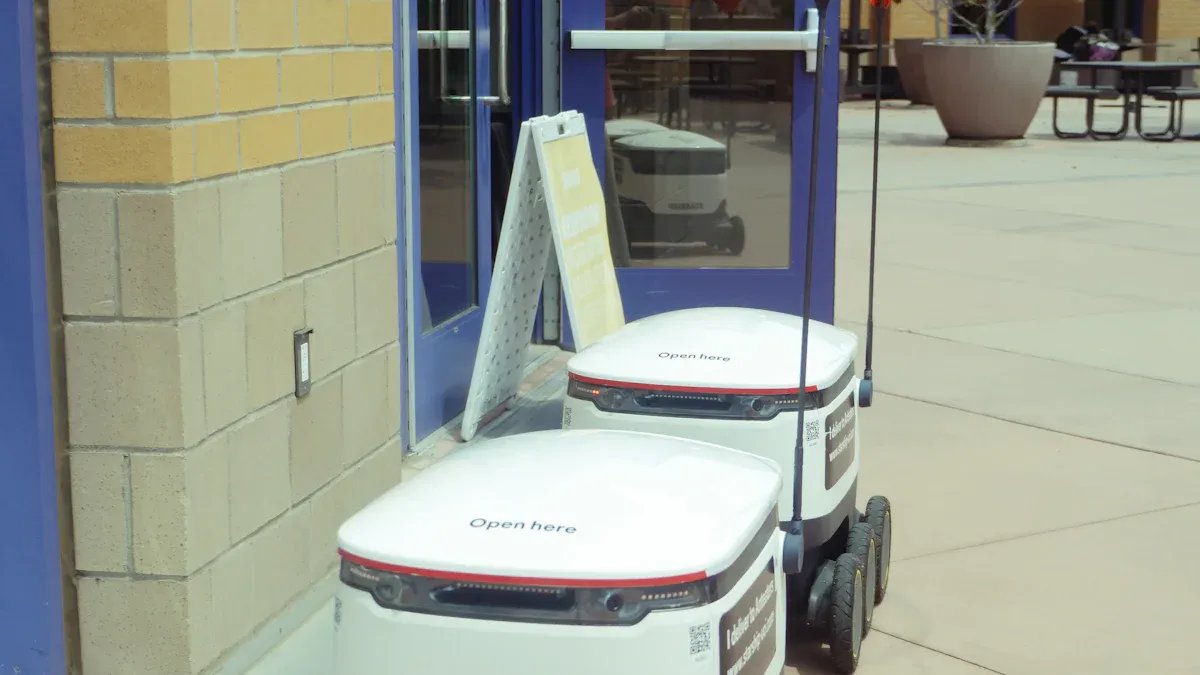
You notice big changes in stores when you use AI-powered stores. These smart stores help you finish simple jobs faster. You can spend more time helping customers. Many retailers use AI now. About 90% use it in their business. You can save time and get better results. For example, Books-A-Million saves 25 hours each week. The table below shows more ways stores improve work and service:
Improvement Type | Description |
|---|---|
Workforce Productivity | AI agents help teams do more work in less time. |
Customer Experience | AI makes shopping easier and quicker for customers. |
Consistent Execution | AI keeps store quality good in every location. |
Key Takeaways
AI-powered stores help staff work better by doing easy jobs for them. This lets workers spend more time helping customers.
Smart scheduling tools look at data to plan shifts. This saves money and makes workers happier.
Automated inventory management stops mistakes and keeps favorite items ready. This makes shopping better for customers.
Real-time communication tools let teams fix problems fast. This keeps the store running well.
AI technologies like machine learning and computer vision give helpful information. This helps stores make good choices and sell more.
Productivity Challenges in Multi-location Retail
Inconsistent Processes and Manual Tasks
Managing stores in different places is hard. Teams get confused when processes are not the same. Manual tasks can cause mistakes and waste time. Manual onboarding makes opening new stores slow. If decisions are late, you miss chances to grow. Errors in paperwork upset franchisees and hurt trust. Adding more stores means more paperwork. Customers get different experiences at each store. This can make people trust your brand less. When staff leave often, you must retrain new workers. It is hard to keep knowledge in your team.
Metric | Impact |
|---|---|
Location opening time | Decreased by 28% |
Compliance with brand standards | Improved by 32% |
Average unit economics | Improved by 18% |
Scheduling and Staffing Issues
Scheduling workers for many stores is tricky. Each store needs different numbers of staff. Bad schedules can mean too few or too many workers. Not enough staff leads to lost sales and unhappy customers. Too many staff raises labor costs, which are a big part of expenses. Using location-based staffing can cut labor costs by up to 8%. This also makes employees happier. When staff leave often, you must retrain new people. This puts stress on the team.
Tip: AI-powered stores help you make better schedules and lower labor costs. This makes your team work better.
Communication and Data Silos
Headquarters and stores sometimes do not talk well. Important updates may not reach store workers. This causes missed info and bad results. Data silos keep knowledge apart, so teams repeat work or use wrong data. Bad data wastes time and money. Without full customer info, you cannot give personal service or good marketing. Siloed data causes confusion and fights between teams. Teams may work on the same thing without knowing.
Common challenges include:
Miscommunication and delays
Inconsistent customer service standards
Difficulty tracking assets across locations
Monitoring task completion and policy adherence
AI-powered Stores: Key Technologies
AI-powered stores use smart tools to help you work better. There are three main technologies in these stores. They are machine learning, computer vision, and natural language processing. These tools do jobs for you, look at data, and help you make good choices.
Machine Learning for Operations
Machine learning checks store data and finds trends. It helps you see problems early and fix them fast. This tool makes better work schedules by looking at old sales and busy times. You spend less time on boring jobs like typing in data or making orders. Your team can help customers more and solve bigger problems.
Machine learning lets you:
Cut emergency jobs by 75%
Lower job delays by 67%
Make workers 20-30% more productive
Raise total work time by 29%
Machine learning also helps with hiring. It looks at job applications and guesses who might quit soon. This makes hiring faster and keeps your team strong.
Computer Vision for Store Insights
Computer vision uses cameras and sensors to watch your store. You get alerts when shelves are empty or lines are long. This helps you restock fast and keep customers happy. You can count how many people walk by displays and see what they like.
Computer vision can raise sales by 5% and make profits 4.5% higher.
Watching inventory can cut lost sales by up to 65%.
Labor costs go down by 10-15%, and customer happiness goes up by 15-25%.
You use computer vision to speed up checkout and keep your store running well.
Natural Language Processing for Communication
Natural language processing (NLP) helps you talk to your team and customers. You can use chatbots to answer questions right away. NLP breaks down walls between teams and helps everyone share news.
NLP helps teams work together by sharing info and making sure everyone knows what is happening.
You get quick messages about new rules or sales. Your team stays up to date and works as one.
Technology | What It Does | How It Helps You |
|---|---|---|
Machine Learning | Finds patterns in data | Makes better schedules, lowers mistakes |
Computer Vision | Watches what happens in the store | Sends alerts, speeds up checkout |
Natural Language Processing | Understands and answers language | Helps teams talk, answers questions |
AI-powered stores use these tools to do simple jobs for you. This lets you focus on the most important work.
Boosting Productivity with AI-powered Stores

Automated Inventory and Stock Management
Automated inventory and stock management helps your store run better. These systems watch your products all the time. They help you keep popular items in stock. You do not have to count items by hand. You also do not need to worry about missing products. AI-powered stores use automated workflows for tracking inventory, seeing what is in the warehouse, and making sales reports. This saves you time and cuts down on mistakes.
Feature | Description |
|---|---|
Automated Workflows | Automates inventory tracking, warehouse visibility, and sales reporting, saving time and minimizing manual errors. |
Real-Time Inventory Management | Enables real-time tracking of stock levels, predictive demand forecasting, and automated reordering, ensuring optimal stock levels. |
Operational Automation | Frees staff from manual tasks, allowing them to focus on customer needs and business growth. |
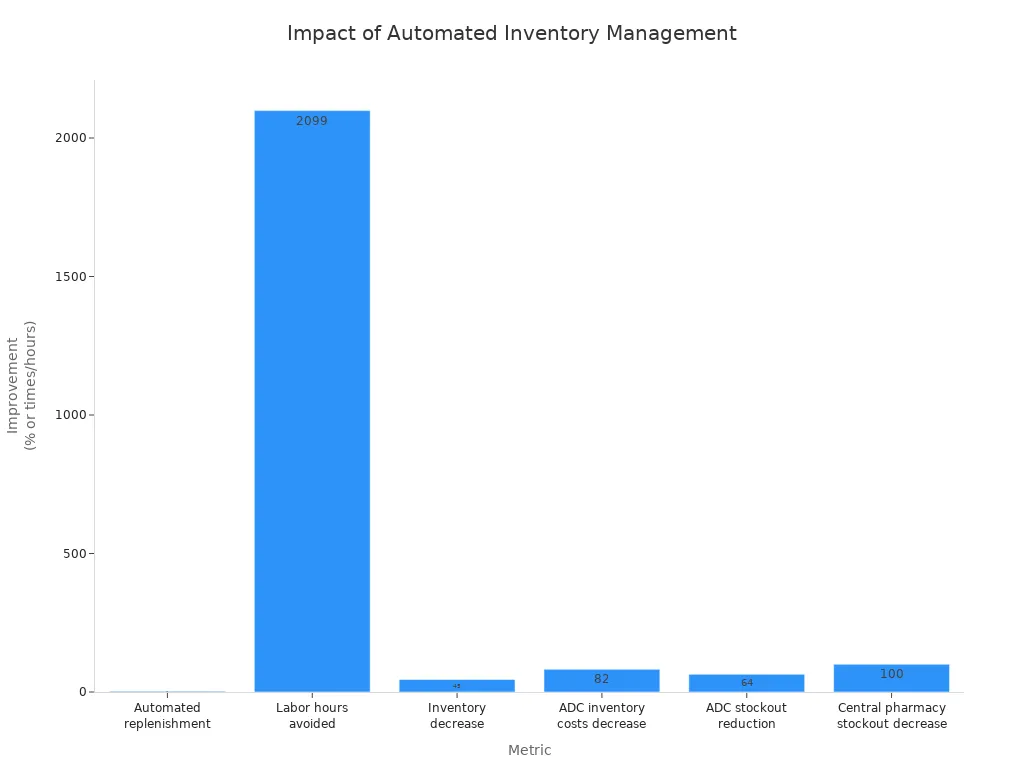
You will see big changes when you use these tools. Stores that use automated replenishment do it almost three times more than before. Staff skip over 2,000 hours of hand work each year. Inventory costs go down, and running out of stock does not happen much.
Metric | Result |
|---|---|
Average periodic automated replenishment | 2.8 times more post intervention |
Estimated labor hours avoided | Over 2,099 hours annually |
Decrease in total inventory (5 sites) | 45% decrease |
Decrease in ADC inventory costs (9 sites) | 82% decrease |
Reduction in ADC stockout percentage (7 sites) | 64% reduction |
Decrease in central pharmacy stockout percentage | 100% decrease |
Tip: When you use automated inventory tools, you spend less time on manual tasks and more time helping customers.
Smart Scheduling and Workforce Optimization
Smart scheduling tools help you put the right people in the right place at the right time. These tools use data and AI to guess when your store will be busy. You can make better schedules and not have too many or too few workers. This saves money and keeps your team happy.
Smart scheduling tools use data analytics and AI to predict staffing needs.
They automate scheduling and ensure compliance with labor regulations.
These tools help minimize overstaffing and understaffing, which are major contributors to increased labor costs.
Workforce optimization tools use historical and real-time data to predict staffing needs.
They automate schedule creation based on employee availability and compliance with labor laws.
These tools empower employees to swap shifts easily, enhancing flexibility and satisfaction.
If you do not have enough staff, you might lose sales and get bad reviews. Too many staff means you pay more than you should. Smart scheduling helps you avoid both problems. You can also let your team swap shifts, which makes them feel more in control.
Real-time Communication Tools
Real-time communication tools help you fix problems faster. Your team can talk and share news right away. You do not have to wait for emails or phone calls. This helps you solve issues quickly and keep your store running well.
Benefit | Description |
|---|---|
Issues that might take hours or days to resolve through email chains can be addressed in minutes through synchronous communication. | |
Reduced Scheduling Conflicts | Real-time collaboration allows for immediate adjustment and negotiation of shift swaps and coverage issues. |
Improved Operational Agility | Teams can quickly adapt to changing conditions, whether they’re unexpected rushes, staffing shortages, or emergency situations. |
Enhanced Employee Engagement | Direct, immediate communication makes employees feel more connected to their team and organization, even during off-hours. |
Streamlined Training and Onboarding | New employees can receive immediate feedback and guidance, accelerating their integration into the team. |
Note: Real-time communication keeps everyone on the same page and helps new staff learn faster.
Customer Insights and Traffic Analysis
AI-powered stores give you tools to learn about your customers and store traffic. You can see when your store is busiest and plan your staff schedules to match. This helps you stop long lines and unhappy customers. You can also use smart queue systems to send customers to the right staff member for their needs.
Understanding real-time customer traffic enables you to avoid overstaffing and understaffing, leading to a balanced operational flow.
Detailed footfall data allows for better scheduling, resulting in quicker service and happier customers.
AI-powered Queue Management Systems enhance customer routing based on query types and urgency, improving efficiency and personalization.
Emirates Airlines uses smart kiosks to identify customer needs and optimize staff allocation, ensuring high-quality service during peak demand.
Retail traffic software helps maintain ideal staff-to-customer ratios, ensuring customers receive adequate attention.
It allows for precise scheduling during peak times, reducing wait times and enhancing customer satisfaction.
When you use these insights, you can give each customer the help they need. Your team works better, and your store becomes a nicer place to shop.
Real-world Success Stories
AI-driven Scheduling in Franchises
AI-driven scheduling makes a big difference for franchises. Companies like Domino’s Pizza and McDonald’s use AI to guess when stores will be busy. They use this to make smart work schedules. These tools help you manage workers at many stores from one place. You can match staff shifts to what each store needs. This keeps service the same at every location.
Here is what you can get with AI-driven scheduling:
Improvement Type | Percentage/Amount |
|---|---|
Overtime Reduction | 20-30% |
Labor Cost Precision | Exact staffing levels |
Administrative Efficiency | 80% time reduction |
Turnover Reduction | 15-25% |
$250,000-500,000 annually |
You can also cut down on missed shifts and having too many workers. This means fewer last-minute call-outs and more money saved.
Inventory Automation in Grocery Chains
Grocery chains use inventory automation to save time and stop mistakes. When you use barcode or RFID technology, you make half as many counting errors. Automated systems help you order more products before you run out. This stops empty shelves and keeps customers happy.
Evidence Type | Description |
|---|---|
Reduction in Counting Errors | 50% fewer errors with barcode or RFID compared to manual methods. |
Reduction in Excess Inventory | 15-20% less extra stock, which means less waste. |
Time Saved in Inventory Management | 30% less time spent on inventory tasks, so staff can help customers more. |
Automated ordering systems stop delays when you need to restock.
Real-time checks help you keep better control and waste less.
Having the right amount of stock makes customers happier.
Enhanced Customer Experience with AI
AI can make shopping easier and more fun for customers. Stores like Great Clips let people check wait times and save a spot with their app. AI systems look at data fast, so you know what your customers want and when they shop.
Impact on Customers | Impact on Employees | |
|---|---|---|
Checkout Options | Increases efficiency | N/A |
In-Store Robots | N/A | Increases efficiency |
Retailer Apps | Makes shopping better | N/A |
Smart Wearables | N/A | Makes work better |
AI-powered stores help you serve customers faster and with more care. You can see happier customers and workers who get more done.
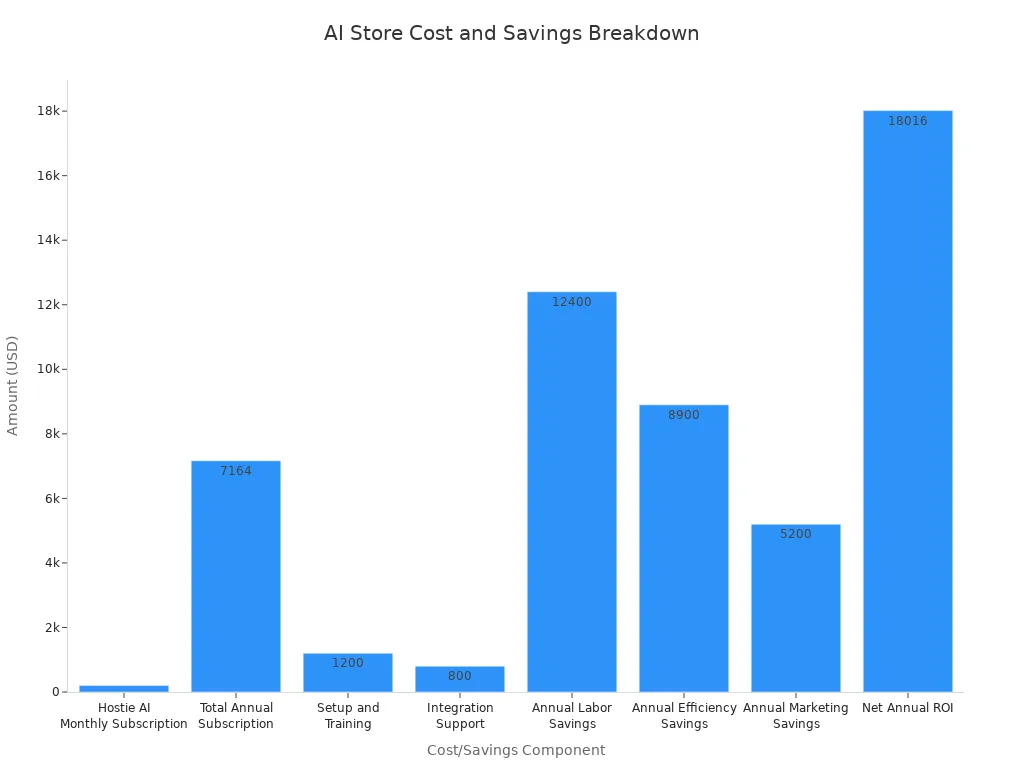
When you use these tools, you spend less and get more back. Some stores see a 251% return on investment after switching to AI-powered solutions.
Overcoming Implementation Barriers
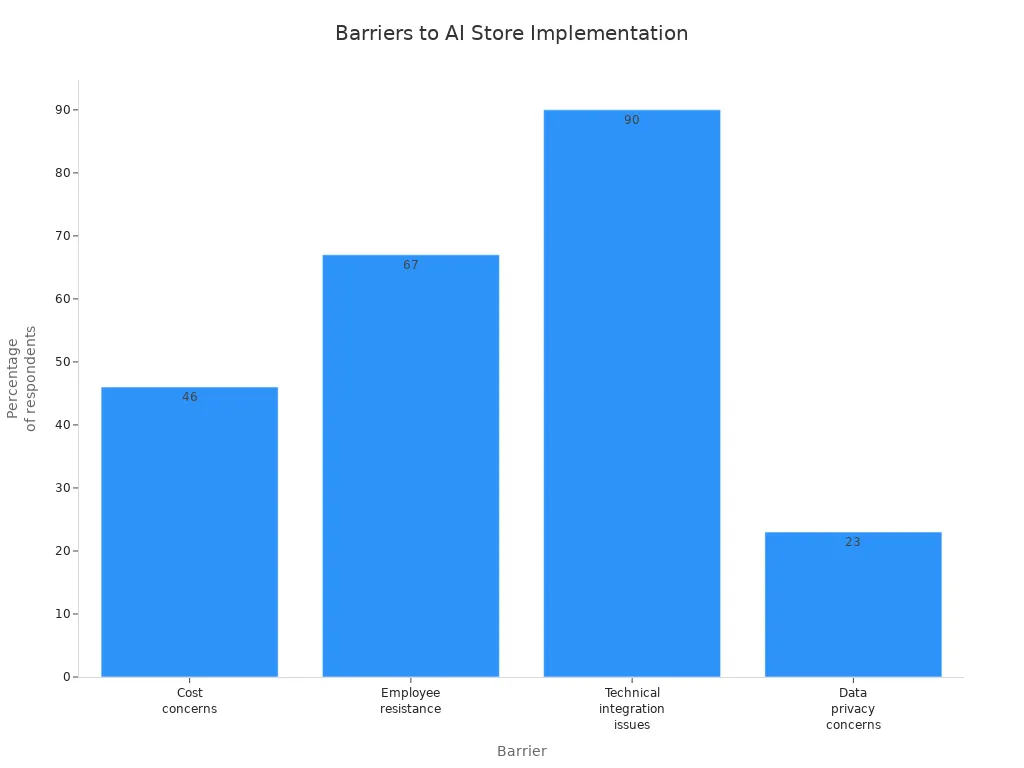
When you try to use AI-powered stores, you face some problems. These problems can make it hard for franchise and multi-location retailers. Some people worry about the cost. Others are not sure if AI will help them. There are also problems with connecting new tools to old systems. Many people worry about keeping data safe. The table below shows the main problems:
Barrier | Description |
|---|---|
Cost concerns | 46% of IT professionals cite price uncertainty as a primary concern, affecting budget constraints. |
Employee resistance | 67% of Americans expect AI to impact the workforce, but only 13% believe it will benefit them. |
Technical integration issues | Over 90% of organizations face difficulties integrating AI with existing systems. |
Data privacy concerns | 23% of organizations highlight security risks as a major concern regarding AI implementation. |
Staff Training and Adoption
You need to teach your staff how to use AI tools. Many workers want clear training plans. If you give at least five hours of lessons with someone there to help, you get better results. Companies like Toyota save more than 10,000 work hours each year with AI training. Target uses a 'Store Companion' app so staff can check prices and find products. You can help your team feel good about AI by letting them try it out.
Workers who get at least five hours of lessons with help learn better.
Good companies build a culture where people try new things with AI. This helps team members feel less worried and learn new skills.
System Integration and Data Security
You must connect AI tools to the systems you already use. More than 90% of groups have trouble with this. You can use one data platform to bring all your data together. Checking your data often and having special teams keeps it clean. You should follow privacy rules and ask legal experts for help to keep customer info safe.
Use one data platform to see info right away.
Check your data often and have rules for keeping it safe.
Ask legal experts to make sure you follow privacy laws.
Change Management Strategies
You need a good plan to help people get used to AI. You can use models like Prosci ADKAR, Lewin's Change Management, or McKinsey's 7S Framework. Leaders should tell everyone how AI will change their jobs and show support. You can give clear ways to learn, keep teaching, and let people practice.
Framework | Description |
|---|---|
Focuses on individual change with five key elements: Awareness, Desire, Knowledge, Ability, and Reinforcement. | |
Lewin's Change Management Model | Consists of three phases: Unfreeze, Change, and Refreeze, to embed change into the culture. |
McKinsey's 7S Framework | Analyzes seven interdependent elements: Strategy, Structure, Systems, Shared Values, Skills, Style, and Staff to ensure alignment for AI integration. |
Leaders should talk clearly about how AI will change jobs.
Strong leaders help more people use AI.
Leaders should show how to use AI and share their ideas.
Give clear ways for people to learn about AI.
Keep teaching and remind people about new habits.
Let people try AI so they feel part of the change.
Note: Many people think AI is just for big companies or is too hard and costs too much. You can show your team that AI is for everyone and is easy to use with the right training.
You get a lot of good changes when you use AI-powered stores in franchise and multi-location retail. These stores fix common problems and help your team do more work.
AI systems guess what each store needs with over 90% accuracy. This means you throw away less food and get fresh items faster.
Automated tools let you do less paperwork. You have more time to talk to people and build trust.
Inventory management systems help you order and move stock before you run out.
Benefit Description | Estimated Impact |
|---|---|
Labor cost savings from AI scheduling | |
Potential annual savings for a $50M retailer | $250,000–500,000 |
Labor cost savings reported by companies using AI | Up to 12% |
Reduction in turnover due to better scheduling | 10–15% decrease |
Reduction in average wait times for customers | 30% decrease |
You will see even more changes soon. AI-driven models help you make better ads and learn from new data. You get tools that keep getting better and help your stores grow. Now is a great time to try AI-powered stores for long-lasting productivity.
FAQ
What is an AI-powered store?
You use smart tools like machine learning and computer vision in an AI-powered store. These tools help you finish tasks faster. You get more time to help customers and improve your store.
How does AI help with staff scheduling?
AI looks at sales and busy times. You get smart schedules that match your store’s needs. This helps you avoid overstaffing and understaffing.
Is it hard to train staff to use AI tools?
You can train your team with simple lessons. Most workers learn best with hands-on practice and clear guides. Many companies see better results after just a few hours of training.
Will AI-powered stores replace workers?
AI does not replace you. It helps you do your job better. You spend less time on boring tasks and more time helping customers.
How do AI-powered stores keep data safe?
AI-powered stores use strong security rules. You control who sees your data. Regular checks and updates keep your information safe.
See Also
The Future of Retail Lies in AI-Driven Stores
Exploring Features and Advantages of AI Vending Machines
Transforming Online Retail Management with AI Tools
Essential Insights on AI-Enhanced Corner Stores for Retailers
