From Data to Actionable Insights in the AI-Powered Warehouse

Warehouse managers always try to work faster and make fewer mistakes. Many warehouses now use advanced analytics to help with these problems. The ai-powered warehouse uses real-time data to help make choices, work better, and keep track of inventory. Recent reports say that more than 90% of warehouses use some kind of AI or automation. Companies have better labor management and fewer slowdowns.
Statistic | Value |
|---|---|
AI embedded in warehouses | |
Warehouses using some form of AI or automation | Over 90% |
Companies planning to increase AI budgets | 87% |
Managers should think about how AI can change their own warehouse work.
Key Takeaways
AI helps warehouses work better by using live data. This helps people make good choices and manage inventory well.
Predictive maintenance finds problems before machines break. This means machines stop less and work goes smoother.
Real-time analytics and dashboards help teams act fast when things change. This makes work better and helps people work together.
AI helps plan how many workers are needed. This saves money and helps get more work done.
Check your data systems often and pick the best AI tools. This helps you get the most from automation in your warehouse.
The AI-Powered Warehouse Advantage
Optimizing Machine Uptime and Workflow
An ai-powered warehouse uses smart tools to help machines work well. These tools help keep machines running and make jobs easier. Predictive maintenance checks how machines are doing. It finds problems before they cause a breakdown. This means there are fewer delays and less time when machines stop working. For example, predictive maintenance can cut equipment downtime by 12%. Automated systems like autonomous mobile robots and robotic arms move around the warehouse. They pick up and move products carefully. These machines use AI algorithms to find the best paths and decide which jobs are most important. Because of this, warehouses work faster and make fewer mistakes.
Tip: Check machine data often to find early signs of damage.
The table below shows how these changes help:
Advantage | Measurable Impact |
|---|---|
Warehouse slotting optimization | 15-30% less time spent walking, 10-15% more work done |
AI-based labor allocation | 20% less time workers are not busy |
Predictive maintenance | 12% less time machines are down |
Higher throughput with AI orchestration | 25-30% more work finished |
Enhancing Workforce Allocation
The ai-powered warehouse also helps leaders give jobs to workers better. AI looks at old data to guess how many workers are needed. This stops having too few or too many workers. It matches workers’ skills to the right jobs. This lowers mistakes and helps workers do better. Real-time changes keep work moving, even when it gets busy.
Some main benefits of AI-driven workforce allocation are:
It guesses how many workers are needed and fills empty spots.
It gives out jobs in a smart way for better results.
It helps workers do better and get more done with good planning.
Companies that plan their workforce well get more work done and spend less on workers. The ai-powered warehouse gives managers tools to make fast, smart choices. This leads to better results everywhere.
Transforming Data into Insights
Real-Time Analytics and Dashboards
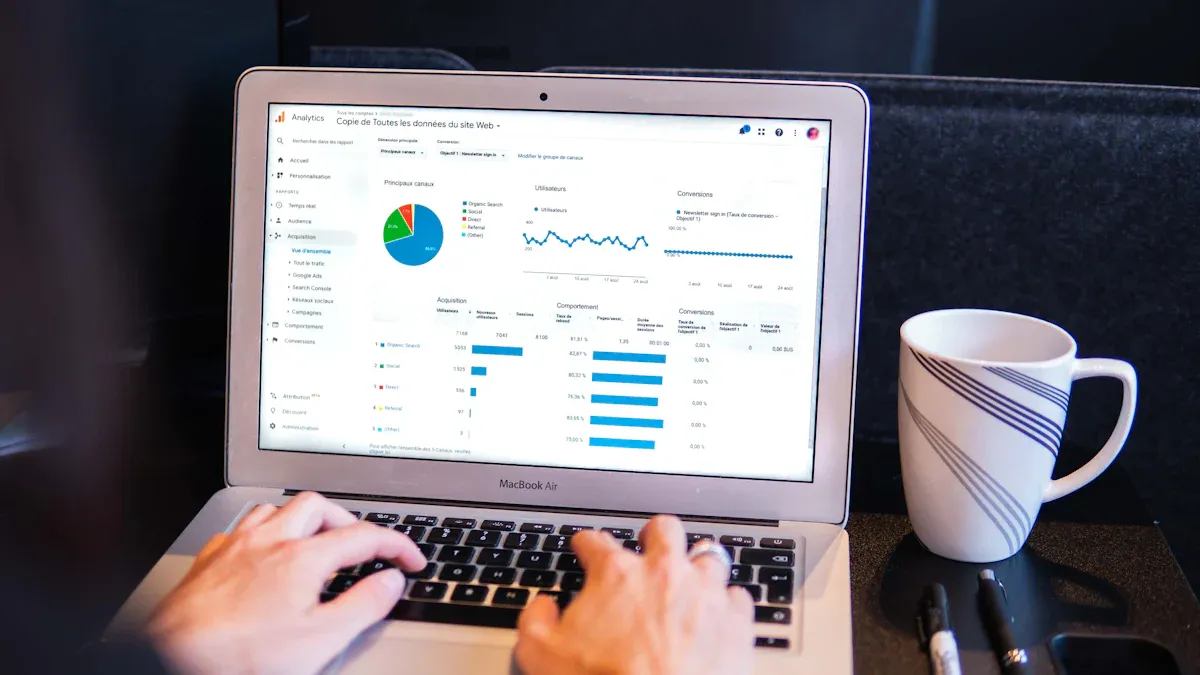
Warehouses get lots of data every day. Many managers have trouble using this data. They may save data but not use it. They miss chances to learn from it. They also do not have good ways to see the information. Real-time analytics and dashboards help with these problems.
Real-time analytics let teams see live information right away. This helps them react fast to changes in orders or inventory. Workers can see how things are going at any moment. They can fix problems before they get worse. Dashboards use colors and pictures to show how work matches warehouse goals.
Tip: Pick dashboards with easy-to-read visuals. This helps teams find problems and act quickly.
Some good things about real-time analytics and dashboards are:
Teams can make quick choices using data.
Fast insights help workers handle market changes and stop big problems.
Dashboards help teams work together by sharing live numbers.
Managers can watch important areas without waiting for old reports.
AI-powered warehouse systems use these tools to work faster and better. For example, digital twin technology lets managers try out ideas before making changes. AI can find patterns in the work that people do not see. It gives tips to help teams work better. At DHL, AI helps save money, make fewer mistakes, and speed up work.
Managers notice these results:
AI optimization algorithms can make walking distances 20–50% shorter.
Advanced picking tools can make picking up to 30% faster.
Identifying Key Warehouse KPIs
Key performance indicators, or KPIs, show how well a warehouse works. AI-powered warehouse systems watch these KPIs to help managers make smart choices. Good KPIs help teams focus on what is important and get better results.
Some problems with tracking KPIs are not looking at the data and not showing it well. If teams do not use KPIs, they miss ways to get better.
The table below shows important KPIs for warehouse work:
Pillar | Key Performance Indicators |
|---|---|
Inbound & Inventory | Dock-to-Stock Time, Inventory Accuracy, Inventory Turnover |
Order Fulfillment | Order Picking Accuracy, Order Cycle Time, Perfect Order Rate |
Outbound | On-Time Shipping, On-Time Delivery |
Reverse Logistics | Rate of Return, Return Processing Time |
Watching these KPIs helps managers find problems and ways to improve. For example, AI-driven 3D cartonization helps pick the right box size. This lowers shipping costs. When teams watch order picking accuracy and cycle time, they can work faster and make fewer mistakes.
Note: Pick a few important KPIs. This keeps teams from feeling overwhelmed and helps them stay focused.
When managers can see and understand KPIs, they can act fast. This helps them plan better and makes the warehouse work more smoothly.
Predictive Analytics for Inventory and Demand
Demand Forecasting with Machine Learning
Warehouses must know what customers want to buy. Machine learning helps managers guess demand better than old ways. AI systems look at sales, weather, holidays, and social media. These systems find patterns people may not see.
Old forecasting methods are only 50% to 80% accurate.
These methods have trouble with live data and changing markets.
AI models can lower forecasting mistakes by 20% to 50%.
AI systems study lots of data from many places. They change fast when trends change.
For example, Zara uses AI agents to check sales data and find demand trends. This helps the company restock popular items quickly. Zara does not run out of bestsellers and does not waste money on slow sellers.
Tip: Use machine learning tools that update forecasts often. This helps teams react to changes in what customers want.
AI-powered demand forecasting shows managers what to expect. They can plan better, order the right amount, and keep customers happy.
Inventory Optimization and Out-of-Stock Detection
Keeping the right amount of inventory is tough. Too much stock costs extra money. Too little stock means lost sales. Predictive analytics helps managers find the best balance. Real-time tracking shows where each item is in the warehouse. AI tools spot trends and warn teams about shortages.
Real-time inventory tracking helps teams watch stock levels and movement.
AI in warehouse management can make inventory accuracy up to 95%.
Inventory costs can go down by up to 30%.
Supply chain efficiency can go up by up to 25%.
Studies show a Cronbach’s alpha of 0.919, which means very high consistency in measuring how well big data analytics work for inventory.
Many companies use AI to make inventory better and spot out-of-stock risks. The table below shows some real results:
Company | AI Application | Results |
|---|---|---|
Rastelli Food Group | RELEX’s AI-driven planning system | 927% ROI, $3M extra inventory recovered, 95% less planning time, $250K saved each year |
API Group | AI forecasting from Kortical | 8.5% less extra stock, 11% better delivery lead-time accuracy |
Walmart | In-store shelf scanning robots | Robots worked 3× faster and 50% more accurately than manual audits for shelf issues |
Note: AI-powered warehouse systems help teams spot out-of-stock risks before they happen. This means fewer empty shelves and happier customers.
Predictive analytics lets managers act before problems get worse. They can order new stock at the right time and avoid mistakes. Teams save money, work faster, and keep customers coming back.
Boosting Labor Productivity with AI
AI-Driven Labor Management
Warehouse teams do their jobs faster with AI-driven labor management tools. These tools look at old data and what is needed now. They help plan shifts and give out tasks. Managers see fewer mistakes and better work. AI robots pick, sort, and pack items very quickly. Labor optimization tools help managers use their teams in smart ways. Demand forecasts tell when more workers are needed. This helps managers plan ahead. Automation does boring jobs, so workers can do more important things.
Application | Impact on Productivity |
|---|---|
AI robots for picking, sorting, and packing | Cuts down on manual labor costs and makes work faster |
AI-driven labor optimization tools | Uses resources well and needs less manual labor |
Demand forecasts for shift scheduling | Makes sure enough workers are there at busy times |
Automation of repetitive tasks | Lets workers do harder jobs and helps get more done |
AI and automation help orders get filled faster. They help teams make fewer mistakes and save money on labor. Companies say they get 5% to 20% more work done. This is because they have better staffing and track how well people work.
Tip: Use AI tools to plan shifts and give out tasks. This helps teams avoid last-minute changes and keeps work going well.
Task Allocation and Worker Safety
AI-powered warehouse systems help managers give out tasks better. These tools match jobs to what workers are good at. They also watch how well workers do. Workers get jobs that fit their skills. This helps them work better and stay safe. AI makes the job feel more personal, so workers are happier. A fun work place keeps workers happy and makes them stay longer.
Impact Area | Description |
|---|---|
Employee Experience | AI makes the job feel more personal and workers are happier. |
Engagement | Makes work more fun and interesting. |
Turnover Reduction | Happier workers means fewer people quit. |
AI tools cut down on planning by hand, so there are fewer mistakes. Better forecasts help make smarter schedules and stop last-minute problems. Predictive analytics help teams work better and spot problems early. This makes work safer and keeps everyone healthy.
Note: Smart task giving helps teams avoid getting hurt and keeps everyone safe.
The ai-powered warehouse uses these tools to help everyone work better and make the workplace nicer.
Implementing AI Analytics in Warehousing
Assessing Data Infrastructure
Warehouse leaders need to check if their data systems are ready for AI. A strong data foundation helps teams use AI tools well. Leaders should make clear rules about who owns and manages data. When data is organized and the same everywhere, it is easier to use. Old systems may need upgrades to handle new AI work. Cleaning and adding to data makes AI models more accurate. A good data pipeline moves information smoothly between places. Teams should keep data systems updated and ready to grow.
Steps to assess data infrastructure:
Build a strong data foundation.
Set up a scalable data governance framework.
Standardize and organize data for consistency.
Upgrade infrastructure for AI readiness.
Clean and enrich data.
Create a strategic data pipeline.
Maintain and scale data systems.
Tip: Make sure AI projects match business goals and check if the team has the right skills.
Choosing AI Tools and Platforms
Picking the right AI tools is important for warehouse success. Teams should choose tools that fit their business needs and work with what they already have. The best platforms can grow as the warehouse gets bigger. Security and privacy must always be strong. Good vendor support helps teams fix problems fast.
Criteria | Description |
|---|---|
Alignment with Business Objectives | The tool should fit the warehouse’s main goals and tasks. |
Integration with Existing Systems | It should connect easily with current software and hardware. |
Scalability and Flexibility | The platform must handle more data and users as the warehouse grows. |
Security and Compliance | It must protect data and follow privacy rules. |
Vendor Support | Strong customer support and resources help teams succeed. |
Note: Some tools have special features for certain industries or let teams change workflows.
Training and Integration
Training helps teams feel sure about using AI tools. Programs should match different jobs and skill levels. E-learning and practice let workers learn at their own speed. Short lessons help teams keep up with new AI features. Mentors can help workers learn faster. Simulations let teams try AI tools in a safe way. Support channels answer questions and help solve problems.
Teams should also focus on change management. Sessions that explain AI benefits help workers feel better about changes. Mixing AI with human skills leads to better results. Companies that train and support workers see fewer mistakes and happier teams.
Callout: Learning all the time and talking openly helps teams get used to AI and makes the warehouse work better.
Best Practices and Success Stories
Case Studies in Efficiency
Many companies have seen big improvements after using AI in their warehouses. These real-world examples show how smart tools can make work faster and save money.
AI can lower supply chain and logistics costs by about 15%. This happens because AI finds better ways to do tasks.
Most retailers who use AI, about 72%, say their costs have gone down.
Amazon uses predictive analytics to guess what customers will buy. This has made their forecasts 25% more accurate and cut stockouts by 15%.
GXO uses AI to count inventory. Their system can scan 10,000 pallets every hour.
JD Logistics built self-operating warehouses. They grew from 10,000 to 35,000 storage units. This change made their work 300% more efficient.
These stories show that the ai-powered warehouse can help teams work smarter and reach their goals.
Lessons and Tips for ROI
Warehouse managers can learn from these success stories. They can follow some simple steps to get the most value from AI.
Set clear goals. Decide what success looks like, such as saving money or working faster.
Start small. Test AI tools in one area before using them everywhere.
Make sure data is clean and organized. Good data helps AI work better.
Involve workers early. Show them how AI can help and listen to their ideas.
Track progress. Use KPIs to see what works and make changes if needed.
Train staff. Give workers the skills they need to use new tools.
Keep improving. Update AI systems and ask for feedback from the team.
Tip: Managers should check their current systems, pick the right AI tools, and train their teams. They should measure results and keep looking for ways to improve.
These best practices help warehouses get the most out of AI and see strong returns on their investment.
AI-powered analytics help warehouses work better and save money. They also make it easier to grow bigger. Teams use live data to use resources well and get more done. Managers can train workers and pick good tools to use AI the right way. Experts think AI, robotics, and blockchain will grow fast. These tools will make warehouses smarter and greener. Warehouses that use these new tools will keep up with others and handle new needs.
FAQ
What is an AI-powered warehouse?
An AI-powered warehouse uses smart computer systems to help run things. These systems help manage inventory, workers, and machines. They collect lots of data and give advice to managers. This makes work faster and easier for everyone.
How does AI improve inventory accuracy?
AI keeps track of items in real time and finds mistakes fast. Managers use this information to fix problems before they get bigger. This helps keep inventory counts right.
Tip: Check AI reports often to find errors early.
Can AI help with worker safety?
AI watches how people work and finds risky jobs. Managers use these tips to change jobs and keep workers safe. AI also sends alerts when it sees something unsafe.
Safety Feature | Benefit |
|---|---|
Real-time alerts | Stops accidents |
Task matching | Lowers injuries |
What are common challenges when starting with AI?
Teams often have trouble with old data systems and learning new things. Managers should update technology and teach workers how to use new tools. Clear goals help everyone stay on track.
Update data systems
Train workers
Set clear goals
See Also
The Future of Retail: Embracing AI-Driven Stores
Revolutionizing Online Retail Management with AI Tools
Understanding the Growth of AI-Enhanced Corner Stores
Launching a Low-Cost AI-Driven Corner Store Successfully
Modern Retail Benefits from AI-Enhanced Combo Vending Machines
