How AI retail empowers airports to manage peak passenger flow efficiently

Imagine you walk into a crowded airport during the holidays, experiencing peak passenger flow. There are long lines at check-in and security. Travelers look upset and workers hurry to help everyone. Airports have trouble with crowds they did not expect and slow updates. The table below lists common problems:
Challenge Type | Description |
|---|---|
Unpredictable Passenger Volume | Sudden crowds that are hard to guess and handle |
Reliance on Delayed Data | Using old information most of the time |
Lack of Real-Time Visibility | Not able to see what is happening right now |
AI retail solutions help airports deal with busy times, especially during peak passenger flow. They can guess crowd patterns and change resources right away. This can make wait times 30% shorter and make travelers 15% happier. You get faster service and your trip feels easier.
Key Takeaways
AI retail solutions help airports guess when crowds will come. This can make wait times shorter by up to 30%. Real-time monitoring lets airports control lines better. This makes more passengers happy, with a 28% increase. Automated staff allocation puts workers where they are needed most. This helps use resources well during busy times and makes service better. AI tools make airports safer by finding dangers fast. This keeps the airport safe for everyone. Using AI needs good planning and training for staff. Airports also must follow data privacy rules.
Peak Passenger Flow Challenges
Defining peak passenger flow
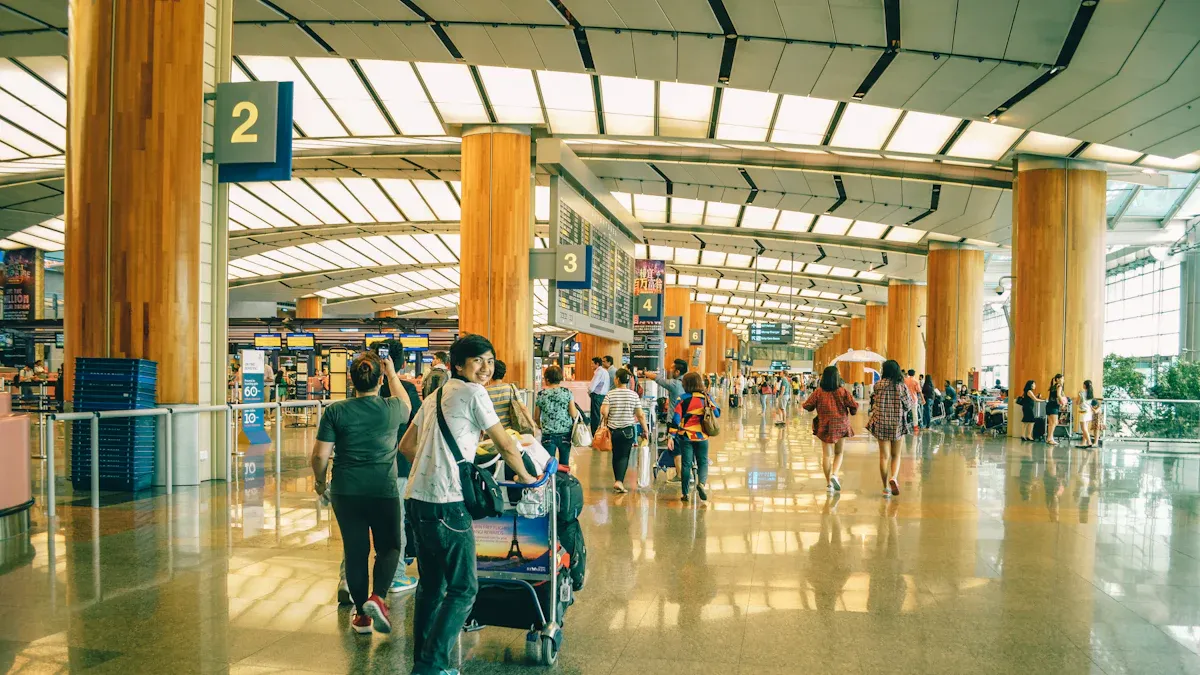
Airports get crowded at certain times. This is called peak passenger flow. It happens when lots of people go through shops, security, and gates at once. You see this during holidays or after big events. Flight schedules are important. When many flights leave or arrive together, crowds form fast. People shop, eat, and wait in lines. Weather and connecting flights can also change how people move.
Tip: Look for busy times like holidays or after big events. These are when peak passenger flow usually happens.
Operational and retail pain points
During peak passenger flow, airport workers face many problems. They deal with crowds that are hard to guess. Sometimes, they only have old data. This means they cannot act quickly. Staff might not be in the right spots. Long lines can happen without anyone seeing them. The table below lists common problems:
Challenge Type | Description |
|---|---|
Unpredictable Passenger Volume | Sudden surges that are hard to predict and manage. |
Reliance on Delayed Data | Often working with outdated information. |
Lack of Real-Time Visibility | Inability to see current happenings in the terminal. |
Ineffective Staff Management | Not enough staff in busy areas. |
Operational Blind Spots | Missing problems like long queues. |
Effects on passenger experience and revenue
Peak passenger flow can change your airport visit and the airport’s money. Long lines at security and bag drop can make you upset. Manual checks for passports and visas add more waiting. Crowded stores and long waits can make you less happy. This can hurt airport shops and restaurants because happy travelers spend more. Airports use AI to put staff in better spots and manage stock. AI can also suggest deals you might like, which helps shops earn more.
Long lines and crowded shops can make your trip less fun.
Airports can use smart systems to guess crowds and move staff.
Better planning gives you faster service and helps shops earn more.
AI Solutions for Peak Passenger Flow
Predictive analytics and demand forecasting
AI can help airports know when crowds will show up. It looks at flight schedules, bookings, old data, and local events. These models tell you where and when peak passenger flow will happen.
Some common predictive models are:
Statistical regression methods
Classical machine learning methods
Temporal deep learning methods
Transformer-based models
Simulation methods make simple models of how people move. They help guess wait times and crowd sizes. Statistical regression methods, like ARIMA, use old data to find trends. Machine learning models, like Random Forests, find links between many things and passenger numbers. Temporal deep learning models use neural networks to see changes over time. Transformer models use attention to spot important changes and give good forecasts.
AI demand forecasting tools use lots of data sources. They use machine learning to find patterns that change passenger numbers. This helps you plan better and use resources well. Models like Gradient Boosting and Random Forest make these forecasts more accurate.
Note: Good forecasting helps you get ready for busy times and avoid surprises.
Real-time monitoring and queue management
AI gives you live updates about what is happening in the airport. You can see where lines are and how fast they move. This helps you act fast and keep people moving.
Technology | Description |
|---|---|
AI Cloud Software | Lets you watch and manage lines from anywhere. |
People Movement Sensors | Show where crowds are and how people move. |
Real-time Insights | Give alerts about wait times, store crowds, and kiosk use. |
LiDAR Technology | Counts people and shows live crowd patterns. |
When you use these tools, you can:
Make passengers happier by 28%.
Lower missed connections by 23%.
Cut staff questions by 31%.
AI queue systems use digital screens and LED signs. These show live wait times and help guide people. Passengers feel less worried when they know what will happen.
Benefit | Impact |
|---|---|
By 30% | |
Increase Profitability | By 96% |
Improve Staff Use | Staff can help more people at busy times |
Automated staff and resource allocation
AI helps you put staff and resources where they are needed most. Predictive analytics show when and where crowds will form. Real-time monitoring lets you move staff to busy spots right away. Optimization algorithms help you use your staff and space in the best way.
AI-driven check-in counter allocation helps more people get through faster.
Security demand optimization keeps lines moving and avoids bottlenecks.
Gate and baggage plans change as needed to keep flights on time.
Measurable Outcome | Description |
|---|---|
Improved Passenger Flow | Better movement of people using real-time data and AI. |
Reduced Delays | Faster baggage and security checks mean less waiting. |
Optimized Resource Utilization | Staff and counters move to where they are needed most. |
Tip: Automated resource allocation means you can handle peak passenger flow without wasting staff or space.
Computer vision and hazard detection
Computer vision uses cameras and AI to watch for problems in the airport. It can spot left bags, broken items, or unsafe places. This keeps everyone safe and helps you fix problems before they get worse.
Component | Recall | F1-score | |
|---|---|---|---|
Bags | 0.92 | 0.88 | 0.90 |
Handles | 0.89 | 0.94 | 0.91 |
Straps | 0.74 | 0.58 | 0.65 |
Damage | 0.75 | 0.80 | 0.77 |
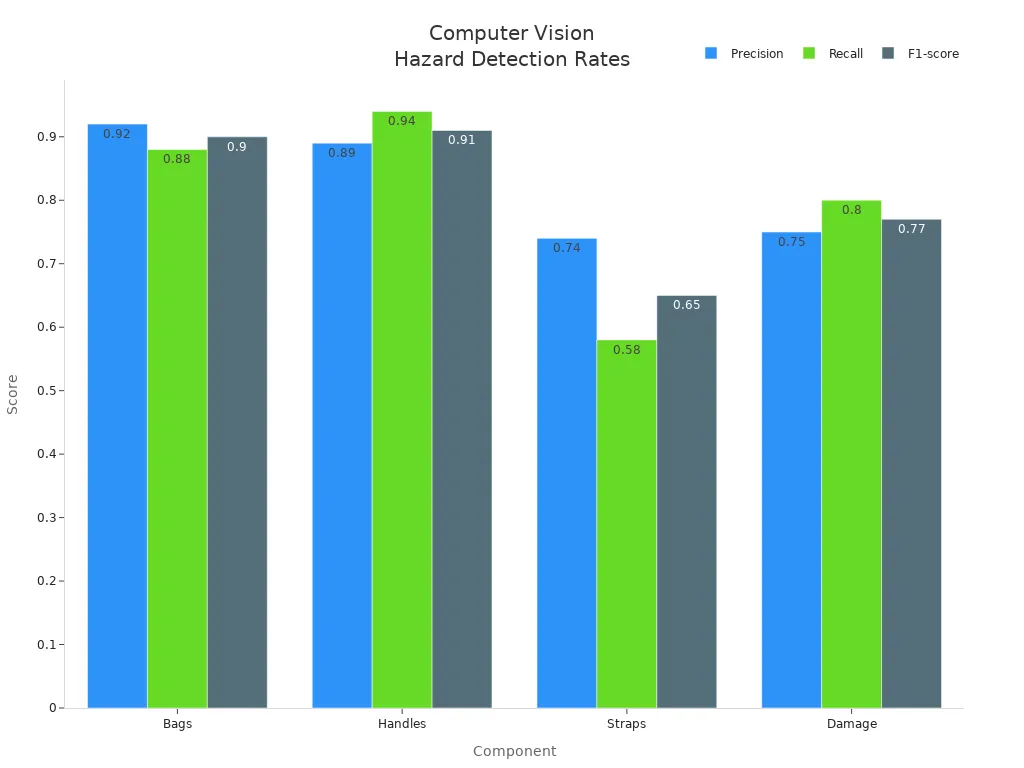
Computer vision systems work well in busy airports. They help you spot hazards fast and keep the airport running smoothly during peak passenger flow.
Alert: Fast hazard detection means safer airports and fewer delays for everyone.
Implementing AI Retail in Airports
System integration and data privacy
You must link AI retail solutions to your airport’s systems. This can be tough if your tools are old or not made for AI. Airports use Data Protection Impact Assessments (DPIAs) to check risks with passenger data. You must follow rules like GDPR when handling sensitive information. Airports keep passenger data safe by using data anonymization and segregation. These steps protect privacy and help travelers trust the airport.
Airports use Data Protection Impact Assessments (DPIAs) to check risks.
Following rules like GDPR is important for handling risky data.
Data anonymization and segregation keep passenger data safe.
Tip: Always look for privacy risks in your systems before adding new AI tools.
Staff training and engagement
Staff must learn how to use AI retail technology. Digital training platforms, like RapL, help train many employees at once. Staff can use their phones to learn, so everyone gets the same lessons. Dashboards show where staff need more help. You can give extra training to those who need it. Standardized programs make sure all staff learn the same things. Training covers many topics, so staff feel ready and confident.
Digital training platforms let all employees learn on their phones.
Dashboards show where staff need more training.
Standardized programs make sure everyone learns the same things.
Training covers many topics and helps staff do better.
Staff engagement is very important for success. When your team feels involved, they use AI tools better. This makes service better and work less stressful.
Overcoming implementation challenges
You may face problems when bringing AI retail to your airport:
It can be hard to connect old systems with new AI tools.
Staff may worry about losing jobs or learning new technology.
Training is needed to help staff use AI.
People must learn that AI helps jobs, not replaces them.
You must also follow privacy rules and anonymize data at the source. Sometimes, airports have old buildings that are hard to update for new technology. Upgrades can be expensive and complicated.
"Operational and regulatory issues also exist. AI is not regulated much by governments, which can cause problems when using it."
Airports that do well use strategies like omnichannel retailing, data analytics, and smart shelves. These tools help track stock and know what travelers want.
Strategy | Description |
|---|---|
Omnichannel Retailing | Connects online and offline shopping for a better experience. |
Data Analytics and AI | Uses data to suggest products and manage inventory. |
Smart Shelves and IoT Devices | Tracks stock and customer preferences in real time. |
Impact and Recommendations
Enhanced passenger satisfaction
You can notice big changes in how people feel after airports use AI retail. These systems help you get help faster and make your trip easier. Airports now use clear ways to measure how happy travelers are. You can look at the table below to see what they check:
Metric Type | Metrics Included |
|---|---|
Customer-focused | Net Promoter Score, Customer Satisfaction Score, Customer Effort Score |
Operational | Average response time, Resolution rate, Queue length, Abandonment rate |
When lines are shorter and you get help fast, you feel happier and less worried. AI helps airports answer your needs right away.
Increased efficiency and revenue
AI retail helps airport shops and services work better. You can check out faster and have more things to pick from. Here are some ways AI makes things run smoother:
AI makes buying things easier and keeps shelves full.
Automated stores and contactless ordering save you time.
Smart payment systems help you wait less.
AI guesses what travelers want, so shops do not run out.
Personalized marketing helps you find deals that fit you.
AI also helps airports make more money. The table below shows how much more they can earn:
Revenue Growth Projection | Timeframe |
|---|---|
2025-2029 |
Better data and quick changes mean more sales and happier shoppers. AI lets airports use staff and stock based on how many people are there. This lowers costs and helps them sell more.
Steps for AI retail adoption
You can follow these steps to bring AI retail to your airport:
Pick what is most important for your airport and set goals.
Make a plan and see what technology you need.
Set your budget and check if you can use what you already have.
Talk to experts who know about AI in airports and other places.
Look at different vendors and learn from their customers.
Focus on training, custom features, reliability, and support when picking AI.
Tip: Do not make mistakes like using the wrong AI tools or bad data. Good planning helps you get the best results from AI retail.
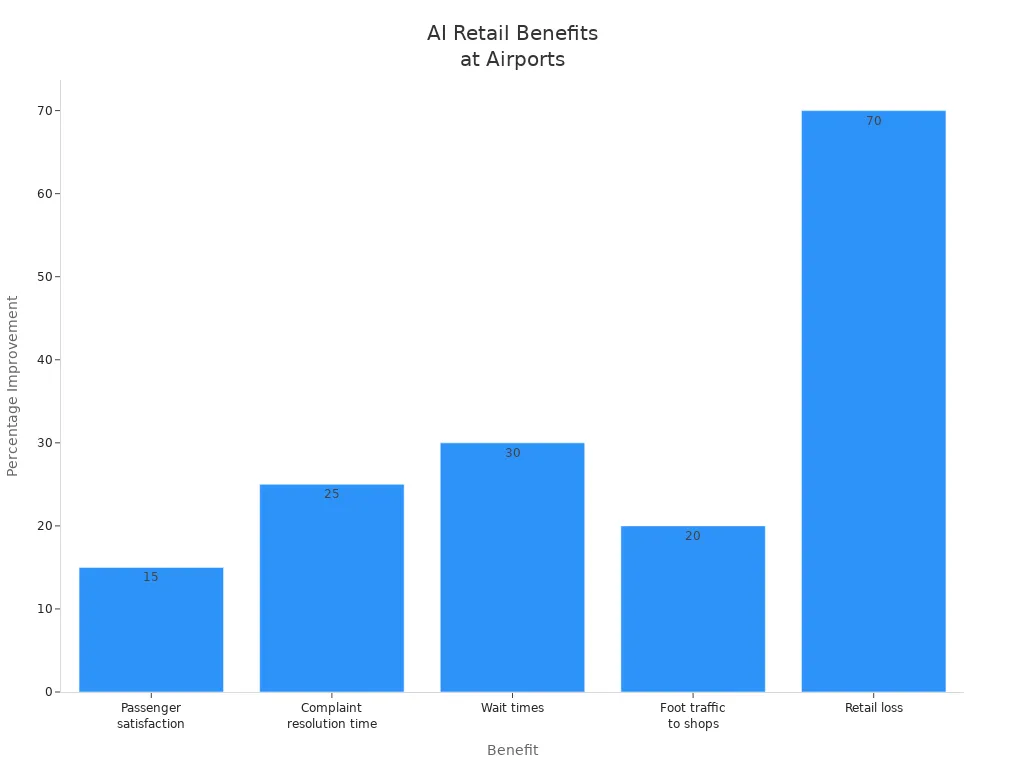
You can notice how AI retail makes airports work better. It helps people get through the airport faster and enjoy their trip more. Airports say they see big changes after using AI retail:
Benefit | Percentage Improvement |
|---|---|
Rise in passenger satisfaction | 15% |
Drop in complaint resolution time | 25% |
Reduction in wait times | 30% |
Increase in foot traffic to shops | 20% |
Reduction in retail loss | 70% |
You should see if your airport is ready for AI retail. First, make one data system for everything. Pick a clear goal and try a small test to see what happens.
Make a clear plan before you try to grow bigger.
Start by checking important things like CSAT, on-time flights, and saving money.
Try a small test in one terminal to see early results.
If you plan well and use good tools, your airport will run better and travelers will feel happier.
FAQ
What is AI retail in airports?
AI retail uses smart technology to help airport shops and services. You see faster checkouts, better stock, and helpful staff. AI predicts busy times and helps you get what you need quickly.
How does AI reduce wait times during peak hours?
AI tracks crowds and lines in real time. You get updates on wait times and directions to less crowded areas. Staff move to busy spots fast. This makes your wait shorter.
Is my personal data safe with AI retail systems?
Airports use strong privacy rules. They anonymize your data and follow laws like GDPR. You can trust that your information stays safe and private.
Can AI retail help airport staff?
Yes! AI gives staff real-time updates and training. You see staff in the right places. They use digital tools to help you faster and answer your questions.
How can my airport start using AI retail?
You can start by setting clear goals and picking the right tools. Try a small test in one terminal. Train your staff and check results. Grow your system step by step.
See Also
Exploring The Advantages Of AI-Enhanced Vending Machines Today
Revolutionizing Online Retail Management With AI Tools
Boosting Retail Efficiency And Customer Experience With Cloudpick
The Future Of Retail Lies In AI-Driven Stores
Enhancing Office Productivity Through Smart Vending Solutions
