Real-World Success: AI Retail in Managing Peak Passenger Flow for Airports

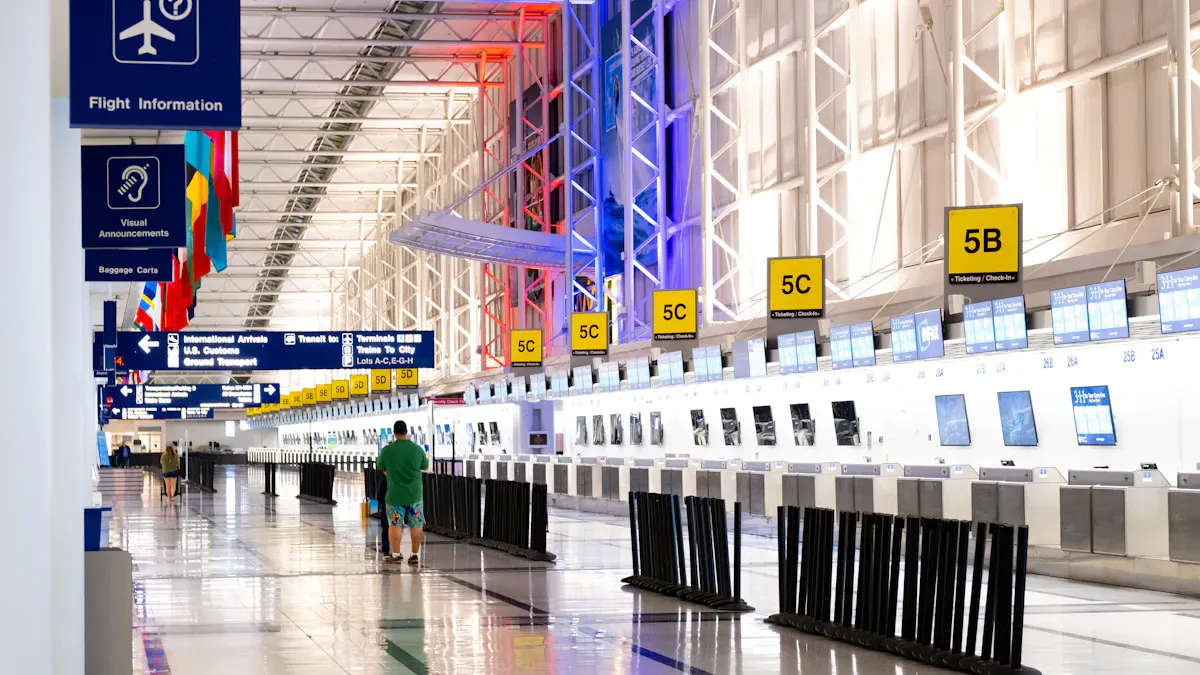
AI retail changes how airports work by making things better. It helps airports handle peak passenger flow with more control. Watching crowds in real time cuts down wait times at security. This makes people feel happier and helps the airport look good. Changing lines and moving staff around makes security checks go faster. Fixing traffic outside and watching people during check-in stops crowds and delays. These changes make service scores go up and set a new bar for happy travelers. Smart leaders can try these ideas to make their airports better too.
Key Takeaways
AI retail helps airports work better by using real-time data. It manages crowds and makes wait times shorter.
Smart kiosks and automated systems can make wait times up to 40% less. This makes passengers happier overall.
Predictive analytics helps airports know when they will be busy. This lets them use resources better and keeps passenger flow smooth.
Service robots and autonomous processes give personal help to travelers. They make the travel experience better and keep everyone safe.
Airports check how well AI solutions work often. This helps them keep making passengers happier and operations more efficient.
AI Retail’s Impact on Peak Passenger Flow
Operational Efficiency Gains
AI retail solutions help airports handle busy times better. These systems use real-time data to guess where crowds will go. They can change resources fast. Staff can move to busy spots. Counters can open or close when needed. This helps cut delays at security and check-in. Airports see bags move faster and boarding go smoother.
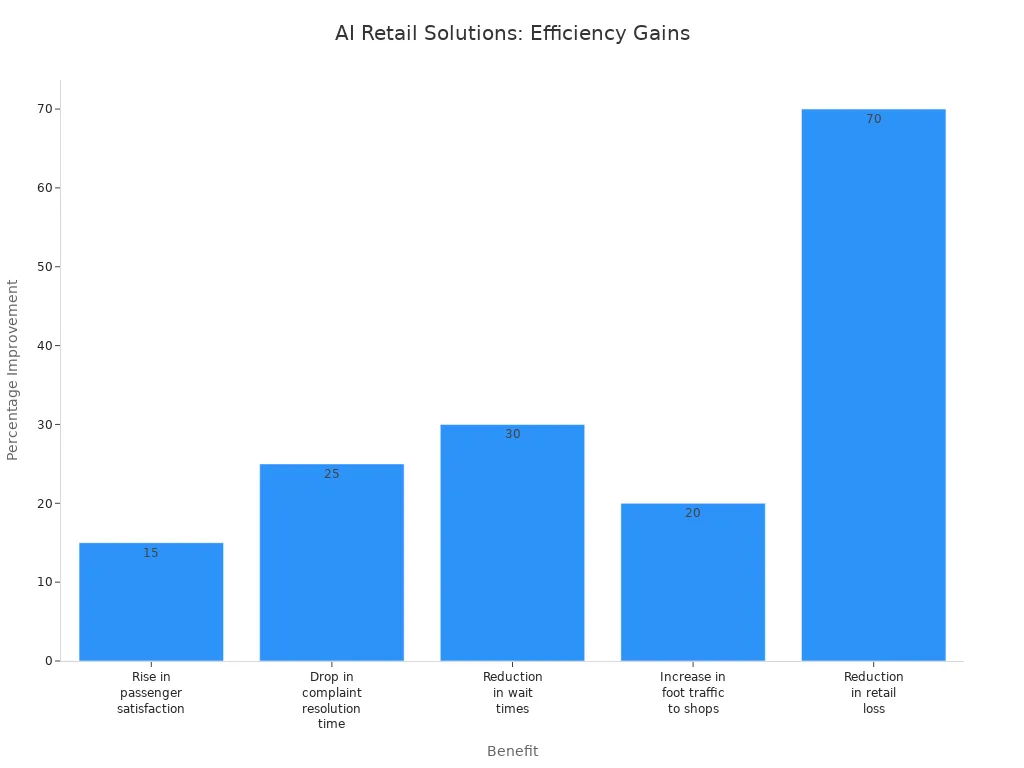
The table below shows how AI retail helps airports work better:
Benefit | |
|---|---|
Rise in passenger satisfaction | 15% |
Drop in complaint resolution time | 25% |
Reduction in wait times | 30% |
Increase in foot traffic to shops | 20% |
Reduction in retail loss | 70% |
AI-driven tools help airports use staff in smarter ways. Workers can help more people when it gets busy. Automated planning sends resources where they are needed most. These changes mean fewer slow spots and better use of space.
Enhanced Passenger Experience
AI retail makes the passenger journey easier during busy times. Smart kiosks and service robots help travelers and answer questions. Passengers wait less and spend more time in shops and restaurants. For example, London Heathrow Airport made wait times drop from over 20 minutes to under 3 minutes by using common-use kiosks.
The table below shows improvements at big airports:
Airport | Implementation | Impact |
|---|---|---|
Hong Kong International Airport | Smart check-in kiosks with biometric tech | Reduced peak-hour congestion and improved throughput |
Singapore Changi Airport | Automated kiosks (FAST initiative) | Reduced processing times by 60% and better space use |
London Heathrow Airport | Common-use kiosks for multiple airlines |
AI gives real-time updates about flights and gate changes. Passengers get information quickly, which lowers stress and makes them happier. Personalized offers and tips make the airport more fun. These changes set a new standard for service during busy times.
Challenges During Peak Passenger Flow

Bottlenecks and Delays
Airports have trouble with bottlenecks when lots of people travel. Smaller airports have more problems because they have less space and fewer workers. When more people travel during holidays, things get even harder. Many travelers do not know how long check-in and security will take. This makes lines longer and people get upset when crowds show up fast.
If bottlenecks happen at check-in, security, or immigration, people are less happy. Delays in these spots can cause more problems in the airport. Some people might miss their flights or feel worried. Flight delays also make the airport look bad. People often blame the airport if their flight is late. Studies say 63% of airports saw a 20% jump in happiness after fixing how they handle passenger flow.
Bottlenecks at important spots make people less happy and cause more trouble.
Delays mess up travel plans and hurt the airport’s reputation.
Waiting longer makes people feel worse about airport service.
Service and Resource Strain
When lots of people travel, airport systems and staff get stressed. Sometimes, technology breaks at the worst time. For example, check-in kiosks can freeze during busy holidays. Mobile apps might stop working when travelers need them most. Baggage scanners can break when lines are long. If the booking database stops, flights can be late and ground crews cannot see new schedules.
Staff must fix problems fast to keep people moving.
Not enough resources make it hard to help everyone.
Simulation models help airports plan staff and spread out arrivals to stop crowds.
These problems show why airports need better tools to handle busy times and keep things running well.
AI Solutions for Passenger Flow
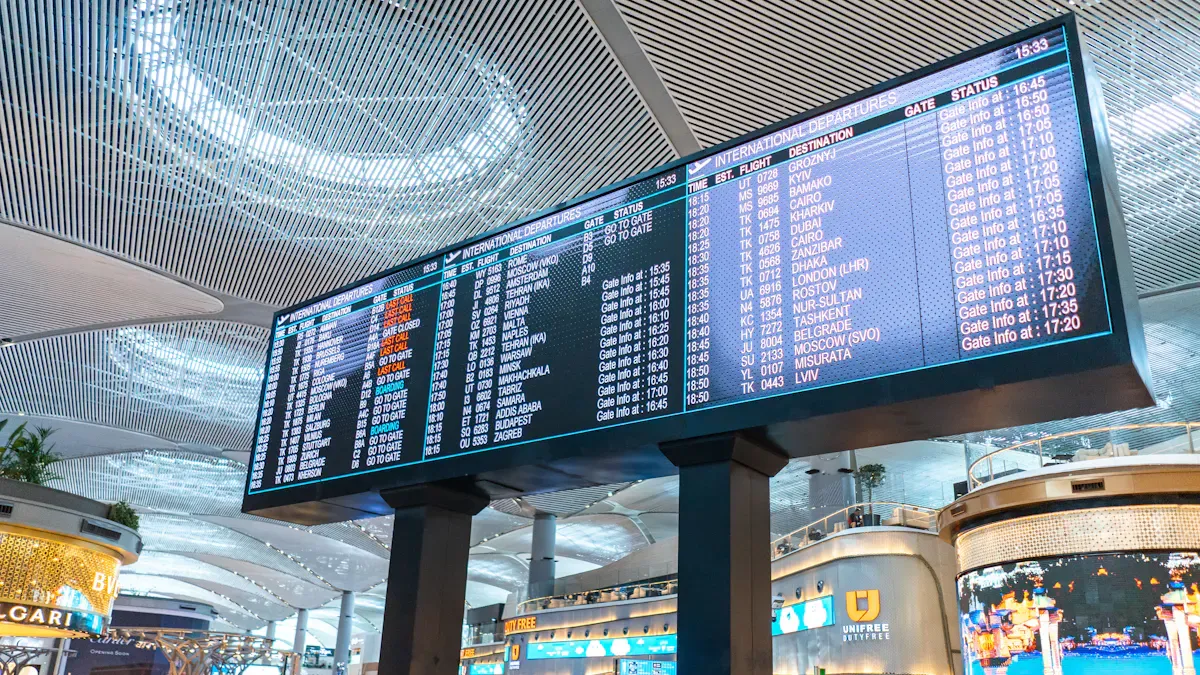
Predictive Analytics and Forecasting
Airports use predictive analytics to get ready for busy times. These tools help leaders know when crowds will come and where they will be. By looking at old data, airports can find patterns and plan better. Simulation methods make simple models to guess wait times and crowd sizes. Statistical regression methods, like ARIMA, use past data to spot trends. Classical machine learning models, such as Random Forests, find links between different things and passenger numbers. Temporal deep learning methods use neural networks to track changes over time. Transformer-based models use attention mechanisms to notice important shifts and give good forecasts.
Predictive analytics can guess peak passenger flow with 70-80% accuracy four to six hours ahead. For problems just one or two hours away, accuracy can go over 85%.
Airports also use real-time data to see how people move. This helps them act fast when crowds get bigger. By working with airlines and using booking trends, airports can change staff and resources before trouble starts. This way, they stop bottlenecks and make travel better for everyone.
Real-Time Monitoring and LiDAR
Real-time monitoring lets airports see what is happening all the time. LiDAR technology is special because it makes 3D maps of crowds and spaces. It works in any light and does not collect personal data, so privacy is safe. LiDAR helps airports see where crowds start and how people move. It also helps leaders decide where to send staff and when to open more lanes.
Use Case | Benefits |
|---|---|
Passenger Flow Monitoring | Looks at and guesses passenger patterns, cutting bottlenecks and wait times. |
Resource Optimization | Makes workers more efficient with good spatial insights. |
Security Management | Handles risks like unauthorized access and too many people. |
Real-time Data Processing | Gives quick insights for better choices. |
Privacy Preservation | Follows GDPR by not taking personal identification data. |
Emergency Preparedness | Makes simulations for safe evacuation routes in emergencies. |
Traffic Flow Analysis | Watches traffic patterns and tracks journeys from curb to gate. |
LiDAR also helps with emergency plans. Airports use it to make safe routes for getting out. With these tools, airports keep people safe and moving, even when it is very busy.
Automated Queue and Resource Management
Automated queue and resource management systems help airports handle crowds with less stress. Self-service kiosks and biometric screening make check-ins and security checks faster. AI-powered queue management systems guess when lines will get long and change staff and lane assignments. These systems use real-time data to put the right number of staff in the right place at the right time.
Self-service kiosks and biometric screening make check-ins and security checks faster.
AI-powered queue management systems guess busy times and change staff and lane assignments.
Virtual queuing lets passengers join lines from far away, which cuts down on crowds.
Smart guidance systems help people find their way and follow safety rules.
Airports using these systems have seen wait times drop by up to 40%. Passengers feel happier, and staff can help where they are needed most.
Digital twin frameworks also help. They make virtual copies of the airport that update with real-time data. Leaders can try out plans in these digital twins before changing things in real life. This helps airports handle delays and keep things running smoothly.
Service Robots and Autonomous Processes
Service robots and autonomous processes give airports new ways to help. At Athens International Airport, AI-powered service robots help travelers with flight information, directions, and avoiding crowded areas. These robots use thermal cameras to watch crowd size without taking personal data. They also use 5G wireless networks to talk to each other and airport systems in real time.
Service robots give personal help and guide passengers through busy spots.
Thermal cameras watch crowd size and spot strange patterns while keeping privacy safe.
5G networks let robots, sensors, and management systems talk quickly.
Service robots help airports stop problems before they start. They keep people safe, help passengers move, and make the airport experience better for everyone.
All these AI solutions help airports handle busy times with more accuracy and speed. They cut wait times, use staff better, and make things safer, setting a new standard for airport operations.
Real-World Success Stories
International Airport Case
Many big airports use AI retail to handle busy times. One top European airport used AI to watch crowds and change resources fast. Staff could react quickly when more people showed up. This made lines at security shorter and check-ins faster. AI helped shops and restaurants set better prices by looking at real-time data and how people act. Staff got better training with AI tools, so service improved and travelers felt happier.
Description | |
|---|---|
Improved Pricing Strategies | AI-driven insights help optimize pricing based on real-time data and passenger behavior. |
Enhanced Staff Professionalism | Training and AI tools improve staff interactions with passengers, leading to better service quality. |
Real-Time Data Management | AI systems manage passenger flow and security wait times, reducing congestion and enhancing experience. |
Regional Airport Example
Small airports also get help from AI retail. One North American airport put in smart kiosks and automated queue systems. These changes made planes ready faster by 15-20%. Passengers waited up to 40% less in lines. Flights left on time 10-15% more often. The airport used real-time data to move staff and open new lanes when needed. Travelers had smoother trips and spent more time shopping.
Value | |
|---|---|
Reduced aircraft turnaround times | 15-20% |
Decreased passenger wait times | Up to 40% |
Improved on-time performance | 10-15 percentage points |
Key Outcomes and Lessons
Airports learned some good tips from these projects:
Give modern retail services to make travelers happy and boost interest.
Use logistics solutions to make things run smoother and help customers.
AI interfaces give personal ideas for food and shopping.
Agentic payment systems let people pay easily and wait less.
Dynamic retail services make people spend more and help airport profits.
Customer service and fun programs build loyalty and make shopping better.
Airports that use AI retail do better during busy times. They make travel easier, travelers happier, and business stronger.
Implementing AI Retail in Airports
System Integration Steps
Airports can use simple steps to add AI retail to their work. They often begin with small projects that are safe and helpful. For example, they might start with a chatbot for passengers. This chatbot gives flight updates and connects to the airport app. Next, they could test predictive maintenance on a few machines. Automating how emails are sorted helps staff work faster and makes decisions easier.
Try a chatbot for flight updates and passenger help.
Test predictive maintenance on some equipment.
Use email sorting tools for operations teams.
Set clear goals and make sure data is ready.
Connect new apps to the airport’s current systems.
The main system helps both travelers and airport workers. It uses data storage, analytics, and links to other airport systems.
Staff Training Essentials
Staff are very important for AI retail to work well. Training should teach them how to use new tools and why they help. For example, staff learn to help with app orders, self-checkout kiosks, and AI suggestions. These tools let passengers pre-order duty-free items, book places to eat, and get special deals.
Trained staff can help travelers, answer questions, and fix problems fast. This support helps airports handle busy times and keeps service good.
Measuring Impact
Airports must check how well AI retail works. They look at wait times, how happy passengers are, and sales numbers. Leaders compare these numbers from before and after using AI. Checking results often helps airports make better plans and get better results.
Metric | Before AI Retail | After AI Retail |
|---|---|---|
Average Wait Time | 20 minutes | 12 minutes |
Passenger Satisfaction | 75% | 90% |
Retail Sales Growth | 2% | 8% |
Regular checks make sure AI keeps helping and supports airport goals.
Future of AI Retail in Airports
Emerging Technologies
Airports are using new AI retail tools to change travel and shopping. Many airports have mobile commerce platforms now. These platforms let passengers pre-order duty-free items and book meals before arriving. Changi Airport’s app gives flight updates and has a delay assurance program. This helps travelers plan better and feel less worried.
Smartphones help airports learn about passenger habits. They collect data so airports can make special retail plans. Many airports let people order food and drinks through apps. This cuts wait times and makes things easier. Self-checkout kiosks let travelers pay fast and skip long lines. AI systems give personal suggestions based on what travelers like.
Some airports use advanced robots for baggage handling. Companies like Azalea Robotics use AI-powered systems to move bags faster and lose fewer. These changes help airports handle busy times with more control and efficiency.
Note: Airports that use these technologies set new standards for service and convenience.
Long-Term Benefits
AI retail gives airports many lasting benefits. Travelers get quicker service and more choices. Airports see happier passengers and better sales in shops and restaurants. Staff can help people instead of doing boring tasks.
Over time, airports with AI retail become more flexible. They can change fast when travel patterns shift. This helps them stay ready for busy seasons and surprises. AI also helps airports use resources well, which saves money and cuts waste.
Airports that lead in AI retail build strong reputations. They attract more travelers and business partners. As technology grows, these airports will keep finding new ways to make the passenger journey better.
AI retail helps airports do better when they are very busy. Leaders notice that lines are shorter and people are happier. Shops in the airport also do better. Teams look at real-time data to make fast choices and give better service. Airports that use AI-driven solutions work better and set new goals for others.
Airport leaders should try AI retail technologies and spend money on new tools. These actions help airports stay strong and ready for changes in travel.
FAQ
What is AI retail in airports?
AI retail uses smart tools to make airport shopping better. These systems help airports handle crowds and speed up check-ins. They also make travel easier for everyone.
How does AI reduce wait times for passengers?
AI can guess when airports will get busy. It moves staff or opens more kiosks when needed. This helps people get through check-in and security faster.
Are AI retail solutions safe for passenger privacy?
Yes. Many AI tools, like LiDAR, do not take personal data. Airports use strong privacy rules to keep travelers safe.
What results can airports expect from using AI retail?
Airports usually have shorter lines and happier travelers. Sales go up, and staff can help people instead of doing boring jobs.
See Also
The Future of Retail Lies in AI-Driven Stores
Transforming Online Store Management With AI-Driven Tools
Modern Retail Benefits From AI-Enhanced Combo Vending Machines
