AI Tech Companies to Watch in Retail Automation

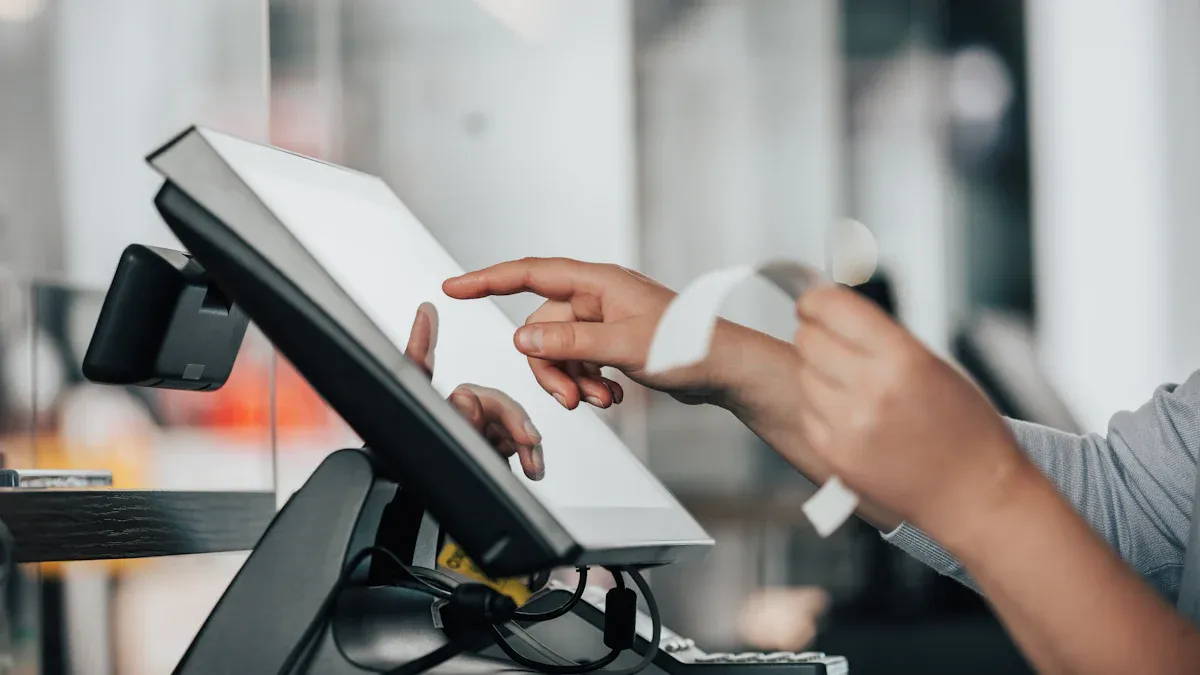
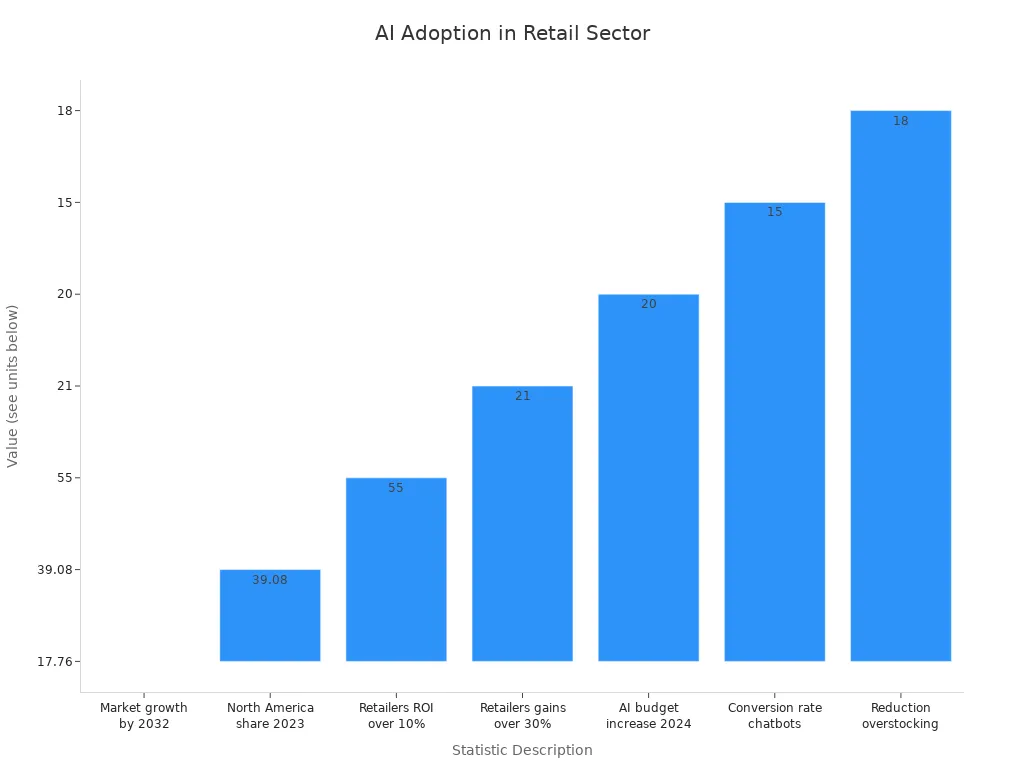
You see the retail world changing fast as AI takes center stage. Today, stores use smart chatbots and inventory systems that help cut overstocking by 18% and boost sales, with over 55% of retailers gaining more than 10% ROI from AI. Companies like Amazon, Walmart, and Alibaba Group lead this change. Watching these AI Tech Companies helps you understand how technology shapes shopping. The global market for AI in retail could reach $17.76 billion by 2032.
Key Takeaways
AI is transforming retail by improving inventory management and customer service, leading to significant cost savings and increased sales.
Top AI Tech Companies like Amazon, Google, and Microsoft are innovating with tools that enhance shopping experiences and streamline operations.
Personalization through AI helps retailers tailor recommendations, making shopping easier and more enjoyable for customers.
Automation technologies, including robotics and computer vision, are revolutionizing how stores operate, increasing efficiency and accuracy.
Following trends in AI retail can help you stay informed about new tools and strategies that enhance customer satisfaction and drive sales.
AI Tech Companies Overview
Top Innovators
You see many AI Tech Companies changing how stores work and how you shop. These companies use smart tools to make shopping easier, faster, and more fun. Some focus on online stores, while others help physical shops. Here are some of the most notable companies leading retail automation:
Amazon Web Services helps stores use AI for better inventory and customer service.
Google Cloud AI gives stores tools for data analysis and personal shopping experiences.
Microsoft Azure AI supports smart supply chains and store operations.
NVIDIA powers computer vision and AI hardware for smarter stores.
Standard AI, AiFi, and Zippin create checkout-free shopping experiences.
Trax and Pensa Systems use computer vision to track products on shelves.
OneView Commerce helps stores go digital and improve in-store experiences.
Nimble builds robots for faster order fulfillment.
Bespoke Post offers personalized subscription shopping.
Boisson uses smart vending machines for retail automation.
Faire connects local shops with artisans through a digital marketplace.
Instacart brings groceries to your door with AI-powered delivery.
Wayfair uses augmented reality to help you shop for home goods.
You can see how these AI Tech Companies shape the future of shopping. They use new ideas to solve real problems in retail.
Selection Criteria
You might wonder how to pick which companies to watch. You should look for three main things:
Innovation: Does the company use new technology or ideas? For example, checkout-free stores or smart robots show strong innovation.
Impact: Does the company help many stores or shoppers? Companies that change how people shop or how stores run have a big impact.
Scalability: Can the company grow and help more stores in the future? The best AI Tech Companies can expand their solutions to many places.
When you follow these criteria, you can spot the leaders in retail automation. These companies set the trends and help shape how you will shop tomorrow.
Importance of AI in Retail

Efficiency Gains
You see stores using AI to work smarter every day. AI helps you predict what customers want by looking at past sales and local events. This means stores keep shelves full without having too much extra stock. You notice that Sainsbury’s uses AI to plan better, which leads to happier shoppers and less wasted inventory. Sam’s Club uses smart machines to check shelves, making sure popular items are always ready for you. These machines help workers get more done, boosting productivity by 15%.
AI forecasts demand using past sales and local factors.
Stores balance stock levels, reducing waste and empty shelves.
AI-driven scheduling and replenishment lower costs and improve satisfaction.
Customer Experience
AI changes how you shop, both online and in stores. You get help from chatbots any time you need it. Stores use AI to learn what you like, so you see ads and products that fit your style. This makes shopping easier and more fun.
Benefit | How AI Helps |
|---|---|
Personalized Recommendations | Suggests products based on your shopping habits |
24/7 Support | Chatbots answer questions day and night |
Seamless Shopping | Creates smooth, tailored experiences |
Makes it easier for you to buy what you want |
Real-Time Inventory
You see stores using AI to keep track of products every minute. AI looks at seasons, local events, and what customers buy to set the right stock levels. When sales slow down, AI lowers reorder points to avoid extra inventory.
AI predicts demand and adjusts restocking quickly.
Automated systems create orders fast and with fewer mistakes.
Stores prevent stockouts and overstock, saving money and keeping you happy.
AI Tech Companies use these tools to help stores run better and give you a better shopping experience. You benefit from smarter stores that know what you need and keep shelves stocked.
Company Highlights
AI Tech Companies Impact
You see many AI Tech Companies changing how stores work and how you shop. Each company brings unique solutions that help retailers solve real problems and improve your shopping experience. Let’s look at how these companies make a difference.
Amazon Web Services: AI-powered Retail Automation Tools
Amazon Web Services gives stores powerful tools to automate tasks and improve customer service. You can see how these tools help stores run smoothly and keep shoppers happy.
Tool Name | Description | Impact on Retail Operations |
|---|---|---|
Amazon Connect | Cloud contact center for omnichannel engagement. | Enhances customer engagement and operational efficiency through AI-native features. |
Amazon Lex | Conversational AI for automating customer interactions. | Frees up human agents for complex tasks, improving efficiency and customer satisfaction. |
Amazon Kendra | Intelligent search service for precise answers from content. | Reduces search times and improves service quality for agents and customers. |
Amazon Bedrock | Access to powerful foundation models for custom AI solutions. | Enables tailored generative AI solutions for personalized customer interactions. |
Amazon SageMaker | Toolkit for building and deploying custom AI models. | Facilitates advanced agent assistance and hyper-personalized customer responses. |
Amazon Personalize | Machine learning for individualized recommendations. | Transforms support interactions into personalized experiences, boosting engagement. |
You notice that these tools help stores answer questions faster, recommend products you like, and make shopping easier.
Google Cloud AI: Data Analytics and Personalization
Google Cloud AI helps stores use data to understand what you want and create shopping experiences just for you.
Retail Customer Intelligence uses customer data to find shopping patterns.
Advanced analytics tools help stores give you personalized shopping experiences.
Stores see improved customer satisfaction and loyalty.
Retailers use Vertex AI to analyze customer behavior and deliver personalized recommendations.
A major apparel retailer saw a 20% increase in conversion rates after using these features.
Google Cloud AI uses real-time data to show you products you want and make shopping more fun.
Microsoft Azure AI: Intelligent Supply Chain Solutions
Microsoft Azure AI helps stores manage inventory and keep shelves stocked. You see stores like Sainsbury’s use AI to plan better and reduce waste.
Sainsbury’s improved inventory management with machine learning forecasting.
Stores use automated workflows to boost productivity.
AI-powered solutions help stores see what products they need and when to order more.
Security features protect stores from cyber threats.
You benefit from stores that always have what you need and keep your information safe.
NVIDIA: AI Hardware and Computer Vision
NVIDIA powers smart cameras and AI systems that help stores watch shelves and keep you safe.
Evidence Description | Statistic |
|---|---|
92% | |
Potential impact of generative AI in retail | $400B-$660B |
Retail product shrinkage due to theft | 65% |
Annual challenge of retail product shrinkage | $142B |
Personalized shopping advisors give you recommendations and support.
AI systems watch live video feeds to spot suspicious activities.
Predictive analysis helps stores stop theft before it happens.
You see safer stores and better shopping experiences because of NVIDIA’s technology.
Standard AI, AiFi, Zippin: Checkout-Free Store Technology
You walk into stores and grab what you want without waiting in line. Companies like Standard AI, AiFi, and Zippin make this possible.
AiFi’s technology uses a “human in the loop” to keep checkout-free systems accurate.
Zippin relies on human support to fix transactions when AI confidence is low.
You get a fast and easy shopping experience, but stores still need people to make sure everything works right.
Trax, Pensa Systems: Computer Vision for Inventory Management
“Out-of-stock products are a significant challenge for CPG companies and retail partners, with hundreds of millions of dollars in potential sales impact,” said Patrick O’Riordan, vice president of Explore at ZX Ventures. “While we’ve explored various solutions to the problem, Pensa’s approach is truly novel. Its unique combination of expertise and technology tools — including scalable AI and advanced computer vision — provides an opportunity to make both timely and significant impacts to inventory visibility throughout the industry.”
Pensa uses AI, drones, and computer vision to see what’s on store shelves. Trax and Pensa help stores know when products run out and when to restock.
Computer vision systems look at shelf conditions and past data to forecast demand.
Stores use these systems to recommend when to order more products.
You get real-time product information and recommendations through apps and displays.
Stores keep shelves full and help you find what you need.
OneView Commerce: In-Store Digital Experience Optimization
OneView Commerce helps stores connect digital and physical shopping. You see better inventory visibility and get offers that match your preferences.
Outcome | Description |
|---|---|
Stores see all operations across digital and physical sales. | |
Personalized Customer Interactions | Stores give you targeted recommendations and offers. |
Enhanced Operational Efficiency | Associates use accurate data to fulfill orders and maximize sales. |
The Composable Commerce platform lets stores change quickly to meet your needs.
Real-time inventory intelligence helps stores plan better.
AI-driven analytics predict demand and personalize your shopping experience.
You enjoy a smooth shopping journey with helpful recommendations.
Nimble: Robotic Fulfillment Automation
Nimble uses robots and AI to make warehouse operations faster and more accurate.
Feature/Benefit | Description |
|---|---|
Advanced AI and Robotics | Robots work quickly and efficiently in warehouses. |
Dynamic Configuration | Systems adjust in real time for storage and retrieval. |
Reduction of Manual Intervention | Fewer people needed for picking and packing orders. |
Improved Inventory Management | Stores track and manage stock levels better. |
Nimble’s technology helps stores fill orders faster and with fewer mistakes.
Real-time storage and retrieval keep up with online shopping demands.
FedEx invests in Nimble, showing trust in its ability to transform fulfillment.
You get your orders quickly and accurately because of robotic automation.
Other Notable Startups
You see new companies bringing fresh ideas to retail automation. Startups like Bespoke Post, Boisson, Faire, Instacart, and Wayfair use AI to personalize shopping, automate vending, and connect local shops with customers.
Bespoke Post offers personalized subscription boxes.
Boisson uses smart vending machines for easy shopping.
Faire connects small shops with artisans through a digital marketplace.
Instacart delivers groceries using AI-powered logistics.
Wayfair uses augmented reality to help you shop for home goods.
These startups show how innovation keeps changing the way you shop.
How These Companies Revolutionize Retail Operations
You see stores using AI to answer questions any time, manage inventory, and create personalized promotions. Stores that use AI report an average revenue increase of 66%. AI helps stores keep shelves stocked, forecast demand, and make shopping more personal. When stores use a holistic approach to AI, they get the most benefits.
You experience faster service, better product choices, and a shopping journey that fits your needs. AI Tech Companies lead the way in making retail smarter and more efficient.
Trends and Future Outlook
Automation Trends
You see automation changing retail faster than ever. Stores now use computer vision, sensors, and RFID to track products and help you check out without waiting in line. The checkout-free market grows at over 20% each year. Major retailers like Amazon and Alibaba lead this shift, but you also notice new stores in suburban and rural areas adopting these systems. The table below shows the main technologies driving this trend:
Technology Type | Description |
|---|---|
AI-Based | Uses deep learning for real-time product identification and transactions. |
Sensor-Based | Combines cameras and sensors to monitor activity and validate purchases. |
RFID-Based | Enables fast product identification, especially in apparel and luxury goods. |
Other Emerging Tech | Includes augmented reality and biometrics for smoother checkout. |
You want contactless shopping, especially after COVID-19. Retailers invest in AI to improve efficiency and customer experience. The market for AI-driven retail automation could reach $47.81 billion by 2030, with growth rates between 8.7% and 12.6% each year.
Personalization
You expect stores to know your preferences. AI-powered personalization lets retailers tailor every interaction to your needs. About 80% of shoppers like you are more likely to buy from brands that offer personalized experiences. AI uses your data to suggest products, send offers, and even provide support after you buy.
The shopping experience in 2025 will be revolutionized by the integration of AI and real-time predictive analytics, enabling retailers to create truly individualized paths to purchase.
Retailers use AI to build loyalty programs and support that fit your lifestyle. This makes shopping easier and more enjoyable.
Robotics
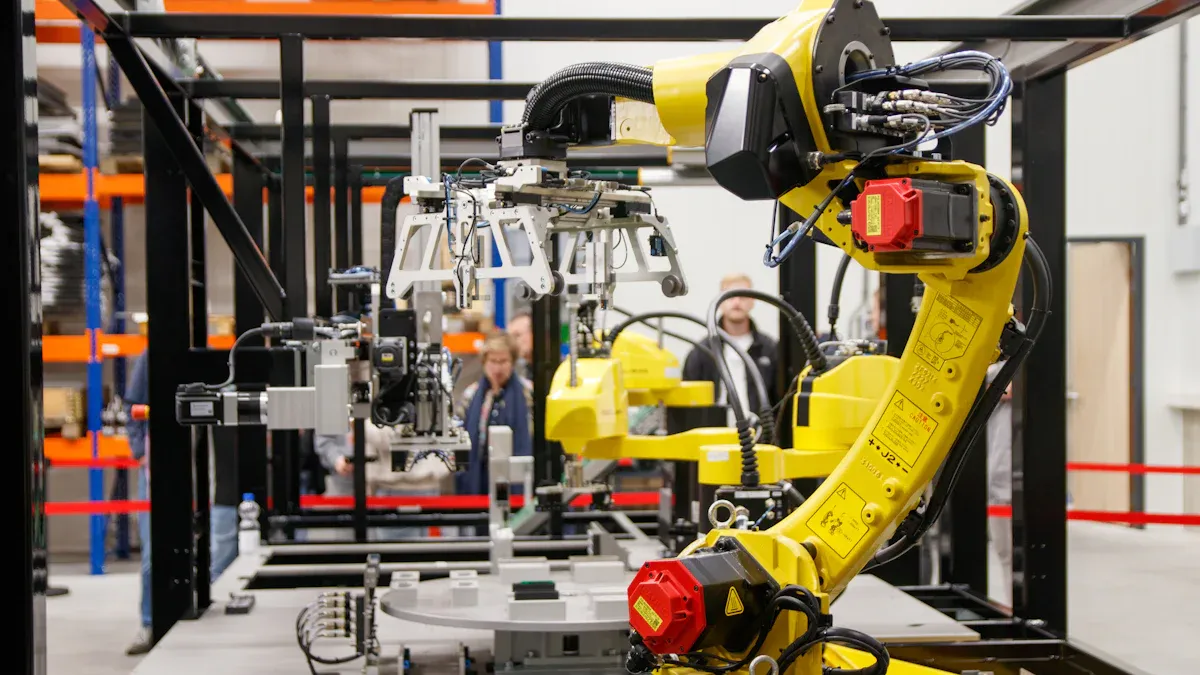
You benefit from robots working behind the scenes in warehouses. Automated mobile robots pick and sort orders, reducing processing times by up to 25%. Shipping accuracy improves, and you get more items delivered the same day. Companies like Locus Robotics, GreyOrange, Geek+, and Symbotic help stores fill orders faster and keep track of inventory.
As you enjoy these advances, you should also know that retailers must protect your data and treat you fairly. They need to get your consent, explain how they use your information, and check their systems for bias. This helps build trust as AI shapes the future of retail.
You see AI tech companies changing retail every day. Tracking their progress helps you spot trends, improve inventory, and boost customer satisfaction. AI brings you hands-free shopping, dynamic pricing, and better fraud protection. To stay ahead, follow new tools and platforms that share the latest updates:
Platform | Key Features | Best For |
|---|---|---|
Salesforce | Personalized shopping, real-time stock visibility | E-commerce retailers |
Blue Yonder | Sales prediction, price optimization | Large retailers |
Trax | Shelf monitoring, real-time store insights | Retail execution optimization |
Stay curious and keep learning to remain competitive in the fast-changing world of retail.
FAQ
What are AI Tech Companies in retail?
You see AI Tech Companies as businesses that create smart tools for stores. These companies use artificial intelligence to help stores manage inventory, improve customer service, and make shopping easier for you.
How do AI Tech Companies help stores save money?
AI Tech Companies help stores use data to predict what you want to buy. Stores order the right amount of products. This reduces waste and saves money. You also get better prices and fewer empty shelves.
Can AI Tech Companies improve your shopping experience?
Yes, you get personalized recommendations and faster service. AI Tech Companies use your shopping habits to show you products you like. You find what you need quickly and enjoy shopping more.
Are AI Tech Companies safe for your data?
Most AI Tech Companies use strong security to protect your information. You should check store privacy policies. Look for companies that explain how they use your data and keep it safe.
Will robots take over all retail jobs?
You will still see people working in stores. Robots help with tasks like stocking shelves or packing orders. Workers focus on helping you and solving problems that need a human touch.
See Also
Understanding AI-Driven Convenience Stores for Retail Success
The Future of Retail Lies in AI-Enhanced Stores
Smart Technology: Transforming Retail Through Electronics Vending Machines
Transforming Online Retail Management with AI E-Commerce Solutions
