Using AI to monitor store performance metrics in Convenience store chains & small-format grocery.

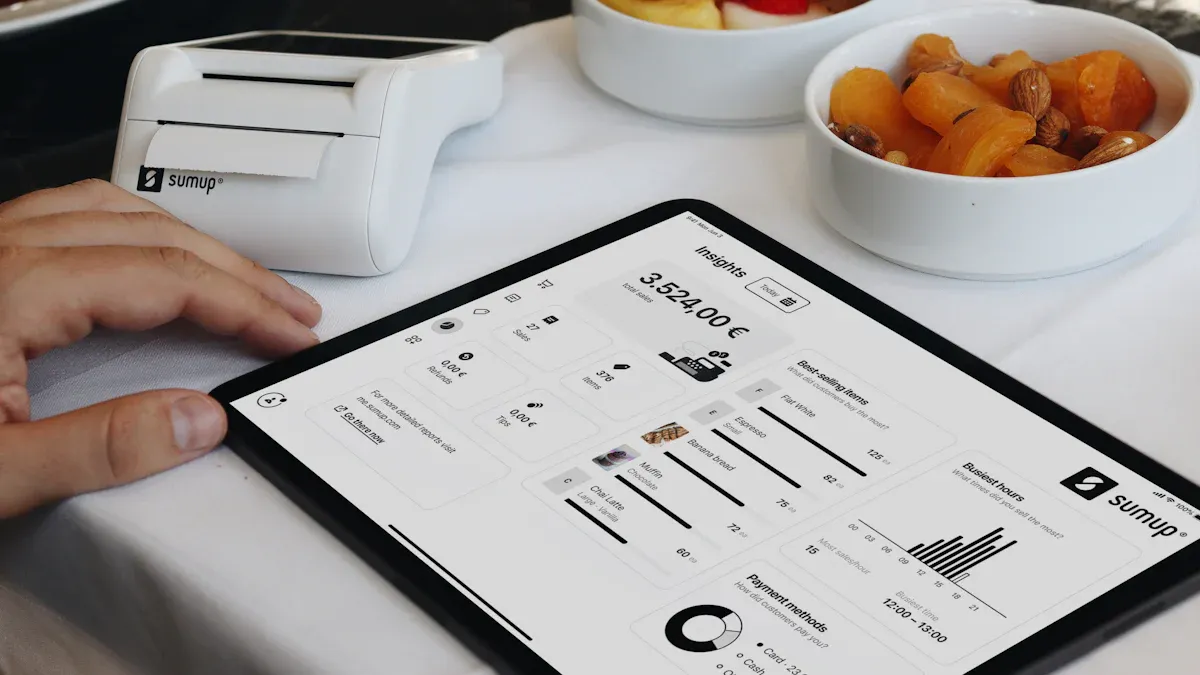
Imagine you’re running a busy grocery store. You want to monitor store performance, but the numbers keep changing and it’s tough to keep up. Today, ai to monitor helps you track sales, inventory, and customer behavior in real time. You get instant alerts when stock runs low, and ai-driven recommendations boost basket sizes. Take a look at how ai to monitor impacts your results:
Metric | Impact of AI |
|---|---|
U.S. purchase decisions | AI influences 53% of decisions |
Inventory management | Smarter forecasting and real-time adjustments |
Basket size and conversion | Higher basket sizes through recommendation engines |
Customer engagement | Enhanced through chatbots and personalized support |
Operational efficiency | Improved forecasting and execution monitoring |
With ai to monitor, you can monitor store performance and see immediate changes. You get fewer stockouts, better promotions, and stronger customer engagement. Store managers at chains and independent shops use ai to monitor store performance every day.
Key Takeaways
AI helps grocery stores track sales and inventory in real time, leading to better decision-making and increased profits.
Using AI for inventory management reduces stockouts and waste, ensuring shelves are always stocked with the right products.
AI-driven customer insights allow for personalized promotions, boosting customer satisfaction and increasing basket sizes.
Real-time data analysis enables quick adjustments to marketing strategies and inventory, enhancing operational efficiency.
Implementing AI in your grocery store can lead to significant cost savings and improved customer experiences.
Key Metrics to Monitor Store Performance

When you want to boost your store’s results, you need to track the right metrics. AI in retail makes it easier to monitor these numbers and spot trends fast. Let’s break down the most important store performance metrics for convenience stores and small-format grocery.
Sales and Revenue
Sales and revenue show how much money your store brings in. You can track total transaction values, average order value, and gross profit margin. AI helps you see patterns in sales and spot which products drive the most revenue. With AI-powered sales analytics, you can increase conversion rates and deal size. Many stores using AI in retail see a 5-10% jump in conversion rates and a 15% boost in average deal size. You get real-time updates, so you never miss a chance to grow your sales.
Tip: Use AI to monitor sales trends and adjust your product mix for higher profits.
Inventory Levels
Grocery store inventory management is key for keeping shelves stocked and customers happy. You need to watch inventory turnover, accuracy, and days on hand. AI in retail analyzes sales and inventory data to automate reordering and prevent stockouts. You can compare turnover by department and use AI for inventory optimization. AI streamlines stocktaking with barcode scanning and computer vision, saving you time and reducing errors. Predictive analytics lets you forecast demand and adjust orders before you run out.
KPI | Description | Formula |
|---|---|---|
Inventory Turnover | How fast you sell and replace inventory | Cost of Goods Sold ÷ Avg Inventory Value |
Inventory Accuracy | Match between records and actual stock | (Counted ÷ Recorded) × 100 |
Days on Hand | Average time items stay in inventory | (Avg Inventory ÷ COGS) × Number of Days |
Customer Behavior
Understanding your customers helps you create better experiences. AI in retail tracks purchase patterns, collects data on preferences, and segments shoppers. You can use AI to monitor digital behavior and predict what customers will buy next. Grocery stores use AI for abandoned cart recovery and personalized recommendations. You get insights to tailor your store’s layout, product selection, and promotions.
Track purchase patterns to align inventory with customer needs
Use AI-driven segmentation for targeted offers
Analyze digital interactions for smarter marketing
Promotions Impact
Promotions can drive traffic and boost sales, but you need to measure their effect. AI in retail predicts how promotions will perform before they launch. You can track metrics like promotion lift, redemption rate, and basket uplift. AI helps you optimize timing, content, and audience for each campaign. Real-time data analysis lets you adjust promotions on the fly for maximum impact.
Promotion Tactic | Goal | ROI Impact |
|---|---|---|
Holiday Pricing | Drive seasonal traffic | Boosts margin on basket add-ons |
Deep Store Placement | Expose high-margin goods | Converts traffic into profitable sales |
Card-Linked Offers | Subsidize discounts | Tracks verified lift, minimizes margin risk |
Operational Efficiency
Operational efficiency keeps your store running smoothly. AI in retail improves inventory management, automates checkout, and reduces energy costs. You can track labor cost as a percent of revenue, cashier performance, and energy consumption. AI-driven systems help you spot problems fast and make better decisions. Stores using AI see faster response times and higher customer satisfaction.
Note: AI-powered chatbots and automation can cut response times by 60% and boost satisfaction scores by 40%.
By focusing on these store performance metrics, you can use AI to monitor, optimize, and grow your grocery business.
AI to Monitor and Optimize Metrics

Real-Time Data Analysis
You want to see what’s happening in your grocery store right now, not tomorrow. AI gives you real-time data so you can make quick decisions. You get instant updates on sales, inventory, and customer activity. With real-time data, you spot problems before they grow. AI in retail uses tools like demand forecasting, inventory optimization, personalized recommendations, dynamic pricing, cashierless checkout, energy optimization, and loss prevention. Kroger uses predictive analytics for demand forecasting, making sure products stay available. Walmart adjusts prices in real time to manage stock and cut waste.
Here’s how real-time data analysis helps your store:
Benefit | Explanation |
|---|---|
Enhanced Decision-Making | Real-time data allows for informed decisions, especially in time-sensitive situations. |
Improved Marketing Efficiency | Immediate feedback enables effective marketing decisions and campaign adjustments. |
Optimized Customer Experiences | Timely insights help tailor customer interactions and improve overall service quality. |
You get quicker decision-making, accurate data, and fast responses to market changes. AI in retail revolutionizes operations, provides deep insights, and fine-tunes customer interactions. You see the results in your store every day.
AI-Driven Grocery Inventory Management
You want shelves stocked and customers happy. AI-driven grocery inventory management makes this easy. These systems analyze historical data and real-time trends to balance supply and demand. You get automated inventory management that reduces stockouts and waste. AI tools offer localized forecasting, so each store can adjust inventory for local preferences.
AI-driven grocery inventory management enhances demand forecasting and balances supply and demand.
Automated inventory management improves efficiency by reducing stockouts and waste.
Localized forecasting lets you tailor inventory for your neighborhood.
Stores using AI-powered inventory optimization see measurable results:
Measurable Outcome | Description |
|---|---|
Forecast accuracy | Higher accuracy leads to better planning and fewer sales losses. |
Inventory turnover | Faster turnover frees up cash and reduces waste. |
Stockout rate | Lower rates mean fewer lost sales opportunities. |
Gross margin return on inventory (GMROI) | Measures how much profit your inventory generates. |
Customer satisfaction and market share | Direct results of keeping the right products in stock. |
You minimize stockouts and overstock. You lower warehouse space needs and cut costs. Accurate forecasting and smart replenishment mean less waste and more revenue. Grocery store inventory management becomes simple and effective.
Demand Forecasting
You want to know what customers will buy next week. AI demand forecasting helps you predict demand with high accuracy. AI-driven forecasting uses data from weather, local events, and past sales. Walmart reaches 92% forecast accuracy by analyzing weather patterns and local events. Danone reduced product obsolescence by 30% and improved service levels to 98.6% with machine learning-based promotion forecasting.
Company | Improvement Metric | Result |
|---|---|---|
McKinsey | Forecast Accuracy | 35% better with data integration |
Walmart | Forecast Accuracy | 92% accuracy |
Danone | Product Obsolescence Reduction | 30% reduction |
Danone | Service Levels Improvement | 98.6% service level |
Next-generation forecasting lets you plan better, stock the right products, and avoid lost sales. Grocery store inventory management gets easier, and you see higher profits.
Experience Breakdown Detection
You want every customer to leave happy. AI detects experience breakdowns before they hurt your store’s reputation. Real-time feedback tools capture customer sentiment at checkout and other key spots. Instant feedback streams into live dashboards, so you can act fast. Granular trend analysis helps you spot recurring issues and keep service consistent.
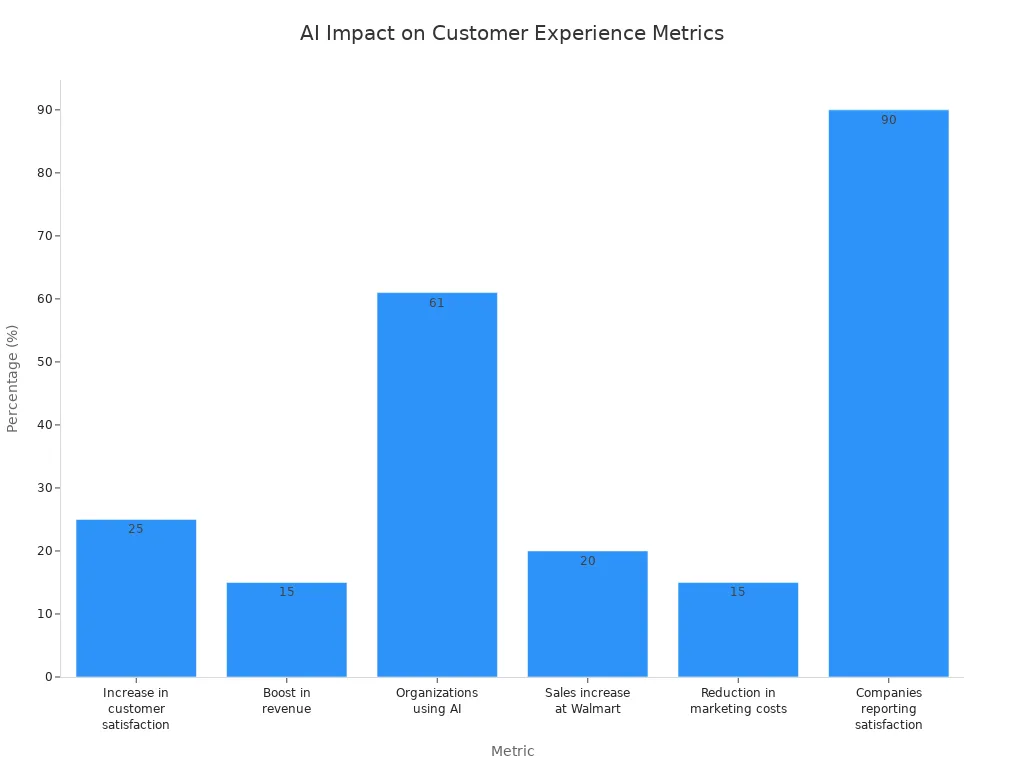
AI uses predictive analytics to anticipate customer needs and operational challenges. You fix problems like cleanliness or product availability before they affect satisfaction. Domino’s Pizza uses an AI-powered chatbot to handle over half of customer inquiries and cut wait times by 50%. Walmart analyzes purchase history and browsing behavior, boosting sales by 20% and cutting marketing costs by 15%.
"I’ve witnessed firsthand how AI transforms customer journey mapping. With it, we have personalized the customer experiences in real-time… That’s the power of AI. AI personalizes the customer experience at every step, shows abandoned cart items on product pages, and can promptly recommend complementary accessories based on past purchases to lower the cart-abandon rate. These personalized touches drive engagement and loyalty." – Joosep Seitam, co-founder, IceCartel
AI in retail helps you increase customer satisfaction by 25%, boost revenue by 15%, and outperform competitors. Grocery store inventory management and customer experience both improve with AI.
Personalized Promotions
You want promotions that work for your customers. AI-powered personalized recommendations and promotions use data to target shoppers with offers they love. You see higher coupon redemption rates and bigger basket sizes. AI in retail boosts customer satisfaction, retention, and average basket value.
Metric | Impact |
|---|---|
Customer Satisfaction | Increased by 25% |
Average Basket Value | Boosted by 15-30% |
Customer Retention Rates | Enhanced by 40% |
Coupon Redemption Rates | 3x higher for personalized offers |
Personalized recommendations drive engagement and loyalty. Grocery stores using AI-powered personalized recommendations see customers buying more and coming back often. Automated inventory management and grocery inventory optimization work together to support these promotions. You get better results and happier shoppers.
Benefits of AI in Grocery Stores
Efficiency and Cost Savings
You want your grocery store to run smoothly and save money. AI in grocery stores helps you automate tasks and optimize supply chains. You can use AI to track sales, manage inventory, and even predict demand. This leads to lower costs and higher profit. Automation makes online shopping more profitable for grocers. Smaller automated centers break even with less sales volume, and robotics make micro-fulfillment more efficient.
Benefit | Description |
|---|---|
Cost Savings | AI can bring down costs and optimize supply chains. |
Efficiency Improvements | Automation and optimization of business processes lead to increased profits and customer satisfaction. |
Market Growth Prediction | AI services in retail are expected to grow from $5 billion to over $31 billion by 2028. |
You see more profit and better performance in your store every day.
Reduced Waste and Stockouts
AI in grocery stores helps you keep shelves full and cut down on waste. You can use AI to analyze data at the store and SKU level, so you know exactly what to order. AI inventory forecasting tools look at past sales and real-time transactions to predict future demand. This means you avoid stockouts and reduce waste. AI-driven demand planning lets you order smarter and keep your store running smoothly. You can even change your store layout based on local preferences to reduce waste.
AI enables precise forecasting for specific products and locations.
AI analyzes weather trends and regional events to predict demand.
AI-driven demand planning optimizes inventory across locations.
Your grocery store stays stocked, and you waste less food.
Enhanced Customer Experience
You want shoppers to feel happy and come back often. AI in grocery stores gives you tools to personalize offers and track customer satisfaction. You can send personalized promotions based on purchase history, which makes customers feel valued. Predictive analytics boost sales by 10-15% with tailored promotions. AI-driven suggestions bring back 75% of shoppers, building loyalty. Real-time updates help you restock quickly, so customers always find what they need.
AI provides personalized offers and recommendations.
AI tracks inventory and alerts staff when shelves are low.
AI monitors customer satisfaction and helps you respond fast.
Your store becomes a place where customers love to shop.
Faster Decisions
You need to make quick choices to stay ahead. AI in grocery stores gives you real-time data and smart forecasting. Walmart uses AI for demand forecasting, analyzing sales data and market trends to predict what customers want. This helps you plan stock and avoid overstock or stockouts. Most grocery leaders believe AI is essential for future competition, and many think it will boost operational efficiency.
Tip: Use AI in supermarkets and AI in retail to make faster decisions and improve your store’s performance.
You get the right products on shelves and keep your grocery store profitable.
Overcoming Challenges and Getting Started
Integration and Costs
You might feel excited about bringing AI into your grocery store, but you could face some hurdles. Setting up new systems takes planning and teamwork. You need to think about how automation will fit with your current operations. Sometimes, the first investment seems high, and figuring out the return on investment can be tricky. You also have to keep up with regular maintenance and fix technical issues quickly. Here are some common challenges you may run into:
Operational complexity and scalability can make planning tough.
Protecting customer data is a must for every store.
Initial investment and ROI need careful review.
Technical issues and maintenance require attention.
Workforce training is important for smooth performance.
Data Privacy and Security
Keeping customer data safe should be your top priority. You want to make sure your store follows privacy rules and keeps information secure. Use strong access controls and keep sensitive data inside your own systems. Encrypt personal data and run regular audits to check for problems. Train your team to understand how AI works and make sure humans have the final say. Invest in good infrastructure, like firewalls and encryption, to keep everything safe.
Staff Training
Your team needs to feel confident using new technology. You can use different training programs to help them learn quickly. Some stores use AI-powered learning platforms that adjust to each person’s needs. Others try virtual reality for hands-on practice. Chatbots can give short lessons, and predictive analytics can show who needs extra help. Gamification makes training fun and keeps everyone motivated.
Training Program Type | Description |
|---|---|
Personalized Learning Systems | AI-powered platforms that tailor training to each employee. |
Immersive VR Training | Virtual reality programs for hands-on practice. |
Chatbot-Assisted Microlearning | Chatbots that deliver short, focused lessons. |
Predictive Analytics for Training | Tools that spot training needs and suggest solutions. |
Gamification in Training Programs | Game-like features to motivate staff and boost performance. |
Implementation Steps
Ready to get started with AI in your grocery store? Follow these steps to make the process easier:
Action Step | Description |
|---|---|
Assessing Store Readiness | Check if your store is prepared for AI by looking at key areas. |
Pick tools that match your store’s needs and make sure they are secure. | |
Measuring Success | Track performance indicators to see how well AI works for your store. |
Tip: Start small and scale up as you see results. Focus on one area, like demand forecasting or inventory management, before expanding.
You can overcome challenges and unlock new performance levels for your grocery store with the right approach.
You see how AI changes the way you run your grocery store. You track every metric, spot trends, and meet demand with ease. Your grocery store stays stocked, and customers leave happy. You save money, boost sales, and make faster decisions. AI helps you solve problems before they grow. If you want your grocery store to stand out, start exploring AI solutions made for your store. You can unlock new levels of performance and meet every demand in your grocery business.
FAQ
How does AI help you manage inventory in your grocery store?
AI tracks what sells and predicts demand. You get alerts when items run low. This keeps your grocery shelves stocked and helps you avoid waste. You spend less time counting and more time helping customers.
Can AI improve customer experience in my grocery store?
Yes! AI learns what shoppers like. You can send personalized offers and make shopping easier. Customers find what they want faster. Happy shoppers come back to your store again and again.
Is it hard to start using AI in a grocery store?
You can start small. Many tools work with your current systems. Training helps your team learn quickly. You see results fast, like better demand forecasting and smoother store operations.
Will AI help me plan for busy times in my grocery store?
AI looks at past sales and local events. You get smart predictions about demand. This helps you stock up before rushes. Your store stays ready for busy days.
What about privacy when using AI in my grocery store?
You keep customer data safe by using strong security. AI systems follow privacy rules. You control who sees information. Customers trust your grocery store when you protect their data.
See Also
Understanding AI-Driven Convenience Stores: Essential Insights for Retailers
The Future of Retail: Embracing AI-Enhanced Store Solutions
Comparing Micromarkets and Smart Stores in Global Retail Automation
Transforming Online Retail Management with AI-Driven E-Commerce Solutions
Modern Retail Advantages of AI-Enhanced Combo Vending Machines
