AI trends unifying customer data and strengthening showroom experiences


You can see how AI trends are changing stores now. Today, 90% of retailers use AI to link customer data and make every showroom visit better.
Statistic | Value |
|---|---|
Percentage of retailers using AI | 90% |
This technology helps you earn trust and loyalty from customers. You get instant ideas about what shoppers want. Companies with good omnichannel strategies keep 89% of their customers. Your store can give smooth experiences that increase interest and sales.
Key Takeaways
90% of retailers use AI to bring customer data together. This helps make showroom visits better and builds customer loyalty.
AI-powered tools can guess what inventory is needed. This cuts down on stockouts by 35%. It also makes customers happier.
Personalized offers use unified data to help sales go up by 10-15%. These offers make customers feel special and want to buy again.
Having smooth online and offline shopping is very important. Unified data lets shoppers move easily between all channels.
Putting money into AI now gets your store ready for the future. This helps you stay ahead and meet what customers want.
AI trends in brick-and-mortar retail
Data unification across channels
Now you can link customer data from all places. Customer data platforms like Segment, BlueConic, and Tealium help you see each shopper as one person. These tools gather info from your website, mobile app, and store visits. You learn what your customers enjoy and how they shop. When you use all the data together, you make better choices and give better service. Many stores connect e-commerce, point-of-sale, and customer relationship management systems. This way, you can help customers fast and make every visit special.
AI-powered inventory and operations
AI trends show that smart inventory systems change how you handle stock. You get real-time updates to track products and stop running out. Edge AI uses sensors and computer vision to check how much you have. Digital twins help you guess what people will buy and get ready for busy days. Predictive analytics can lower stockouts by 35% and cut extra stock by 28%. Customers are happier because they find what they want. AI helps you order more products and manage your team. You can spend more time helping shoppers while AI does the simple jobs.
Tip: Try AI-powered tools to see sales trends and fix your inventory before problems start.
Dynamic pricing and theft prevention
AI helps you set prices that fit market changes. Dynamic pricing changes prices right away when demand or other prices change. This can raise your sales by 5–10% and grow profits by 2–5%. You also have less extra stock and fewer empty shelves. AI trends include smart security systems that watch for strange actions. For example, Kroger used visual AI to lower self-checkout losses by 35%. Canadian Tire saw 15% less theft and 5% more customer conversions with cloud video surveillance. These tools keep your store safe and make customers happy.
Technology | Impact on Inventory Management |
|---|---|
Edge AI | Real-time tracking with sensors and computer vision |
Digital Twins | Predicts demand and avoids overstocking and stockouts |
Unified data for omnichannel personalization
Single customer view
You need a single customer view to know your shoppers. This means you collect data from online, in-store, and mobile. You put all the data together in one place. Then you see each customer as one person, not many profiles. This helps you learn what your customers like and how they shop.
Technology Type | Description |
|---|---|
MACH architecture | Promotes flexible, modular retail technology systems through Microservices, API-first, cloud-native, and headless commerce. |
Headless commerce | Allows rapid updates by separating the user interface from the back end of retail systems. |
Composable commerce | Enables retailers to assemble systems from specialized vendors rather than relying on monolithic systems. |
API-first software | Connects various technologies in composable commerce and headless retail systems, facilitating integration. |
You can use these technologies to make a single customer view. This gives you a full look at your shoppers. You can see what they buy, what they look at, and how they connect with your brand. When all the data is together, you make better choices and give better service.
Note: A single customer view helps you make shopping easier. This can help you get more sales, keep customers, and see better results.
Personalized offers and recommendations
You can use unified data to give each customer special offers. AI trends show that personalizing makes shoppers feel important. You can send the right message at the right time. For example, you can suggest products based on what a customer bought before or looked at online.
Evidence | Description |
|---|---|
Gartner Prediction | Smart personalization engines would increase digital business profits by up to 15% by 2020. |
Revenue Lift | AI-driven personalization typically drives a 10–15% revenue lift for retailers. |
Revenue Generation | Retailers leading in personalization generate 40% more revenue than competitors. |
Consumer Likelihood | 76% of consumers are more likely to purchase again from a brand that provides personalized content. |
Conversion Rates | AI recommendation engines drive higher conversion rates by suggesting relevant products. |
Personalized offers really work. AI-powered recommendations can raise order value by 20% for electronics stores. These tools help you sell more to each customer. You also build loyalty and get people to buy again.
AI-powered personalization grows basket size and sales.
It helps customers like your brand more.
Personalized marketing makes people buy again and again.
Tip: Use AI to guess what your customers want before they ask. This helps you send offers that fit their needs and makes them want to buy.
Seamless online-offline experiences
You want your customers to move easily between your website, app, and store. Unified data makes this possible. You can give shoppers a smooth journey, no matter where they start or finish. Most customers want a seamless experience in all retail channels. Companies with strong omnichannel strategies keep most of their customers. Companies with weak strategies keep only a few.
Unified customer data helps you know what customers need and give smooth experiences.
Personalized messages make people pay attention in every channel.
Keeping things the same in emails, texts, apps, websites, and stores is important.
You can follow brands like Nike, Sephora, and Starbucks. Nike’s app lets people shop and pick up in-store. Sephora uses AR for fun try-ons. Starbucks connects its app with stores so people can order ahead.
Tip: Train your team and set up your store to support smooth experiences. This helps you use unified data the best way.
You may have problems like old systems and teams that do not work together. You also need to follow privacy rules like GDPR and CCPA. If you fix these problems, you can use AI trends to make a great, personal experience that keeps customers coming back.
Showroom transformation with AI
Experiential and sensory design
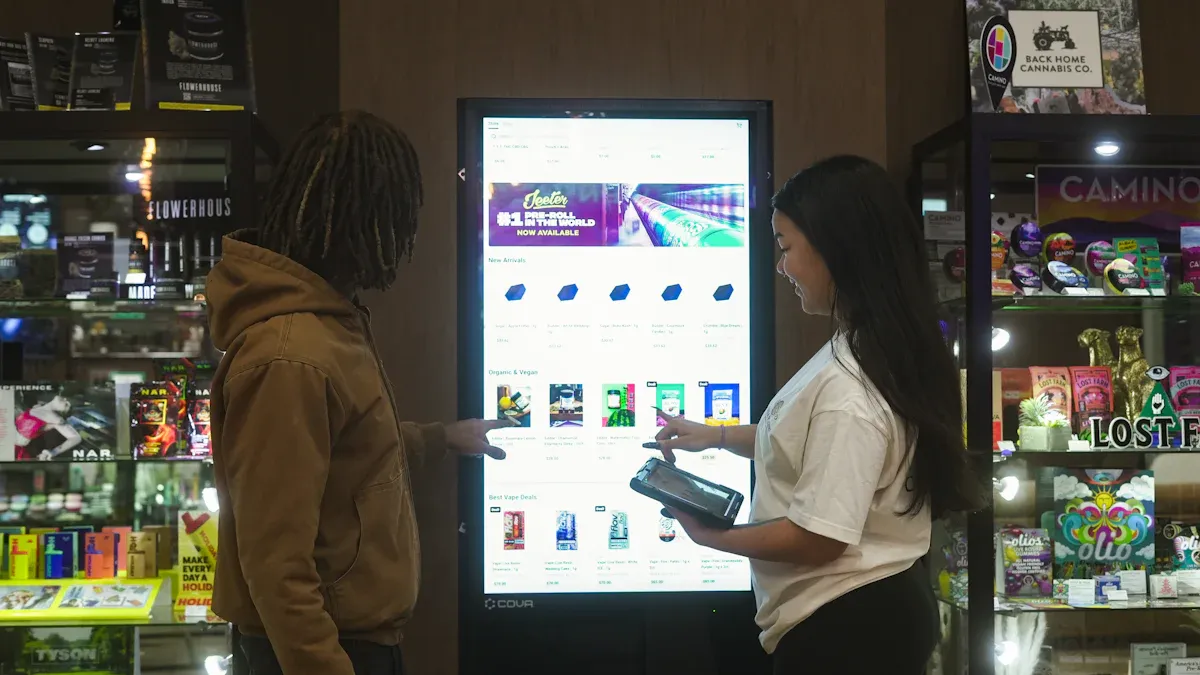
AI can help make showrooms more fun and interesting. Digital displays change when more people walk by. Product suggestions also change as shoppers look around. AR mirrors let you see clothes or makeup on yourself without touching them. VR lets you hear stories about brands and makes shopping exciting. These tools help customers stay in the store longer and buy more things.
Metric | Description |
|---|---|
Dwell Time | Shows if customers stop to look at displays or just walk past. |
Conversion Rates | Checks if people buy something after using these tools. |
Basket Size and Return Rates | Tracks if shoppers feel sure about their choices and return less. |
Repeat Visit Frequency | Shows if your showroom makes people want to come back. |
When stores use these tools, more people come back and buy again. Shoppers feel good and have a better time in the store.
Augmented reality and phygital integration
You can mix digital and real shopping with AR and smart tech. AR lets people try on things or see how furniture looks at home. Smart inventory systems watch what shoppers like and suggest items right away. Interactive kiosks help people check products, find sizes, and order things.
Sephora’s Virtual Artist has helped with over 200 million virtual try-ons. This made online makeup sales go up and returns go down.
L'Oréal’s ModiFace made more people download the app and buy products.
IKEA Place lets shoppers see furniture in their homes, so they feel sure before buying.
Ralph Lauren’s virtual mirrors are used by almost everyone who visits, which helps sales grow.
The AR furniture try-in app market was worth $1.5 billion in 2024 and is still growing. Stores with smart mirrors see more sales and bigger orders.
Interactive in-store technologies
Smart mirrors and kiosks make shopping easier and more fun. Gamified AR mirrors keep people in the store for 7 to 12 more minutes. This extra time means shoppers often buy more. AR mirrors can help your store make up to 25% more money each year. More than half of shoppers feel better about buying after using AR. Most people like stores that have these new tools.
Stores like H&M and Topshop use smart mirrors so shoppers can try things on virtually and get special tips. These AI trends help you keep customers happy and make them want to come back.
Benefits for retailers and customers
Efficiency and cost savings
AI helps stores work better and save money. Smart systems can track what is in stock and guess what people will buy. These tools also do simple jobs by themselves. This means you do not run out of things or have too much on the shelves. AI checkout lets you use fewer cashiers. You can move workers to help shoppers or pack online orders. AI can cost a lot at first, but stores save money later. Predictive analytics can stop 35% of stockouts and cut extra items by 28%. AI-powered analytics give you more money back than old ways.
Benefit | Quantifiable Impact |
|---|---|
Customer Acquisition Costs | Reduced by up to 50% |
Expenses | Reduced by up to 30% |
Time-to-Market | Reduced from months to weeks |
Sales Increase | |
Margin Growth | Up to 10% growth |
AI changes prices fast to keep up with others.
You can make more money by matching prices to what people want.
Tip: Use AI to see trends early and fix problems before they get big.
Customer engagement and loyalty
AI helps you talk to shoppers in new ways. Chatbots and recommender systems give each person special help. Customers want brands to notice them every day, not just on holidays. AI helps you make friends with shoppers, not just sell things. When you use AI to send special messages and offers, people feel important. This makes more people join loyalty programs and come back again.
Special experiences make shoppers want to return.
Studies show AI keeps shoppers interested and loyal.
Chatbots and smart tips help answer questions fast and suggest good products.
Note: Loyal shoppers spend more and tell their friends about your store.
Data-driven decision making
You can use data to make better choices every day. AI gives you sales and stock numbers right away. You can change orders when people want different things. You can pick the right products by looking at what shoppers bought before. Guessing what people will buy helps you keep enough stock and not waste things.
Look at how shoppers act and where they walk to make the store better.
Use data to put best-selling items in good spots and plan when workers are needed.
Good guesses help you not run out of things or have too much.
Tip: Let data help you make choices so shopping is better for everyone.
Future outlook for AI in retail
Emerging AI trends
In the next five years, stores will change a lot. Smart devices will buy supplies when they get low. AI agents and chatbots will help customers and answer fast. You will get suggestions based on what you bought before. Stores will use machines to guess what people want and keep shelves full.
Smart devices will buy things when needed
AI agents and chatbots will help shoppers
Each shopper gets special suggestions
Machines will help plan and order products
Stores will use data to plan better. Shopping online and in stores will feel smoother. Customer service will use more machines. Inventory will be tracked with real-time data. The AI market in retail could reach $98 billion by 2033. You will shop in places where digital and real mix together. Gen Z shoppers will want brands that care about the planet and tell the truth.
Stores and supply chains will get smarter
Shopping will be easy and quick
Shelves will be full and delivery will be fast
You will see more personal offers right away
Note: These AI trends will make shopping feel easy and just for you.
Preparing for next-gen retail
You can look at top stores to see how they get ready. Sephora made an AI Factory to help stores work better in 15 countries. They use Dataiku on Google Cloud. Walmart is trying AI to help shoppers and workers. They use OpenAI’s GPT-4 for smart talks and better stock.
Stores like Mondial Tissus use AI to share info faster. This helps them work with many suppliers and get products to stores quickly.
Tip: Get ready for new retail by trying AI tools, teaching your team, and focusing on what your shoppers care about most.
You see how AI brings together customer data and transforms showrooms. Centralized data helps you connect every shopper’s journey. AI works best when you start with simple uses and help your team learn new tools. Experts say stores will keep leading retail sales, so you need AI to stay ahead. Many leaders plan to spend more on AI soon. Sensory design and calming spaces attract younger shoppers. You can use these trends to build better experiences and prepare for the future of retail.
FAQ
How does AI help you unify customer data?
AI collects data from your website, app, and store. It brings all this information together. You see each shopper as one person. This helps you understand what your customers want and how they shop.
What showroom technologies can you use with AI?
You can use smart mirrors, AR try-ons, and digital displays. These tools make shopping fun and interactive. They help customers see products in new ways and make better choices.
Is customer data safe when you use AI?
You must follow privacy laws like GDPR and CCPA. AI systems use strong security to protect data. You should tell customers how you use their information. This builds trust and keeps data safe.
How can you start using AI in your store?
Start small. Try AI tools for inventory or customer service. Train your team to use new systems. Watch how these tools help your store. You can add more AI features as you learn.
See Also
Revolutionizing Online Store Management With AI E-Commerce Tools
The Future of Retail Lies in AI-Powered Stores
Essential Insights for Retailers on AI-Powered Corner Stores
Exploring Features and Advantages of AI Vending Machines
Enhancing Store Experience With Cloudpick's Cashierless Technology
