How autonomous retail can help solve staffing shortages in convenience store chains and small-format grocery.


You face staffing shortages in convenience store chains and small-format grocery stores every day. These labor gaps can disrupt your business and drive up costs. Many operators now look to autonomous retail for answers.
60% of convenience store operators report big problems from staffing shortages.
Grocery stores have raised starting pay by up to 25% in three years.
Retail turnover rates are over 60% each year.
AI-powered technologies and automation change how you manage stores. The adoption of these solutions continues to rise:
Statistic | Value |
|---|---|
Convenience stores looking to implement AI solutions within 2 years | |
Stores in AI pilot projects planning to scale | 72% |
Engaged in AI robotic checkout pilot projects | 74% |
Piloting AI-driven autonomous delivery vehicles | 32% |
Piloting AI-enabled autonomous cleaning robots | 52% |
Key Takeaways
Autonomous retail technologies, like cashierless checkout, reduce the need for staff, helping to solve labor shortages.
Smart shelves track inventory in real-time, preventing stockouts and reducing waste, which improves store efficiency.
AI and robotics can handle repetitive tasks, allowing employees to focus on customer service and enhancing the shopping experience.
Investing in automation can lead to significant cost savings and improved operational efficiency for convenience stores.
Embracing new technologies prepares your business for future retail trends and meets changing customer expectations.
Autonomous Retail Technologies for Labor Shortages
Cashierless Checkout in Convenience Stores
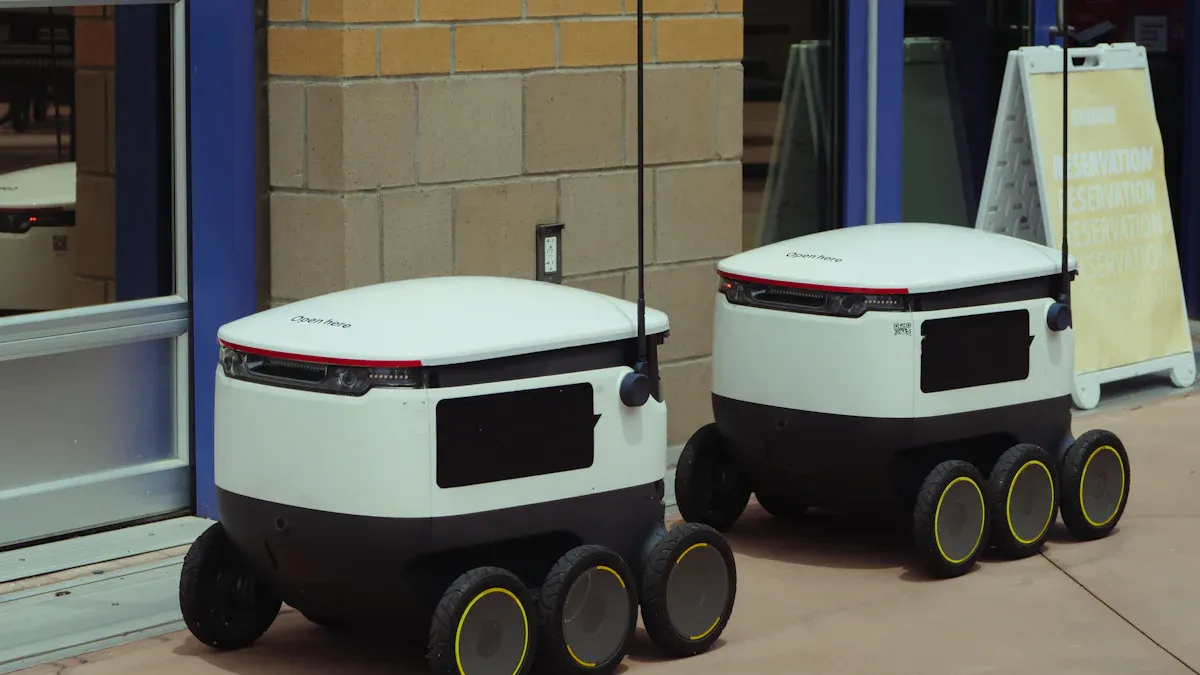
You can see how cashierless checkout systems change the way you run convenience stores. These systems let shoppers grab what they need and walk out without stopping to scan or pay. Automated checkout uses sensors, cameras, and AI to track what customers take. The system charges them automatically. This technology means you need fewer cashiers, which helps you deal with labor shortages.
Customers enjoy shopping at any time, even late at night or early in the morning.
Shoppers do not have to wait in line, which makes their experience faster and easier.
You save money because you do not need as many staff members.
You can use the extra space for more products, which can help you earn more.
Automated checkout systems also improve your store’s efficiency. They speed up transactions and reduce mistakes. These systems collect data about what people buy, which helps you manage inventory better. You can use this information to make smarter decisions about what to stock. Many convenience store chains now use cashierless checkout to cut costs and keep up with customer expectations.
Note: Cashierless stores require fewer staff members than traditional stores. Automated checkout handles transactions, so you spend less on hiring and training. This leads to big savings in payroll.
You also give customers more control over their shopping. Many people feel empowered when they can check out on their own. Studies show that self-service options make customers happier, as long as you protect their data.
Smart Shelves and Inventory Automation
Smart shelves use sensors and AI to track product levels in real time. When an item runs low, the system alerts you so you can restock quickly. This technology helps you avoid empty shelves and lost sales. Smart shelves also track expiration dates, which is important for grocery stores with perishable goods. You can reduce waste and make sure you always offer fresh products.
Smart shelves collect data on how shoppers interact with products.
You can learn which items are popular and where to place them for better sales.
The system helps you make better decisions about inventory and marketing.
Many stores have seen strong results from using smart shelves and inventory automation. For example, Home Depot and Lowe’s improved stock accuracy and cut operational costs by using AI-powered shelves. B&Q, a UK retailer, used RFID and AI to reduce stock problems and improve supply chain coordination.
Metric | Result |
|---|---|
Inventory labor cut | 22–25% |
Shrinkage reduction | 18% |
Top-product sales increase | 3–5% |
Inventory accuracy improvement | From 93% to over 98% |
Smart shelves also solve common problems in small-format grocery stores:
Challenge | Description |
|---|---|
Manual tracking led to inaccurate inventory levels. | |
Shrinkage & Waste | Poor expiration tracking resulted in unsellable products. |
Labor Inefficiencies | Staff spent too much time on manual stock checks. |
Operational Complexity | Managers struggled to oversee stock and labor distribution. |
When you use smart shelves, you spend less time on manual tasks. You can focus on helping customers and growing your business. Automated checkout and inventory automation work together to make your store more efficient.
AI and Robotics in Small-Format Grocery Chains
AI and robotics play a big role in autonomous stores. Many small-format grocery chains now use robots to handle tasks that are hard to fill because of labor shortages. Robots can restock shelves, clean floors, and even help with deliveries. They work around the clock, so you do not have to worry about finding staff for late shifts.
Robots operate 24/7, which lowers your labor costs.
They take care of repetitive jobs, so your employees can focus on customer service.
Robots make sure shelves stay stocked, even when you have trouble hiring enough people.
Some companies use ai-powered automation to boost productivity. For example, Ocado uses robotic arms that pick and pack orders in grocery fulfillment centers. These robots use machine learning to recognize and handle different products. They work alongside your staff, making your store run smoothly.
Insight | Description |
|---|---|
Store Intelligence | Forms the base for better operations and measurable results. |
Revenue Generation | Digital teammates create new revenue through data-driven solutions. |
Shelf Insights | Provides accurate shelf data at scale without extra robot maintenance. |
Digitization | Digitizing stores with robots is key for using AI and scaling operations. |
You can see that autonomous stores use ai, robotics, and automated checkout to solve staffing problems. These technologies help you run your store with fewer people, lower costs, and better results. When you invest in automation, you prepare your business for the future of retail.
Operational Benefits of Autonomous Stores
Cutting Labor Costs and Boosting Efficiency
You can achieve major cost reduction by using autonomous stores. Many operators report a 60-70% drop in labor costs after switching to ai-powered automation. These systems handle repetitive tasks and cashierless checkout, so you need fewer workers. This helps you manage labor shortages and keep your store running smoothly.
Automation reduces the need for manual staff.
Artificial intelligence handles tasks like checkout and restocking.
You save money and boost operational efficiency.
Here is a quick comparison:
Aspect | Autonomous Retail | Attended Retail |
|---|---|---|
Cost | Reduces operational costs by eliminating the need for cashiers and full-time staff. ROI scales quickly with volume despite high initial investment. | Incur ongoing labor costs that are volatile due to various economic factors, leading to higher long-term expenses. |
Efficiency | Utilizes AI for inventory management and real-time analytics, minimizing waste and human error. | Relies on manual processes and staff performance, which can hinder operational efficiency. |
Reducing Human Error in Inventory Management
Autonomous stores use ai and automation to improve inventory management. You can cut inventory errors by 40-60% with these systems. Robots like StockBot scan shelves, find misplaced items, and give you real-time stock data. This means you always know what you have and what you need to order.
StockBot works for 12 hours without stopping and reaches 99% reading accuracy.
Automated demand forecasting and quality control help you avoid mistakes.
You do not need to rely on manual counting, which often leads to errors.
With better inventory management, you reduce waste and keep your grocery store stocked with the right products.
Streamlining Store Operations
Autonomous stores change how you run your business. You can focus on customer service and merchandising while systems handle transactions and inventory. Stores like Amazon Go, Zippin, and Grabango use ai and computer vision to create a seamless shopping experience.
Store Name | Features |
|---|---|
Amazon Go | Uses 'just walk-out technology' with sensors and cameras for a cashier-free experience. Customers scan their app to enter and receive a receipt via email after shopping. |
Zippin | Employs AI and computer vision for a checkout-free experience. Customers enter by scanning an app, and purchases are automatically charged when they leave. |
Grabango | Designed for larger stores, it uses overhead rails and machine learning to monitor products without relying on traditional sensors. Shoppers can select items and exit without waiting in line. |
Autonomous stores let you operate 24/7, increasing sales opportunities.
You get valuable data insights to make better decisions.
Automation helps you meet modern customer expectations.
By using autonomous retail, you solve labor shortages, improve operational efficiency, and keep your store ahead of the competition.
Customer Experience in Autonomous Retail
Frictionless Shopping and Convenience
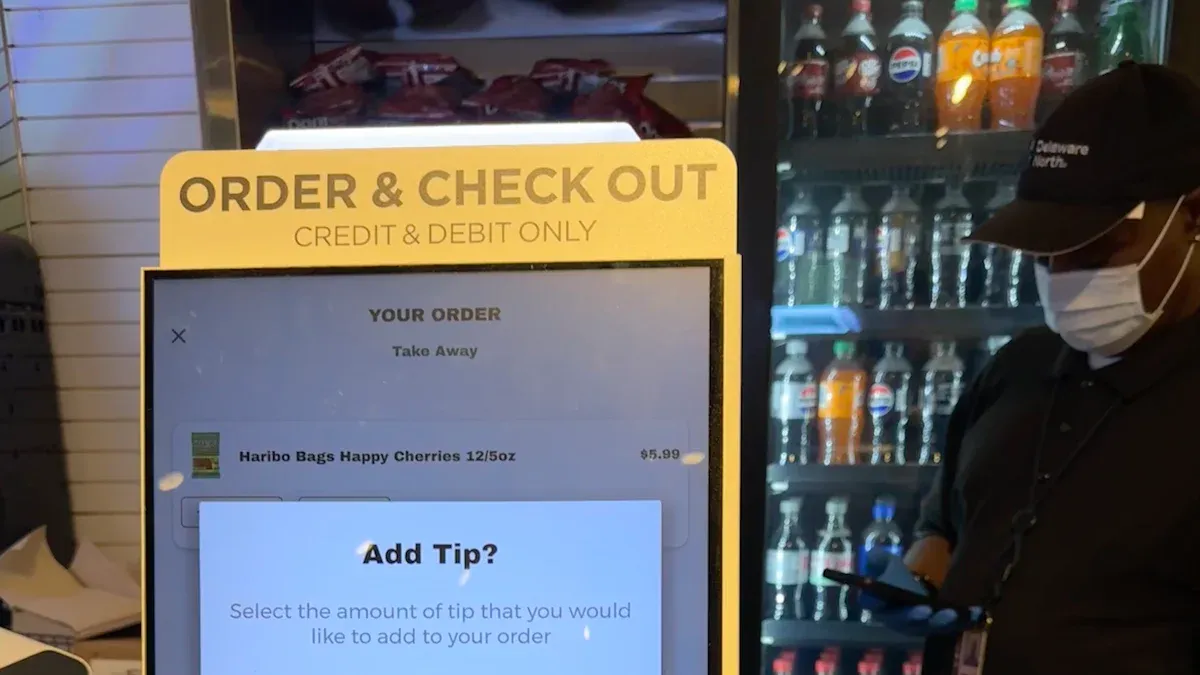
You want a shopping trip that feels easy and quick. Autonomous retail gives you frictionless shopping by removing long lines and slow checkouts. Cashierless shopping lets you grab what you need and leave without waiting. Automatic payment processing makes your visit smooth. You see clear product choices, which helps you decide faster. Efficiency improvements lead to higher customer satisfaction. Many customers who try autonomous retail prefer it over traditional stores. Grocery stores now use self-checkout systems to minimize wait times. This trend helps convenience stores attract busy shoppers who want fast service.
Automated inventory systems make sure you get what you expect.
These systems reduce lead times by predicting demand, especially during busy seasons.
You benefit from sustainable pricing because stores use data to set fair prices.
Personalized Service with Fewer Staff
You still get personalized service even when stores have fewer staff. Autonomous retail uses AI and data to learn your shopping habits. You receive tailored recommendations based on what you like. Smart shopping carts track your items in real time, helping you manage your budget. Automated checkout and inventory management free up staff to help you with special requests. You enjoy an enhanced customer experience because technology handles routine tasks while staff focus on your needs.
AI provides personalized shopping experiences.
Automated systems reduce the need for staff but improve customer experience.
Smart carts help you shop smarter.
24/7 Access and Self-Service Options
You can shop whenever you want, day or night. Autonomous retail stores offer 24/7 access, which is a big convenience for you. Self-service kiosks let you scan items and pay on your own. Checkout-free systems allow you to leave quickly without waiting in line. Unmanned stores give you local access to essentials, saving you travel time. Self-service options make shopping faster and simpler, matching your changing habits.
Benefit | Description |
|---|---|
24/7 Access | You can shop at any hour, which is helpful in rural or underserved areas. |
Convenience | You find it easier to buy groceries late at night or early in the morning. |
Checkout-Free Systems | You pay and exit quickly, which saves time. |
Self-Service Kiosks | You scan and pay for items independently, avoiding crowds. |
Local Access | You get essential items nearby, reducing travel distance. |
Improved Customer Experience | Shopping becomes faster and simpler, meeting your needs. |
You see that autonomous retail improves customer experience by making shopping more convenient, personal, and accessible. Stores use technology to solve staffing challenges and give you better service.
Challenges and Solutions in Automation Adoption
Investment and ROI for Small-Format Grocery Chains
You may worry about the cost of automation in small-format grocery chains. Upfront investment can seem high, but you find that the return on investment grows as you save on labor and improve efficiency. Many small-format grocery stores face challenges like labor shortages, supply chain changes, and scaling technology across locations.
Challenge | Description |
|---|---|
Difficulty in finding enough staff, especially in small-format grocery locations. | |
Need for quick responses to demand changes and maintaining stock levels. | |
Complexity of Scaling | Challenges in integrating technology and gaining customer trust across multiple locations. |
You can use solutions like autonomous mobile robots to reduce manual work. Cashierless store technologies help you run longer hours with fewer staff. These solutions let you focus on growing your business instead of worrying about labor shortages.
Technology Integration and Staff Training
You need to make sure your staff can use new technology. Hands-on training helps your team learn systems quickly. Technology training teaches staff about unified systems, making inventory and checkout easier. Regular audits show where staff need more help, so you can offer extra support.
Training Method | Description |
|---|---|
Hands-on training | Engages staff directly with the systems they will use, enhancing familiarity and confidence. |
Technology training | Focuses on educating staff about the unified systems, reducing complexity and improving efficiency. |
Regular audits of training gaps | Identifies specific areas where staff may need additional training, ensuring comprehensive skill coverage. |
Tip: Use a centralized information hub and mobile access for all employees. This keeps staff updated and helps them solve problems fast.
As your store becomes more autonomous, staff roles change. You may see fewer cashiers and more jobs in IT support or customer help. Retraining staff for these new roles is one of the best solutions for keeping your store running well.
Data Privacy and Security
You must protect customer data in small-format grocery stores. Many shoppers worry about how stores use their information. Biometric data, like facial recognition, can cause privacy concerns. Some cities have even passed laws to protect shoppers.
60% of shoppers spend more with stores they trust to handle data safely.
Anonymous computer vision solutions track shopping behavior without storing personal data.
Some solutions, like AiFi, use avatars instead of facial recognition to protect privacy.
Note: Always choose solutions that follow privacy laws like GDPR and CCPA. This builds trust and keeps your store safe.
You can solve privacy and security challenges by using solutions that do not store biometric data. This helps you keep customer trust and avoid legal problems.
Future Trends in Autonomous Retail
Emerging Technologies for Convenience Stores
You will see many new technologies changing convenience stores in the next five years. Self-checkout and scan-pay-go systems let you skip lines and pay with your phone or at kiosks. Smart shelves use RFID tags and sensors to track products, helping you avoid empty shelves and making inventory easier. ai-driven demand forecasting predicts what customers want, so you can stock the right items and reduce waste. ai-supported security systems watch for unusual activity and help prevent theft. Kitchen robotics make food service faster and more accurate. These tools work together to make your store smarter and more efficient.
Self-checkout and scan-pay-go systems
Smart shelves with RFID and sensors
ai-driven demand forecasting
ai-supported security
Kitchen robotics
Tip: Try new technologies in small steps to see what works best for your store.
Next Steps for Retailers Facing Labor Shortages
You can take action now if you face labor shortages. Start by forming a task force with people from technology, business, finance, and operations. Give this group the power to look at automation needs and test new solutions. Explore different technologies and partners, and learn from other stores that use autonomous retail. Align new tools with your business needs and help your employees adapt to changes. Use ai-powered scheduling, smart inventory systems, and task automation platforms in phases. Draft a plan with clear goals, budgets, and timelines.
Investigate technologies and partners
Empower employees to adapt
Implement ai-powered solutions in phases
Note: Support your team with training and resources to make the transition smooth.
Long-Term Impact on Store Operations
You will notice big changes in store operations as autonomous retail grows. Checkout-free stores disrupt old retail models, so you must rethink your strategy to stay competitive. Early adopters like Amazon Go push others to innovate and improve efficiency. Customers expect faster and easier shopping, which affects all retail formats. The labor market shifts as cashier jobs decrease and tech roles increase, so you need to retrain your workforce. Autonomous systems generate valuable data, helping you understand customer behavior and improve your store.
Increased competition and innovation
Shift in consumer expectations
Labor market adjustments
Data-driven decision making
ai will continue to shape the future of retail, making stores smarter and more responsive to customer needs.
You see how autonomous retail helps you solve labor shortages in convenience and small-format grocery chains. Automation transforms your store, making operations more reliable and safe. You use robotics to handle repetitive tasks, which lets your team focus on customer needs. Service robots and AI-powered systems improve customer experience by providing fast, accurate service. You notice that agentic AI acts as a digital employee, learning and adapting to customer behavior. This technology gives you real-time insights, so you can meet customer demand and keep shelves stocked. You also use connected devices to track inventory, which ensures customer satisfaction.
You want to stay ahead of automation trends. Here are steps you can take:
Choose a busy location to attract more customer visits.
Implement AI-powered systems to streamline customer service.
Train your team to help every customer use new technology.
Test systems and gather customer feedback to improve.
Use real-time tracking for better customer inventory management.
Focus on customer experience with user-friendly tools.
Add theft prevention to protect customer data.
Evidence Description | Impact on Operations | Impact on Customer Experience |
|---|---|---|
Agentic AI enables continuous process improvement through self-learning capabilities. | Enhances tactical operational strategy and decision-making. | Drives consumer experience by embedding customer-centricity within workflows. |
Connected devices and computer vision provide real-time visibility for inventory management. | Monitors and audits workstreams effectively. | Ensures timely and accurate service to customers. |
You face barriers like high costs and customer adaptation, but you can overcome them with planning and strong security. You build trust by protecting customer information and listening to customer concerns. You see that automation does not remove jobs; it changes them, letting your team focus on customer support. You create a better store by putting the customer first and using technology to meet customer needs. You prepare for the future by making every customer visit smooth, safe, and enjoyable.
FAQ
How does real-time tracking help you manage inventory in autonomous stores?
You use real-time tracking to see what items sell fast. This helps you restock shelves before products run out. Real-time tracking also lets you spot trends. You can adjust orders quickly. Tracking makes your store more efficient and keeps customers happy.
What role does tracking play in cashierless store technologies?
Tracking follows every product as customers shop. Cashierless store technologies use tracking to know what you pick up or put back. Real-time tracking records each action. You get accurate receipts. Tracking also helps you prevent theft and keep inventory correct.
Can automation technologies reduce errors in tracking inventory?
Yes. Automation technologies use tracking to scan shelves and count products. Real-time tracking finds mistakes fast. You fix problems before they grow. Tracking also helps you avoid overstock or empty shelves. You save money and keep your store running smoothly.
Why is real-time tracking important for customer experience?
Real-time tracking shows you what is in stock. You find what you need without searching. Tracking also helps you get fresh products. Real-time tracking alerts staff to refill items. You enjoy a better shopping trip because tracking keeps shelves full.
How do you use tracking to improve store security?
You use tracking to watch products and people in your store. Real-time tracking spots unusual activity. Tracking helps you stop theft. You can see where items go. Real-time tracking also helps you check if products move to the right place. Tracking keeps your store safe.
See Also
Navigating Walgreens Self-Checkout: Ease and Hurdles in Shopping
The Emergence of AI-Driven Convenience Stores: Essential Insights for Retailers
Micromarkets Compared to Smart Stores: Global Insights on Automated Retail
The Future of Retail: Embracing AI-Enabled Stores
Cloudpick's Role in Delivering Cashier-Free Convenience for Retailers
