How Multi-Location Retailers Benefit from Autonomous Store Technology

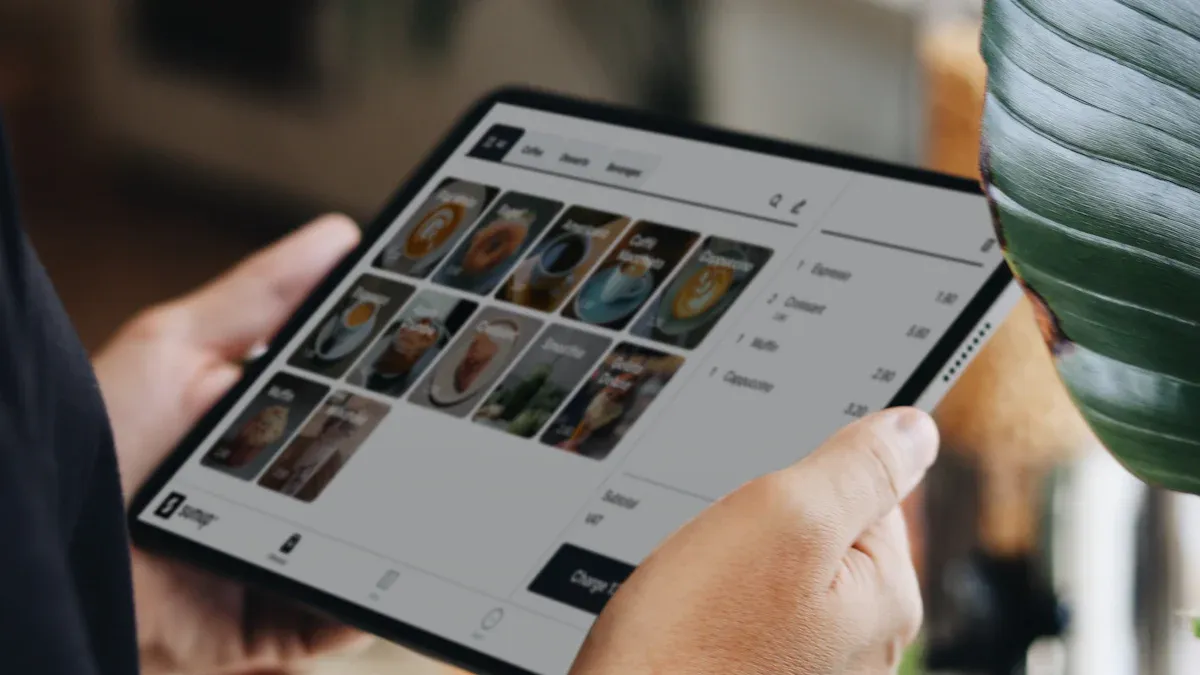
Imagine going into stores where you do not wait in lines. You take what you want and leave quickly. Autonomous stores let you do this. These stores are showing up in many places now. The market for these smart shops is growing fast. It will be worth over $5 billion in 2024. Customers care more about convenience than loyalty. 72% of people want shopping to fit their busy lives. You can find new ways to help people and run your business better. Are you ready to think about how retail can change?
Key Takeaways
Autonomous stores remove checkout lines. This saves you time. Shopping becomes easy and less stressful.
These stores are open all day and night. You can shop anytime you want. This makes shopping more convenient.
Automated inventory management helps retailers track stock better. It cuts down on waste. It also makes stores work more smoothly.
Flexible store deployment lets retailers open stores in busy places. This helps them meet customer needs fast.
AI-driven personalization makes shopping better for you. It suggests products you might like based on what you prefer.
Autonomous Stores Drive Convenience
Eliminating Checkout Lines
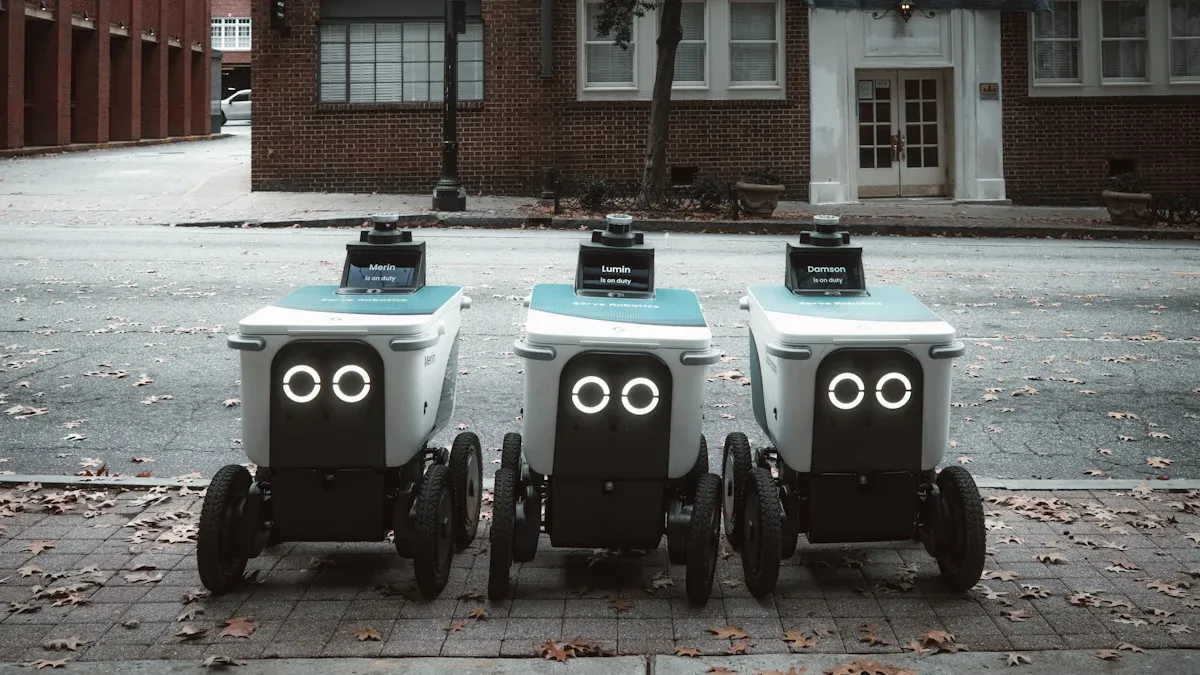
You know that feeling when you walk into a store and see a long line at the checkout? It can make you want to leave right away. Autonomous stores change this for you. These stores use smart technology to give you a checkout-free experience. You just grab what you want and walk out. No more waiting. No more stress.
You save time because you do not have to stand in line.
Shopping feels easy and smooth, even if you are in a hurry.
You can make quick stops for snacks or drinks without worrying about delays.
Many customers say they enjoy shopping more when they do not have to wait. Autonomous stores make shopping simple and fun. You get a seamless payment integration, so you do not need to pull out your wallet or phone at the register. This new way of shopping fits your busy life and gives you more freedom.
24/7 Access for Customers
Imagine being able to shop whenever you want. With 24/7 autonomous operation, you do not have to worry about store hours. These stores stay open all day and night. You can stop by after work, early in the morning, or even late at night.
Advanced technology keeps the store safe and open at all times.
You can shop when it fits your schedule, not the other way around.
The seamless payment integration means you can finish your shopping fast, even if you only have a few minutes.
This kind of convenience makes you want to visit more often. You might even pick up extra items because it is so easy. The 24/7 autonomous operation helps stores serve more customers and boost sales. You get more choices, and the store runs better without needing extra staff. Autonomous stores give you the freedom to shop your way, any time you want.
Operational Efficiency and Cost Savings
Automated Inventory Management
You want your stores to work well. Automated inventory management helps with this. Smart sensors and AI show what is on your shelves. Real-time analytics track every item for you. You do not have to guess about stock levels. If something is low, the system sends an alert. You can restock before customers notice.
Let’s see some top technologies that help track inventory:
Technology | Key Features |
|---|---|
Quantum-Enabled Tracking | Tracks inventory at the molecular level, watches conditions, and predicts maintenance needs. |
Neural Inventory Networks | Processes many stock cues each second, checks in real time, and predicts with high accuracy. |
Behavioral Inventory Intelligence | Watches how customers move, guesses buying intentions, and suggests shelf changes. |
IoT 3.0 | Uses smart shelves with nano-sensors, auto-reorders, and tracks expiration dates. |
StockBot | Manages inventory with high accuracy and gives a live view of stock. |
These tools help you avoid too much or too little stock. You get accurate demand forecasting and real-time stock monitoring. Automated replenishment means less waste and more convenience for customers.
Lower Overhead and Labor Costs
Switching to autonomous stores changes how you spend money. You do not need as many cashiers or full-time staff. Your team can help customers and keep the store neat.
Retail Model | Overhead Expenses Description |
|---|---|
Autonomous Retail | Cuts costs by removing cashier roles and using AI for many tasks. |
Traditional Retail | Faces higher labor costs that change with wage laws and the job market. |
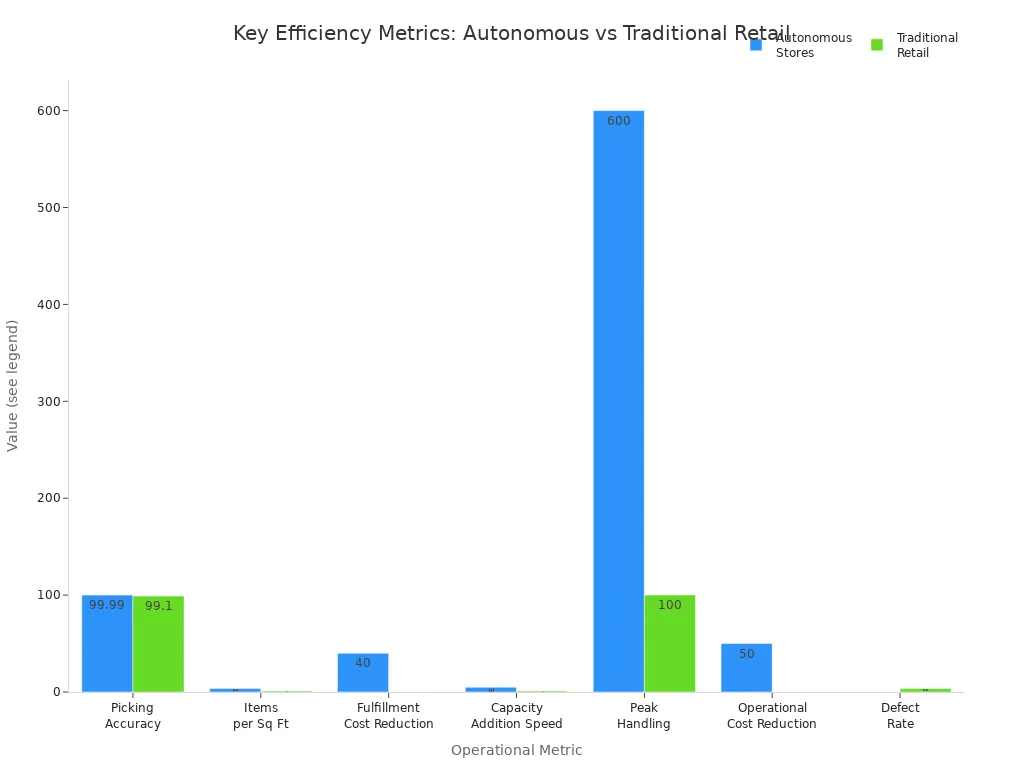
Retailers using robots for inventory accuracy have seen costs drop by 23%. Inventory visibility has gone up by 17%. Fulfillment costs per unit are 40% lower. Operational costs are 40-60% lower. This is data-driven optimization at work. With these savings, you can grow your business faster and serve more customers.
Quick-Commerce Opportunities and Scalability
Flexible Store Deployment
You want your retail business to grow quickly. Autonomous stores help you do this. You can put these stores almost anywhere you want. Think about busy airports or college campuses. You can even use sports arenas. Each place is different, but autonomous formats give you options. You can move a store if you see more customers somewhere else. This helps you make a smart plan for locations.
You can open stores in schools, workplaces, or travel spots.
You can change your plan fast if you find new quick-commerce chances.
These stores are great for busy places where people want things fast.
Autonomous stores use smart sensors and apps. Customers get in with a special card or app. Cameras watch what they pick up. The system charges them by itself. This saves time, which is good for busy places. You can help more customers without long lines.
Quick-commerce means you help customers right away. You can open stores where people need things fast. This gives you a big edge over slower stores.
Testing New Markets with Micro Shops
You do not have to spend a lot to try a new place. Micro shops help you test new spots for less money. You can use shipping containers or pop-up shops. Brands like Nike and Sephora use these to try new products or cities. Sometimes, many brands share one small shop. This keeps costs down and gives you new chances.
Benefit | Description |
|---|---|
Reduced Labor Costs | Unmanned stores lower costs, so it is easier to try new places. |
Rapid Deployment | These stores can open fast, so you can enter markets quickly. |
Extended Operating Hours | Open 24/7, these stores meet the need for convenience and make customers happy. |
Smart micro shops let you learn what customers want. You can change your products and plans using real feedback. If a spot does not work, you can move your store and try again. This makes your business flexible and ready for quick-commerce growth.
Enhancing Customer Experience
Seamless Shopping Journeys
Shopping should be simple and quick. Autonomous stores help make this happen. When you enter, you do not need to look for a cashier. You do not have to wait in line. You just pick up what you want and leave. These stores use smart retail technology with AI. The system watches what you take and charges you by itself. This saves you time and makes shopping easier.
Agentic AI can notice when you need something. It can find deals for you. It can even finish your purchase.
Smart stores use facial recognition and mobile payments. These tools help you buy things fast.
Digital assistants check if items are in stock. They also add discounts, so your trip is smooth.
The store learns from what customers do. It can change the layout or show new products you might like. This makes every visit feel special.
Here’s how autonomous stores and traditional stores are different:
Feature | Autonomous Retail Stores | Traditional Retail Stores |
|---|---|---|
Use of Intelligent Agents | Yes, uses Store Agents, Humanoids, and Digital Assistants | No |
Real-time Sensing | Yes, changes for customer needs | Limited |
Personalized Experiences | Yes, very personal based on what you do | Basic personalization |
Checkout Process | Easy with biometric checks and emotion reading | Regular checkout |
Customer Engagement | Real-time help and talking | Not much engagement |
Technology Utilization | Machine vision, sensor fusion, robots | Not much technology |
Personalized Service with AI
You want stores to know what you like. AI helps by learning about what you buy and do. It can suggest things you may enjoy. It can remind you about things you buy often. This makes your shopping better and makes you feel important.
AI can help you see new things to try.
You will want to come back if the store remembers you.
Did you know 65% of shoppers like brands that use AI for personal service? When you feel understood, you want to shop there again. Stores use data to learn about their customers. This helps them make the store better for everyone. They also teach you how to use new technology. You can read signs or ask friendly staff for help. This makes you feel good about shopping in these stores.
Tip: If you are not sure what to do, ask for help. Many autonomous stores have guides or staff to answer your questions.
Autonomous stores give you a shopping trip that is easy, personal, and fun. This helps stores because happy customers return again and again.
You can see that autonomous stores change how you help customers. These stores make things easier, help you work better, and give you new ways to grow your business. Here are the main benefits:
Benefit | Explanation |
|---|---|
You can open more stores with fewer workers. | |
Enhanced inventory management | You can keep track of products and plan better. |
Quick-commerce opportunities | You can reach more people and do it faster. |
Experts say you can use AI and smart tools to make shopping better for customers.
You can fix problems with not enough workers and make better decisions.
Now is a good time to try these smart ideas for your business.
FAQ
How do autonomous stores keep my payment information safe?
You can trust these stores. They use strong encryption and secure payment systems. Your data stays private. Most stores update their security often to protect you from threats.
Can I get help if I have trouble in an autonomous store?
Yes! Many stores have digital assistants or a help button. Some even offer live video support. You can always find help if you need it.
What if I want to return something I bought?
Returning items is easy. You can use the store’s app or kiosk. Some stores let you scan your receipt and drop the item in a return bin. The process is quick and simple.
Do autonomous stores work for all types of customers?
Yes, they do. These stores help people who want fast shopping. They also help those who need extra time or support. You can find clear signs and friendly guides in most locations.
See Also
The Future of Retail: Embracing AI-Driven Stores
Global Insights: Micromarkets Compared to Smart Retail Solutions
Understanding AI-Enhanced Corner Stores: Essential Insights for Retailers
Transforming Online Retail: The Impact of AI Tools
Modern Retail Revolution: Advantages of AI-Enabled Vending Machines
