How autonomous stores support digital transformation in convenience store chains & small-format grocery.

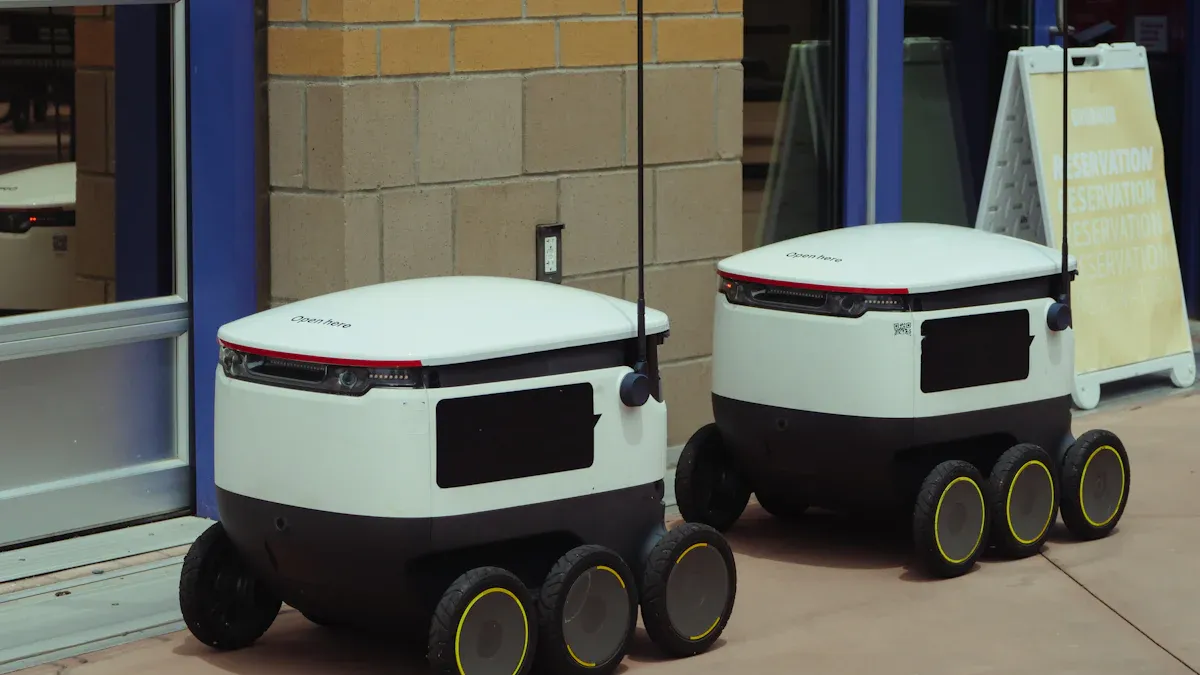
Autonomous stores change how you shop and manage convenience stores. You see the digital transformation of grocery shopping every time you enter a store with no lines or cashiers. High-resolution cameras and sensors track products and movements, while AI learns to identify items and charge you accurately. This technology lets autonomous stores offer checkout-free, self-service experiences. You benefit from faster visits and 24/7 access. Store owners gain real-time data for better decisions. Today, 69.3% of stores use some automation, and 41.7% use digital self-checkout kiosks:
Automation Technology | Percentage of Adoption |
|---|---|
Any Automation Technology | 69.3% |
Digital Self-Checkout Kiosks | 41.7% |
The growth of autonomous stores supports the digital transformation of grocery shopping and opens the door for fully autonomous stores in your neighborhood.
Key Takeaways
Autonomous stores enhance shopping by eliminating lines and cashiers, allowing for faster, 24/7 access to products.
Self-service technologies reduce labor costs by up to 70%, enabling store owners to allocate resources more efficiently.
Data analytics in autonomous stores helps optimize inventory management, ensuring popular items are always in stock and reducing waste.
Personalized shopping experiences, driven by AI, improve customer satisfaction and engagement, making visits more enjoyable.
Implementing autonomous technology can lead to significant sales growth and operational efficiency, with some stores reporting up to a 25% increase in sales.
How Autonomous Stores Transform Retail

Streamlining Operations
You see grocery stores changing fast with self-service technologies. These stores use automation to make daily tasks easier. You notice fewer staff at checkout because self-service checkouts handle most transactions. Automation helps you shop faster and lets store owners save money on labor. Many grocery chains report that automation reduces labor expenses by 60-70%. You find that micro-warehouses near your home lower delivery costs by up to 55%. Grocery stores use predictive inventory management to keep popular items in stock and reduce waste. AI tracks products and sets reorder points in real-time, so you rarely see empty shelves. You experience less waiting because frictionless checkout systems scan and bag items as you shop. The table below shows how different chains use automation and self-service technologies to improve operations:
Convenience Store Chain | AI Implementation Description | Reported Results |
|---|---|---|
Zippin | AI-powered computer vision tracks items and charges your account automatically. | Shopping time reduced from 20 minutes to just 20 seconds. |
Cubby's & Mach 1 Stores | Voice analytics tool listens to cashier-customer interactions. | Improved employee motivation and customer service. |
Casey's General Stores | Conversational AI system for call-in orders linked to rewards. | Enhanced personalized offers and upselling opportunities. |
You see grocery stores using augmented reality applications to help staff find products and restock shelves. Augmented reality makes training easier and improves accuracy. You notice that predictive inventory management helps stores avoid excess stock, sometimes reducing it by 40%. Grocery stores use augmented reality to show you where items are located, making your shopping trip faster and more enjoyable.
Enhancing Customer Experience
You enjoy shopping at grocery stores with self-service checkouts because you spend less time waiting. Traditional checkout takes 3 to 8 minutes, but self-service checkouts reduce this to about 90 seconds. Autonomous stores use augmented reality to guide you through aisles and help you find products quickly. You see personalized shopping experience features, such as digital displays that recommend products based on your past purchases. Grocery stores use personalization to send you special offers and rewards. You notice that 85% of shoppers have used self-service checkouts, and 84% prefer self-service kiosks. Younger generations, like Gen Z and millennials, lead the way in using self-service technologies.
You experience augmented reality applications that let you scan products with your phone and see nutritional information or recipes. Grocery stores use automation and self-service technologies to create frictionless checkout experiences. You get a personalized shopping experience every time you visit, with offers tailored to your preferences. Grocery stores use predictive inventory management to make sure your favorite products are always available. You see augmented reality displays that show you new products and promotions, making your shopping trip more exciting.
Data-Driven Insights
You notice grocery stores using data analytics to improve inventory management and sales. Autonomous stores collect real-time data on what you buy and when you shop. AI agents analyze this data to forecast demand and set optimal prices. Grocery stores use predictive inventory management to adjust stock levels based on sales velocity and market trends. You see stores using augmented reality to display dynamic pricing and promotions. AI helps stores personalize your shopping experience by recommending products and sending you targeted offers.
You find that grocery stores use data-driven insights to optimize product assortment and pricing strategies. AI analyzes competitor prices and local demographics to set prices that are both competitive and profitable. Real-time data integration allows stores to adjust prices and promotions instantly. You see augmented reality applications that show you personalized deals as you shop. Grocery stores use self-service technologies to collect feedback and improve consumer experiences. You notice that stores like Academy Sports and Famous Footwear use AI for inventory decisions and dynamic pricing, leading to higher sales and reduced inventory usage.
You experience the benefits of augmented reality and automation every time you shop at a modern grocery store. Self-service technologies, predictive inventory management, and personalized shopping experience features make your visits faster, easier, and more enjoyable. Grocery stores use innovation to stay ahead, offering you new ways to shop and save.
Core Technologies Behind Self-Service Stores

AI and Computer Vision
You experience self-service stores powered by ai and computer vision every time you shop. These ai-based solutions track items as you pick them up, letting you skip traditional checkouts. Smart checkout and cashierless stores use ai-driven solutions to monitor shelves and alert staff when products run low. You see ai analyzing customer behavior and foot traffic, helping stores arrange products for easy access. Computer vision is the second most widely adopted ai solution in retail. The global retail computer vision platform market will reach nearly USD 23.56 billion by 2033. You notice ai-driven solutions like crowd analysis and inventory management keeping shelves stocked. Automated checkout solutions use ai image recognition technology to identify items quickly, reducing wait times. You benefit from ai-powered self-checkouts that automate item lookup and improve satisfaction. Facial recognition technology helps verify identities and prevent fraud, making your shopping experience safer. You see technological innovations like smart shopping carts and scan & go systems that use ai to make shopping easier.
Smart checkout and cashierless stores use ai to track items and enable self-service.
Shelf monitoring and inventory management rely on ai-driven solutions for real-time updates.
Customer behavior analysis uses ai to optimize store layout and product placement.
Facial recognition technology supports security and personalized experiences.
IoT and Smart Sensors
You find self-service stores using IoT devices and smart sensors for real-time inventory tracking. RFID technology replaces manual entry with automated tracking. IoT sensors record environmental factors and send data to the cloud. Real-time data processing keeps inventory records accurate. You see a digital twin of inventory showing every item's status. Automation and alerts notify staff about low stock or expiry. Predictive analytics use historical data to optimize stock levels and delivery routes. These technological innovations help stores prevent stockouts and improve your shopping experience. Facial recognition technology works with IoT sensors to enhance security and personalize your visit.
Component | Description |
|---|---|
RFID Technology | Enables constant, sensor-based monitoring, replacing manual data entry with automated tracking. |
IoT Sensors | Record environmental factors and send data to the cloud, enhancing visibility beyond simple identification. |
Real-Time Data Processing | Continuous data ingestion and validation ensure accurate inventory records. |
Digital Twin of Inventory | A live model representing every item's status, improving tracking and management. |
Automation and Alerts | Triggers for replenishment and notifications for low stock or expiry, facilitating proactive management. |
Predictive Analytics | Analyzes historical data to optimize stock levels and delivery routes, preventing stockouts. |
Contactless Payments
You use self-service checkouts with contactless payment options for fast transactions. Automated checkout solutions let you scan items and pay without touching cash or cards. Scan & Go technology allows you to scan products with your phone, bypassing lines. Facial recognition technology verifies your identity and speeds up payments. Ai-based solutions integrate with contactless payment options to make your experience smooth. Ai-driven solutions support security and fraud prevention during checkouts. You see technological innovations like smart shopping carts and ai-powered self-checkouts that automate payment processes. Self-service stores rely on ai and facial recognition technology to keep payments secure and efficient.
Tip: Self-service stores use ai-driven solutions and facial recognition technology to make checkouts faster and safer for you.
Business Benefits of Autonomous Stores
Scalability and Flexibility
You can expand your grocery store management operations into new markets with autonomous stores. Self-service technology lets you open locations without large investments. You do not need to hire many staff members. You can fill gaps in your location portfolio and reach more customers. Autonomous stores give you the power to open or close locations based on profits and market needs. You can adjust your business quickly.
You reduce the need for human staffing, which lowers costs.
You can scale your self-service stores up or down as needed.
You reach new neighborhoods and test new markets with less risk.
Self-service solutions make your grocery store management more flexible. You can respond to changes in demand and customer preferences. You can use real-time inventory management to track products and adjust stock levels. This helps you keep shelves full and customers happy.
Labor Optimization
You save money by using self-service technology in your stores. Automation handles routine tasks like checkout, stocking, and customer service. You can focus your staff on important jobs. Many retailers report up to 40% savings in labor costs after switching to autonomous stores.
Labor Cost Savings | Description |
|---|---|
Up to 40% | Achieved through automation of routine tasks like inventory management, checkout processes, and customer service interactions. |
Self-service kiosks and automated checkout systems work all day. You do not need to schedule shifts or worry about staff shortages. You can use your team for tasks that need a human touch, like helping customers or solving problems.
24/7 Operations and New Revenue
You can keep your self-service stores open all day and night. Customers shop whenever they want. You increase sales and profits because you never close. Retail automation programs add 300–500 basis points to profit margins compared to traditional stores. You spend less on labor and operating costs. Customers enjoy faster checkout times and fewer lines.
Benefit | Description |
|---|---|
Quick sales growth | Retail automation programs can add 300–500 basis points to profit margins compared to traditional stores. |
Reduction in operational costs | Autonomous solutions require less labor, leading to lower operating costs. |
Faster checkout times | Customers experience zero queues and zero scanning, enhancing their shopping experience. |
Fewer stock discrepancies | Improved inventory management through advanced technology. |
You see examples like the Structural Concepts Autonomous Retail Merchandiser, which generates 30% more recurring profits than competitors by operating 24/7 and using less labor. VenHub’s Smart Store removes checkout lines and lowers overhead costs. You give your customers constant access to products, which builds loyalty and drives new revenue.
Tip: Self-service technology helps you grow your grocery store management business, save money, and serve customers any time they need you.
Overcoming Adoption Challenges
Legacy System Integration
You may face several barriers when you try to add autonomous technology to your existing store systems. Many older systems use outdated programming languages. This makes updates difficult and expensive. You might find that your data is stuck in silos, which blocks real-time analytics and slows decision-making. Clunky interfaces can frustrate both you and your staff. Security features in legacy systems often fall short of modern standards. You may also struggle to find developers who know these old systems. Full replacement can be risky and costly, so you need a careful plan.
Older systems often have architecture limitations.
Data is not always ready for real-time use.
Security and compliance can be weak.
Finding skilled talent is a challenge.
Tip: Start by mapping your current systems and identifying which parts need upgrades or integration. This helps you avoid costly surprises.
Security and Privacy
You must protect customer data and store operations from threats. Autonomous stores use several methods to keep data safe and private. These include anonymizing personal information, collecting only what is needed, and using strong encryption. You should always get clear consent from customers before collecting data. Staff training and regular audits help keep your store compliant and secure.
Data Privacy Control | Description |
|---|---|
Anonymization and Pseudonymization | Remove or encrypt personal data to protect privacy. |
Informed Consent | Ask customers for permission before collecting their data. |
Data Minimization | Only collect the data you truly need. |
Robust Data Security Measures | Use encryption and access controls to keep data safe. |
Transparent Data Handling Policies | Set clear rules for managing and deleting data. |
Employee Training and Awareness | Teach staff about privacy and security best practices. |
Third-Party Auditing and Certification | Use outside experts to check your privacy and security standards. |
Cameras and sensors also help by providing constant surveillance. Automated alerts let you respond quickly to any security issues.
Staff and Customer Adaptation
You need to help both staff and customers adjust to new technology. Start small by testing autonomous systems in one area of your store. This lets you learn and fix problems before a full rollout. Focus on making the customer journey smooth and easy. Train your staff to use new tools and to help customers with questions. Keep a human touch by having staff available for complex issues. Communicate clearly about how the technology works and its benefits. This builds trust and encourages adoption.
Improve the customer journey by removing friction points.
Train staff to handle both technology and customer needs.
Share information with customers to build trust and understanding.
Note: A successful transition depends on strong training, clear communication, and a focus on both technology and people.
Real-World Impact and Results
Case Studies
You see many companies using autonomous store technology to improve business results. Sainsbury’s uses AI to make inventory management and labor scheduling more efficient. You notice that customers at Sainsbury’s feel more satisfied because products stay in stock and checkout is faster. Amazon uses AI-powered recommendations to boost sales and customer engagement. You find that Amazon’s stores report a 25% increase in sales and a 30% rise in customer engagement. Netflix and Stitch Fix also use AI to personalize shopping experiences. Netflix sees a 75% increase in customer engagement, while Stitch Fix reports a 20% jump in sales from recommended products.
Company | Impact on Business Performance |
|---|---|
Sainsbury’s | Improved operational efficiency, customer satisfaction, and inventory management with AI. |
Amazon | 25% sales growth and 30% higher customer engagement from AI recommendations. |
Netflix | 75% increase in customer engagement through personalized recommendations. |
Stitch Fix | 20% sales increase from recommended products. |
Tip: You can use AI-driven solutions to make your store more efficient and keep customers coming back.
Key Metrics
You measure the success of autonomous stores with clear metrics. Customer Lifetime Value (CLV) shows how much revenue each customer brings over time. Customer Satisfaction (CSAT) tells you how happy shoppers feel with your store. Customer Effort Score (CES) measures how easy it is for customers to shop. Net Promoter Score (NPS) shows how likely customers are to recommend your store to others.
Metric | Description |
|---|---|
Customer Lifetime Value | Total revenue a customer generates during their relationship with your store. |
Customer Satisfaction | How happy customers feel with your services and products. |
Customer Effort Score | How easy shopping is for your customers. |
Net Promoter Score | How likely customers are to recommend your store. |
You also track sales growth, customer retention, and operational efficiency. After you implement autonomous store technology, you may see sales grow by 7–25%. Customer retention rates often rise above 90%. You can reduce operational costs by up to 30%. These results show that autonomous stores help you run a better business and keep customers satisfied.
You see autonomous stores and self-service technologies changing the way you shop and manage convenience stores. These solutions boost operational efficiency, cut costs, and improve inventory management. You enjoy a better shopping experience with no lines and 24/7 access. Self-service systems give you valuable data for smarter decisions. To stay competitive, you can start with a pilot store, train your team, and use data analytics to optimize your business.
Enhanced customer experience
Data-driven growth
FAQ
What is an autonomous store?
An autonomous store uses technology like AI, sensors, and cameras to let you shop without cashiers. You pick up items, and the system tracks your choices. You pay automatically when you leave.
How do autonomous stores keep my data safe?
Stores use encryption, limit data collection, and ask for your consent. Staff receive training on privacy. Regular audits help protect your information.
Can you use cash in an autonomous store?
Most autonomous stores focus on digital payments. Some offer cash options at kiosks or partner locations. Always check payment methods before you shop.
What happens if you pick up the wrong item?
You can put the item back on the shelf. The system updates your virtual cart in real time. You only pay for what you take with you.
See Also
The Future of Retail: Embracing AI-Driven Stores
Comparing Micromarkets and Smart Stores in Global Retail
Understanding AI-Enhanced Corner Stores: Insights for Retailers
Transforming Online Retail Management with AI Tools
Analyzing Walgreens Self-Checkout: Benefits and Retail Hurdles
