How to choose an autonomous retail vendor for corporate offices and tech parks

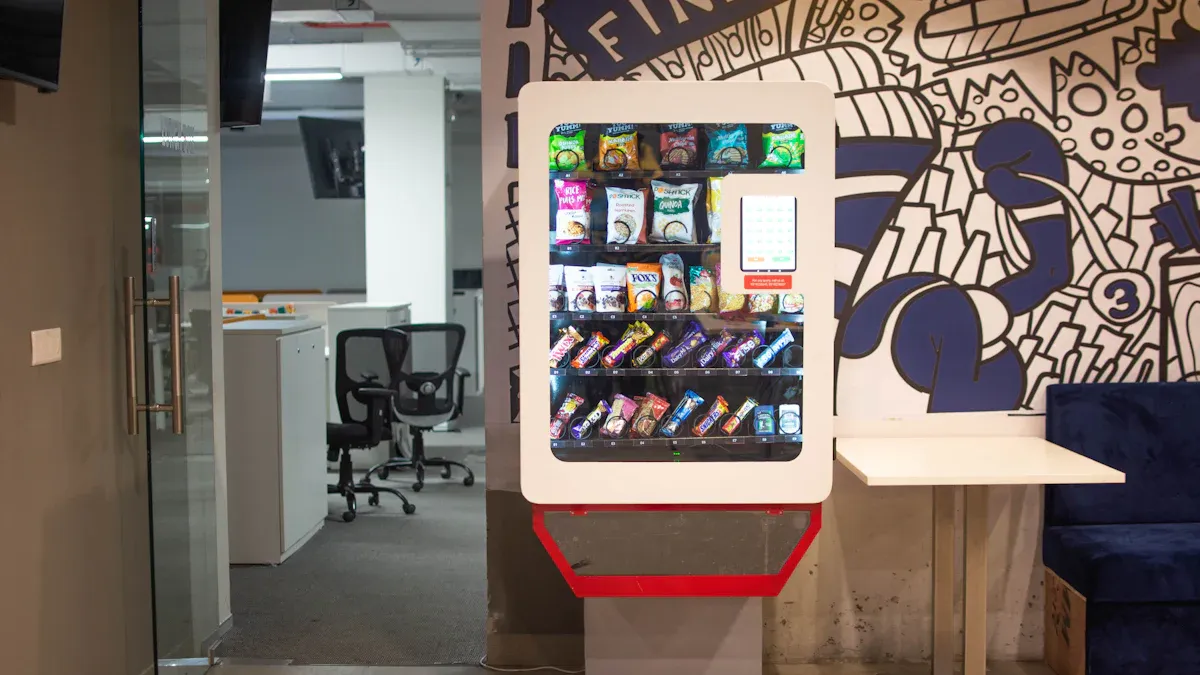
Choosing the right autonomous retail vendor matters for your office or tech park. You want easy payments, happy employees, and smart technology. A good choice improves daily life at work. Take a smart, step-by-step approach so you meet your team’s needs and boost workplace satisfaction.
Key Takeaways
Identify your workplace goals to enhance employee satisfaction and retention through autonomous retail solutions.
Choose vendors that offer advanced payment systems for a seamless shopping experience, reducing wait times and improving convenience.
Evaluate vendor technology for compatibility and scalability to ensure smooth integration and future growth.
Define Needs for Autonomous Retail

Workplace Goals and Employee Convenience
You should start by identifying what you want to achieve with autonomous retail in your office or tech park. Many companies use autonomous retail to boost morale and keep talented employees. When you give your team more control over their choices, you help them feel valued. Quick and easy access to snacks, meals, and drinks can make the workday smoother.
Enhanced customer experience
Sharpened business acumen
Autonomous retail also helps you save time and money. Many operators see a big drop in labor costs after switching to automated solutions. This means your staff can focus on more important tasks. Stores that use autonomous retail can run all day and night, so your team always has access to what they need. This level of convenience supports productivity and keeps everyone satisfied.
Evidence Description | Impact on Operations | Impact on Customer Experience |
|---|---|---|
Increased Operational Efficiency | Reduces labor costs and lets staff focus on key tasks | Improves store productivity and service |
24/7 Operation Potential | Store runs without human supervision, more sales chances | Greater convenience for all shopping schedules |
Product Variety and 24/7 Access
Think about the types of products your employees want. Autonomous retail lets you offer a wide range of snacks, drinks, and even fresh meals. You can meet the needs of people working late shifts or those who arrive early. Traditional setups often limit choices during off-hours, but autonomous retail removes these barriers.
Industry Vertical | Unique Requirement Addressed | Solution Offered |
|---|---|---|
Retail | Enhanced profit margins | Camera-only autonomous store |
Workplace | 24/7 access to amenities |
Autonomous retail solutions, like Just Walk Out technology, give your team seamless access to food and amenities. This is especially helpful for late-night workers who need convenience at any hour. You also reduce bottlenecks during busy times and lower the risk of theft. By focusing on convenience and variety, you create a better workplace for everyone.
Evaluate Autonomous Retail Vendor Capabilities
Payment Solutions and Customer Experience
You need to look closely at how each autonomous retail vendor handles payments and customer interactions. The best vendors use advanced payment orchestration to manage complex payment stacks. They often rely on AI-driven technology to process transactions started by software agents. This approach helps optimize transaction routing, improves authorization rates, and lowers processing costs.
Modern payment systems in autonomous retail environments make shopping easier for everyone. You can find features like mobile payment, self-checkout, and cashierless stores. These features let your employees pay in the aisle, skip long lines, and enjoy a frictionless shopping experience. Centralized payment systems also modernize checkout and boost operational efficiency. When you choose an autonomous retail vendor with these capabilities, you help your team avoid wait times and enjoy a seamless experience.
Tip: Look for vendors that offer digital receipts and secure identity verification. These features add convenience and keep transactions safe.
Technology Integration and Scalability
You should check how well an autonomous retail vendor’s technology fits with your current systems. Leading vendors use platforms like smart shelves, computer vision, sensor networks, and data analytics. These tools help track inventory, monitor customer behavior, and automate checkout. Vendors also use cloud platforms such as Microsoft Azure or AWS to ensure flexibility and support growth.
Technology Platform | Description |
|---|---|
Uses RFID tags and sensors for inventory tracking and real-time pricing updates. | |
Computer vision and cameras | Tracks customer behavior and automates checkout processes. |
Sensor networks | Monitors customer presence and keeps products in good condition. |
Data analytics and AI | Analyzes customer behavior and gives personalized recommendations. |
Automated checkout | Identifies items and processes payments seamlessly. |
Inventory management systems | Tracks inventory in real-time and connects with supply chain software. |
Security and theft prevention | Uses AI-driven surveillance for monitoring and theft prevention. |
Mobile apps and interfaces | Gives customers access to store information and personalized offers. |
Cloud platforms | Provides scalable solutions for businesses of all sizes. |
Scalability matters when you want to expand to more office locations. The right autonomous retail vendor will offer centralized control, self-healing automation, and predictable costs. These features reduce maintenance time, cut downtime, and help you avoid hidden fees. Streamlined IT operations and simplified security also make it easier to manage multiple sites.
Feature | Benefit |
|---|---|
Centralized Control | |
Self-Healing Automation | Reduces downtime by 97%, keeping locations online |
Predictable Costs | Allows expansion without hidden fees |
Streamlined IT Operations | Cuts operational costs by 40% and eliminates vendor sprawl |
Simplified Security | Reduces misconfiguration risks with a secure design |
Support, Maintenance, and Security
You want an autonomous retail vendor that provides strong support and maintenance. Good contracts include regular inspections, preventive and corrective maintenance, and emergency support. Vendors should cover parts and labor, and offer performance optimization to keep systems running smoothly.
Service Type | Description |
|---|---|
Regular inspections | Scheduled checks for wear, damage, or malfunction. |
Preventive maintenance | Proactive steps to fix issues before they cause failures. |
Corrective maintenance | Fast repairs or replacements for faulty parts or systems. |
Emergency support | Quick help for unexpected breakdowns or malfunctions. |
Parts and labor | Coverage for replacement parts and labor fees. |
Performance optimization | Adjustments to improve efficiency and reliability. |
Security is a top concern in autonomous retail. Vendors use mobile apps or payment cards for customer authentication. Payments process automatically when someone leaves the store, and digital receipts are sent right away. Strong cybersecurity measures protect customer data. Vendors use encryption for data at rest and in transit, and they run regular security audits to find and fix problems.
You should also consider how vendors handle privacy. Autonomous systems collect a lot of data about customer movements and purchases. The best vendors use robust encryption, access controls, and follow data protection rules. They design systems for accuracy, reliability, and accessibility. Look for vendors who use open standards and avoid vendor lock-in.
Note: Check if the autonomous retail vendor can show high customer satisfaction scores, accurate order fulfillment, and strong inventory turnover rates. These metrics show efficiency and agility in a business park environment.
Compare Vendors for Business Parks
Track Record and References
When you compare autonomous retail vendors, you should look at their history and reputation. A strong track record shows that a vendor can deliver quality service in business parks. You want a partner who understands your needs and has experience in similar environments.
Check if the vendor has worked with other companies like yours.
Ask for references and talk to current clients about their experiences.
Look for vendors with a good reputation in the industry.
Make sure the vendor offers competitive pricing and can prove their prices are fair.
Confirm that the vendor meets all data security requirements.
Focus on how well the vendor’s technology fits your future needs, not just what they offer today.
Evaluate how easy it is to integrate their system with your current setup.
Consider the vendor’s ability to support your goals and respond quickly to issues.
Cost, ROI, and Contract Flexibility
You should also compare costs and contract options. The best vendors help you manage your budget and offer flexible payment plans. Many vendors provide leasing programs, financing, and payment options that fit your needs. This makes it easier to start with autonomous retail, even if you have a limited budget.
Feature | Description |
|---|---|
Lets you use a unit right away | |
Capital Budget Circumvention | Helps you work around tight capital budgets |
Cash Flow Management | Supports better cash flow for your business |
Financing | Covers installation and support with full financing |
Payment Options | Offers fixed or flexible monthly payments |
Credit Availability | Gives new businesses access to credit |
You should always review the total cost of ownership, not just the upfront price. Ask about support, maintenance, and any extra fees. Flexible contracts let you scale up or down as your needs change.
To choose the right autonomous retail vendor, you should follow these steps:
Set up and integrate systems.
Calibrate and test.
Launch and optimize.
Focus on technology fit and proven results. Start your evaluation now to align with your tech park’s goals and boost workplace satisfaction.
FAQ
What is the best location strategy for autonomous micro stores in corporate offices?
You should place autonomous micro stores in high footfall locations. This location strategy increases retail opportunities and helps convenience retailers reach more employees.
How do cashier-free stores and kiosks support rapid deployment in business parks?
Cashier-free stores and kiosks use a location strategy that allows rapid deployment. You can set up unstaffed micro shops in high footfall locations to create new opportunities for convenience retailers.
What opportunities do autonomous micro stores offer for convenience retailers?
Autonomous micro stores create opportunities for convenience retailers. You can use a location strategy to target high footfall locations and maximize retail opportunities in business parks.
See Also
Enhancing Office Efficiency Through Intelligent Vending Machines
Benefits and Features of AI-Driven Vending Machines in Retail
Comparing Micromarkets and Smart Stores in Global Retail
