How to choose an autonomous retail vendor for universities and campus retail


You want an autonomous retail vendor that matches your campus needs. Many universities now use autonomous shopping experience technology, like grocerants and smart stores, for contact-free experience and new dining options. Top vendors offer services that support brand consistency, compliance, scalability, and advanced ai capabilities. Look for a vendor with strong support and financial stability. Common challenges include high costs and system integration, as shown below:
Challenge | Solution |
|---|---|
High initial cost | Subscription-based solutions spread costs over time. |
Employee resistance to change | Career development and staff involvement help with acceptance. |
Integration with legacy systems | Technology partners support smooth integration and migration. |
Maintaining a personalized experience | AI chatbots and trained staff keep service personal. |
Technical issues | Backup systems and regular updates reduce downtime. |
Tip: Take each step carefully to find the right vendor for your campus.
Key Takeaways
Identify your campus needs before selecting a vendor. Consider factors like student diversity, convenience, and accessibility.
Choose a vendor with proven experience in university settings. Look for case studies and references from other schools.
Ensure the vendor uses reliable technology that integrates smoothly with your existing systems. This will enhance the shopping experience for students.
Select a vendor who offers strong customer support and training. Quick assistance is crucial for maintaining operations.
Look for vendors who prioritize data security and compliance with privacy laws. Protecting student information is essential.
Define Needs for College Campuses

Operational Requirements and Pain Points
You need to understand what makes your campus retail environment different from a traditional store. On college campuses, you serve a diverse group of students with busy schedules and unique needs. You must offer more than just snacks and drinks. Students look for course materials, school supplies, and even event tickets. The table below shows some categories you should consider:
Category | Description |
|---|---|
Course Materials | Required and recommended textbooks and essential course-required supplies. |
General Merchandise | Emblematic clothing, gifts, trade books, school supplies, electronics, snacks, and beverages. |
Campus Services | Non-product offerings like gift cards, event tickets, bus passes, and rentals. |
You may face pain points such as long lines, limited store hours, and the need for accessibility. Students want convenience at all hours, especially during exams or late-night study sessions. You must also think about accessibility for all students. Features like accessible touchscreens, wider aisles, and adjustable kiosks help everyone shop with ease. These features support compliance with disability laws and create a welcoming environment.
Goals for Autonomous Retail Implementation
Your main goal is to provide unique campus convenience for students. Autonomous retail solutions help you reach this goal by making shopping faster and easier. Students can shop any time, day or night, which increases satisfaction and engagement. The benefits of autonomous retail include:
Seamless shopping experiences
Faster transactions
Improved hygiene with contactless options
Personalized experiences through AI technology
You want to create a campus where students feel supported and valued. Autonomous retail also helps you keep your brand strong and consistent. You can customize the store to match your campus culture and meet the needs of your student population. When you focus on convenience and accessibility, you build a better campus experience for everyone.
Choosing an Autonomous Retail Vendor
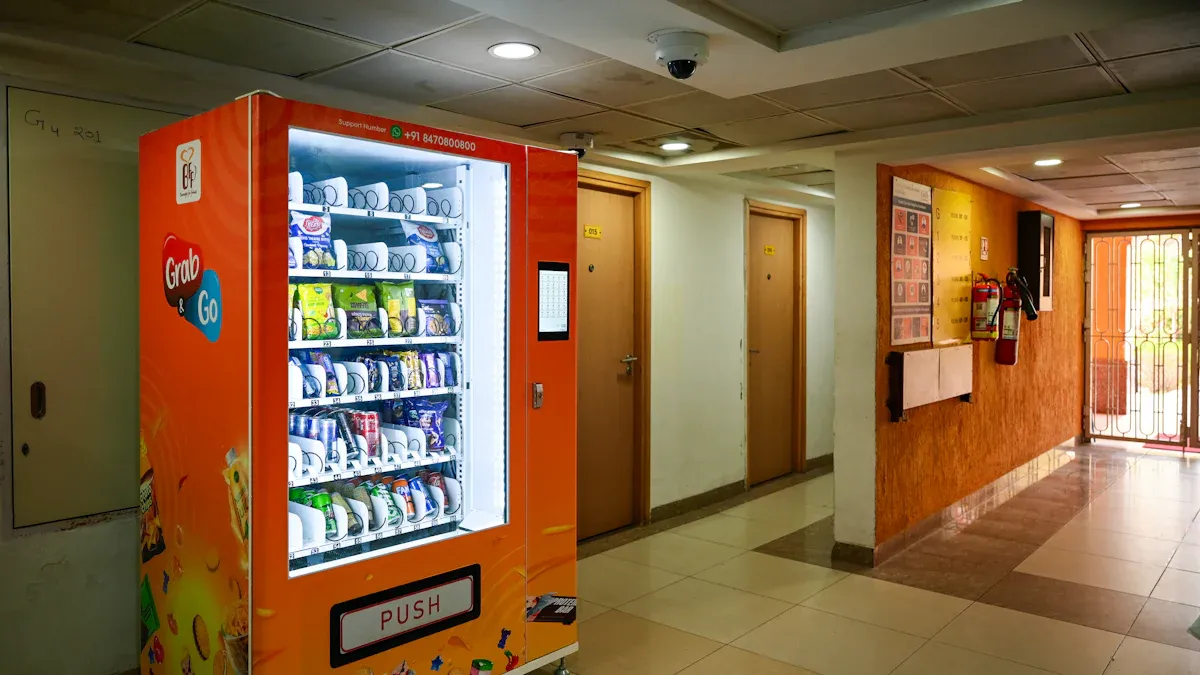
Vendor Experience and Track Record
You want a vendor with a strong history of success on college campuses. Experience matters because it shows that the vendor understands your unique needs. You should look for vendors who have completed projects at other universities. This helps you see how they handle challenges and deliver results.
Here is a table that shows some vendors with proven campus experience:
Vendor | Implementation Details |
|---|---|
Chartwells | Plans to open 100 autonomous retail stores on various campuses, including successful implementations at the University of Houston and San Jose State University. |
AiFi | Successfully implemented autonomous stores at the University of Denver and the University of San Diego. |
You can ask for references from other schools. This gives you real feedback about how the vendor works. You should also check if the vendor has handled projects similar to yours. A good vendor will share case studies and examples. These show how they solve problems and support students.
Tip: Choose a vendor who can show you real results, not just promises.
Technology and Integration Capabilities
You need a vendor who uses reliable technology. The right technology makes shopping easy and safe for students. Many vendors use AI and computer vision to create seamless shopping experiences. These tools help students shop quickly and avoid long lines.
Here are some common technology platforms used by leading vendors:
Chartwells Higher Ed uses autonomous checkout platforms to improve customer service and reduce wait times.
Standard AI provides systems that respect privacy and allow checkout-free shopping.
Other vendors, like AiFi, use AI and computer vision for cashierless shopping. Standard AI works with Compass Digital Labs to update stores for autonomous checkout. They focus on privacy and a good customer experience.
You should also think about integration and technology. The vendor must connect with your campus payment and security systems. This makes it easy for students to pay with credit cards, student IDs, or work IDs. The system should support secure, contactless transactions. Here is a table that shows important integration features:
Feature | Description |
|---|---|
Payment Methods | Supports credit/debit cards, student IDs, and work IDs, which can be pre-authorized at the POS. |
Integration with Payment Systems | Existing payment processing systems can be easily integrated with the ARM. |
Security Features | Supports secure, contactless transactions tailored to the security needs of educational institutions. |
You want a vendor who offers strong customer support. If you have a problem, you need help fast. Good vendors provide training and answer questions quickly. They also update their systems to keep your store running smoothly.
You should also ask about environmental practices. Many vendors promote sustainable products and work with suppliers to set green goals. Some even join projects that reduce waste and support the circular economy.
Note: Look for a vendor who uses cutting-edge technology and cares about the environment.
Choosing the right autonomous retail vendor means looking at experience, technology, integration and technology, and support. You want a partner who can grow with your campus and meet your needs now and in the future. Careful vendor selection helps you build a better campus retail experience.
Scalability and Tailored Solutions
Growth Potential for College Campuses
You want a vendor who can help your campus grow. A good vendor offers solutions that fit your needs now and in the future. When you look at growth, you should check if the vendor can handle more students, new buildings, or extra locations. Many universities, like Drexel and Arizona State, have used autonomous solutions to manage busy times and long lines. These solutions use technology like Vision AI to make shopping faster and easier.
Here are some important factors to consider when you look at scalability:
The vendor should align with your campus goals and strategy.
The solutions must grow with your campus as you add more technology.
The vendor should make sure their solutions fit into your current systems.
You need clear ways to measure success and see if the investment works.
Some vendors use plug-and-play technology. This makes it easy to add new stores or kiosks without a lot of extra work. A-POPs have worked in over 1,000 places and have even tripled revenue compared to old vending machines. This shows that the right vendor can help your campus retail grow and succeed.
Customization and Brand Consistency
You want your campus stores to feel unique and match your school’s brand. The right vendor will offer solutions that you can customize. This means you can choose colors, logos, and even the types of products you sell. A good vendor understands that every campus is different. They will help you create a store that fits your students’ needs and your school’s image.
Look for a vendor who:
Lets you pick the design and layout of your store.
Offers solutions that match your school’s colors and logos.
Helps you choose products that your students want.
Supports changes as your campus grows or your needs change.
Customization Feature | Benefit for Your Campus |
|---|---|
Store Design | Matches your school’s look and feel |
Product Selection | Meets student preferences |
Branding Options | Keeps your brand strong and consistent |
A vendor who offers tailored solutions helps you stand out. You can build a retail space that students trust and enjoy. The right vendor will support your goals and help your campus grow with the best technology and service.
Compliance, Support, and Financial Stability
Regulatory Compliance and Data Privacy
You must choose an autonomous retail vendor who understands university rules and legal standards. Your campus handles sensitive data every day. You need a vendor who protects student data and follows privacy laws. The vendor should use secure technology to keep data safe from hackers. You must check if the vendor meets all state and federal data privacy laws. This includes how they collect, store, and share data. You should ask about their data encryption and how they handle data breaches. Good vendors train staff to protect data and keep your campus safe. You want a partner who values data security as much as you do.
Customer Support and Vendor Reliability
You need strong support from your vendor. Universities require help with new hardware and software. The vendor must offer fast answers when you have questions. You want quick fixes for problems to keep your store open and protect your roi. The vendor should help you connect new systems with your old ones. This keeps your operations smooth and your data accurate. Here are common reliability issues you may face:
Challenge | Description |
|---|---|
Ensuring System Accuracy | The system must track inventory and product quality and inventory accuracy, even with changes. |
Real-Time Processing | The technology must process data fast to keep up with busy dining times. |
The vendor must connect new and old systems for accurate data and inventory tracking. | |
Handling Dynamic Environments | The vendor must adjust to new layouts and products to keep data and inventory correct. |
Analyzing Customer Interactions | The vendor must understand many actions to keep data and inventory records up to date. |
Scalability Issues | The vendor must handle more students and dining locations as your campus grows. |
You should pick a vendor who solves these problems and keeps your inventory and data reliable. Good support helps you reach your roi goals and keeps your dining and retail spaces running well.
Financial Stability and Case Studies
You want a vendor who can support you for years. Financial stability means the vendor can invest in better technology and support. You should ask for case studies that show how the vendor improved roi, inventory, and product quality and inventory accuracy for other schools. Look for vendors who help you cut cost and boost efficiency. Many universities see labor cost drop by 15% after using AI for inventory and dining. AI systems also manage inventory and alert staff for restocking. This keeps your inventory levels high and your data accurate. Vendors who share real results show they care about quality and your roi.
Tip: Choose a vendor who values data, inventory, and quality as much as you do. This will help you build a strong, safe, and efficient campus retail and dining experience.
You need a methodical approach when you choose an autonomous retail vendor for your campus. Balancing operational needs, technology, compliance, and financial factors helps you build a strong retail environment. Vendors use AI to improve repairs, inventory, and budgeting. Small colleges face staff shortages, while large universities manage complex compliance. Use this checklist to guide your decision:
Checklist Item | Description |
|---|---|
Integration Capabilities | Check if the vendor fits your current systems. |
Flexibility for Future Scaling | Make sure the vendor can grow with your campus. |
Data Governance | Review privacy and data protection standards. |
Support and Training Resources | Look for strong vendor support and training. |
Vendor Transparency | Choose a vendor who shares clear information. |
Use these steps to find the best vendor and create a successful campus retail experience.
FAQ
What is autonomous retail?
You use autonomous retail to let students shop without cashiers. Smart technology tracks what students take and charges them automatically. This makes shopping faster and easier for everyone.
How do you keep student data safe?
You choose vendors who use strong security. They encrypt data and follow privacy laws. Staff get training to protect information. You can ask vendors about their safety steps before you sign a contract.
Can you add more stores later?
You can add more stores as your campus grows. Many vendors offer solutions that scale up. You start small and expand when you need more locations or services.
What support do vendors provide?
You get help with setup, training, and troubleshooting. Good vendors answer questions quickly. They update systems and fix problems fast. You can ask for support details before you choose a vendor.
How do you keep your campus brand in the store?
You work with vendors to match your school’s colors, logos, and style. You pick products that fit your students’ needs. This keeps your retail space unique and familiar.
See Also
Exploring Global Trends in Automated Convenience Retail Solutions
Discovering Unique Vending Machine Locations for Modern Consumers
Enhancing Workplace Efficiency with Intelligent Vending Machines
The Evolution of Fast Food Through Automated Vending Machines
Transforming Retail Access with Innovative Grocery Vending Machines
