Key Compliance Requirements Every Airport Smart Store Must Follow

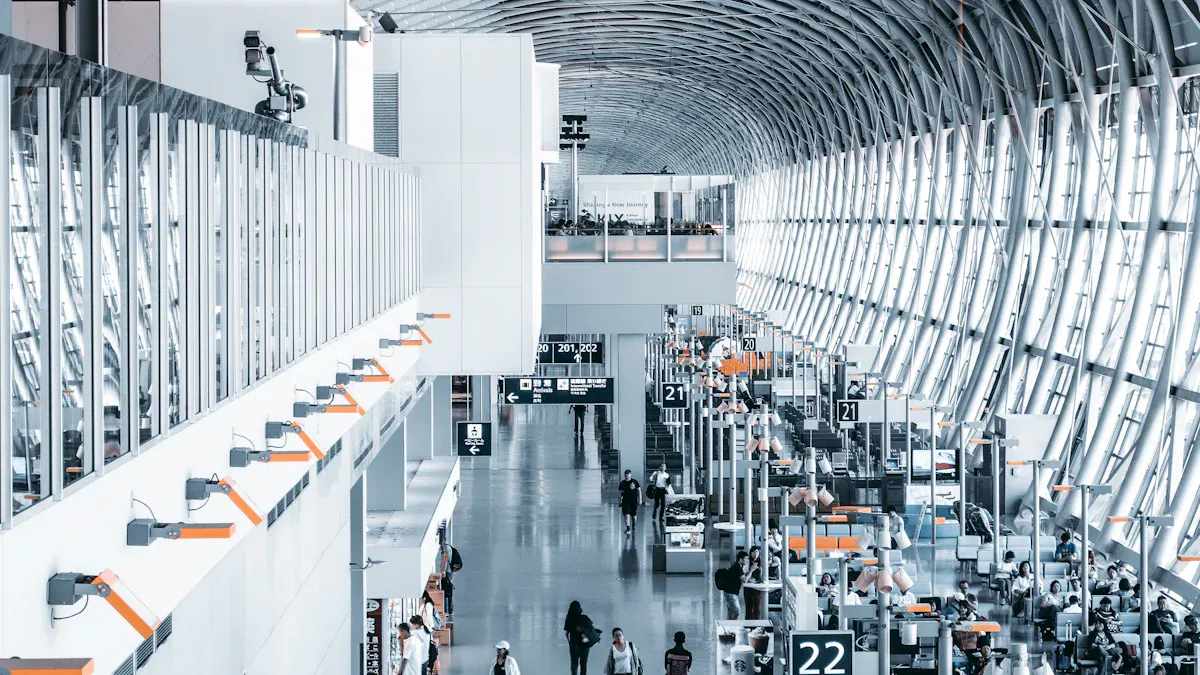
Running a smart store in an airport involves adhering to various compliance requirements that ensure your business remains legal and safe. Airport authorities monitor aspects such as obstacle analysis, noise control, and wildlife management. You are also required to utilize technology and meet accessibility standards. Failing to comply with these requirements could result in hefty fines or the loss of your store license. Staying informed about these compliance requirements not only helps your store operate smoothly but also builds customer trust.
Compliance Area | Description |
|---|---|
Obstacle analysis & permitting | Ensures airspace safety by identifying objects that may obstruct aircraft. |
Noise mitigation | Reduces noise pollution from aircraft for the comfort of nearby residents. |
Wildlife management | Mitigates wildlife hazards, such as bird strikes, to enhance flight safety. |
Key Takeaways
Know and follow aviation authority rules to keep your airport smart store safe and secure.
Check and update your compliance rules often to avoid fines and keep your store license.
Use strong security steps, like staff training and digital data safety, to protect customer information.
Use technology like GIS and merchandising apps to track compliance and make your store work better.
Make your store easy to use by following ADA rules for kiosks and making sure all customers can use your services.
Regulatory Compliance Requirements
Aviation Authority Guidelines
Airport smart stores must follow rules from aviation authorities. The FAA and TSA make safety and security standards. Airports often ask you to sign agreements about sharing money and meeting MAG. These agreements help airports use space well and keep business fair. You should check these rules often. They can change if new technology comes or airport policies update.
FAA Grant Obligations
Many airports get FAA grants to improve their buildings. If you have a smart store there, you must follow grant rules. These rules may say what technology you use and that your store must be open to everyone. You also need to follow environmental rules. If you do not follow these rules, the airport could lose money. You might lose your store. Work with airport managers to know all grant rules.
Customs and Duty-Free Laws
Smart stores in airports must follow customs and duty-free laws. These laws say what you can sell and how to report sales. You need special licenses to sell duty-free items. You must keep good records and report them to customs. Some things, like tobacco and alcohol, have extra rules. Workers must pass background checks. Your store must be safe.
Tip: Always look for new customs laws. Rules can change fast.
Here is a summary of key customs and duty-free laws:
Custom/Duty-Free Law | Description |
|---|---|
Duty Free Licensing | You need permission to sell goods without local taxes. |
Customs Compliance | You must keep records and report to customs. |
Security and Screening | Workers need background checks. Stores must be safe. |
Product Restrictions | Some items, like tobacco and alcohol, have special rules. |
You must always pay attention to these rules. Following them keeps your business safe and helps the airport.
Security and Access Control
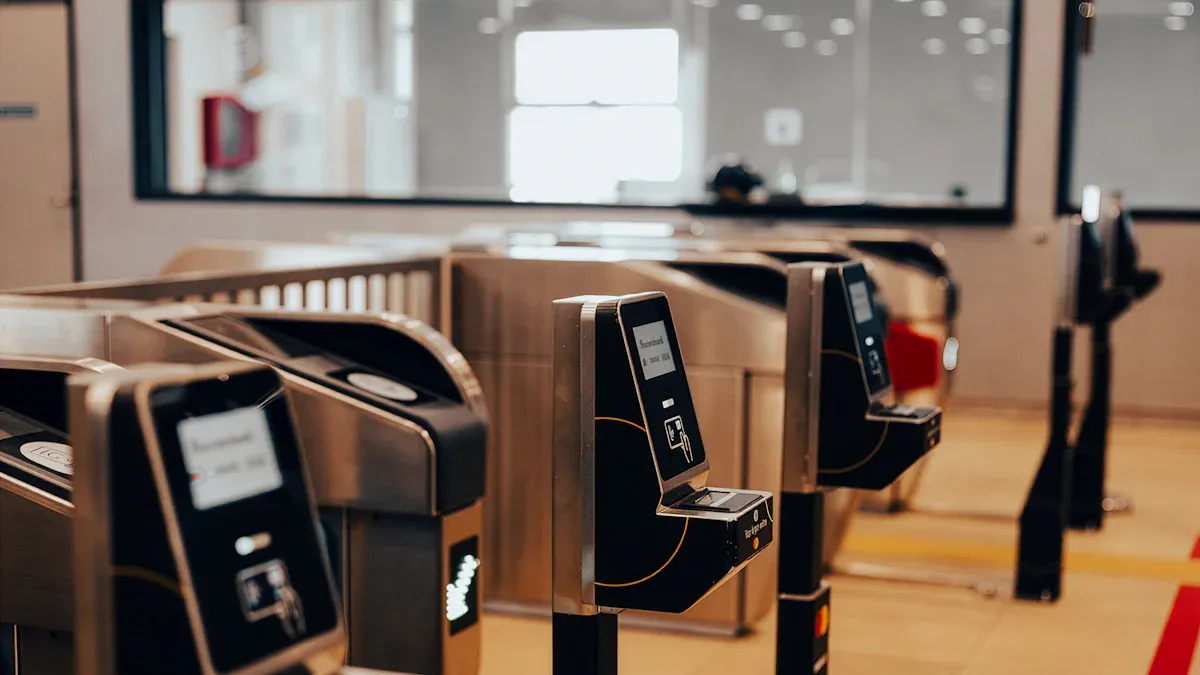
Physical Security Protocols
Airport smart stores must follow strong security rules. The TSA makes the Airport Security Program (ASP) to keep stores safe. These rules protect travelers and workers. Store teams need training to spot dangers and act quickly. Many reports say 76% of store operators think low security awareness is the biggest risk. Also, 29% worry about internet risks.
The TSA has made new changes that affect stores. Passengers can now bring more liquids without plastic bags. AI security systems help check people faster and cut wait times. Some airports let visitors get guest passes to enter gates. This means more people might visit your store. You need to update your checks to handle more guests and keep everyone safe.
Tip: Check your security plan often. New TSA rules can change how you run your store.
Digital Security & Data Protection
Stores use customer data every day. You must follow digital security rules to keep this data safe. PCI DSS protects cardholder data. GDPR protects personal data for people in the EU. You must follow these if you take payments or serve EU travelers.
Standard | Focus Area | Mandatory? |
|---|---|---|
PCI DSS | Cardholder data security | Yes |
GDPR | Personal data privacy (EU) | Yes (in EU) |
If you break these rules, you can get big fines. Fines for PCI DSS or GDPR can start at $5,000 each month. They can go up to $100,000 after six months. A big data leak can cost millions. Following these rules keeps your business safe and helps customers trust you.
Operational Compliance Requirements
Staff Screening & Training
You must check your staff before hiring them. Background checks help you follow airport security rules. Using creative staffing can help you fill open shifts. Training is important for everyone on your team. Set clear goals for each job. Check what skills your team has and what they need to learn. Spend money on classes, webinars, and learning materials. Give tests and watch your staff to see if they use new skills. These steps help you follow the rules and keep your store safe.
Training Method | Description |
|---|---|
Set objectives for each role to guide learning. | |
Assess Current Skill Levels | Find areas needing improvement. |
Invest in Training Resources | Offer classes, webinars, and materials. |
Follow Up on Outcomes | Use tests and observations to check skill use. |
Inventory & Planogram Tracking
You need to keep track of your inventory. You also need to use planograms to show where things go. Planograms help you put products in the right place. Tracking helps you keep your store layout correct. Merchandising apps let you change layouts fast. You can check if all your stores follow the rules. Planograms make it easier to stock shelves and keep displays the same. This helps you meet airport rules and avoid mistakes.
Evidence Description | Source |
|---|---|
Track compliance across stores, follow layout, display products correctly | |
Merchandising App ensures planograms are executed, real-time updates, analytics | |
Planograms maintain consistency, simplify stocking and restocking | Optimizing Airport Retail Management with Data-Driven Strategies |
Tip: Use planogram tracking to keep your store neat and follow airport rules.
GIS Technology for Compliance
GIS technology helps you run your store and follow rules. It gives you live updates about your store and the airport. GIS works with asset management to track repairs. You can watch noise levels and get alerts for weather or other dangers. GIS helps you follow FAA rules by checking data and making reports. CCTV video helps you spot risks and keep your store safe. Ready-to-use tools help you follow US and world rules. GIS checks FAA data and sends alerts for activities.
GIS makes your store safer.
GIS tracks repairs and helps with FAA rules.
GIS watches noise and sends alerts.
GIS uses CCTV to help people act safely.
Note: GIS technology makes it easier to follow airport rules and keep your store safe.
Health, Safety, and Environmental Standards
Fire Safety & Emergency Procedures
You have to follow fire safety rules in your airport smart store. Fire alarms and sprinklers help keep people and things safe. You need to check these systems often to make sure they work. Emergency exits must always be open and easy to reach. Train your staff to use fire extinguishers and know the evacuation plan. Cleaning and fixing things helps keep your store safe. Electrostatic cleaning machines spray a special mist every night. This mist sticks to surfaces and kills germs better than normal cleaning. Keeping your store clean stops slips and falls. During COVID-19, airports used digital tools like biometric boarding to help keep people safe and move faster. These changes show why you should update your safety rules.
Tip: Check your emergency plans every month. Practice drills with your team so everyone knows what to do.
Electrostatic cleaning helps keep everyone healthy and lowers health risks.
Environmental Sustainability
You need to follow environmental rules as part of your job. Airports use a lot of energy, so you should try to save power. Many stores use LED lights and better HVAC systems. Some stores use sunlight to use less energy. You can pick eco-friendly materials like recycled steel or bamboo for displays. Modular construction helps cut waste and makes upgrades easier. Water management systems, like rainwater harvesting and low-flow fixtures, help save water.
Practice | Description |
|---|---|
Eco-friendly materials | Use recycled steel, bamboo, and low-carbon concrete to lower impact. |
Energy efficiency | Install LED lighting and efficient HVAC systems to save energy. |
Modular construction | Build with modular parts to reduce waste and allow easy upgrades. |
Water management | Use rainwater harvesting and low-flow fixtures to conserve water. |
Many airports use renewable energy like solar and wind power. You should follow rules like LEED certification and the FAA's Sustainability Master Plan. These steps help protect the environment and meet airport rules.
Note: Using green practices makes your store better for travelers who care about the planet.
Accessibility & Customer Compliance Requirements
Accessibility Standards for Kiosks
You need to make sure kiosks follow accessibility rules. The ADA and other laws say kiosks must be usable by everyone. People with disabilities should be able to use kiosks easily. This includes people who cannot see or hear well. Kiosks should have features like text-to-speech and closed captioning. They should also have more than one way to enter information. You should test kiosks often to find problems. Testing helps you make kiosks better for all travelers. Train your staff so they can help people use kiosk features.
Standard | Applicability | Description |
|---|---|---|
Part 382 | Carriers and airport operators | Must ensure accessible models for shared-use automated airport kiosks. |
Part 27 | Airport operators | Compliance required for shared-use automated airport kiosks. |
Proposed ADAAG revisions | Self-service machines | Proposed changes to address accessibility for kiosks used in airports. |
Kiosks need clear space on the floor. They should have buttons you can feel and instructions you can hear. Give privacy to everyone who uses kiosks. Make sure kiosks work in many languages. Simple menus help travelers from different places.
Tip: Ask people with disabilities what they think. Their ideas help you make kiosks better and follow new rules.
Payment Processing Regulations
You must follow payment rules to keep customer data safe. PCI DSS gives steps to protect card information. Use tokenization to hide sensitive data. Secure payment systems lower risks. Payment machines must meet PCI DSS 9.9 rules. GDPR also affects how you handle personal data.
Regulation | Description |
|---|---|
PCI DSS | Requires businesses to protect sensitive payment data and outlines security measures for processing, storing, and transmitting card information securely. |
GDPR | Mandates the protection of personal data and privacy, impacting how customer information is handled during transactions. |
Tokenization helps keep card data safe.
Use payment systems that do not show card numbers.
Note: Safe payment technology helps passengers trust your store and keeps it secure.
Customer Data Privacy
You must keep customer data safe to follow the rules. GDPR and the PNR Directive have strict rules for personal information. You should remove names and keep data for only a short time. These laws help stop crime and protect passenger information.
Regulation | Description |
|---|---|
GDPR | Imposes strict requirements on the collection, storage, and handling of personal data, enhancing protection for passengers. |
PNR Directive | Requires that PNR data be used solely for the fight against terrorism, with strict rules on data retention and depersonalization. |
Alert: Check your privacy rules often. Change them when laws change to avoid fines and keep your good name.
You need to follow rules to keep your airport smart store safe and legal. Checking your store often helps you keep up with new rules and technology. When you follow these standards, people trust your store more and your store works better. Look at the table below to see the benefits:
Benefit | Description |
|---|---|
Enhancing operational efficiency | Using different parts together makes your store run better. You earn more money because your systems are clear and safe. |
Streamlined processes | Scanning and checking documents with machines saves time. It also makes checking passenger papers easier. |
Enhanced personalization | Giving special tips and services makes passengers feel important. This helps them trust your store and feel included. |
Here are steps you can take to keep your store ready:
Learn FAA rules for managing risks.
Decide what risk levels your store has.
Make plans for each risk level.
Link your plans to SMS steps.
Keep records so you can show them later.
Teach your staff what to do.
Check if your plans work well.
Use technology to help your store.
Prepare for FAA checks.
Stay alert and look at your compliance plans often. This helps your store stay safe, work well, and be trusted by travelers.
FAQ
What happens if you do not follow airport compliance rules?
You might lose your store license. You could pay big fines. Airport authorities may shut down your store. Customers might stop trusting your business.
How often should you review compliance policies?
You need to check your compliance policies every month. Change your plans when rules change. Train your staff after each update.
Which technology helps you track compliance?
Technology | Benefit |
|---|---|
GIS | Helps track repairs and gives alerts |
Merchandising App | Checks if store layouts are correct |
CCTV | Watches for safety risks |
How do you make kiosks accessible for everyone?
Add features that read text out loud.
Use buttons that are easy to feel.
Give instructions in different languages.
Test kiosks with people who have disabilities.
What is the best way to protect customer data?
You should use safe payment systems. Tokenize card data. Follow PCI DSS and GDPR rules. Remove personal information quickly.
See Also
Upcoming Changes to Walmart's Self-Checkout System in 2025
Comparing Micromarkets and Smart Stores in Global Retail
Understanding AI-Driven Corner Stores: Essential Insights for Retailers
Analyzing Walgreens Self-Checkout: Benefits and Obstacles in Retail
The Future of Retail: Embracing AI-Enhanced Store Experiences
