How computer vision enables accurate checkout in convenience store chains & small-format grocery.

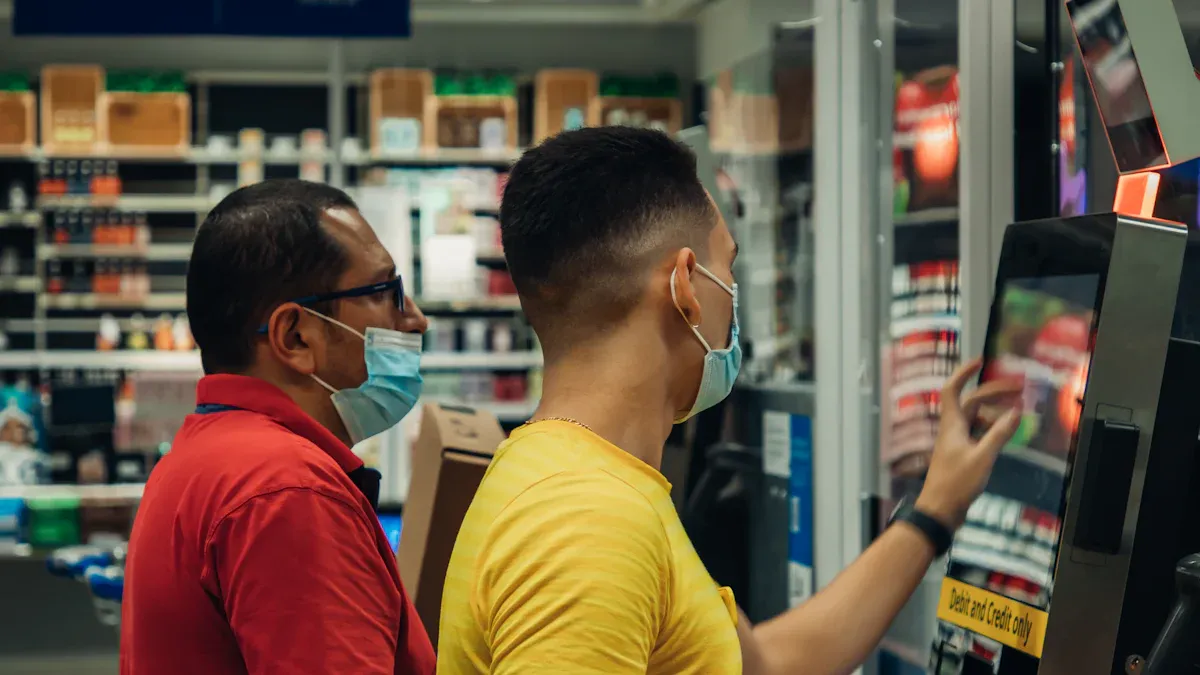
You see computer vision and AI technology change how you shop in convenience stores and small-format grocery stores. Cameras and sensors watch products and track your movements. This autonomous system uses data to add items to your cart instantly, helping you avoid long lines. You get a fast and reliable checkout that improves your experience. The technology also increases accuracy, keeps shelves stocked, and makes shopping easier.
You pick up items and walk out with no need for barcode scanning.
Cashierless stores charge you automatically, streamlining your journey.
Key Takeaways
Computer vision technology allows you to shop without scanning barcodes. Cameras and sensors track your items, making checkout faster and easier.
AI algorithms enhance product recognition accuracy. This leads to fewer errors and a smoother shopping experience, allowing for real-time inventory updates.
Automated checkout systems reduce wait times by up to 75%. This increases customer satisfaction and allows staff to focus on assisting shoppers.
Privacy and data security are important. Look for stores that use strong encryption and follow privacy laws to protect your information.
Hybrid checkout models combine automated systems with staffed lanes. This approach helps small stores manage costs while improving the shopping experience.
Computer vision for automated checkout
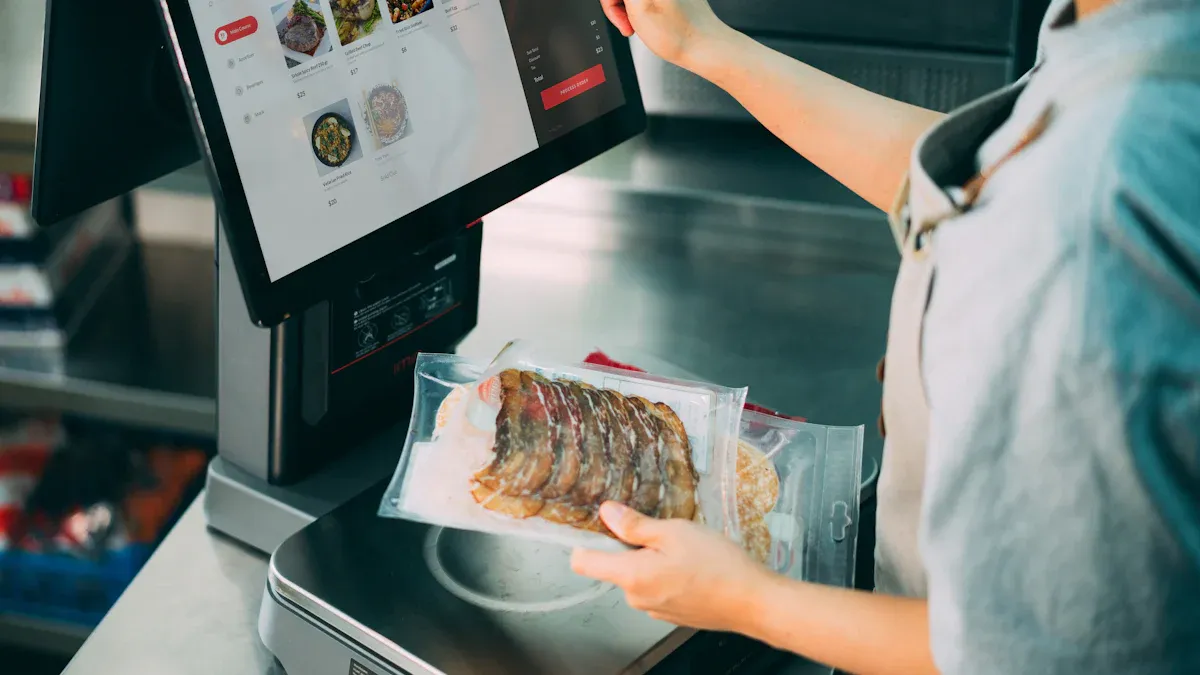
You see computer vision for automated checkout changing the way you shop. This technology uses cameras, sensors, and ai to track products and customers. You experience a smooth checkout process because the system recognizes items and movements in real time. Computer vision technology works with ai-based video analytics and sensor fusion to make sure every transaction is accurate.
Cameras and sensor fusion
You notice cameras placed throughout the store. These cameras capture images and video of products and shoppers. High resolution and dynamic range help the system detect small product labels, even in different lighting conditions. Customized lens options fit various store layouts, and compact designs keep the cameras reliable.
Feature | Description |
|---|---|
High Resolution and Dynamic Range | Detects small product labels and works in many lighting conditions. |
Customized Lens Options | Fits different store layouts and improves surveillance. |
Multiple Connectivity Options | Connects easily with retail systems. |
Compact and Durable Design | Stays reliable in busy stores. |
AI and Cloud Support | Uses updated ai algorithms and remote management features. |
You see sensors working with cameras to improve accuracy. Pressure mats track your steps, weight sensors detect when you pick up items, and RFID tags identify products. Sensor fusion combines these technologies, so the system knows exactly what you take and where you move. LiDAR maps depth for accurate tracking, and vibration sensors notice product interactions. This multimodal approach helps prevent errors and theft while keeping your data private.
Tip: Sensor fusion makes product and customer tracking more reliable than using cameras alone.
AI algorithms for product tracking
You watch ai algorithms work behind the scenes. These systems use deep learning to recognize products, even in crowded aisles. Computer vision for automated checkout uses image recognition to tell items apart, so you do not need to scan barcodes. The system updates inventory levels in real time, helping with smart inventory management and automated stock replenishment.
AI-driven demand forecasting predicts what products you might buy next. The system uses analytics to study your shopping patterns and offers personalized recommendations. Self-checkout kiosks use built-in cameras and sensors to capture product images and verify them against codes. This process improves product recognition and reduces errors.
Strategy | Description |
|---|---|
Data Augmentation | Adds glare, crops, and angles to training images for better recognition. |
Multiple Camera Angles | Uses staggered cameras for clear views during busy times. |
Real-time Monitoring | Checks scanned barcodes against items in the bagging area to prevent mistakes. |
You benefit from improved product recognition accuracy. Studies show that enhanced self-checkout systems using advanced ai algorithms, like YOLOv10, outperform older methods in both speed and accuracy. These systems also help with real-time inventory tracking and ai for inventory management.
Integration with retail systems
You see computer vision for automated checkout working with existing retail systems. Cameras, video processing units, QR scanners, and model servers connect to point-of-sale and inventory management software. This integration lets the system update inventory and process payments automatically.
Component | Description |
|---|---|
Cameras | Record and send visual data for object recognition. |
Video processing unit | Processes video data for real-time analysis. |
QR scanner | Scans QR codes to identify you and start your shopping. |
Model server | Ensures fast video processing and quick system responses. |
You may face challenges when stores use older systems. Compatibility issues and high setup costs can make integration difficult. Data privacy concerns also matter because the system collects and analyzes visual data. Retailers use APIs and middleware to connect new technology with legacy systems. You benefit from seamless integration because it reduces wait times and errors. Store associates can focus on helping you, and finance teams can use analytics for better business decisions.
Note: A strong integrated software infrastructure is key for successful automated checkout adoption.
You see self-checkout kiosks and automated checkout systems becoming more common. Over 217,000 new terminals appeared in stores in 2023. These systems use computer vision, ai, and sensors to make shopping faster and more accurate. You enjoy a better experience, and retailers improve operational efficiency.
AI-powered autonomous retail benefits
Faster, contactless checkout
You notice how ai-powered autonomous retail systems make checkout much faster. You pick up your items and walk out, skipping long lines. Contactless payments finish in just a few seconds, so you spend less time waiting. Staff can focus on helping you instead of handling cash. Stores see up to a 75% reduction in wait times and a 35% increase in transaction volume. Customer satisfaction rises by 30%, and average basket size grows by 27%.
Improvement Metric | Value |
|---|---|
Reduction in wait times | Up to 75% |
Increase in transaction volume | 35% |
Increase in customer satisfaction | 30% |
Increase in average basket size | 27% |
Aldi uses Grabango to cut checkout labor costs by 20%. Kroger’s smart carts boost transaction values by 12%. You get in and out quickly, even during busy hours. The technology lets you shop at any time, giving you more flexibility.
Reduced errors and fraud prevention
You see ai-powered autonomous retail systems reduce mistakes and stop fraud. These systems learn from transaction histories and customer patterns. They spot abnormal activity, like strange transaction amounts or failed logins. AI assigns risk scores and blocks risky transactions or sends them for review.
AI checks the full context of each transaction.
It finds patterns that may show fraud.
You benefit from real-time fraud prevention.
Machine learning for fraud detection improves payment security and lowers the risk of chargebacks. AI systems use device data, such as geolocation and IP address, to assess fraud risk instantly.
Computer vision helps detect receipt fraud, price switching, and bulk return schemes. AI-powered automated self-checkout systems watch hand movements, making sure every item is scanned. This technology stops theft and keeps your shopping safe.
Enhanced customer experience
You enjoy a better customer experience with ai-powered autonomous retail. You scan multiple items at once, saving time. The system recognizes your purchases instantly, making shopping smoother. Stores offer personalized shopping experiences, suggesting products you might like. You see higher conversion rates and bigger order values.
Evidence Type | Description |
|---|---|
Reduced Wait Times | 43% of consumers prefer self-checkout for speed. |
Increased Convenience | AI systems let you scan many items at once. |
Personalization | 71% want personalized shopping experiences; 76% return to stores that offer them. |
Higher Conversion Rates | Personalized suggestions boost conversion rates by 10-15%. |
Increased Average Order Values | Personalized offers raise order values by 20-30%. |
24/7 Access | Autonomous stores let you shop anytime, improving satisfaction. |
You get personalized shopping experiences and can shop whenever you want. AI-powered automated self-checkout and automated checkout systems improve efficiency and make your visits enjoyable.
Challenges in checkout-free systems
Product identification and accuracy
You face challenges with product identification and accuracy in checkout-free systems. Sometimes, the technology struggles to recognize items, especially when products look similar or packaging changes. You see retailers use several methods to improve accuracy:
Method/Technique | Description |
|---|---|
Data Annotation | Labeling images with product names and brands for better recognition. |
Model Selection | Using models like YOLO or Faster R-CNN for quick and accurate deployment. |
Custom Model Creation | Building models for specific products, which takes more time and data. |
Image Collection | Gathering diverse product images to help the system work in any condition. |
Real-time Processing | Tracking customer actions instantly for accurate automated checkout. |
System Integration | Making sure AI and computer vision work with retail management systems. |
You notice that real-time processing needs strong computers. Machine learning models must get updates often to keep accuracy high. Even large retailers sometimes need human reviewers to fix errors, showing that full automation is still hard to achieve.
Tip: Regular updates and diverse image data help maintain high accuracy in automated checkout systems.
Privacy and data security
You may worry about privacy and data security when using checkout-free systems. The technology tracks your movements and collects data to improve your experience, but this raises concerns. Retailers address these issues by following strict rules and using secure systems.
Concern Type | Description |
|---|---|
Some shoppers fear misuse of their data by computer vision and AI systems. | |
Data protection | Stores use certifications like ISO 27001 to keep sensitive data safe. |
Consumer confidence | Strong safeguards help you trust cashier-less checkout and autonomous technology. |
Retailers use strategies to protect your data:
Ethical data collection: Only gather what is needed.
Transparency: Tell you how your data is used.
Compliance: Follow privacy laws to keep your trust.
Encryption: Protect your data during storage and transfer.
Routine auditing: Check systems often for safety.
Note: You should look for stores that clearly explain their data policies and use secure technology.
Cost and scalability
You see cost and scalability as major challenges for checkout-free systems. Hardware costs for cameras, GPUs, and storage can be high. Software licensing and integration with existing systems add to expenses. Ongoing maintenance also increases operational costs.
Cost Component | Description |
|---|---|
Hardware Costs | Cameras, GPUs, CPUs, and storage can be expensive. |
Software Licensing/Development | Integrating computer vision solutions and maintaining software. |
Operational Expenses | Maintenance and support for automated checkout systems. |
Camera Costs | Prices range from under $50 to over $3,000 each, depending on specifications. |
Integration Costs | Ensuring new systems work with current technology. |
You see many shoppers enjoy self-service and cashier-less checkout, but scaling autonomous technology for small-format grocery stores takes careful planning. Hybrid models, which mix automated checkout with staffed lanes, help stores manage costs and improve experience.
"I think hybrid is the way forward... you need that hybrid, and we’re seeing the same thing with autonomous." – Jordan Fisher, CEO of Standard AI
Real-world adoption of computer vision

Case studies in convenience stores
You see convenience store chains lead the way in adopting computer vision and ai for autonomous checkout. Amazon Go set a new standard by using sensor fusion and deep learning to create a cashier-less shopping experience. You walk in, grab what you need, and leave without waiting in line. This technology improves inventory accuracy and lowers labor costs. You notice that shopping takes less than 15 seconds, which makes your experience smoother and faster.
Many convenience store chains report big savings and better efficiency after switching to computer vision-based checkout systems. Stores save up to $3,900 per month and $31 million annually across hundreds of locations. Managers save 10 hours every two weeks, and direct labor costs drop by 3-7%. You see sales increase by 1-3% and forecast accuracy improve by 30%. Vision AI monitors transactions and aisles, helping detect mis-scans and theft. Shrinkage drops by up to 60%, so stores keep more products on shelves.
You benefit from real-time tracking of stock levels and demand forecasting. Stores use data to keep popular items in stock and reduce waste.
Retailer | Lesson Learned |
|---|---|
Starbucks | Frequent inventory counting with AI reduces stockouts. |
Walmart | Generative AI improves shopper and associate experiences. |
Target & Home Depot | Predictive inventory management boosts reliability and margins. |
Innovations in small-format grocery
You see small-format grocery stores use computer vision to create new shopping experiences. Just Walk Out technology lets you skip lines and self-checkout. You grab your groceries and leave, which makes quick trips easier. Customers appreciate this technology for its speed and convenience.
Stores use computer vision and loss prevention AI to reduce shrinkage and detect theft in real time. You notice that these systems work without human oversight, so staff can focus on helping you. Small-format grocery stores rely on data from these systems to improve inventory management and keep shelves stocked.
Innovation Type | Description |
|---|---|
Computer Vision & Loss Prevention AI | Reduces shrinkage, ensures self-checkout accuracy, and detects theft in real time. |
You see that early adopters learned to update systems often and use diverse data to maintain accuracy. Stores that use predictive inventory management keep products available and improve margins. You experience faster checkout and better service every time you shop.
You see computer vision and ai change the way you shop by making checkout faster and more accurate. This technology gives you a smoother experience and helps stores use data to improve service. In the future, autonomous stores will offer personalized shopping, connect with online platforms, and use advanced systems for inventory and security. You can explore these innovations to boost efficiency and meet customer needs in your own store.
FAQ
How does computer vision checkout work in stores?
You pick up items. Cameras and sensors track your choices. The system adds products to your virtual cart. You walk out, and the store charges you automatically.
Tip: You do not need to scan barcodes or wait in line.
Is my personal data safe when I shop with AI checkout?
You can trust stores that use strong encryption and follow privacy laws.
Security Feature | Purpose |
|---|---|
Encryption | Protects your data |
Auditing | Checks for safety |
What happens if the system makes a mistake?
You can contact store staff or use a help kiosk. The store reviews your transaction and fixes errors quickly.
Staff support
Help kiosks
Fast corrections
Can small stores afford computer vision checkout?
You see many small stores use hybrid systems. These mix automated checkout with staffed lanes. This approach lowers costs and helps stores scale technology over time.
Note: Hybrid models make advanced checkout more affordable for small businesses.
See Also
Navigating Walgreens Self-Checkout: Benefits And Hurdles In Shopping
Discover How Cloudpick Offers Cashier-Free Shopping Solutions
Understanding The Growth Of AI-Driven Convenience Stores For Retailers
Walmart Self-Checkout Updates: Anticipated Changes For 2025
Comparing Micromarkets And Smart Stores: Global Automated Retail Insights
