Computer Vision and RFID Which Technology Delivers Better Results

You want to find out which technology works better in stores. Computer vision is usually faster and more automatic. It helps with jobs like checking inventory and stopping theft. Cameras can see when items are missing and watch for bad behavior. This helps workers act quickly. RFID is great for keeping track of products and making stock work easier. Here are some real-life examples:
Use Case | Description |
|---|---|
Inventory Checks | Computer vision drones check inventory much faster than people. |
Autonomous Checkout | Cameras and sensors let people shop and pay without cashiers. |
Loss Prevention | Visual systems tell security right away if someone might steal. |
Inventory Management | Cameras find missing or wrong items so staff can restock fast. |
You should look at accuracy, cost, how easy it is to grow, privacy, automation, and how well they work in real life. Using both together can give even better results.
Key Takeaways
Computer vision and RFID are both good at different things. Use RFID to keep track of inventory. Use computer vision to watch what happens in real time.
Using both together can make stores work better. This helps stores keep track of items and makes shopping nicer for customers.
Think about the costs. RFID does not cost much to start. Computer vision costs more at first but can save money later by stopping theft.
Privacy is important. Always tell customers if you use cameras or RFID tags. This keeps their data safe.
Make customer experience a priority. Both technologies can make checkout faster and keep shelves full. This makes shoppers happier.
Criteria for Better Results
Accuracy
You want the right products on your shelves. RFID tags help you count items fast and reach about 95% accuracy or more. This means you can trust your inventory, even when it is busy. Computer vision watches shelves and tells you if items are missing or in the wrong spot. It does not need special tags, so it can find problems that RFID might not see.
Technology | Accuracy Rate | Notes |
|---|---|---|
RFID | 95% or better | High accuracy, even during peak seasons. |
Without RFID | 65% | Lower accuracy, more out-of-stock risk. |
Computer Vision | Not specified | Finds shelf gaps and checks product placement. |
Cost
You need to think about setup and ongoing costs. RFID tags are cheap for each item, and you can set up the system fast in small stores. Computer vision costs more because you need cameras and servers. Cameras can cost from $50 to over $3,000 each. You also pay for software and updates. The total cost depends on how many cameras you need and how many stores you have.
Scalability
If you want to grow your business, RFID works well for adding more items or stores. You can tag new products and scan them quickly. Computer vision needs more planning and equipment as you add stores. It takes longer to set up in big stores, but it can watch many areas at once without tags.
Privacy
You care about your customers’ privacy. RFID rules say you must label tags and readers clearly. You cannot track people without telling them. Computer vision brings up worries about hidden cameras and collecting data. Laws say you must tell customers when you use these systems and keep their information safe.
Note: Most Americans want strong privacy laws and clear rules for how stores use their data.
Automation
You can use both RFID and computer vision to help your store run better. RFID lets you count inventory fast and helps with restocking. Computer vision powers self-checkout, scan-and-go, and loss prevention. Many stores now use both to cut mistakes and save time.
AI and smart sensors help stores scan shelves and track products.
Robots and electronic shelf labels are becoming more common.
Customer Experience
You want shoppers to have a good visit. RFID makes checkout faster and keeps shelves full. Computer vision helps by making sure products are always there and by supporting new ways to shop. When you use these tools, customers find what they need, wait less, and leave happier.
Benefit | Description |
|---|---|
Faster Shopping | RFID speeds up transactions. |
Better Product Availability | Accurate data keeps shelves full. |
Frictionless Experience | Computer vision supports cashierless shopping. |
Fewer Fulfillment Cancellations | Reliable inventory means more happy customers. |
RFID in Retail
RFID Overview
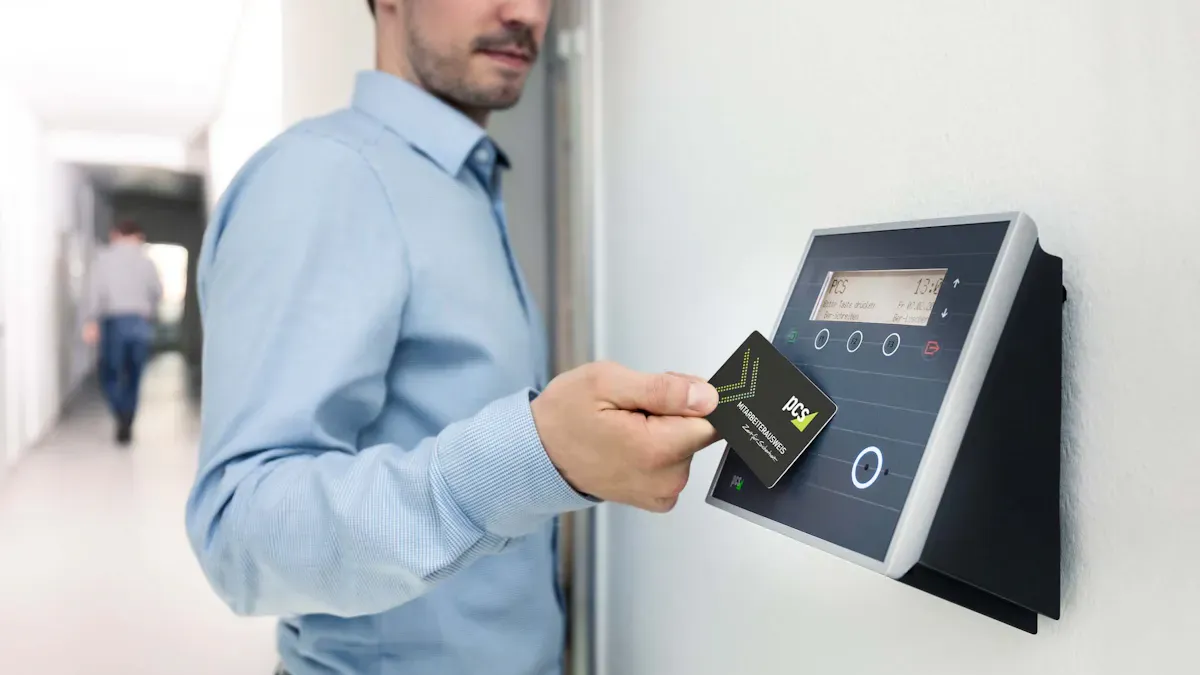
Many stores use RFID today. RFID means Radio Frequency Identification. It uses radio waves to find and track products. Small RFID tags go on each item. These tags hold information about the product. RFID readers send out radio waves. They pick up signals from the tags. Antennas make the signals stronger. This helps readers find tags fast. The process has four steps:
The reader sends energy with its antenna.
The tag wakes up and uses this energy.
The tag sends its data back to the reader.
The reader reads the data and sends it to computers.
Here is a table that shows the main parts of RFID and how they work in stores:
Component | Description | Application in Retail |
|---|---|---|
RFID Tags | Small electronic devices that store data and are attached to products. | Helps in tracking inventory and managing stock levels. |
RFID Readers | Devices that emit radio waves to communicate with RFID tags. | Enables quick checkouts and inventory management. |
RFID Antenna | Amplifies signals for communication between tags and readers. | Enhances the efficiency of data transmission in stores. |
Workflow Process | Involves energy transmission, tag activation, data exchange, and processing. | Streamlines operations and improves customer experience. |
RFID Strengths
RFID helps you in many ways. It makes inventory control better and more accurate. You can track every item with its own ID. This helps you find things faster and restock before shelves are empty. RFID also makes checkout faster. You can scan many items at once. This means customers wait less. Smart shelves help you find products easily. Stores like Lowe’s use RFID to help shoppers find what they need. RFID also makes shopping better for customers. Smart fitting rooms show sizes and suggest other items. This makes customers want to come back.
Strength | Explanation |
|---|---|
Improved customer experience | RFID reduces stockouts and overstocks, making shopping easier and more enjoyable. |
Inventory control | RFID gives you accurate inventory data, which is important for online and in-store sales. |
Enhanced data and inventory detail | RFID tags carry unique IDs, so you can track each item individually. |
Smart shelving | RFID helps you find products quickly and assist customers better. |
Shorter checkout wait times | RFID scans multiple items at once, so checkout is faster and more efficient. |
Tip: RFID helps you keep shelves full and customers happy.
RFID Limitations
RFID has some problems too. It does not always work well with water or metal. These things block or bounce radio waves. Sometimes, wireless problems happen like dropped calls. Other devices can mess up RFID signals. Some people worry about privacy. They do not like being tracked by RFID tags.
Limitation | Description |
|---|---|
Reliability | Water and metal can block or reflect radio waves, making RFID less reliable. |
Wireless Reliability | Distance and interference can cause RFID to miss tags or lose signals. |
Electromagnetic Interference | Other wireless devices can disrupt RFID performance. |
Privacy Concerns | Some people worry about being tracked by RFID tags, raising privacy issues. |
Note: You should think about these problems when picking RFID for your store.
Computer Vision in Retail
Computer Vision Overview
Computer vision helps stores see what happens on the sales floor. It uses cameras and smart programs to watch people and products in real time. This gives you helpful information for making good choices. The main parts of computer vision work together to show you what is happening in your store.
Component | Description | Applications |
|---|---|---|
Image Recognition | Finds products and customers in pictures. | Used for self-checkout and learning about customer actions. |
Facial Recognition | Spots people for marketing and safety. | Helps find regular shoppers and stop shoplifters. |
Video Analytics | Looks at live video for useful details. | Watches how people move and finds strange actions. |
Augmented Reality (AR) | Makes shopping more fun with special images. | Lets shoppers see products and try new things. |
Data Collection and Analysis | Collects and studies data to learn about shoppers. | Helps with stocking shelves and putting products in the right place. |
Deep Learning and Neural Networks | Smart tools that make computer vision better. | Used for self-checkout, learning about shoppers, and making the system smarter. |
Computer Vision Strengths
Computer vision can help your store in many ways. It makes shopping easier and helps workers do their jobs better.
Self-checkout lets people pay without scanning barcodes. This makes paying faster and easier.
Inventory tracking is more exact. You can see when shelves are empty right away.
Watching shoppers shows you what they like and where they go. You can use this to make shopping better.
Cameras help stop stealing by spotting bad actions.
Automation lets workers spend more time helping customers.
Not many stores use computer vision yet, but more will soon.
Computer Vision Limitations
There are some problems with computer vision you should know.
People, carts, or signs can block the cameras’ view.
Bad lighting can make it hard to see products clearly.
Products that look alike can confuse the system.
Adding new items takes time, especially if you have a lot.
Big lists of products can slow down the system and make mistakes.
Each store may need special changes, which can make setup harder.
Tip: Plan for these problems so computer vision works well in your store.
Comparison
Accuracy
You want your store to have the right products in the right place. RFID gives you strong item-level tracking. You can count items quickly and know what is missing. RFID works well for most products, but it can miss items if there is interference from metal or water. Computer vision helps you see shelf gaps and misplaced products. It does not need tags, so you can spot problems that RFID might miss.
RFID gives you high accuracy for counting and tracking.
Computer vision adds situational awareness. You can see what is happening on the shelves in real time.
When you use both together, you get the best results. You can manage inventory better and fix problems faster.
Cost
You need to think about how much you will spend. RFID tags are cheap for each item. You can set up RFID quickly in small stores. The cost goes up if you have many items or need special tags. Computer vision costs more at the start. You need cameras, servers, and software. The price depends on how many cameras you need and how big your store is. Over time, computer vision can save you money by reducing theft and mistakes.
Tip: Start with RFID if you want a low-cost solution for tracking. Choose computer vision if you want more automation and can invest more at the start.
Scalability
You want your system to grow with your business. RFID makes it easy to add new items or open new stores. You just tag new products and use the same readers. Computer vision needs more planning. You must add more cameras and set up new software for each store. It takes longer to set up, but you can watch many areas at once.
RFID scales well for tracking lots of items.
Computer vision scales well for watching large spaces and many activities.
Privacy
You care about your customers’ privacy. RFID has some risks. People can read tags without you knowing. It is hard to control who can access the data, especially in emergencies. The low cost of RFID tags makes it hard to add strong security. Retailers use theft prevention systems to help protect data, but risks remain.
Computer vision brings other privacy worries. Cameras can collect a lot of data about people. You must tell customers when you use cameras and keep their data safe. Some shoppers feel uneasy about being watched.
RFID can be read without line-of-sight, which helps prevent theft but also increases privacy risks.
Computer vision needs clear rules and signs to protect privacy.
Automation
You want your store to run smoothly. RFID helps you count inventory and restock, but you must place tags on every item. You also need to check for errors if signals get blocked. Computer vision can automate many tasks. You can track products, spot empty shelves, and even run self-checkout with little human help.
RFID needs manual work for tagging and checking.
Computer vision gives you real-time insights and analytics. You can make decisions faster and improve efficiency.
Customer Experience
You want shoppers to enjoy their visit. RFID makes checkout faster and keeps shelves full. Customers find what they need and spend less time waiting. Computer vision helps by making shopping smooth and easy. You can offer cashierless checkout and always have products in stock. Studies show that both technologies improve customer satisfaction, loyalty, and repeat purchases.
Impact Category | Improvement Percentage |
|---|---|
Customer Loyalty | 25% |
Repeat Purchases | 26% |
Note: When you use RFID or computer vision, you make shopping better for everyone.
Real-World Outcomes
RFID Case Studies
You can see how RFID helps stores by looking at real examples. Many stores use RFID to make inventory more accurate and work faster. It also helps customers find what they want. The table below shows some important results:
Case Study | Impact on Retail Operations |
|---|---|
Inventory Management | In-store inventory accuracy went up to over 98%. For every 3% more accuracy, sales went up by 1%. |
Store Operations | Counting items got faster and more correct. Workers spent less time counting by hand. |
Customer Experience | Products were easier to find. Checkout was smoother for shoppers. |
RFID helps you find things fast, so you can help customers better.
You can offer things like buying online and picking up in the store.
Many stores now use RFID with AI and computer vision for even better results.
Computer Vision Case Studies
Stores use computer vision to make shopping smarter and easier. You can see big changes in speed, accuracy, and how happy customers are. Here are some real results:
Measurable Outcome | Description |
|---|---|
Inventory Check Speed | Drones with computer vision check inventory up to 15 times faster. |
Out-of-Stock Events | Stores have fewer empty shelves because of real-time shelf watching. |
Wait Times | Queue tools help cut wait times when stores are busy. |
Shrink Reduction | Some stores have up to 60% less loss by using fraud detection. |
Revenue Gains | Stores make over $2 million more from better operations. |
Lost Sales Reduction | Lost sales drop by up to 65% with AI-powered inventory checks. |
Labor Cost Reduction | Labor costs go down by 10-15% because of automation. |
Customer Satisfaction | Customer satisfaction goes up by 15-25% as staff can help more during busy times. |
You can check inventory much faster with computer vision.
Stores lose fewer sales and stop more theft.
Customers wait less and leave the store happier.
Lessons Learned
You can learn a lot from these real-life examples. Stores found that looking at data helps them keep better track of inventory. Real-time alerts help stop theft and loss. Many stores now use data to decide how to stock shelves, schedule workers, and help customers.
Tip: Use data to make smart choices and make your store better for shoppers.
Good data helps you keep shelves full and customers happy.
Real-time alerts help you stop losses and act fast.
Using RFID and computer vision together gives you the best results for today’s stores.
Hybrid Solutions
Benefits of Integration
You can make your store work better by using both RFID and computer vision together. This way, you can see your inventory and store activities more clearly. RFID tags help you keep track of products and make sure shelves are not empty. Computer vision watches for bad behavior and checks for empty shelves right away. When you use both, you get many good things:
You can see where every item is, which helps a lot in clothing stores.
You spend less time counting and restocking, so labor costs go down.
You can offer things like picking up online orders in the store or shipping from the store. This makes shopping easier for customers.
Cameras with AI can spot theft early and help stop it.
You can see everything happening in your store, so you make smarter choices.
Smart shelves and AI tools work together to make shopping better for customers. You can watch how shoppers look at products and help them quickly. This teamwork leads to more sales and better inventory tracking.
Tip: Using both technologies helps you learn more and makes your store run smoother.
Future Trends
More stores will start using both RFID and computer vision soon. Stores now use Nexite tags to follow where products go. These tags show how well products do and how shoppers act, even if no one buys the item. Cameras with AI look at video to find patterns and fix problems before they get worse.
Stores learn about what customers do and how products sell.
Using both together gives a full picture of the store, so you can make better choices.
Hybrid systems will keep getting better. You will see smarter shelves, stronger ways to stop theft, and more exact inventory counts. Stores that use both computer vision and RFID say they sell more and work better. This will change how stores work in the future and help them focus more on customers.
Note: Using both technologies helps you stay ahead by using the best parts of each one.
You can use RFID and computer vision to help your store. Each one is good for different things. Pick the one that fits your needs best. Think about how exact you want your tracking to be. Ask yourself how quickly you need updates. Count how many items you have and how much they are worth. Make sure the system is simple to use. Check how much money you will spend and what your products cost. In the future, new technology will mix both systems. This will make keeping track of items and checking out even better.
How exact you want your tracking
How fast you need updates
How many items and how much they cost
What your store looks like
How simple it is to set up and use
How much you pay to buy and fix it
Hybrid systems will make running your store easier and keep shoppers happy.
FAQ
What is the main difference between RFID and computer vision?
RFID uses radio waves to track items with tags. Computer vision uses cameras and AI to see and understand what happens in your store. You do not need to tag items for computer vision.
Is computer vision safe for customer privacy?
You must follow privacy laws and tell customers about cameras. Most stores use signs to inform shoppers. You should keep video data safe and limit who can see it.
Can you use RFID and computer vision together?
Yes, you can use both. RFID tracks products. Computer vision watches shelves and people. When you combine them, you get better results and more information.
How much does it cost to set up these systems?
RFID costs less to start, especially for small stores. Computer vision costs more because you need cameras and software. Your total cost depends on your store size and needs.
Which technology is easier to scale as your business grows?
RFID scales well for tracking more items or opening new stores. You just add more tags and readers. Computer vision needs more cameras and planning, but it can cover large spaces.
See Also
Transforming Retail: The Impact of Smart Vending Machines
Modern Retail Benefits from AI-Enhanced Combo Vending Machines
Fast Food Automation: The Future of Vending Machines
Automated Convenience Retail: Micromarkets Compared to Smart Stores
Vending Machines Evolve: Transitioning from Snacks to Smart Tech
