Cost savings with autonomous checkout experts share top tips

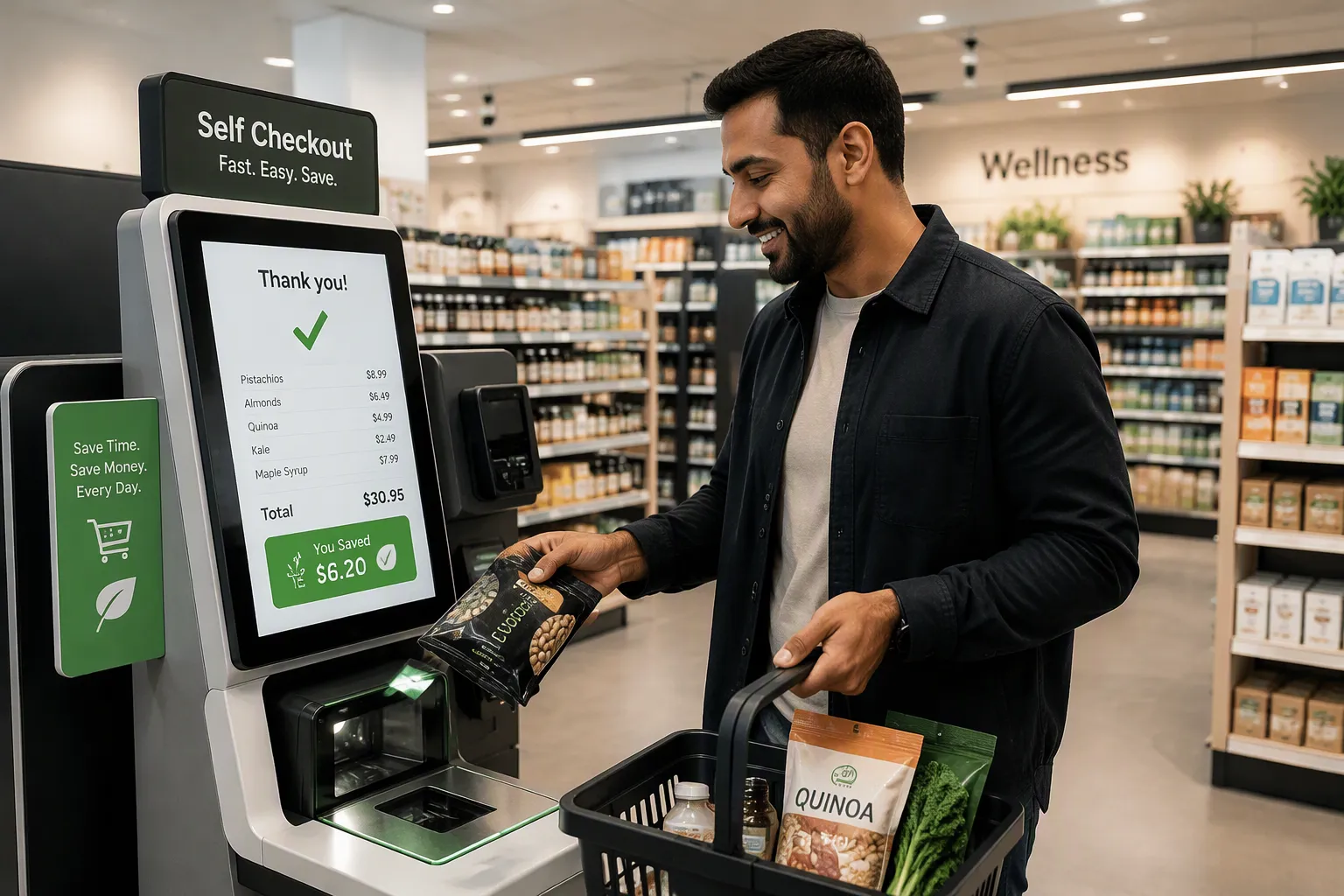
Autonomous checkout can lower checkout costs by about 15–30% compared with regular checkout. Most of that gap comes from lower labor and operating costs.
Experts name three ways to save. Labor comes first, because fewer staffed lanes mean fewer cashier hours each shift. Space and speed are the second way, since smaller setups free up selling space and faster lanes serve more shoppers each hour. Data-driven operations complete the set, as transaction records show where to fix staffing and layout.
This post compares real costs, shares expert tips for both options, and shows where each fits best. Cost savings with autonomous checkout – scenario 12 offers a practical place to start.
Key Takeaways
Self-checkout machines lower costs by 15–30% by cutting down on worker pay and daily running costs.
Begin with a small test of one or two lanes to check savings and lower risk.
Link your self-checkout lanes to your POS and inventory systems. Then you can use that data to plan better staffing and store layout.
Think about using hybrid self-checkout to save on labor costs. At the same time, keep staffed lanes open for complex purchases.
Pick the checkout model that fits your store's size and sales. Busy stores do best with self-checkout, while slower stores save money with the usual kind.
Autonomous vs Traditional: Cost Gap
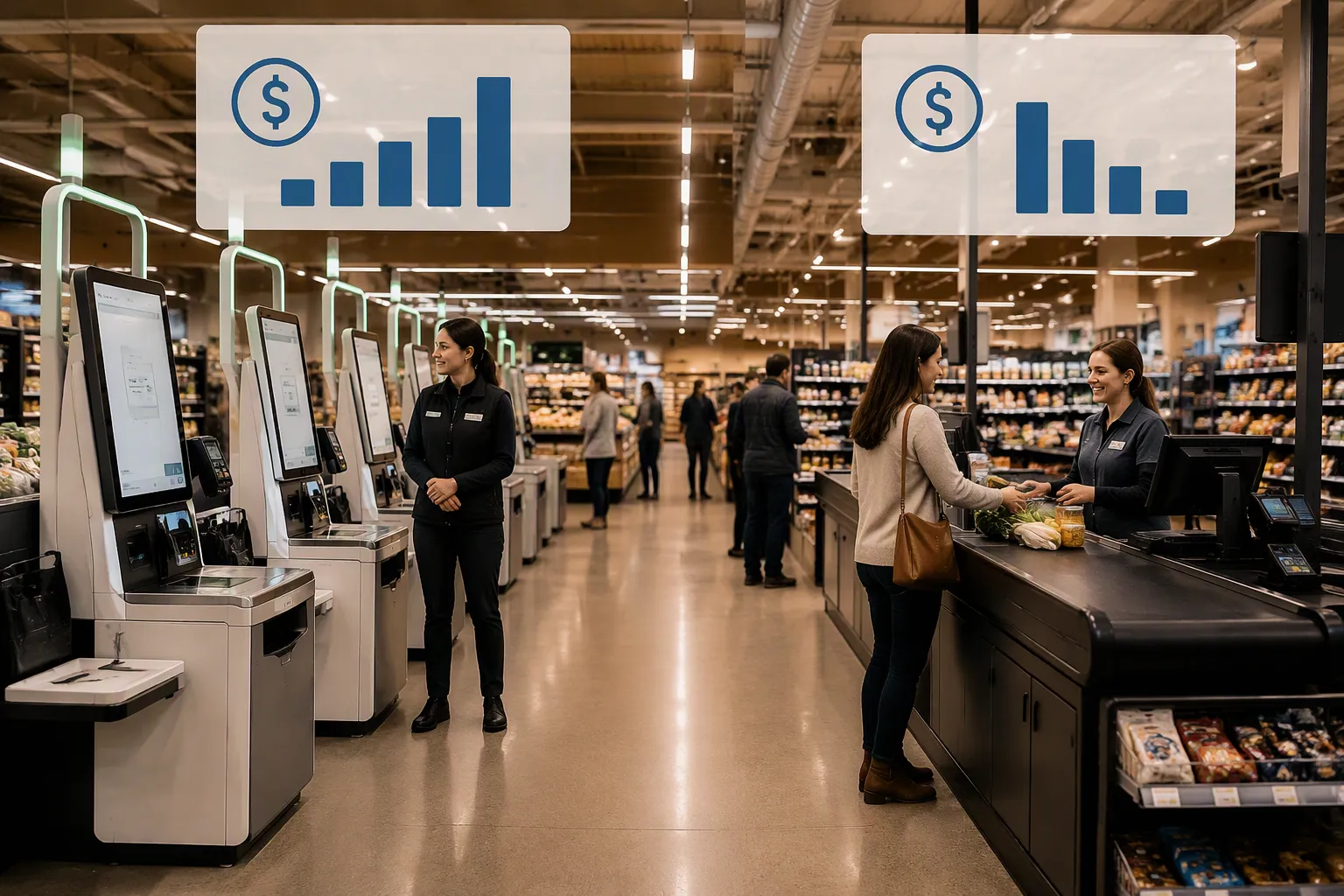
The cost gap between the two models shows up in three places: what a store pays up front, what it pays every month, and how long the payback takes. Expert-reported estimates put the ranges side by side. Treat every figure below as a planning range, not a quote.
Cost area | Autonomous checkout (expert-reported estimates) | Traditional checkout (expert-reported estimates) |
|---|---|---|
Hardware per lane | About $15,000–$40,000 for each self-service lane, depending on size and features | About $3,000–$10,000 for each staffed lane, covering registers, scanners, and belts |
Installation and site work | Medium to high; wiring, fixtures, and network changes make up a big part | Low to medium; mostly setting up registers and counter work |
Software licenses | A repeating subscription or per-lane fee, billed monthly or yearly | Often included with the POS; smaller repeating fees |
Maintenance | Service contracts and parts, usually a set yearly percentage of hardware value | Lower; registers are mature and easy to service |
Staffing | Fewer cashier hours per shift; attendants watch over several lanes | Cashier hours grow directly with each open lane |
ROI timeline | Often said to be about 18–36 months for busy stores | Immediate; no payback period to recover |
Initial Investment Costs
Autonomous checkout has the higher starting price. Hardware, installation, and software setup add up to a large capital outlay. Experts suggest budgeting a contingency on top of the lane price. Site work often surprises buyers. Network upgrades, power runs, and fixture changes add cost beyond the hardware itself.
Traditional checkout stays cheaper to start. Registers are mature technology with predictable pricing. Installation is quick. A store can open a staffed lane for a fraction of the autonomous cost. That lower barrier matters for stores with tight capital budgets or short lease terms.
Ongoing Costs and ROI
Ongoing costs tell a different story. Autonomous lanes trade up-front spend for fewer labor hours per shift. One attendant can supervise several lanes. Maintenance contracts and software fees continue, and experts flag these as the main recurring line items. Shrink and error handling also deserve a budget line.
Traditional checkout keeps labor as its largest recurring cost. Cashier hours rise with every open lane. Maintenance stays low, and software fees are modest. The model pays for itself immediately, with no recovery period.
ROI depends on volume. A busy store spreads the autonomous investment across many transactions and shortens payback. A quiet store may never recover the up-front cost. Experts recommend modeling payback against actual hourly transaction counts before committing. The comparison favors autonomous checkout at high volume and traditional checkout at low volume or short horizons.
Cost Savings With Autonomous Checkout – Scenario 12 Tips
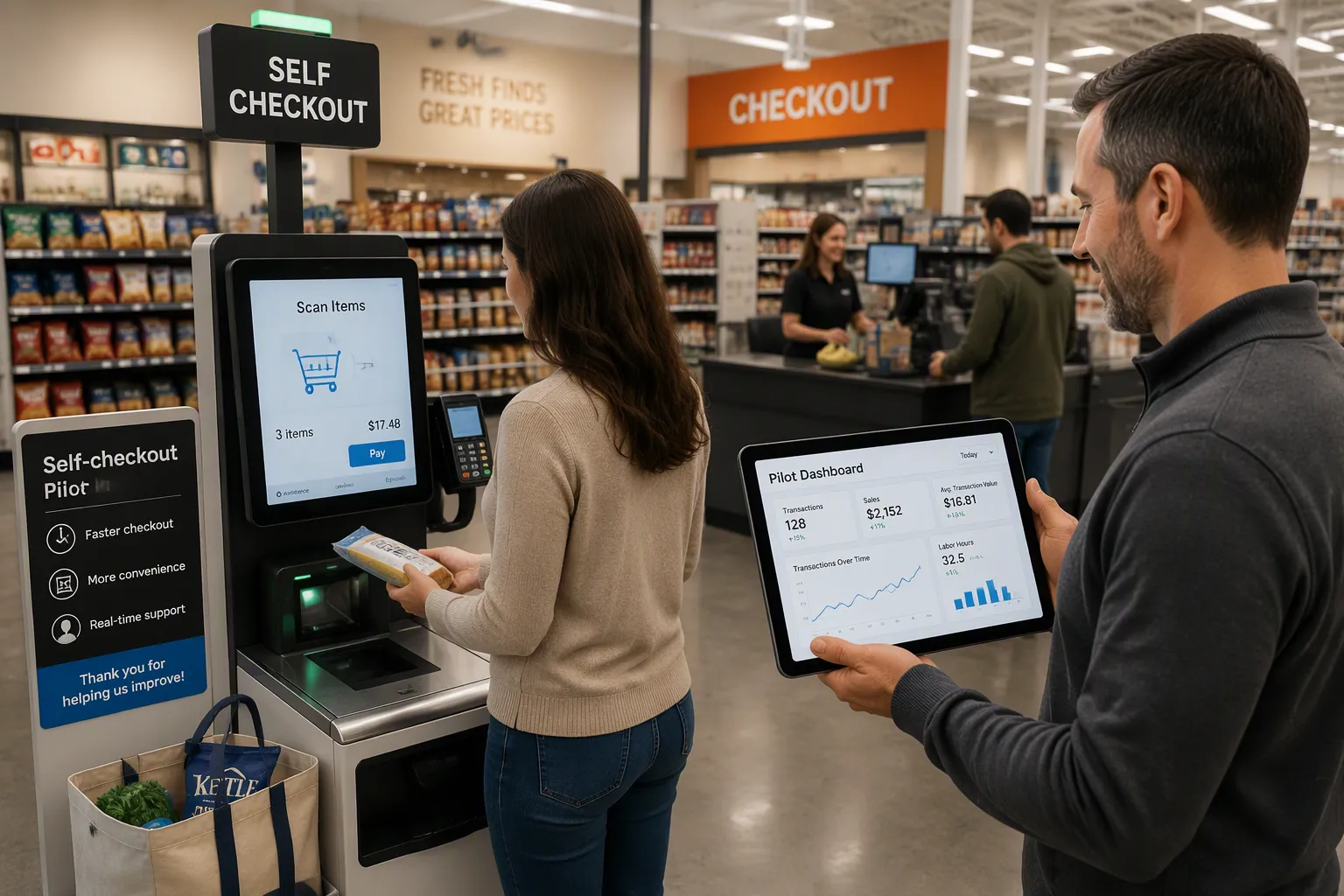
Scenario 12 is a typical mid-size store pilot. The store has a steady number of shoppers and a mix of basket sizes. Experts use this kind of site to test cost savings with autonomous checkout – scenario 12 before a full rollout. The pilot model gives managers a real cost picture. It also shows where the savings levers actually land. The tips below come from that pilot example.
Start Small With Pilots
Experts advise opening one or two autonomous lanes first. A small pilot limits capital risk. It also produces real transaction data. The store can compare labor hours and queue times against staffed lanes. Cost savings with autonomous checkout – scenario 12 appear early when the pilot lanes carry a steady share of traffic. One lane at the lower end of the hardware range keeps the test affordable. A pilot also exposes site problems. Network gaps, fixture conflicts, and power runs show up before a large order. Experts suggest running the pilot for a full sales cycle. That period captures weekday and weekend patterns. It also captures slow and busy hours. The pilot result then guides the decision on more lanes. Cost savings with autonomous checkout – scenario 12 stay measurable at this small scale. A single lane pilot costs far less than a full front-end rebuild. Managers should set clear success measures before launch. Labor hours per transaction and queue length are two practical measures. A pilot that misses both targets still teaches the store where the model fits.
Integrate Systems, Leverage Data
Integration drives the largest gains. Autonomous lanes should connect to the existing POS and inventory systems. A connected lane updates stock counts in real time. It also feeds transaction records into one reporting view. Experts use that data to tune layout and staffing. Slow lanes get repositioned. Attendant coverage shifts to peak hours. Cost savings with autonomous checkout – scenario 12 grow when data replaces guesswork. The pilot store can test a layout change in one week and read the result in the next. Integration also cuts manual reconciliation work. Fewer staff hours go to counting and correcting records. Experts recommend a short integration test before the pilot opens. The test confirms that prices, promotions, and stock counts match across systems. A mismatch at this stage costs more to fix later. A daily data refresh keeps the reporting view useful for staffing decisions.
Hidden costs deserve a budget line. Maintenance contracts usually run as a set yearly percentage of hardware value. Shrink and error handling need attention too. A mis-scanned item or a walk-off loss adds cost that the lane price does not show. Staff retraining is the third hidden item. Attendants need time to learn the new workflow. Experts recommend budgeting for retraining hours during the pilot. Cost savings with autonomous checkout – scenario 12 remain real after these costs. The pilot simply makes them visible early. A store that plans for all three hidden items avoids a budget surprise at rollout. The payback period of about 18–36 months for busy stores assumes these costs are counted. A model that ignores them overstates the savings. Experts also suggest a small reserve for error handling in the first months.
Expert Tips: Traditional Checkout Savings
Smarter Staff Scheduling
Labor is the biggest ongoing cost at a staffed checkout. Experts say scheduling is the quickest way to cut it. The goal is simple: match cashier hours to the shoppers who actually show up. Transaction records show clear busy times and quiet times. Managers can plan shifts around those patterns instead of covering every hour the same way.
Lane management helps the schedule work. Opening fewer lanes when it's slow brings shoppers together and keeps each cashier busy. A floating cashier can jump in when a line gets long. Training staff on bagging and returns adds flexibility without adding hours. Experts also suggest checking schedules against real queue data every month. Small changes add up over a year. These tactics cut labor cost while keeping service steady, and they need no new hardware.
Hybrid Self-Checkout
Hybrid self-checkout mixes both models. A store keeps staffed lanes for big baskets and adds a few self-service lanes for quick trips. Experts call it a middle path with a lower entry cost than a full autonomous front end. The staffed lanes handle complex transactions and service needs. Self-service lanes take the fast, small-basket traffic.
This mix pays off in stores with mixed shopper types. It also suits stores that want to test self-service before a bigger commitment. Labor hours drop on the self-service share of traffic, and staffed lanes stay open for shoppers who prefer them. Experts recommend tracking queue length at both lane types after launch. The split can then shift toward whichever model carries more traffic. Hybrid setups capture part of the autonomous savings without a full rebuild.
Which Option Fits Best
Performance, Fit, and Compliance
Technical performance splits the two models in ways you can predict. Autonomous lanes handle simple, small-basket purchases fast and with steady results. They have trouble with loose produce, age-restricted items, and complex returns. Staffed lanes deal with those cases using judgment and speed. Experts say to match the lane type to the basket mix, not to a general preference.
Application fit follows the same logic. Stores with high traffic and small baskets gain the most from autonomous lanes. Stores with service-heavy checkout needs keep staffed lanes as the backbone. Regulatory compliance adds another filter. Age-restricted sales, weight-based pricing, and local receipt rules may need attendant overrides or extra hardware. Both models can meet these rules. The autonomous option often needs a written override process and staff training to stay compliant. Cost completes the picture. Autonomous checkout carries the higher capital outlay and the longer payback. Traditional checkout carries the higher labor cost per open lane. Neither model wins on every measure.
Match Costs to Store Format
Store format shapes which cost structure pays off. Small-format stores have limited space and tight capital budgets. A staffed lane costs less to open, and hybrid self-checkout adds savings without a full rebuild. High-volume stores spread the autonomous investment across many transactions. That volume shortens the payback period and makes the 15–30% savings target realistic. Specialty stores sit in between. Their basket mix often includes items that need staff judgment, so a hybrid split usually fits best.
Volume matters as much as format. A quiet store may never recover the autonomous up-front cost, even with lower labor hours. A busy store may find staffed lanes cost more over time than the hardware they replace. Experts suggest modeling both options against actual hourly transaction counts. The right answer often blends the two models rather than choosing one outright.
Busy stores with small baskets save the most with autonomous checkout. High volume spreads the $15,000–$40,000 lane cost over many transactions and shortens the 18–36 month payback. Traditional checkout still saves money in quiet stores, service-heavy formats, and short-lease sites, where the $3,000–$10,000 lane price and quick payback win. Watch hidden costs on both sides: maintenance contracts, shrink, error handling, and retraining for autonomous lanes; cashier hours per open lane for staffed checkout.
Use this checklist to pick a starting point:
Store size: small formats do best with hybrid lanes; large formats can test full autonomous lanes.
Volume: compare payback to real hourly transaction counts.
Budget: set aside money for installation, integration, and hidden costs.
Timeline: run one pilot through a full sales cycle first.
Mixing models captures savings without disruption.
FAQ
How long does autonomous checkout take to pay back?
Experts report a payback period of about 18–36 months for busy stores. Volume drives the result. A store with steady hourly transactions spreads the hardware cost across many sales. A quiet store may never recover the up-front spend. Model payback against real transaction counts before committing.
How many lanes should a first pilot include?
Start with one or two lanes. A small pilot limits capital risk and produces real transaction data. One lane at the lower end of the hardware range keeps the test affordable. Run the pilot through a full sales cycle. That period captures weekday, weekend, slow, and busy patterns.
Which hidden costs should a budget include?
Experts flag three items. Maintenance contracts usually run as a set yearly percentage of hardware value. Shrink and error handling add cost that the lane price does not show. Staff retraining takes attendant hours during the pilot. A small reserve for error handling in the first months helps too.
When does hybrid self-checkout make more sense than a full rollout?
Hybrid fits stores with mixed shopper types. It also suits stores that want to test self-service before a bigger commitment. The entry cost stays lower than a full autonomous front end. Staffed lanes remain open for complex baskets and service needs. Track queue length at both lane types after launch.
Can a low-volume store still cut checkout costs?
Yes. Traditional checkout stays cost-effective at low volume. Smarter staff scheduling is the quickest lever. Match cashier hours to real traffic patterns and open fewer lanes when it is slow. A floating cashier covers short peaks. These tactics need no new hardware and cut labor cost while service stays steady.
See Also
Fixing Self-Checkout Cash Errors: Causes and Solutions for Smooth Transactions
How Cloudpick Checkout Computers Boost Efficiency, Accessibility, and Customer Experience
Walgreens Self-Checkout: Exploring Convenience and Challenges in Retail Today
