How retailers are saving big with autonomous checkout

You can save a lot of money when you use autonomous checkout in your store. These systems use AI-powered monitoring to help stop inventory loss, lower labor costs, and make checkout faster for customers. The real results are clear in the numbers:
Area of Savings | Description | Quantitative Data |
|---|---|---|
Inventory Loss Prevention | Automated systems help stop inventory loss by using AI-powered monitoring and making fewer mistakes. | |
Labor Cost Savings | Self-checkout systems mean you need fewer cashiers, so staff can do other jobs. | Up to 20% reduction in labor costs |
Operational Efficiency | Faster checkout means customers finish shopping quicker and stores can sell more. | Shoppers leave 23% faster |
Retailers in busy supermarkets and convenience stores say these changes help their stores work better and make customers happier.
Key Takeaways
Autonomous checkout lowers inventory loss by up to 15%. AI monitoring helps stores keep more products in stock.
Labor costs can go down by 20%. Stores need fewer cashiers. Staff can do other important jobs in the store.
Checkout times get much shorter. Customers finish shopping 23% faster. This gives shoppers a better experience.
Real-time inventory tracking helps stores restock quickly. It cuts waste and keeps popular items available.
Investing in autonomous checkout can pay off fast. Many stores save money in just 8 months.
Labor Cost Savings

Staff Reduction
Autonomous checkout changes how many workers you need. One worker can watch a few self-checkout stations at the same time. This means you do not need as many cashiers. You can move workers to other jobs in the store. Many stores say they need fewer workers after switching to autonomous checkout. The table below shows how things get better after this change:
Aspect | Before Implementation | After Implementation |
|---|---|---|
Checkout Time | Long waits during peak hours | Reduced to 10-15 seconds |
Staff Requirements | High due to manual transactions | Significantly lowered |
Customer Experience | Frustration due to delays | Improved satisfaction and efficiency |
Operational Costs | Higher due to labor and inefficiencies | Lowered due to streamlined processes |
These systems let your team help with stocking or helping shoppers. This makes service better and helps the store run smoother.
Lower Payroll
Autonomous checkout helps you spend less on paychecks. When you need fewer people at checkout, you save money. Stores using these systems say checkout-line labor hours drop by 25-40%. This means you have more money for other things. The table below shows the numbers:
Reduction Type | Percentage |
|---|---|
Checkout-line labor hours | 25-40% |
You can use the extra money to make the store better or buy new tech. Lower payroll also means less paperwork and easier schedules.
Training Efficiency
Training is faster with autonomous checkout. Old checkout systems need long training for each cashier. With self-checkout, workers learn to help customers instead of doing every sale. This makes training shorter and easier. You spend less time and money teaching new workers. Your team can focus on helping shoppers and keeping the store neat.
Tip: Autonomous checkout makes your store more flexible. You can change staff schedules and jobs based on what the store needs, not just checkout lines.
You save money from less training and better use of your team. All these things help your store work better.
Operational Efficiency
Faster Checkout
Autonomous checkout makes paying for items quick. Shoppers scan and pay by themselves. Lines are shorter, and waiting is less. Customers finish paying in 1 or 2 minutes. Regular checkout takes 3 to 5 minutes. Self-checkout cuts checkout time by up to 35%. Shoppers use any kiosk that is open. They do not have to wait in long lines. This easy process helps shoppers and keeps them happy.
Self-checkout lets stores handle more sales when busy.
Customers wait less and shop faster.
Stores make customers happier by cutting wait times.
Streamlined Store Operations
Autonomous checkout helps stores work better. Staff can leave registers and do other jobs. Workers help shoppers or stock shelves more often. This change makes jobs better and stores run smoother. There are fewer mistakes at checkout. This means fewer returns and less confusion.
Staff spend more time stocking and helping shoppers.
Automation means you need fewer cashiers.
Stores become more organized and productive.
Stores say these changes bring more loyal customers. More people visit the store. Smart carts and new systems track sales and inventory live. You learn about how shoppers act and how your store works.
Resource Allocation
Autonomous checkout helps you use resources well. You spend less on workers and save money. Stores with automation work better and earn more. You can buy new tech or fix up your store.
Evidence Point | Description |
|---|---|
Labor Cost Reduction | Automating checkout lowers need for workers and fixes staff problems. |
Resource Optimization | Savings from automation let you spend on other parts of your business. |
Increased Productivity | Autonomous checkout helps stores work better and earn more. |
You use hardware and software to watch store activity. Machine learning checks inventory and shopper habits. These tools help you make good choices and run your store better. You save money and make shopping nicer for everyone.
Inventory Loss Prevention
Shrinkage Reduction
You can lose a lot of money when items go missing from your store. This is called shrinkage. In 2022, retail shrink in the U.S. reached $112 billion. Many stores now use autonomous checkout to fight this problem. These systems use smart cameras and AI to watch for theft and mistakes. For example, Walmart saw a 15% drop in inventory loss after using autonomous checkout. You get better control over your products and keep more money in your business.
Smart cameras spot suspicious actions.
AI tracks what goes in and out in real time.
Loss prevention teams get alerts right away.
Note: When you use autonomous checkout, you can stop theft before it happens. This helps you keep your shelves full and your profits safe.
Inventory Accuracy
You need to know what you have in stock at all times. Autonomous checkout gives you real-time updates on your inventory. The system tracks every item as it moves through the store. This means you can restock faster and avoid running out of popular products.
Real-time tracking helps you keep shelves stocked.
Automated systems make restocking decisions easier.
AI checks for mistakes and alerts you to problems.
You also see fewer errors in your inventory counts. This leads to better planning and less waste. You save time and money by knowing exactly what you have.
Security Enhancements
Security features in autonomous checkout protect your store from theft and fraud. AI video analytics watch live video and compare it to what gets scanned at checkout. If something does not match, the system sends an alert. Weight checks on high-risk items add another layer of security without slowing down shoppers.
Real-time alerts let your team act fast.
A visible host near checkout helps stop theft and helps customers.
Regular check-ins during busy times reduce mistakes and theft.
These tools work together to keep your store safe. You see fewer losses and more cost savings over time.
ROI and Long-Term Cost Savings
Upfront vs. Ongoing Savings
When you buy autonomous checkout, you pay for hardware and software first. These first costs might seem high. But you start seeing benefits soon after. Most stores get their money back in about 8 months. After that, they keep saving money every year.
Here is a table that shows the main costs for different kiosks:
Cost Component | Basic Kiosk | Advanced Kiosk |
|---|---|---|
Upfront Cost | $8,000 | $20,000 |
Maintenance | $1,500/year | $3,000/year |
AI Software | N/A | $2,400/year |
You spend less on workers and make fewer inventory mistakes. These changes help you save money over time. You can use the extra money to make your store better or try new tech.
Tip: Try using one kiosk or a small area first. See what works before adding more kiosks.
Measuring Financial Impact
You can see how much money autonomous checkout saves by checking sales, visits, and shopping speed. Many stores see big improvements after switching to these systems.
Here are some results from stores using autonomous checkout:
Metric | Value |
|---|---|
Increase in total sales per game | |
Increase in customer throughput | 32% |
Increase in transactions per game | 38% |
Average shopping trip time decreased | 88% |
Shopping sessions during extended hours | 34% |
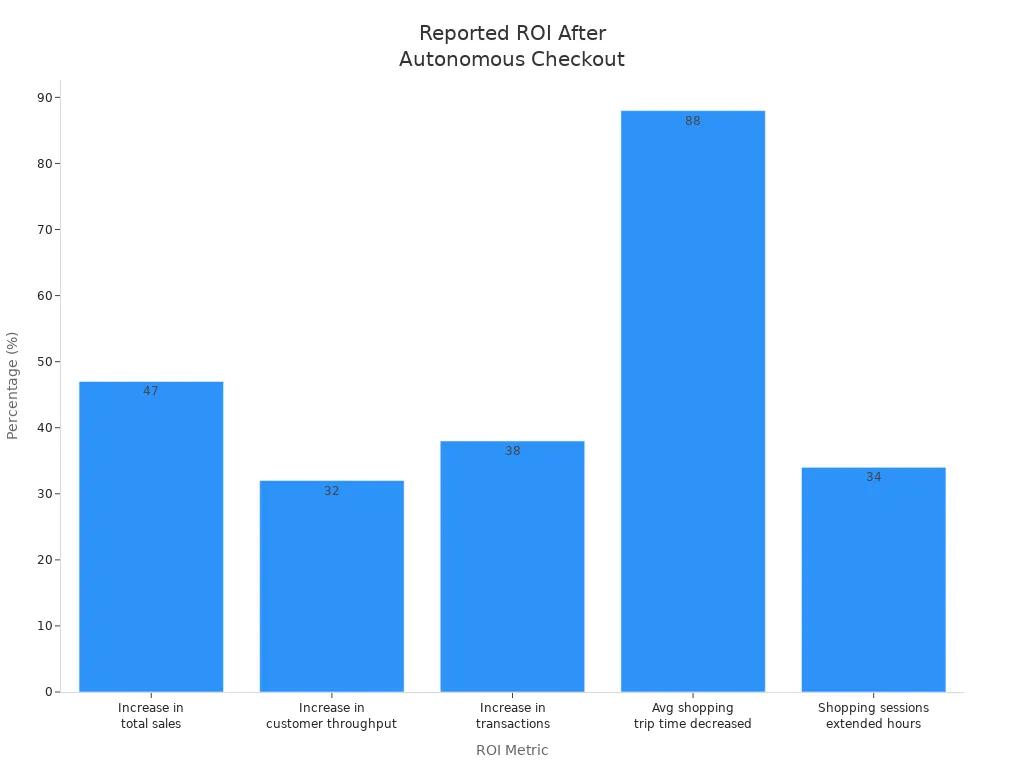
Stores sell more and help more customers. People finish shopping faster, so you can help more shoppers each day. These results show that autonomous checkout helps stores work better and save money.
You should also watch important numbers like:
Customer satisfaction scores
Inventory accuracy rates
Labor hours saved
Number of repeat shoppers
These numbers show how well your investment works over time.
Customer Retention
Happy customers come back to your store. Autonomous checkout helps keep shoppers by making visits quick and easy. Many people do not like waiting in long lines. In fact, 60% of shoppers say long lines are a big problem. Almost half think automation can fix problems like long lines and empty shelves.
Here is a table that shows what shoppers think:
Evidence | Description |
|---|---|
Long checkout lines | 60% of shoppers identify long checkout lines as a major issue. |
Automation perception | Almost half believe automation can resolve these issues. |
When you remove lines, shopping is less stressful. People save time and feel happier. This makes them want to come back. You also build trust by making fewer mistakes and keeping shelves full. Shoppers notice when you use technology to help them.
Note: A good self-checkout experience makes customers happier. If you fix problems fast, customers remember and return.
Stores see that better customer experience brings more repeat shoppers. Busy people like quick trips. They pick stores that help them save time. Over time, this loyalty helps your store earn more and grow.
You really save money when you use autonomous checkout. You spend less on workers. Your store works better and faster. You also use data to make smart choices. The table below shows the main ways you save money:
Financial Benefit | Description |
|---|---|
Reduced Labor Costs | Staff focus on higher-value tasks, raising productivity. |
Increased Operational Efficiency | Streamlined processes help your store run better. |
Rich Data Insights | Data helps you manage inventory and drive sales. |
Try a small test first to learn quickly.
Make shopping simple for your customers.
Teach your AI and workers for the best results.
If you do these things, your store can be smarter and make more money.
FAQ
What is autonomous checkout?
Autonomous checkout lets you scan and pay for items without a cashier. You use self-checkout kiosks or smart carts. The system uses cameras and sensors to track your purchases.
How does autonomous checkout help reduce costs?
You save money by needing fewer cashiers. The system also helps stop theft and mistakes. Stores spend less on training and payroll.
Is autonomous checkout safe for my store?
Yes! AI and cameras watch for theft and errors. You get real-time alerts if something goes wrong. This keeps your store safe and secure.
Will customers like using autonomous checkout?
Most shoppers enjoy faster checkout and shorter lines. Many people say they prefer stores with self-checkout options. You make shopping easier for everyone.
See Also
Upcoming Changes to Walmart Self-Checkout by 2025
Walgreens Self-Checkout: Balancing Convenience and Retail Challenges
How Self-Checkout Systems Have Evolved Over Time
Cloudpick's Role in Delivering Cashierless Store Convenience
Cloudpick's Checkout Systems: Boosting Efficiency and Customer Experience
