Cost savings with autonomous checkout

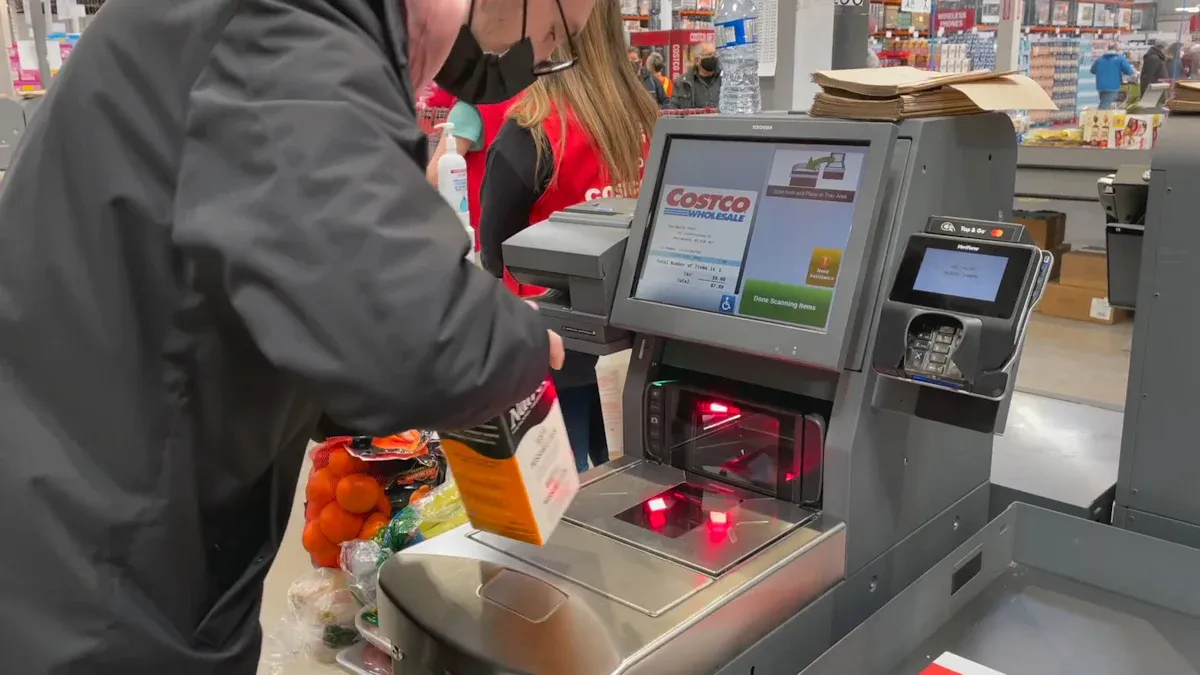
You save money right away when you use autonomous checkout, leading to significant cost savings. Stores report they spend 20% less on workers and experience 15% less inventory loss. The table below illustrates how companies achieve these benefits:
Company | Impact on Labor Costs | Impact on Inventory Loss |
|---|---|---|
Aldi | 20% reduction | N/A |
Walmart | N/A | 15% reduction |
Autonomous checkout not only makes buying things faster but also contributes to cost savings by helping lines move quicker and allowing stores to utilize resources more effectively. You can modify your store’s layout and operate more efficiently, which results in even greater savings.
Key Takeaways
Autonomous checkout lowers labor costs a lot. Some stores say they need 70% fewer workers.
Self-checkout systems make stores work better. They make checkout faster. This makes customers happy and helps stores sell more.
Automated inventory management stops losses. It keeps track of stock well. This saves money and helps the store do better.
Buying self-checkout technology can cost a lot at first. But it saves money later and helps stores earn more.
Self-checkout makes customers happier by cutting wait times. This makes them want to come back and stay loyal.
Labor cost savings
Reduced staffing needs
You can see a big change in your store when you use autonomous checkout. You do not need as many workers at the registers. Self-checkout systems and unattended payment solutions handle most transactions. This means you can run your store with fewer cashiers, even during busy times. Retailers have reported up to a 40% reduction in labor costs after switching to AI-powered checkout. Some stores have seen labor costs drop by as much as 60-70% in fully autonomous locations. You do not have to worry about finding extra staff for peak hours. The technology works all day and night, giving you more convenience and flexibility.
Lower payroll expenses
When you use self-checkout, you spend less money on wages. Stores that add self-checkout kiosks often see a drop in payroll expenses. You do not need to pay as many part-time workers. You also do not need to rely on unpaid family members to help run the store. Even though the number of jobs stays about the same, you save money because you pay less in wages. This helps your business stay strong and competitive. You can use the extra money to improve your store or offer better convenience to your customers.
Self-checkout impact on labor
Self-checkout changes how you use your team. You can move workers from the checkout area to other important jobs. For example, you can assign more people to manage inventory or help customers find what they need. This makes your store run better and gives shoppers more convenience. A McKinsey study found that automation can lower labor costs by up to 20% in retail. When you use self-checkout and unattended payment solutions, your employees can focus on tasks that add more value. Some stores have noticed that workers feel happier because they do not have to stand at the register all day. One manager said, “Our day shift employees actually get to take a break during lunch because they don’t spend the whole time waiting in line.” This shows that self-checkout can improve job satisfaction and make your store a better place to work.
You also help your night-shift team. With self-checkout, they can buy food and drinks at any time, which increases convenience and sales. Former checkout staff can move to higher-value roles, which helps you deal with labor shortages. Self-checkout and unattended payment solutions give you more options to run your store smoothly and save money.
Operational efficiency
Streamlined checkout process
Self-checkout helps your store move faster. Customers do not have to wait in long lines. Shoppers scan and pay for items by themselves. This makes checkout go quicker and keeps people moving. Stores like IKEA in Dubai use smart queue systems. These help customers find open lanes fast. Wait times get shorter, and shopping feels easier. Self-checkout kiosks let you handle more sales at once. You can sell more items in less time. Contactless payment options help customers finish checkout quickly. A study says biometric payments will check over $3 trillion by 2025. People want faster and safer ways to pay. Self-checkout gives your customers a better experience. It also keeps your store running well.
Overhead reduction
Self-checkout technology helps you spend less money. Unmanned stores can cut labor costs by up to 70%. You do not need as many cashiers. This means you save a lot of money. Self-checkout also helps stop shrinkage. AI watches what customers do at checkout. This helps stop theft and mistakes. You lose less money from missing items. Self-checkout makes it easier to control costs. You see a big change in operating costs with these systems.
Resource allocation
Self-checkout lets you use your team better. AI-enhanced checkout and smart carts process data right away. This helps you track inventory and serve customers faster. Self-checkout technology lowers mistakes and makes checkout smoother. Workers can help customers or restock shelves instead of standing at the register. Automation helps your team work better and makes customers happier. When you make your store run better, you can sell more. Self-checkout helps you get the most from your resources.
Inventory loss prevention
Automated loss control
Automated systems at checkout help stop inventory loss. AI-powered monitoring tools watch every self-checkout transaction. These tools look for things like missed scans or item swapping. If something is wrong, the system sends an alert fast. Weight sensors check if the scanned item matches the bag’s weight. Video analytics watch what customers do at self-checkout. These systems notice if someone hides items or skips scanning.
Tip: Video monitoring at checkout helps stop theft. Most shrinkage happens because of theft, so real-time alerts help stop losses early.
Technology | Description |
|---|---|
Watches for strange checkout activity and acts if needed | |
Weight Sensors | Checks if scanned items match the expected weight at self-checkout |
Video Analytics | Spots suspicious actions during self-checkout |
Error reduction
Automation helps lower mistakes at checkout. Self-checkout uses barcode scanners and RFID tags to track items. These tools update your inventory right away. You do not need to worry about typing mistakes or missed counts. Automated systems make sure each scanned item matches your records. This cuts down on human error and keeps inventory right.
Automation at checkout lowers mistakes in data entry.
Barcode scanners and RFID tags help you avoid errors.
Automated systems update stock levels after each checkout.
Improved inventory accuracy
Self-checkout technology helps you keep inventory accurate. Automated systems track every scanned item at checkout. You get updates on your stock in real time. This helps you avoid having too much or too little product. AI-driven tools at self-checkout spot problems quickly. The system can even order more when stock is low. You do not have to guess what to buy.
Self-checkout gives you real-time updates on inventory.
Automated checkout helps you decide when to restock.
You can keep shelves full and customers happy.
Retailers using AI-enhanced checkout have seen up to 15% less inventory loss. You can protect profits and run your store better with self-checkout.
ROI and additional savings
Upfront investment vs long-term gains
You might think self-checkout systems cost a lot. The price changes based on the technology you pick. Basic self-checkout units cost between $3,000 and $8,000 each. Most stores pay about $4,500 to $6,500 for a regular unit in 2025. Advanced self-checkout systems with AI, weight sensors, and touchless payments can cost $10,000 to $20,000 or more. Some can even cost over $25,000. You also pay for software licenses and maintenance every year.
Cost Aspect | Price Range (USD) | Notes |
|---|---|---|
Basic Self-Checkout Units | $3,000 - $8,000 per unit | Standard retail units average $4,500 - $6,500 in Q1 2025 |
Advanced Self-Checkout Units | $10,000 - $20,000+ per unit | Includes AI, weight sensors, touchless payments, RFID; some exceed $25,000 |
Software Licensing | $1,500 - $5,000 annually per unit | Additional recurring cost |
Maintenance & Support | $500 - $3,000 annually per unit | Varies by service level and geography |
You pay a lot at first, but you save money later. Self-checkout systems lower labor costs because you need fewer cashiers. You also save money by making fewer mistakes and checking out faster. Over time, your overhead costs go down. You can help more customers because checkout is quicker. Many stores say shoppers leave 23% faster than before. This means you can sell more each day.
Note: Spending money on self-checkout saves you more in the long run. You need fewer workers, make fewer mistakes, and work faster.
Retailers check ROI by comparing what they earn to what they spend. The formula is:
Metric | Description |
|---|---|
ROI Formula | ROI = (how much you earned / cost of the investment) / 100. This shows your return on spending. |
Increase Revenue Per Store | Self-checkout lets you stay open longer and cut wait times, so you get more sales. |
Reduce Operational Costs | You need fewer workers, which helps you manage costs better. |
Boost Customer Satisfaction | AI tools make shopping faster and contactless, which keeps customers happy and loyal. |
You can look at real examples of ROI in stores. For example, smart logistics and route optimization can bring in about $81,300 each month with a $27,000 investment. You get your money back in less than a month. Warehouse process automation can bring in $103,000 each month with a $25,000 investment, paying back in just over a month.
Scenario | Total Impact | Investment | ROI | Payback Period |
|---|---|---|---|---|
Smart Logistics and Route Optimization | ≈ $81,300/month | ~$27,000 | ≈ 3.0× | < 1 month |
Warehouse Process Automation | ≈ $103,000/month | ~$25,000 | ≈ 4.2× | ~1.2 months |
Personalization in E-commerce | N/A | N/A | ≈ 15× | < 2 weeks |
Customer retention benefits
You want shoppers to come back to your store. Self-checkout helps keep customers happy. Many people do not like waiting in long lines. A global survey found that long checkout lines are the biggest problem for shoppers. Sixty percent of people think automation can fix this. Almost half think automation can help with out-of-stock items too.
Long lines make shoppers leave their carts and walk out.
Slow checkout can upset customers and hurt your store’s reputation.
Self-checkout makes shopping faster and easier.
“Computer vision will be at the core of the future store. It changes the supermarket workflow by introducing frictionless checkout which solves the biggest customer pain point in the store: standing in line.”
You make checkout quick and easy, so customers are happier. This leads to better convenience and more loyalty. When you use self-checkout, you show you care about your customers’ time. Happy shoppers come back more often and spend more money.
Reduced training costs
You spend less time and money teaching staff when you use self-checkout. Regular checkout lanes need workers to learn how to use registers, handle cash, and manage transactions. Self-checkout systems are simple to use. Most workers learn the basics quickly.
You do not need to train as many cashiers.
Training for self-checkout is easy and fast.
You save money on new worker training and ongoing lessons.
Self-checkout systems also help new staff make fewer mistakes. Automated prompts and clear steps help workers avoid errors. This means you spend less fixing mistakes and more on growing your business.
You get many benefits from self-checkout, like lower costs and better customer experience. Self-checkout helps you run your store better and make more money.
You save money in many ways with autonomous checkout.
You spend less because you use better systems.
You make your store run smoother and earn more money.
You help customers by removing lines and staying open all day.
Stores with full autonomous checkout can sell more. They let workers do more important jobs. New technology will help you save even more money soon. Now is a good time to try autonomous checkout and help your business do well.
FAQ
How does autonomous checkout save you money?
You save money because you need fewer cashiers. The system also reduces mistakes and theft. You spend less on training and payroll. Your store runs better and faster.
Is autonomous checkout hard to set up?
Most systems are easy to install. You get help from the provider. Training takes only a few hours. You can start using it quickly.
Will customers like using self-checkout?
Many shoppers enjoy self-checkout. They like fast service and short lines. You give them more control over their shopping. Most people learn the system fast.
What if something goes wrong at checkout?
You can call for help right away. Most systems have support buttons or staff nearby. The technology also gives clear instructions to fix common problems.
See Also
How Self-Checkout Systems Have Developed Over Time
Identifying Cash Mistakes at Self-Checkout and Fixing Them
Upcoming Changes to Walmart Self-Checkout Systems in 2025
Boosting Efficiency and Experience with Cloudpick Checkout Tech
Understanding Walgreens Self-Checkout: Benefits and Obstacles
