Customer behavior trends in autonomous retail environments in Convenience store chains & small-format grocery.

You see customer behavior trends shifting fast in convenience retail and small-format grocery. Customers now expect convenience, speed, and seamless customer experience innovations. Many stores use predictive analytics and personalized suggestions, which boost sales by 10-15% and keep 75% of customers coming back.
Benefit | Description |
|---|---|
Leads to higher conversion and retention rates. | |
Improved efficiency | Cost-savings through automated, scalable processes. |
These changes shape customer spending patterns and push you to rethink how you run your store. When you adapt, you help your business grow and meet new demands.
Key Takeaways
Customers now prioritize speed and convenience in shopping. Stores that offer self-checkout and quick payment options see higher satisfaction and loyalty.
Personalization is key. Shoppers appreciate tailored recommendations and offers based on their preferences, making them feel valued.
Safety and contactless options are essential. Many customers prefer touch-free payments and seamless shopping experiences for hygiene and efficiency.
Retailers must adapt to new technologies. Investing in smart shelves, AI, and automation helps stores meet changing customer demands and improve operations.
Building trust is crucial. Stores that prioritize data security and transparency foster customer loyalty and encourage repeat visits.
Autonomous Retail Tech

Autonomous retail technology changes how you shop in convenience stores and small-format grocery stores. These tools make your experience faster, easier, and more personal. Many stores now use advanced systems to help you get what you need with less waiting and more accuracy.
Self-Checkout & Cashierless
You can now find self-checkout kiosks and cashierless shopping in many stores. These systems let you scan items and pay without waiting in line. For example, Sam's Club uses scan-pay-go technology in their app, so you can scan items as you shop and pay right from your phone. Costco also tested a scan-pay-go system that made checkout much faster. Target improved customer satisfaction by making checkout lines shorter and helping employees focus on service. Autonomous checkout helps you save time and gives you more control over your shopping trip.
Smart Shelves & Sensors
Smart shelves and sensors track products in real time. These shelves use RFID tags and sensors to monitor stock levels. When an item runs low, the system alerts staff to restock. This means you are less likely to find empty shelves. Stores like FamilyMart use these systems to reduce waste and keep popular items available. Smart shelves also help workers by reducing mistakes and making their jobs easier.
AI & Personalization
AI-driven personalization makes your shopping experience unique. Stores use AI to suggest products you might like based on your past purchases. This makes you feel valued and understood. Personalized offers and follow-ups encourage you to return. In fact, 90% of shoppers say they prefer stores that offer personalized experiences. AI also helps stores plan inventory, so you find what you want when you visit.
Mobile & Contactless Payments
Mobile scan-pay-go apps and contactless payments let you pay quickly and safely. You can use your phone to scan-pay-go, skipping the checkout line. These tools make shopping faster and reduce contact, which many people now prefer. As technology grows, you will see even more stores using these systems to improve your experience.
Note: The convenience retail sector is growing fast, with new technology making shopping easier and more efficient every year.
Customer Behavior Trends

Demand for Speed & Convenience
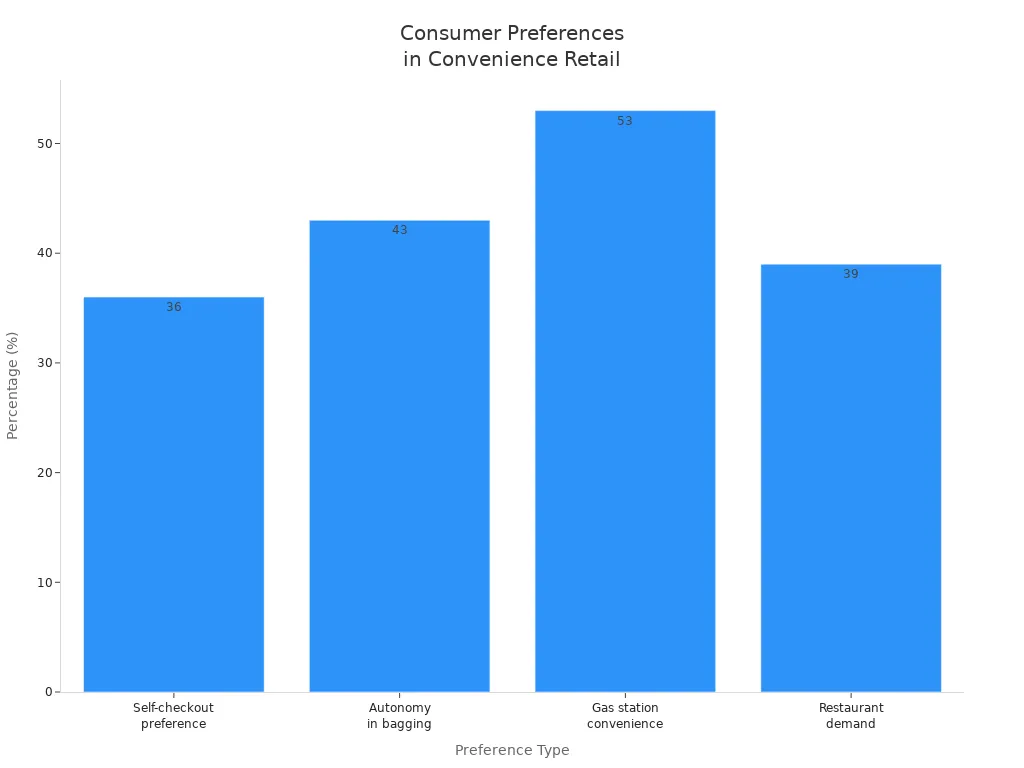
You want to shop quickly and easily. Convenience stores and small-format grocery stores now use technology to help you save time. Many customers choose self-checkout because it gives you more control and shorter lines. In fact, 36% of shoppers prefer shorter lines, and 43% like to bag their own items. You also look for convenience retail options at gas stations, with 53% of customers seeking stores that offer more than just fuel. Kiosks are popular too, with 39% of customers wanting more of them in convenience stores.
You visit convenience stores more often now. In 2024, 96% of U.S. shoppers are expected to visit these stores at least twice. Store layouts change to make your in-store experience faster and smoother. You see more open aisles, clear signs, and easy access to popular products. Technology helps you get what you need without waiting.
Evidence Type | Detail |
|---|---|
Self-checkout preference | 36% of shoppers prefer shorter lines |
Autonomy in bagging | 43% appreciate self-bagging options |
Gas station convenience | 53% seek gas stations with stores |
Restaurant demand | 39% want more kiosks |
Contactless & Frictionless Shopping
You care about safety and want a frictionless shopping experience. After the pandemic, you prefer contactless payments and touch-free options. In convenience retail, 80% of customers now prioritize seamless shopping. You use mobile apps, tap-to-pay, and even facial recognition to pay quickly. These changes make your in-store experience safer and more efficient.
You want convenience and time-saving features.
Hygiene concerns push you to choose contactless shopping.
Technology like facial recognition lets you pay without cash or cards.
Convenience stores and grocery retailers respond by adding more contactless solutions. You see fewer barriers and less waiting. Your shopping feels smooth and secure.
Evidence | Description |
|---|---|
80% of shoppers prioritize a frictionless shopping experience | This shows strong demand for seamless shopping in convenience retail. |
Post-pandemic shopping behaviors | You now choose contactless options for safety and speed. |
Adapting to New Formats
You notice new formats in convenience retail and grocery. Stores use autonomous checkout, smart shelves, and service robots. You adapt quickly, but sometimes face challenges. You may find errors in product detection or billing. Privacy concerns and learning new systems can make you hesitate. Technical glitches and downtime can disrupt your shopping.
You want accurate billing and easy-to-use technology.
Privacy and security matter to you.
You expect stores to fix problems fast.
Retailers work to improve these systems. They train staff and update technology to make your in-store experience better. You learn to trust new formats when stores show they care about your safety and privacy.
Personalization Expectations
You expect stores to know what you like. Shopper personalization is now a key part of convenience retail. Stores use AI to suggest products and offer deals based on your shopping habits. In fact, 71% of shoppers want personalized interactions. You feel valued when stores remember your preferences.
Statistic | Description |
|---|---|
71% | Percentage of shoppers expecting personalized interactions |
You return to convenience stores that offer personalized experiences. Your loyalty grows when you get special offers and recommendations. Grocery retailers use data to make your shopping more enjoyable.
Trust & Safety Concerns
You need to trust the technology in convenience stores and grocery retailers. Safety and privacy concerns affect your willingness to use autonomous retail systems. You want stores to protect your data and use ethical algorithms. When you feel safe, you use new technology more often.
Trust in technology is crucial for you.
You worry about privacy and safety risks.
Stores build trust by being transparent and offering liability insurance.
Retailers focus on making you feel secure. They explain how your data is used and keep systems reliable. Your trust leads to more visits and a better in-store experience.
Tip: When you feel safe and valued, you enjoy shopping more and become a loyal c-store shopper.
Customer Behavior Trend | Description |
|---|---|
You choose self-checkout more often, showing you want more control. | |
Impact of AI technologies | AI makes your shopping more interactive, enjoyable, and tailored to you. |
Importance of experiential quality | A great experience keeps you coming back and builds your loyalty. |
You see customer behavior trends changing fast in convenience retail. You want speed, convenience, safety, and personalization. Stores that adapt to these trends grow and keep you coming back.
Impact on Convenience Retail Operations
Staffing & Labor Shifts
You see big changes in staffing when stores use autonomous technology. In convenience retail, automation helps you keep stores open longer, even 24/7, without needing staff on-site at all times. Żabka, a Polish retailer, uses automation and partners with AiFi to solve labor shortages and give you more convenience.
AI now helps you schedule shifts, hire new workers, and predict how many staff you need. Some jobs disappear, but new roles appear as technology grows. Staff can now spend more time talking with you about products they love.
Inventory & Stock Management
Smart shelves and sensors make inventory management much easier for you and store owners. These tools track products with 99.9% accuracy and cut forecasting errors by almost half. You get real-time updates, so you rarely see empty shelves.
Daily supplier deliveries match orders to real demand, which reduces waste.
Real-time data lets you respond quickly to changes in demand.
High inventory turnover helps manage perishable goods.
Early warnings help redirect products before they expire.
Automated systems also order products for you, saving time and reducing mistakes. This makes convenience retail more efficient and keeps your favorite items in stock.
Security & Loss Prevention
Autonomous stores face new security challenges. You may worry about theft, data breaches, or injuries.
Merchandise theft and employee embezzlement are common risks.
Data breaches can put your information at risk.
Stores invest in surveillance, train staff to greet everyone, and use cash control systems.
Stores also create anti-theft policies and teach staff how to spot problems. These steps help keep you and your data safe in convenience retail.
Sustainability & Efficiency
You care about the environment, and so do many convenience stores. They use energy-saving lights, smart lighting that adjusts when people enter, and eco-friendly building materials.
Stores focus on fresh produce and more organic products.
Smart inventory management cuts food waste and spoilage.
Real-time analytics track expiration dates and help set prices to sell items before they expire.
These changes make convenience retail more efficient and better for the planet.
Strategy for Future Convenience
Localized Innovation
You can shape the future of grocery retail by focusing on your local community. Stores now build strong connections with neighborhoods by offering regional products and forming local partnerships. When you see your favorite local foods or brands, you feel a sense of belonging. Stores like Kwik Trip show how reflecting local values can build trust. QuikTrip’s success with special food items in different regions proves that meeting local preferences increases loyalty. You want stores that understand your needs and celebrate your community.
Tech Investment Priorities
You notice that technology drives the future of grocery retail. Retailers invest in automation to reduce inefficiencies and improve your experience. Amazon Go and 7-Eleven’s Evolution Stores use computer vision, sensors, and AI to create checkout-free shopping. Smart vending machines now offer fresh meals and tech gadgets, using real-time inventory tracking and touchless payments. These investments help you shop faster and more safely. You see that 72% of shoppers now choose convenience over brand loyalty. Retailers who invest in technology stay ahead and keep you coming back.
Evolving Store Concepts
You experience new store formats that change how you shop. Micro-markets, hybrid stores, and interactive vending machines make shopping more engaging. These concepts create immersive experiences and connect you with brands in personal ways. You find that evolving store designs adapt to your changing habits and foster emotional connections. Automated retail, including cashier-less stores and smart kiosks, makes your visits smoother. AI-powered recommendations and smart mirrors help you find what you want, reducing choice fatigue. These changes shape the future of grocery retail by making every visit unique.
Data-Driven Decisions
You benefit when stores use data to make smart choices. Retailers analyze promotions to see what works best and measure changes in your behavior. They track how sales in one category affect others and make sure you find the right products at the right time. Real-time data helps stores adjust to busy and slow periods. Improved inventory management and a better understanding of your needs increase competitiveness. As the future of grocery retail evolves, data helps stores stay flexible and responsive.
The future of grocery retail depends on how quickly stores adapt to new technology and changing customer expectations. You see that digital transformation is not just an option—it is essential for survival. Retailers who innovate and use data will lead the way in convenience and customer satisfaction.
You see the future of convenience retail shaped by your demand for speed, self-service, and unique experiences. Stores use autonomous technology to meet these needs and boost efficiency.
Key Trend | Description |
|---|---|
You want faster, staff-free shopping. | |
Self-Service Empowerment | You feel satisfied when you control your own shopping. |
Business Benefits | Stores grow by making shopping easier for you. |
Retailers who use real-time shopper insights, transparent AI, and smart inventory alerts make better decisions. You value stores that adapt, offer local products, and use digital tools. To stay ahead, stores must keep innovating and focus on your experience.
FAQ
What is autonomous retail in convenience stores?
Autonomous retail uses technology like self-checkout, smart shelves, and AI to help you shop faster. You can scan items, pay with your phone, and get personalized offers without waiting for a cashier.
How does automation improve my shopping experience?
You save time with self-checkout and contactless payments. Smart shelves keep products in stock. AI suggests items you might like. These tools make shopping easier and more enjoyable for you.
Are my personal data and payment details safe in autonomous stores?
Most stores use strong security systems to protect your data. You should look for stores that explain how they use your information and keep payment systems up to date.
Will autonomous technology replace all store staff?
You will still see staff in many stores. Automation handles routine tasks, but people help with questions, restocking, and customer service. Staff focus more on helping you and less on checkout.
See Also
Understanding Global Automated Retail: Micromarkets And Smart Stores
Navigating Self-Checkout At Walgreens: Benefits And Obstacles
AI-Driven Corner Stores: Essential Insights For Retailers
