Customer behavior trends in autonomous retail environments in Franchise & multi-location retailers.

You need to know how customer behavior trends affect autonomous retail environments. These trends help you make choices and plans, especially if you run franchise or multi-location stores. Many shoppers now want easy shopping. About 80% look for smooth experiences. Technology is changing things fast. You must change quickly too. People want more convenience and healthy choices. This makes them want fast-casual dining and delivery services. AI helps stores give customers special offers. This makes customers more interested.
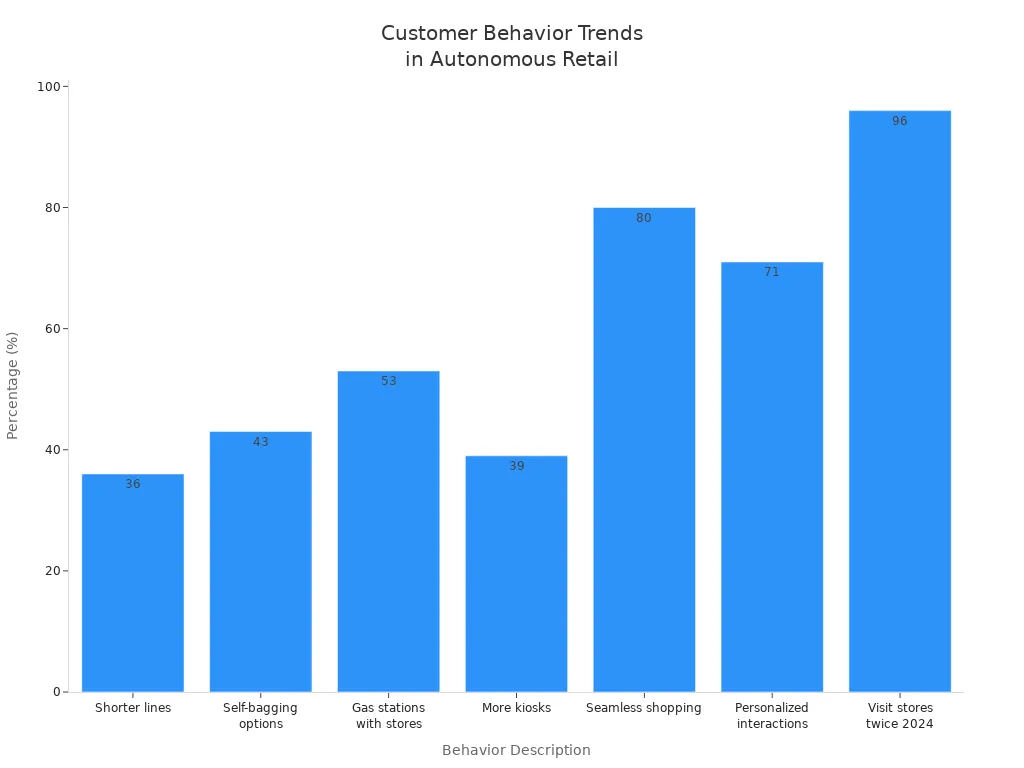
Statistic Description | Percentage |
|---|---|
Shoppers who prefer shorter lines | 36% |
Customers who appreciate self-bagging options | 43% |
Shoppers seeking gas stations with stores | 53% |
Customers wanting more kiosks | 39% |
Customers prioritizing seamless shopping | 80% |
Shoppers desiring personalized interactions | 71% |
U.S. shoppers expected to visit convenience stores at least twice in 2024 | 96% |
You must change your business to keep up with new preferences and technology if you want to stay ahead.
Key Takeaways
Customers like shopping that is quick and simple. Try to make lines shorter and make paying easier.
Personalization matters a lot. Use what you know about customers to give them special offers and deals. This helps shoppers feel important.
Spend money on things like self-checkout and mobile payments. These tools make shopping easier and can help save money on workers.
Keep things the same at every store. Make sure customers get good service and have a nice experience everywhere they shop.
Pay attention to what customers say. Use their ideas to make your store better and help people want to come back again.
Autonomous Retail Overview
Key Features
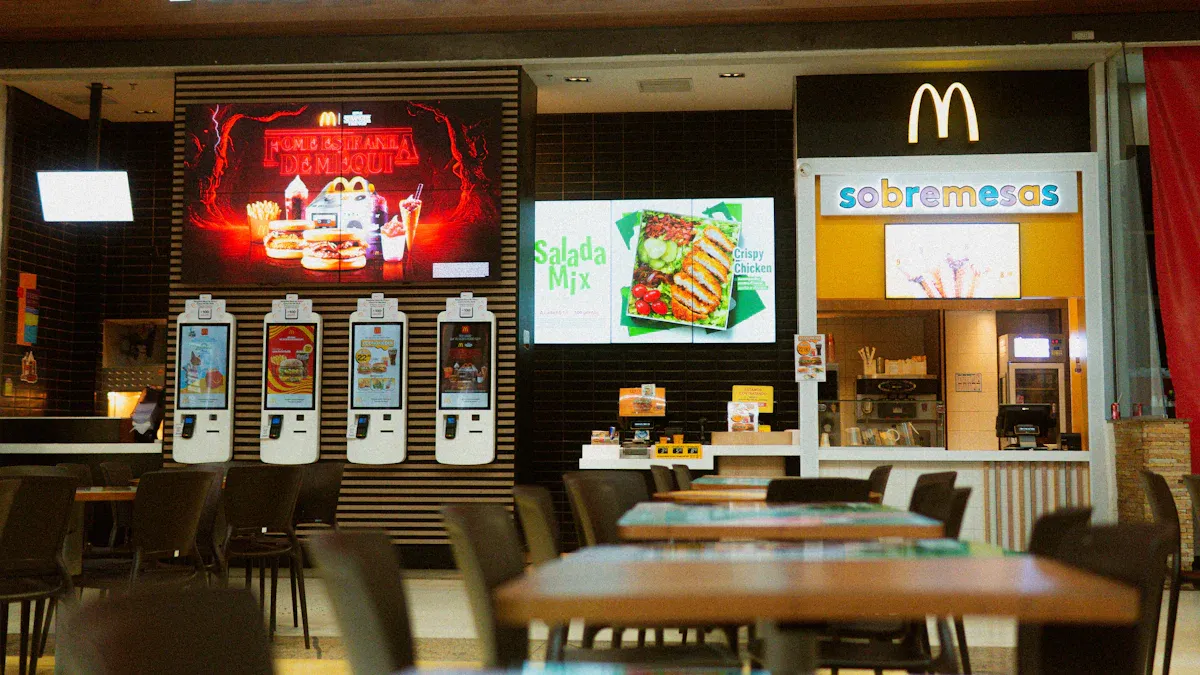
Autonomous retail uses technology to make shopping simple. These stores have things like self-checkout kiosks and mobile payments. You can scan your items and pay with your phone. You do not have to wait in line for a cashier. Many stores use AI to keep track of what is on the shelves. AI also gives you special deals just for you. Automation helps stores work well and keeps products available.
Here is a table that shows which features are most important for customer happiness in franchise and multi-location stores:
Feature | Impact on Customer Satisfaction |
|---|---|
Compliance Metrics | Makes sure every store has the same quality |
Innovation Metrics | Lets stores try new ideas to make customers happy |
Customer Satisfaction Measures | Shows how well each store is doing |
Technology Tools (e.g., CRM systems) | Helps stores talk to customers in a special way |
Digital Marketing Tools | Mixes company style with local touches |
Data Analytics | Helps stores work better and follow rules |
You see these features in many stores now. They help you shop faster and make your visit better.
Franchise & Multi-location Relevance
Franchise and multi-location stores get many benefits from autonomous retail. These stores do things the same way at every location. This makes shopping feel the same for you everywhere. Automation lets stores grow without needing more workers. AI systems do hard jobs, so training is easier. This is good for stores with lots of locations.
You also see more stores using drones and delivery robots. These tools help stores save money and bring you products fast. In the last five years, more stores have started using these new tools. You will see even cooler systems soon.
But there are some problems. Sometimes, customer data does not connect between stores. This makes loyalty programs not work as well. Stores may not know what is happening right away, so they are slow to change sales or restock. Adding new systems can be hard and cost a lot.
Customer behavior trends show you want easy shopping and special offers. Autonomous retail helps stores give you these things. But stores need to fix data and tech problems to keep you happy.
Customer Behavior Trends
Speed & Convenience
Speed and convenience are very important when you shop. Many stores let you walk in, pick items, and leave fast. You do not have to wait in long lines. This matches what people want today. Quick checkouts make shopping better. Autonomous checkout and AI help stores move faster. These tools cut down wait times and help you finish quickly.
Here is a table that shows how these features help you:
Evidence Description | Impact on Customer Satisfaction |
|---|---|
AI technologies make shopping faster and cut wait times. | Customers feel happier and come back more often. |
Autonomous checkout systems make shopping quick and easy. | Shopping feels better and less stressful. |
Frictionless shopping is a big plus for autonomous retail. | People like fast and smooth shopping trips. |
Good self-checkout systems make customers happier. | People like having control and easy use. |
Shoppers want fast and easy checkouts in stores. | Many choose autonomous stores for this reason. |
Franchise and multi-location stores use tech to speed up service. You see drive-thru timers and AI alerts that help stores move faster. Fast service makes you want to come back. Stores that are quick and easy get more repeat shoppers.
Personalization
Personalization changes how you shop at stores. You get product tips based on what you bought before. Stores send you messages when you look at things or leave items in your cart. You feel special when stores give you offers just for you.
Here is a table with ways stores use personalization:
Strategy | Description |
|---|---|
AI-Powered Advertising | Lets stores show ads that fit local needs and brand style. |
High-Quality First-Party Data | Good data helps stores use automation better. |
Marketing Automation | Sends messages to you based on what you do. |
Stores group shoppers by what they do, not just who they are.
You get product tips based on what you bought before.
Stores send messages when you look at things or leave your cart.
Personalization makes shopping feel more special. You feel like stores know what you want. This makes you want to shop there again. Special messages get your attention and help you feel close to the store.
Frictionless Shopping
Frictionless shopping means shopping is easy and smooth. You want to pick up products easily and pay in different ways. You do not want to wait in long lines. Stores give you real-time info about your basket and discounts. This helps you decide what to buy.
Here is a table with things that make shopping frictionless:
Factor | Description |
|---|---|
Consumer demographics | Stores must change their tech for different ages and tech skills. |
Marketing needs | Scan & Go helps stores match ads with products and deals. |
Ease of Shopping Experience | Easy pickup, special prices, and less waiting make shopping better. |
Ease of payments and flexibility | More ways to pay, like card or cash, make checkout faster. |
Real-time information | Updates on basket size and discounts help you choose what to buy. |
Improved customer service | Stores give quick help if you have problems while shopping. |
Reduced queues | Autonomous shopping cuts down wait times a lot. |
Omnichannel connectivity | You can shop online or in-store and switch easily. |
Sustainable options | Digital receipts save paper and are easy for you. |
People want shopping to be smooth and the same everywhere.
Personalization helps you buy more and makes shopping easier.
Stores use mobile features to make shopping fun and simple.
Saved payments and mobile wallets help you pay faster.
You like shopping more when it is easy and quick. Happy shoppers tell others about good stores. This helps stores in the long run.
Loyalty & Brand Preference
Loyalty programs and brand choice matter a lot in autonomous retail. You get special deals, discounts, and rewards with your loyalty card. Stores learn about how you shop to help you better.
When you use your loyalty card, stores collect info about you and how you shop. You get special deals and rewards. Stores use this info to learn what you like and talk to you better.
In AI shopping, brand loyalty helps stores stay popular. AI looks at rewards and benefits when picking products for you. Good loyalty programs help stores get picked more often.
Loyalty programs make brands stronger and help AI suggest them to shoppers.
You see that strong loyalty programs help stores stand out. These programs work with AI to keep you coming back. Customer trends show loyalty and brand choice help stores keep shoppers for a long time.
Technology Influence
AI & Analytics
AI and analytics are changing how you shop. Stores use sensors to watch what you pick up. Smart tools track where you go in the store. This helps make shopping smooth and easy. You feel happy when shopping is simple. AI gives you ideas for what to buy next. These tips come from what you like and bought before. You see updates on your cart and how much you spend. This helps you choose what to buy.
Here is a table that shows how these tools help you:
Evidence Description | Impact on Customer Behavior |
|---|---|
AI and sensors track customer movements and item selections. | Ensures a seamless shopping experience, enhancing customer satisfaction. |
Real-time tracking updates customers' virtual carts immediately. | Keeps shoppers informed about their selections and total cost, aiding in better decision-making. |
Tailored recommendations based on preferences increase engagement. | Encourages exploration of new products, enhancing the overall shopping experience. |
Franchise and multi-location stores use AI to keep things the same. You get the same service and speed at every store. Store owners check results to see who does best. They learn from each other to get better.
Stores use the same rules at every location.
Retailers put all their data together for a clear view.
Owners look at results to find ways to improve.
Cashierless Systems
You do not have to wait in line in these stores. You scan your phone or use your face to get in. Pick up what you want and just walk out. The store charges you by itself. This saves you time and makes shopping easy.
Stores like these systems for many reasons. They can open new stores faster. They spend less money on computer systems. There are fewer problems, so shopping is better for you. Workers can help you or fill shelves instead of checking you out. This helps when there are not enough workers and makes service faster.
Tip: Cashierless systems help you shop quickly and make you want to come back.
Mobile Payments
Mobile payments let you pay with your phone or watch. You do not need cash or cards to pay. This makes checkout fast and safe. You can use many apps or wallets, so you have more choices.
Mobile payments help stores learn what you like. Stores use this to give you better deals and rewards. You get a smooth and easy shopping trip. These tools help shape how you shop in autonomous retail.
Operational Impacts
Staffing Changes
Autonomous retail changes how you use your workers. You do not need as many cashiers because machines do checkouts. Your team can help customers and fill shelves instead. Many stores use dashboards to watch sales and how well staff work. This helps you know which stores need more help. You can teach your team to use new tools and fix problems fast. Automation lets you open more stores without hiring lots of new people.
Tip: Autonomous systems let you spend more time helping customers and less time on boring jobs.
Inventory Management
You must always know what is in stock. Each store checks its own items, so you do not wait for a main office. Tools like StockBot help you find lost items and keep shelves neat. StockBot works for 12 hours and checks inventory with 99% accuracy. You get updates right away about what you have and what you need. This stops you from missing sales and keeps shoppers happy.
Here is a table showing important inventory features:
Feature | Importance |
|---|---|
Centralized visibility | Lets you see stock at all your stores |
Real-time updates | Makes sure you know what is in stock |
Advanced forecasting | Helps you buy the right amount of products |
You can use warehouse tools and automation to fill orders faster and save money. Demand forecasting helps you guess what shoppers want, so you do not buy too much.
Security Challenges
Security is harder in autonomous stores. You face problems like people hanging around late and property damage. With fewer workers, you need cameras and sensors to watch the store. If security is not the same everywhere, you might miss things. You must keep customers safe at drive-thrus, pickup spots, and parking lots.
Security Challenge | Description |
|---|---|
Late-night loitering | Makes customers and workers feel unsafe |
Rising after hours risks | Dangers near EV stations and store fronts |
Vandalism and property damage | Hurts cars and the outside of stores |
Limited staff | Makes it hard to watch the whole store |
Inconsistent security measures | Means some places are not watched well |
Increased demand for customer safety | Needed at drive-thrus and parking lots |
Rising costs of security guards | Guards cannot watch big areas well |
You need better security tech to keep stores safe and make customers trust you.
The smart retail market will be $63 billion by 2025.
It grows by 24% every year.
Note: Autonomous shopping carts help people buy more and shop faster, so your stores can grow quickly.
Adaptation Strategies
Technology Investment
You need to invest in the right technology to stay ahead in autonomous retail. Smart systems can remove checkout lines and make shopping faster. When you use these tools, you save money because you do not need as many cashiers. Your team can focus on helping customers and keeping shelves full. Technology also gives you data about what shoppers like and what sells best. You can use this information to change your store layout or add new products. Technology works for small stores and big ones. You can add new features as your business grows.
Tip: Start with simple tools like self-checkout or mobile payments. Add more advanced systems as you learn what works for your stores.
Data-Driven Decisions
You should use data to make smart choices. Data shows you what your customers want and how they shop. When you collect data from all your stores, you see patterns. You can spot which products sell well and which do not. This helps you buy the right amount of stock and avoid waste. Data also helps you see if your marketing works. If you break down data silos, you get a clear picture of your business.
Here is a table to show how data helps you:
Data Use | Benefit |
|---|---|
Track sales by location | Find top-performing stores |
Monitor customer habits | Personalize offers |
Review checkout speed | Improve shopping experience |
Customer Engagement
You must focus on making shopping special for your customers. Try to give the same good experience at every store. Listen to feedback and use it to improve. If you fix problems fast, shoppers trust you more. Use both local and national marketing to reach more people. Make sure your loyalty programs work everywhere. When you create memorable experiences, customers want to come back.
Keep your brand and service the same at every location.
Make checkout easy and quick.
Use customer feedback to offer better deals and services.
Note: Stores that engage customers and use their ideas often see more repeat visits and higher sales.
You see customer behavior trends shaping how you run your stores. Shoppers want speed, easy payments, and personal offers. You need to use digital strategies like SEO, social media, and offline marketing. Align your IT plans with your business goals. Invest in systems that grow with you. Build strong teams and set clear rules for every location. When you adapt to new technology and listen to your customers, you stay ahead in autonomous retail.
FAQ
What is autonomous retail?
Autonomous retail lets you shop with little help from staff. You can check out by yourself and pay with your phone. Smart systems give you tips on what to buy.
How do autonomous stores keep my data safe?
Stores use strong tools to keep your data safe. They use codes and safe networks. Always read the store’s privacy rules before you shop.
Will autonomous retail replace all store workers?
You will still see workers in stores. They help put items on shelves and help customers. People also fix problems when things go wrong. Technology changes some jobs, but people are still important.
How do loyalty programs work in autonomous stores?
You join a loyalty program by signing up. When you shop, you get points or rewards. Stores look at what you buy to give you special deals.
Can I use cash in autonomous stores?
Some autonomous stores let you use cash, but many use cards or phones. Check how you can pay before you go. Paying with your phone is fast and easy in most places.
See Also
Comparing Micromarkets And Smart Stores In Global Retail
Understanding The Growth Of AI-Driven Corner Stores
The Future Of Retail: Embracing AI-Enabled Stores
Analyzing Walgreens Self-Checkout: Benefits And Obstacles
Walmart's Self-Checkout Innovations: Anticipated Changes For 2025
