Data synchronization between POS and AI analytics

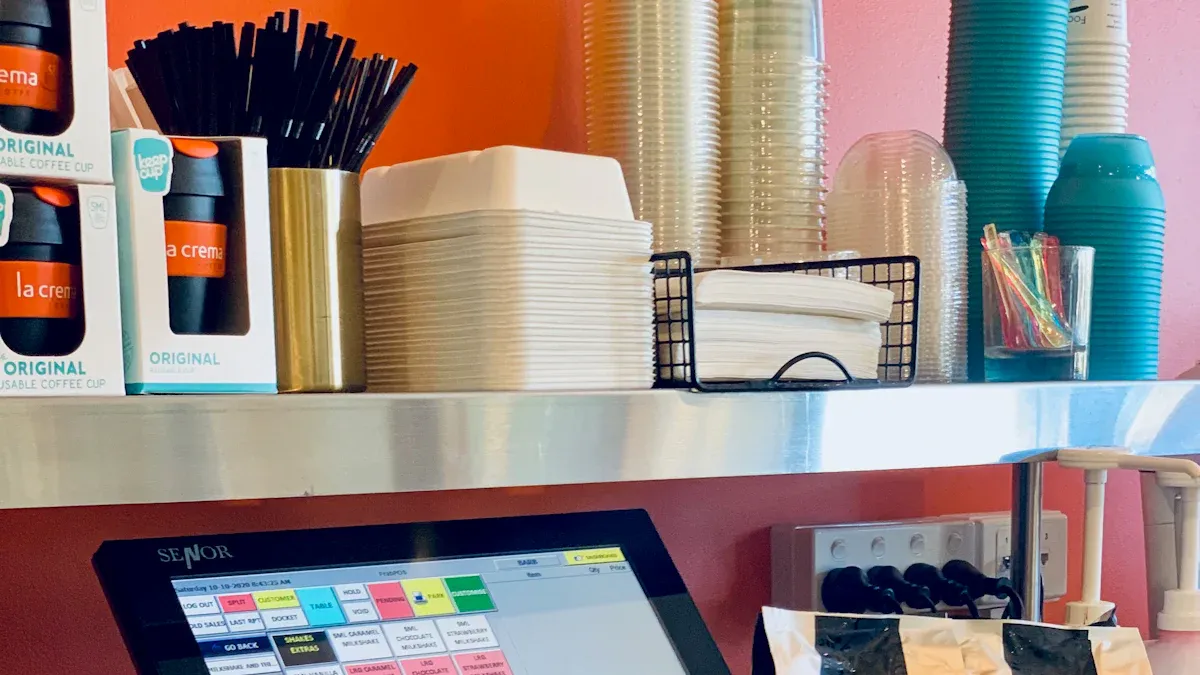
Data synchronization between POS systems and AI analytics platforms uses smart, real-time connections. This brings together sales, inventory, and customer data in one place. Businesses can then make good choices with correct and current information.
Businesses get all their data in one spot by joining data from many sales channels.
Leaders look at real numbers, not just guesses.
Teams can make special offers and keep things the same for every customer.
Inventory management gets better, so there is less chance of running out or making too much.
Companies can act fast when there is fraud or when customers change how they shop.
Having all the data together makes work easier and helps find new ways to grow and save time.
Key Takeaways
Data synchronization puts sales, inventory, and customer info together. This helps people make better choices.
Real-time analytics let businesses spot trends fast. They can fix problems like fraud quickly. This makes everything work better.
Unified data helps give customers special experiences. This makes customers happier and more loyal.
Problems like different data formats and hard integration can slow down syncing. Careful planning is needed to fix these issues.
AI-powered tools make data management easier. They help keep data correct and give quick insights for smarter business plans.
Why Data Synchronization Matters
Unified Sales and Inventory Data
Retailers must see sales and inventory clearly to make good choices. Data synchronization puts all the information together. It removes walls between different teams. This helps everyone know what sells and what does not. Teams can plan better for the future.
Benefit | Description |
|---|---|
When data is in one place, it is easier to guess what customers want. | |
Real-time replenishment | Stores can restock right away when they see what is missing. |
Optimized margins | Selling more and storing less helps companies make more money. |
Tailored customer experiences | Special deals can be made for each customer. |
Enhanced loyalty | Customers come back when they get the same good service. |
Enhanced strategic decision-making | Good data helps leaders pick the best actions. |
Time savings for teams | Computers do the hard work, so people make fewer mistakes. |
Seeing all the data together helps teams plan and make fewer errors. Teams work faster, and leaders can change plans quickly if needed.
Real-Time Analytics and Insights
Data synchronization lets companies use real-time analytics. This means they can find problems or chances right away. For example, AI can watch sales and spot fraud as it happens. Some companies use AI to check sales and video at the same time. They get alerts if something looks wrong. This helps keep money safe and builds trust.
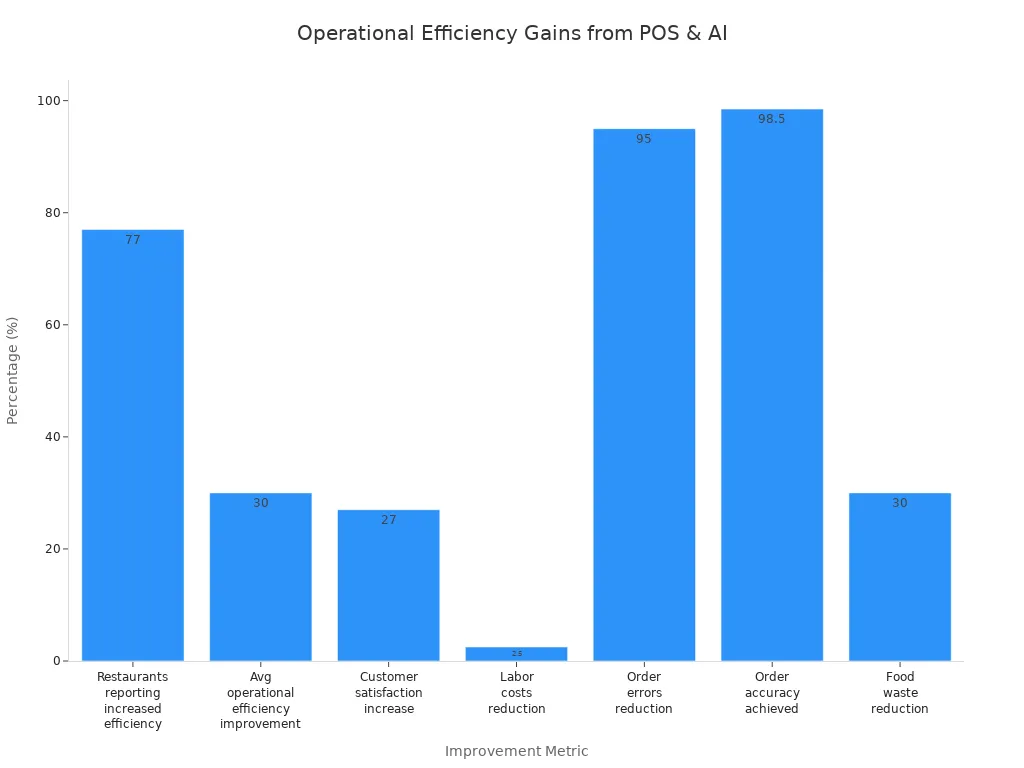
Most stores and restaurants say real-time analytics help a lot. They make fewer mistakes with orders. Customers are happier, and workers do not waste time. With quick data, teams can fix inventory, give better service, and make smart choices every day.
Enhanced Customer Experience
Customers want fast and personal service. Data synchronization helps by linking customer profiles, what they bought, and what they like. AI can suggest items, give special deals, and remember what customers choose. This makes shopping simple and fun.
Real-time updates mean customers get the same service everywhere.
AI suggestions help customers stay loyal and buy more.
Special marketing reaches the right people with the right offers.
When companies use synchronized data, they earn trust and keep customers coming back.
Data Synchronization Challenges
Data Format Inconsistencies
Many businesses use different systems for sales, inventory, and customer management. These systems often save information in their own way. One system might use a different date style or unit than another. Sometimes, the same product has different names in each system. These differences make it hard to match up the data. Teams have to spend more time fixing mistakes before they can use the data.
Different formats can mean dates, units, or names are not the same.
These problems make it harder to put all the data together and study it, especially when comparing different stores.
When data is kept apart in eCommerce, CRM, or POS systems, more problems happen. Moving data by hand between ERP and BI dashboards can cause mistakes. If third-party add-ons do not work together, data can get out of sync and teams cannot see everything they need.
Latency and Real-Time Demands
Retailers want to know what is happening in their stores right away. But sometimes, it takes too long for data to move from POS to AI analytics. Even a small wait can mean missing chances or using old information. Usually, it takes about 1 second for data to be taken in, but it can take up to 1 minute to show up.
Type of Latency | Value |
|---|---|
Ingestion Latency | 1 second |
Materialization Latency | 1 minute |
Impact of Latency on AI-Driven Analytics in Retail |
|---|
Old information does not show what is happening now. |
It can make decisions and customer service worse. |
Slow AI can make customers lose trust and hurt control. |
Integration Complexity
It is not always simple to connect POS systems with AI analytics platforms. Many projects do not work because the systems cannot share information. Different data formats often need special fixes and help from experts.
65% of integration projects do not work because data formats do not match, so special fixes and expert help are needed.
Other problems include IDs that mix up different customers, so offers go to the wrong people. Hard-to-understand data models can confuse workers and slow down use. It is tough to follow privacy rules when mixing data from different places. Bad matching can mix up people, and if teams are not trained, they do not use the system well.
Mixed-up IDs can join different customers into one, so offers are wrong.
Hard data models make it tough for people to use the system.
Privacy rules are hard to follow when mixing data from different places.
Bad matching can mix up who is who.
Not enough training means teams do not use the system much.
These problems show why planning and getting help from experts is important for good data synchronization.
AI-Driven Synchronization Methods

AI and machine learning have changed how businesses connect POS systems with analytics platforms. These tools move and clean data automatically. They make sure information is correct and current. Teams can see sales, inventory, and customer trends right away. This section looks at three main ways: API integration, middleware solutions, and cloud-based platforms.
API Integration
APIs are like bridges between POS systems and AI analytics tools. They let stores link sales platforms, e-commerce sites, and other business tools. When someone buys something, APIs send that data to analytics platforms fast. This real-time data helps teams track sales, spot trends, and react quickly.
APIs give instant updates and keep data in sync across the company. Leaders get new numbers, not old ones. Teams can make choices based on what is happening now. This makes work easier and helps businesses stay ahead.
APIs make it easy for POS and analytics tools to connect, giving instant sales and inventory data.
Middleware Solutions
Middleware sits between POS systems and analytics platforms. It works like a translator so different systems can understand each other. Middleware solutions have several benefits:
Give a central solution that keeps data safe and follows rules.
Lower upfront costs and reduce technical work.
Allow custom workflows with API integration and webhooks, saving time and money.
Let teams sync data in real-time or in batches, making data consistent.
AI-powered middleware can automate field mapping and normalization. These platforms put marketing and sales data in one place. Systems like NinjaCat’s DataCloud take in, change, and improve information from many sources without manual work. Teams can check data to find fields that need fixing. Middleware features automate mapping and normalization, and regular checks keep everything current.
Middleware platforms make data normalization simple, so analytics tools can use information from different places.
Cloud-Based Platforms
Cloud-based platforms are popular for syncing data between POS and AI analytics. Many businesses use these systems because they grow easily and work well. Cloud POS systems grow with a business, fitting new locations or products. They connect smoothly with software and hardware, making one workflow.
AI and cloud computing automate jobs, guess what customers want, and give real-time insights. This makes work faster and helps customers feel happy. The numbers show strong growth:
Statistic | Percentage |
|---|---|
Global retailers using cloud-based POS platforms | |
Businesses prioritizing inventory-linked POS systems | 61% |
Retailers using analytics tools in Cloud POS software | 61% |
Food service businesses preferring Cloud POS platforms | 72% |
Businesses reporting improved inventory accuracy after switching to cloud-enabled POS systems | 59% |
Restaurants using tablet-based Cloud POS systems | 57% |
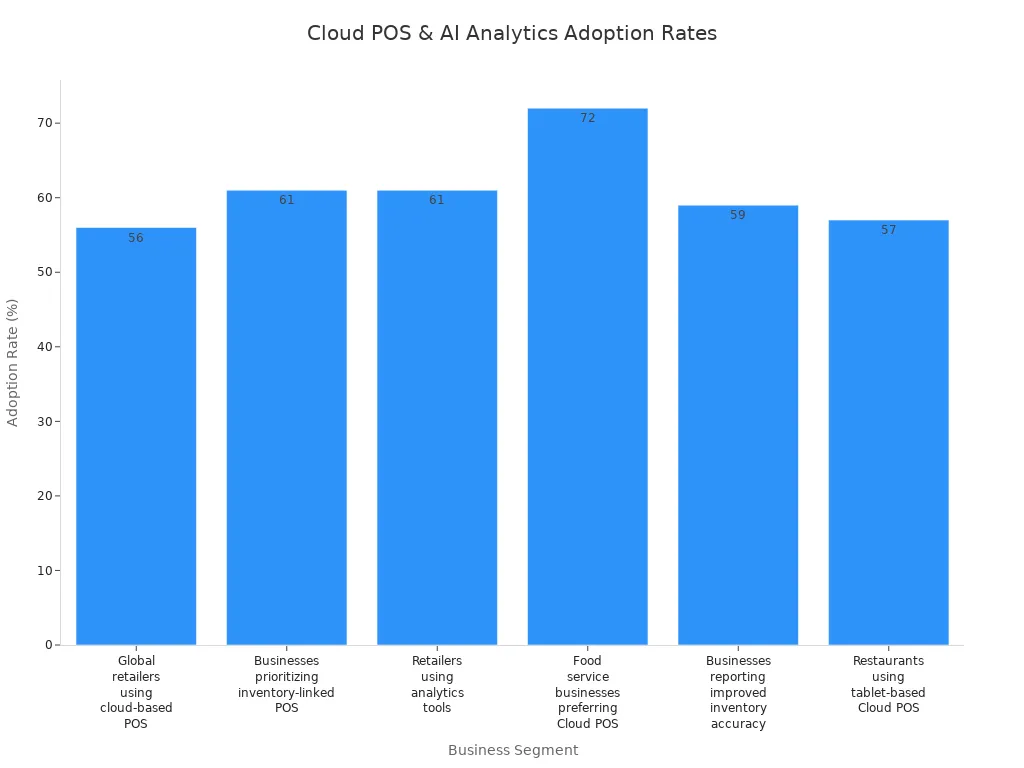
Cloud platforms support real-time data flow and normalization. They help businesses keep information correct and ready for analytics. Companies can grow without big changes, and AI tools can look at data as soon as it comes in.
Cloud-based platforms give reliable, scalable ways to connect POS and AI analytics, making data synchronization simple for growing businesses.
Best Practices for Data Synchronization
Ensuring Data Accuracy
Accurate data helps businesses make good choices. Teams need clear rules for handling information. They should check data often to find mistakes early. Security keeps data safe when it moves. Good records help fix problems faster. The table below lists ways to keep data correct:
Best Practice | Description |
|---|---|
Data Governance | Make clear rules for handling and protecting information. |
Regular Monitoring | Check and audit often to find and fix problems fast. |
Data Security | Use encryption and controls to keep information safe when moving. |
Documentation | Keep records of data changes to help fix issues. |
Teams should use tools to watch data and get alerts if something goes wrong.
Security and Compliance
Keeping information safe and following rules is very important. Companies use strong encryption and controls to protect data. They must follow privacy laws like GDPR, HIPAA, and CCPA. Security standards like ISO/IEC 27001 help keep systems safe. Businesses need to log changes and keep records for checks.
Companies must follow basic standards and rules.
They must obey GDPR, CCPA, and rules like HIPAA.
Data moves should be checked with logs and version control.
Security checks and controls help manage risks.
Companies must follow rules to avoid fines and keep customer trust.
Scalability Planning
Growing means systems must be flexible. Cloud POS platforms help businesses grow without big changes. More than 80% of UK stores use these systems. Linking POS with AI tools helps teams study buying habits and improve loyalty. The table below shows ways to grow:
Strategy | Description |
|---|---|
Cloud-based POS systems | Grow without big changes; many stores use them. |
Integration with AI tools | Improve analytics, personalization, and automation for better choices. |
AI-ready workflows help teams see buying habits and spot popular products.
Smarter selling helps businesses grow and keeps customers coming back.
Planning for growth makes sure data synchronization works as the business gets bigger.
Case Example: AI-Powered POS Integration

Retail Scenario Overview
A big store chain wanted to make stores run better. They also wanted to help customers more. The company picked an AI-powered POS integration. This connected sales, inventory, and workforce data. Sensors watched how customers moved in the store. They suggested the best way to set up the store. AI tools helped managers choose where to put products and checkout counters.
AI watched transactions as they happened to stop fraud.
The system guessed busy times by looking at old sales and seasons.
Managers got advice from data for staffing and tasks.
The platform made end-of-day reports, cash counts, and sales tracking automatic.
Prices changed in real time based on demand, competition, and inventory.
Routine jobs like payroll and reordering low-stock items were automated.
AI chatbots and virtual helpers answered customer questions fast.
This method gave the store one view of all activity. The team could react quickly and help customers better.
Implementation and Results
The company used the AI-powered POS system in every store. Data synchronization made sure each store had the latest information. The results showed clear gains in important areas.
Metric | Improvement Percentage |
|---|---|
Reduction in forecast errors | |
Lower inventory levels | 20%–30% |
Reduction in lost sales | Up to 65% |
Reclaimed employee time | Up to 30% |
Reduction in logistics costs | 15% |
Reduction in theft and fraud | 20–25% |
Improvement in staff productivity | 20% |
Managers saw fewer mistakes when guessing what customers wanted. Inventory went down, so less money was stuck in stock. Lost sales dropped by as much as 65%. Employees spent less time on manual work and more time helping customers. Logistics costs got lower, and theft dropped by up to 25%. Staff worked better, making the business more efficient and profitable.
AI-powered POS integration gave the store better control, faster choices, and a stronger customer experience.
Data synchronization between POS and AI analytics has good points and some problems. The table below shows the main ideas:
Benefits | Challenges |
|---|---|
More tasks done by computers | Data kept in separate places |
Better choices for leaders | Problems with data being correct |
Easier for everyone to study data | Hard ways to connect different data |
AI-powered, real-time connections help businesses move quickly and help customers more. Companies should use smart steps and AI tools to keep data moving safely and without trouble.
FAQ
What is data synchronization between POS and AI analytics?
Data synchronization means POS systems and AI analytics tools share sales, inventory, and customer data. This helps keep information up to date and correct. It lets businesses make better choices using the latest data.
How does real-time data synchronization help retailers?
Real-time data synchronization shows sales and inventory changes right away. Teams can spot trends fast and stop fraud quickly. It also helps them give better service to customers.
What are common challenges in POS data integration?
Many businesses have trouble because data formats are different. Updates can be slow, and connecting systems is hard. These problems can make mistakes and slow down answers.
How can businesses ensure data security during synchronization?
Businesses use encryption and access controls to keep data safe. They also check data often with audits. These steps help protect private data and follow rules like GDPR and CCPA.
See Also
The Future of Retail: Embracing AI-Driven Stores
Transforming Online Retail Management with AI Tools
A Comparative Analysis of Amazon Go and Cloudpick
Understanding the Growth of AI-Enhanced Convenience Stores
Boosting Efficiency and Customer Experience with Cloudpick Technology
