5 facts about data synchronization in POS and AI analytics

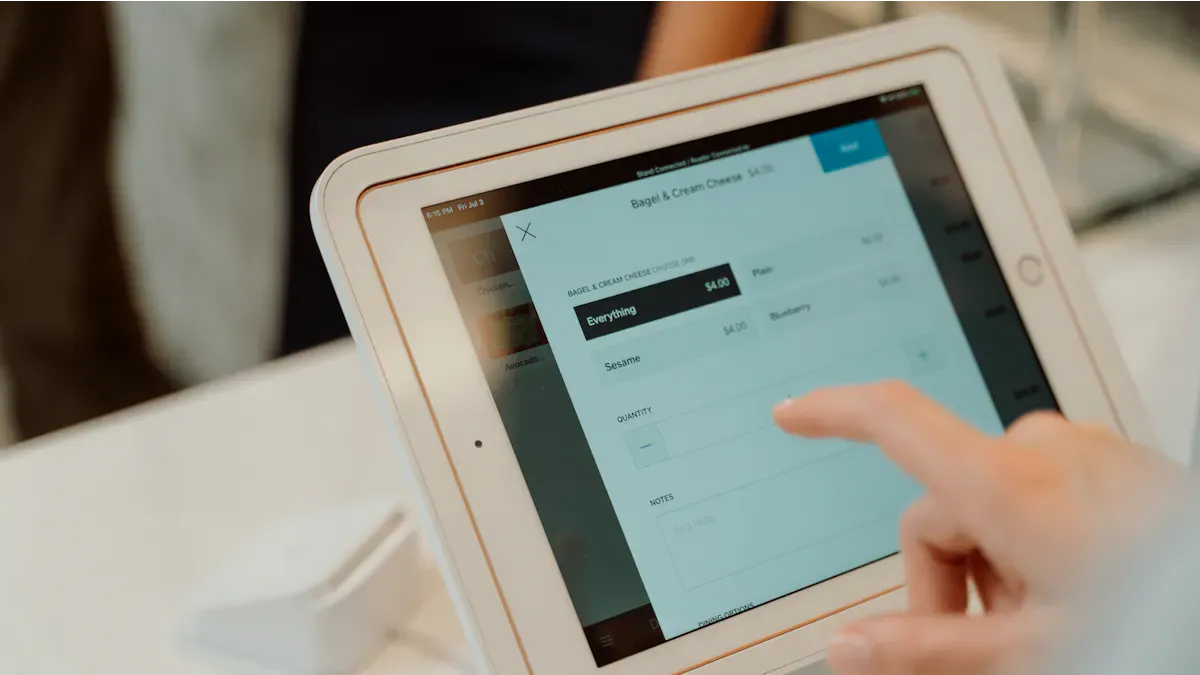
You see fast changes in stores and restaurants. Data synchronization between POS and AI analytics helps you react quickly. AI looks at sales history and local events to guess demand. You get better inventory tracking and smarter marketing plans. The table below shows how AI changes real-time analysis:
Aspect | Impact |
|---|---|
Predictive Insights | AI starts automatic reordering when sales go up. |
Accuracy Improvement | Inventory mistakes drop by as much as 25%. |
Smart Marketing Strategies | Trends show up weeks early, giving you an advantage. |
You need good and useful information to stay ahead. These facts help you make smart choices and grow your business.
Key Takeaways
Data synchronization between POS and AI analytics helps businesses act fast. It makes inventory management better. It also improves marketing strategies.
Real-time updates from AI stop inventory mistakes. This lowers errors by 25%. It keeps shelves full.
Actionable analytics let businesses make customer experiences personal. This builds loyalty. It also raises sales.
Strong security, like end-to-end encryption, keeps sensitive data safe. It protects data during synchronization. This makes customers trust the business.
Checking data synchronization often finds problems early. It helps your business work well and stay efficient.
Real-time data synchronization

AI-powered updates
You need real-time data synchronization to keep your business flexible. When your POS system connects with AI analytics right away, you can see every sale and inventory change as it happens. You also see customer actions right when they occur. This helps you make fast choices and spot trends before others do. Sales and marketing teams stay in the loop, so you never miss a chance to talk to customers or change your plans.
Many businesses use native connectors, API endpoints, middleware platforms, and webhook triggers for smooth data synchronization. The table below lists common ways:
Method Type | Description |
|---|---|
Native Connectors | Connect popular POS systems like NCR and Toshiba easily. |
API Endpoints | Let you move data between special systems. |
Middleware Platforms | Use tools like Zapier or Make.com to link different apps. |
Webhook Triggers | Send instant alerts when inventory changes happen. |
AI-powered updates help keep your information up to date. You get real-time data processing, better inventory management, and smart predictions. AI insights help you see trends, manage inventory, and make good choices. When sales go up or inventory gets low, AI updates your POS system right away. This stops you from running out of stock and keeps shelves full.
AI-powered updates show changes right away.
Dynamic inventory management watches sales and orders more stock.
Real-time pricing changes match what people want and market trends.
Immediate analytics impact
Immediate data synchronization makes AI analytics and reports more accurate. You get real-time data, so you can make smart choices. Old data is less of a problem, so you avoid bad guesses and poor customer service. The table below shows the effects:
Impact of Immediate Data Synchronization on AI Analytics | Description |
|---|---|
Enhances Accuracy | Gives real-time data needed for smart choices. |
Reduces Stale Data Issues | Stops bad guesses and poor customer service. |
Supports Complex Tech Stacks | Helps with data spread across many places. |
You see clear business gains. Inventory counts are more correct, orders go faster, and demand forecasts are better. Fast insights help you act quickly. Dashboards update right away and real-time error checks help you fix mistakes and improve results.
Data consistency and integrity
Reliable POS operations
You need your POS system to work well every day. Connecting your POS with AI analytics helps your business. You must keep your data correct and the same everywhere. If your data is wrong, you might lose sales or make pricing mistakes. You can follow some simple steps to check your POS works right:
Step | Description |
|---|---|
Pick a POS system that works with AI and has open APIs or plug-ins. | |
Test and Optimize | Watch how AI works and change things if needed. |
Integrate Seamlessly | Get help from a tech partner to connect everything smoothly. |
Pick a POS system that can use AI and add new features. Test the connection before you start using it in your store. Make sure your AI tools link to other systems like CRM or inventory. These steps help your business run without problems.
Tip: Ask your POS provider or a trusted tech partner for help. This makes adding AI easier and keeps your business working well.
Trustworthy AI analytics
Trustworthy AI analytics need strong data checks. You should set up checks to keep your data correct and useful. The table below shows what helps keep data quality high:
Key Factor | Description |
|---|---|
Consistency Checks | Make sure data stays the same in all places and stops duplicates. |
Integrity Checks | Check that data parts fit together and make sense. |
Business Rule Validation | Make sure data follows your business rules and policies. |
Data Quality Checkpoints | Put checkpoints in the data flow to find and fix problems early. |
You should sync data in real time. This makes sure updates show up everywhere. Your inventory, prices, and product info stay correct. When you use customer data, use strong security and follow rules. These steps help people trust your business and let you make smart choices with AI analytics.
Integration challenges
Technical obstacles
It can be hard to connect your POS system with AI analytics. Many retail systems use different software and hardware. This makes it tricky to link them together. Payment and fiscal systems are important because they deal with your money. You have to follow the law in every place you do business. Rules and laws are not the same everywhere. You need local legal experts to help you follow them. Testing how well things work is also tough. You must keep private data safe and hide names during testing. These problems can slow you down and make syncing data harder.
Linking different retail systems can cause problems.
Payment and fiscal systems affect your money.
You must follow all local laws.
Testing needs you to keep data private.
Tip: Ask local legal experts and IT pros for help early.
Operational solutions
You can solve these problems with some simple steps. Start by picking systems that do not need big changes for AI. Break big apps into smaller parts called microservices. This helps them work better together. Middleware can help connect different systems. It keeps your business running well. New AI tools work with most POS systems. This makes setup easier and links all parts of your store. You might have to pay more at first and train your staff. Pick AI tools that are easy to use. This makes training faster. Update old apps and use APIs to connect everything.
Pick systems that need only small changes for AI.
Break big apps into microservices.
Use middleware to connect systems.
Choose AI that works with your POS.
Use easy tools to help with training and costs.
Update old apps and use APIs to link them.
Note: Good integration helps your business work better and get more from AI analytics.
Enhanced business insights
Unified customer view
You want to know your customers better. Connecting POS and AI analytics shows all customer actions together. This helps you see what people buy, what they like, and how often they visit. You can use this to make special offers and give better service. Companies with a unified customer view grow faster and make more money. The table below shows how this helps your business:
Metric Type | Evidence |
|---|---|
Pipeline Quality Metrics | Companies with a working RevOps approach grow revenue 19% faster and have 15% more profit than those without it. |
Marketing Efficiency Metrics | Companies with well-matched, connected tools get 23% more marketing pipeline per worker. |
Customer Experience Metrics | Companies good at customer experience can raise revenue by up to 8%. |
You can use these facts to change your marketing and sales plans. When you know what customers want, you can help them faster.
Actionable analytics
You need more than just reports. Actionable analytics turn your data into steps you can use right away. With real-time data sync, you always have the newest info. You can spot sales trends, check loyalty programs, and plan for busy times. Here are some ways actionable analytics help your business:
You can build personal bonds with customers and turn them into loyal fans.
You can look at sales in different places and change rewards or deals to get better results.
You can give instant discounts at checkout, making customers happy and bringing them back.
You can use predictive analytics to get ready for future demand, keeping shelves full and staff prepared.
A 2024 McKinsey report says data-driven companies are 23 times more likely to get new customers and 19 times more likely to make a profit. A 2023 Deloitte study found that real-time analytics can cut problems by up to 35% and make customers 20% happier. You can use smart POS analytics to make better choices every day.
Tip: Check your analytics dashboard every day to find trends and act fast. This helps your business stay ahead of others.
Security and compliance
Secure data transfer
You keep your business safe by protecting data. You use strong protocols to guard sensitive information. End-to-end encryption locks customer data right away. This stops others from listening in or getting access without permission. Secure key management keeps cryptographic keys safe and changes them often. You can use advanced methods like homomorphic encryption and zero-knowledge proofs. These keep privacy during AI training and operations. Digital signatures prove transactions are real and cannot be denied.
Protocol | Description |
|---|---|
Encrypts all data in transit and at rest using strong algorithms to prevent unauthorized access. | |
Homomorphic Encryption/SMC | Allows computations on encrypted data, preserving privacy during AI training. |
Zero-Knowledge Proofs (ZKPs) | Verifies transactions without revealing underlying data, ensuring privacy in AI operations. |
Digital Signatures | Ensures authenticity and non-repudiation of transactions on the blockchain. |
Secure Key Management | Involves secure generation, storage, and rotation of cryptographic keys for data protection. |
Tip: Use end-to-end encryption and secure key management. This protects your business from cyber threats.
Regulatory standards
You must follow strict rules when handling customer and payment data. You build a compliance framework that matches all rules. You make sure your business follows local and global standards. You set up strong data governance to keep data safe and correct. You decide who owns the data and track where it goes. You follow PCI DSS rules for credit cards and GDPR for privacy. These steps help you avoid fines and build trust with customers.
You create a compliance framework for your business.
You follow local and global standards.
You set up data governance for security and accuracy.
You define data ownership and track where data goes.
You comply with PCI DSS and GDPR.
Note: Regulatory compliance protects your business reputation. It keeps you ready for audits.
You keep data synchronization safe and legal by using strong security protocols and following rules. You build trust with customers and keep your business running well.
You get ahead of other businesses when you focus on data synchronization between your POS and AI analytics. This helps you make better choices, work faster, and keep customers happy. Top companies use automation to check records, improve CRM profiles, and connect supply chains for quick results. To get the most out of this, follow these tips:
Pick tools that match what your business needs.
Make clear rules for how you handle data.
Check your data sync often to catch problems.
Spend time training your team.
Metric | Value |
|---|---|
Sales Boost | 10–15% |
ROI Payback Period | 60–90 days |
Stay ahead by using real-time synchronization and getting ready for new things like Edge AI and hyper-automation.
FAQ
What is data synchronization in POS and AI analytics?
Data synchronization lets your POS and AI systems share info right away. You see sales, inventory, and customer updates with no wait. This helps you make fast choices and keeps your business running well.
How does real-time data synchronization help my business?
You get correct inventory numbers and quick sales reports. Real-time updates help you spot trends early and meet customer needs. Your team uses the newest info, so service gets better and mistakes go down.
What are common challenges when integrating POS with AI analytics?
You deal with problems like software not matching, keeping data private, and following laws. You might need to fix old systems or teach your staff new things. Middleware and APIs help link different platforms.
Tip: Talk to IT experts before you start integration.
How can I keep my data secure during synchronization?
You use end-to-end encryption and strong key management. These tools keep important information safe from cyber threats.
Security Feature | Benefit |
|---|---|
Encryption | Stops people from getting in |
Key Management | Keeps your data protected |
Which regulations must I follow for POS and AI data?
You must follow PCI DSS for payment safety and GDPR for customer privacy. You set up data rules and track who owns the data. Following these rules helps people trust you and keeps you from getting fined.
See Also
Understanding AI-Driven Convenience Stores for Retail Success
The Future of Retail: Embracing AI-Enhanced Stores
Exploring AI-Enhanced Vending Machines for Today's Retailers
