Edge AI architecture improves inventory with smart data

You can change how stores handle inventory by using edge ai architecture. Local processing gives fast results, saves money on internet use, and keeps data safe. You get alerts right away when items are almost gone. You can plan better because you know what people will buy. Stores say they spend up to 20% less on running costs. They also have 30% fewer mistakes in their stock.
Edge ai architecture lets stores check inventory even if the internet stops working. This helps stores run without problems.
Trend/Benefit | Description |
|---|---|
Real-time Inventory Management | Makes stores work better with quick updates on stock |
Cost Reduction | Lowers running costs by up to 30% |
Key Takeaways
Edge AI architecture helps stores manage inventory better. It gives updates right away and lowers costs by up to 30%.
Processing data locally makes things faster and more reliable. Stores can check stock even if the internet goes down.
AI-driven demand forecasting makes predictions more accurate by 35%. This helps stores keep the right amount of inventory and avoid running out.
Real-time analytics from edge computing spot theft and inventory problems fast. This leads to 30% fewer losses.
Using edge AI means checking current systems, training workers, and starting with small projects. This builds trust and improves results.
Edge AI architecture in smart retail

Core components and local processing
Edge ai architecture is important in smart retail. It uses edge computing to handle data where it happens. There are three main parts that help it work:
Hardware collects data from sensors, cameras, and smart shelves.
Software uses AI models made for edge devices to understand the data fast.
Communication protocols help devices share information and start actions nearby.
Edge computing lets stores look at data without sending it to the cloud. Stores get video analytics in real time to spot theft. Predictive maintenance models help stop equipment from breaking before it causes problems. Edge ai architecture keeps processing close to where the data comes from. This gives stores speed and reliability, even if the internet goes down.
Role in inventory management
Edge computing helps stores watch inventory in smart retail. Edge AI-powered cameras check shelves in real time. They find empty spots and tell staff right away. Stores follow product placement rules, so restocking mistakes go down. Smart shelves with sensors send alerts when products are moved or touched. RFID tagging helps track items and lowers manual errors.
Edge computing lets stores make decisions fast. Stores see insights and take action because data stays local. The table below shows how edge ai architecture helps inventory management:
Key Aspect | Description |
|---|---|
Edge AI handles data nearby, so stores get quick insights and actions. | |
Live Inventory Sensing | Stores can check stock levels right away and reorder automatically. |
Operational Efficiency | Watching inventory all the time stops too much or too little stock and makes management better. |
AI video analytics spot theft or misplaced items right away. Stores fix inventory problems fast. Edge computing keeps delays low, which is important for quick alerts. Stores keep running, even if the internet is not stable. Smart retail gets accurate, fast, and reliable inventory management with edge ai architecture.
Smart data for inventory optimization
Data sources in retail environments
Stores can use different kinds of data to improve inventory. Edge computing gathers info from sensors, cameras, and RFID tags. This helps you see what happens in your store. You can check how customers feel, watch market trends, and see how other stores are doing. You also keep an eye on sales and changes during different seasons. These data types help you make good choices and react fast when things change.
Data Source Type | Description |
|---|---|
Customer Sentiment Analysis | Looks at what customers say to understand what they want. |
Market Trend Analysis | Checks what is popular to help decide what to stock. |
Competitor Benchmarking | Compares your store to others to find ways to improve. |
Real-time Sales Data | Shows sales and stock right away so you know what is selling. |
You can use old sales records, promotions, and weather info too. Edge computing mixes all these sources to give a full view. You can spot patterns and find problems before they hurt your inventory.
Real-time analytics at the edge
Edge computing lets stores get quick answers by using local data. You do not have to wait for updates from the cloud. RFID and computer vision help you check inventory levels. You see what customers buy and change stock fast. Automation can save up to 20% in costs. AI systems notice demand and find mistakes, so inventory stays correct.
You keep customers happy by having the right amount of stock and stopping empty shelves.
Edge computing works with ERP and SCM systems. You can see everything and manage inventory before problems happen. Walmart saved 25% in costs and sold more by using these tools. Amazon uses AI to find inventory issues by looking at sales.
Aspect | Description |
|---|---|
Immediate Updates | Real-time systems show sales right away and keep stock correct. |
Enhanced Availability | Keeping enough stock stops empty shelves and makes customers happy. |
Demand Forecasting | Fresh data helps predict what people will buy so you do not have too much or too little. |
Edge computing helps stores manage inventory quickly, smartly, and with more trust.
Benefits of edge AI for inventory
Real-time stock monitoring
Edge computing helps you see your inventory clearly. Edge ai architecture lets you check stock in all stores right away. Sensors and cameras on shelves send updates fast. You know what is missing before customers do. Computer vision counts products and finds mistakes quickly. You get real-time information to help you make good choices.
Edge AI models watch inventory and find problems.
You see stock in many stores with no wait.
AI looks at foot traffic and shelf stock to help inventory.
Computer vision counts products and finds errors fast.
Predictive analytics help you plan and stop shortages.
Edge computing helps you sell products faster. Shelf sensors tell staff when items are gone. You act quickly and keep shelves full. Only important data goes to the cloud, so you manage inventory well.
Reducing stockouts and overstock
Edge computing helps you stop empty shelves and wasted products. AI looks at old sales and market trends. You change inventory for big events or seasons. Edge ai architecture helps you guess demand and keep the right amount of stock.
AI forecasting makes demand guesses 35% better.
You have fewer empty shelves and less extra stock.
H&M used inventory AI to cut extra stock by 30% and empty shelves by 40%.
AI checks sales history and trends for better guesses.
You keep inventory balanced. You do not lose sales from empty shelves. You do not waste money on things that do not sell. Edge computing lets you make decisions fast and keeps your store running well.
Demand forecasting improvements
Edge computing changes how you guess demand in smart retail. AI finds patterns in data that people miss. You get new forecasts as data comes in. You see how things like weather or events change demand. Predictive modeling lets you try different plans and get ready for anything.
Advantage | Description |
|---|---|
Pattern recognition | AI finds hidden patterns and links in your data. |
Real-time processing | Forecasts update right away when new data comes. |
Multi-variable analysis | AI looks at many things at once for a full view of demand. |
Predictive modeling | You try different plans and get ready for changes. |
Anomaly detection | AI finds strange patterns and mistakes, so you fix problems early. |
You make better guesses about demand and keep inventory right. You make smart choices and help customers. Edge computing gives you tools to stay ahead in smart retail.
Loss prevention and security
Edge computing helps protect your store from theft and fraud. AI checks video feeds in real time. You spot bad behavior and stop shoplifting early. Edge ai architecture uses EAS and AI for better loss prevention.
Evidence Description | Impact on Loss Prevention and Security |
|---|---|
AI as a driver of holistic LP programs | You stop theft and keep your store safe. |
Real-time video analysis | You see bad actions and lower theft. |
Integration of EAS and AI | You get a strong loss prevention system. |
Adoption of AI-enabled systems | You fight theft, fraud, and shrinkage well. |
AI-powered systems cut inventory loss by 30% in the first year. Real-time watching and tracking help you find theft and mistakes. You lose less and keep inventory safe. Edge computing makes your store safer and better.
Implementing edge AI in retail
Infrastructure assessment
You begin by checking your store’s systems. Use special platforms to see if your store is ready for AI. These platforms give scores and advice. Look at your data setup, staff skills, and how you manage AI. Upgrade your analytics tools and teach your workers new skills. Clean your data and automate easy tasks for quick results. Later, work on bigger goals like updating systems and training all the time.
Spend money wisely based on what you can afford.
Build trust with careful checks and reports.
A mid-size investment firm had messy data and weak systems. They spent six months fixing their base. This made their results come 70% faster.
Solution selection and integration
Pick edge computing tools that match your store’s needs. Make sure the AI platform fits with your inventory systems. Data must move easily between all platforms. Check your tech and train your team. You need help all the time for smooth use.
Criteria | Description |
|---|---|
Platform Compatibility | How well the AI solution works with your systems. |
Data Interoperability | Sharing and using data between platforms. |
Technological Infrastructure | Your store’s tech abilities. |
Workforce Training | Teaching staff to use new AI tools. |
Ongoing Support | Getting help to keep things running well. |
You might have problems with data rules and tech issues. Bad data can make forecasting wrong. Old POS or ERP software may need special fixes. Tell your teams about the benefits and changes.
Staff training and change management
Get your team ready for edge computing. Set up training programs for everyone. Let workers try AI tools in real situations. Encourage safe testing and learning. Make groups inside your store to share knowledge. Reward skill growth to keep people motivated.
Start with clear goals and plans.
Get employees involved early and explain the benefits.
Help teams work together for new ideas.
Staff support is very important. If people resist, things go slower. Being able to change fast matters in smart retail. Edge computing makes customers happier and helps with ai-driven personalization. You keep data safe and private. Use data anonymization, strong encryption, and strict access rules to protect privacy.
Tip: Keep your data clean and get your staff involved to get the most from edge computing in inventory management.
Case study: Edge AI in action
Real-world inventory improvements
Edge computing helps stores use advanced AI systems. Retailers can guess inventory needs very well. This stops empty shelves and wasted products. Edge computing gives real-time updates and fast choices. Stores have fewer stockouts and better demand forecasts. They spend less on logistics and keep less extra inventory.
Improvement Type | Metric/Result |
|---|---|
Stockout Reduction | |
Demand Forecasting Accuracy | 92% accuracy in predicting localized demand |
Inventory Cost Reduction | Implied decrease |
Overall Inventory Level Reduction | 20-30% reduction via AI integration |
Logistics Cost Reduction | 5-20% decrease in logistics costs |
Excess Inventory Reduction | 26% reduction in excess inventory |
Forecasting Accuracy Improvement | 23% better accuracy compared to traditional methods |
Customer Behavior Prediction Improvement | 31% improvement in predictions |
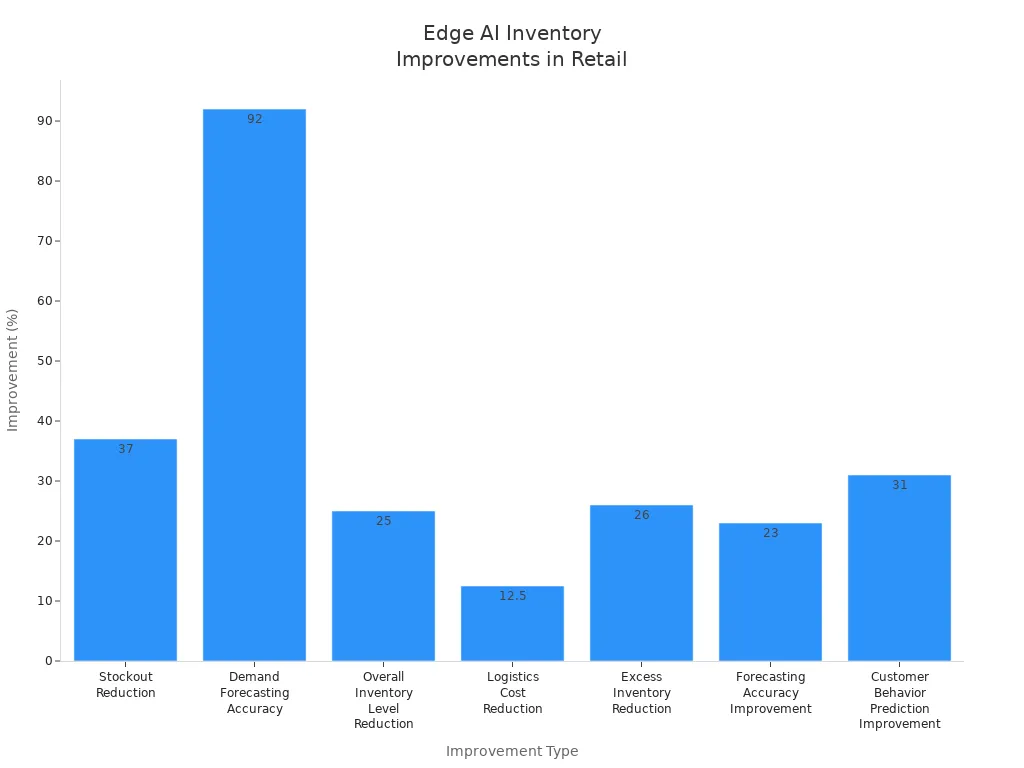
Advanced retailers use AI to guess local inventory needs. You react faster to what customers want. Shelves stay full. AI systems help track inventory and change stock levels quickly. This means fewer mistakes and happier customers in smart retail.
Key outcomes and lessons
Edge computing brings many benefits for inventory management. AI forecasting tools help guess demand at each store. You keep the right products on shelves and waste less. Automated systems change inventory levels fast. You can set prices based on demand and what competitors charge.
Better demand forecasting helps you plan well.
Personalized offers make customers happier.
Loss prevention tools spot theft and errors.
Automated replenishment keeps inventory just right.
AI waste reduction saves money and helps the planet.
Supply chain optimization makes lead times shorter and builds strength.
Stores like Walmart use automated replenishment to lower stockouts. Amazon Go uses AI and computer vision to track inventory. You get detailed data and a better shopping experience. Edge computing makes your store efficient and ready for new challenges.
Tip: Begin with small AI projects and grow as you see results. You build trust and improve your store step by step.
Edge AI architecture and smart data change how stores manage inventory. Stores can now guess what they need better. They have fewer empty shelves and run their supply chain faster.
Improvement Type | Before Adoption | After Adoption | |
|---|---|---|---|
Forecasting Accuracy | N/A | High | N/A |
Stockouts Reduction | N/A | Significant | N/A |
Overstock Reduction | N/A | 15-30% | N/A |
Cost Reductions | N/A | 10-15% | N/A |
Supply Chain Efficiency | N/A | 20-25% | N/A |
Edge AI gives stores some big benefits:
AI makes stock checks more correct and faster.
Automation helps count stock and stops mistakes.
Predictive analysis lets stores keep the right amount of products.
If you want to use edge AI, follow these steps:
Check if your data is good and correct.
Add new tech to what you already use.
Make sure you protect privacy and follow rules.
Decide what you want AI to do for your store.
Try a small project first, then do more if it works.
Companies that work on better data see more AI projects succeed, about 50% more. Clean data helps you trust your results and find new ways to grow.
FAQ
What is edge AI architecture in retail?
Edge AI architecture lets stores use devices like cameras and sensors. These devices handle data right inside the store. This means you get quick answers and your data stays safe.
How does edge AI help reduce stockouts?
You get alerts when items are almost gone. Edge AI checks shelves and updates inventory right away. You can refill shelves before customers see empty spots.
Is edge AI hard to set up in my store?
First, check your store’s systems. Many edge AI tools work with what you already have. Training your staff and picking the best platform makes setup easier.
Can edge AI protect customer data?
Yes. Most data stays in the store, so risk is lower. Use strong encryption and access rules. This helps you follow privacy laws and keep customer info safe.
What results can I expect from edge AI in inventory management?
You will have fewer empty shelves and better guesses about demand. Stores see up to 30% fewer mistakes and save 20% on costs.
See Also
Revolutionizing Online Store Management With AI-Driven Tools
The Future of Retail Lies in AI-Enhanced Stores
Modern Retail Benefits From AI-Driven Combo Vending Machines
