The role of edge computing in real-time retail recognition in Franchise & multi-location retailers.


You can see edge computing change how stores work and help customers. Franchise and multi-location retailers now use edge computing for retail to handle data right where it is made. This way helps you make quick choices and act fast when things change. Most retailers now move their work closer to people, as shown below:
Statistic Description | Percentage |
|---|---|
Retailers prioritizing edge computing for engagement | |
New retail IDCs designed as modular systems by 2025 | 66% |
Retailers moving workloads closer to end-users | 67% |
Supermarkets using IoT sensors | 73% |
Edge-enabled IDCs handling customer personalization engines | 64% |
Retailers reporting lower cart abandonment with AI | 38% |
Retailers reporting better inventory turnover with AI | 44% |
Retail companies in North America deploying edge models | 74% |
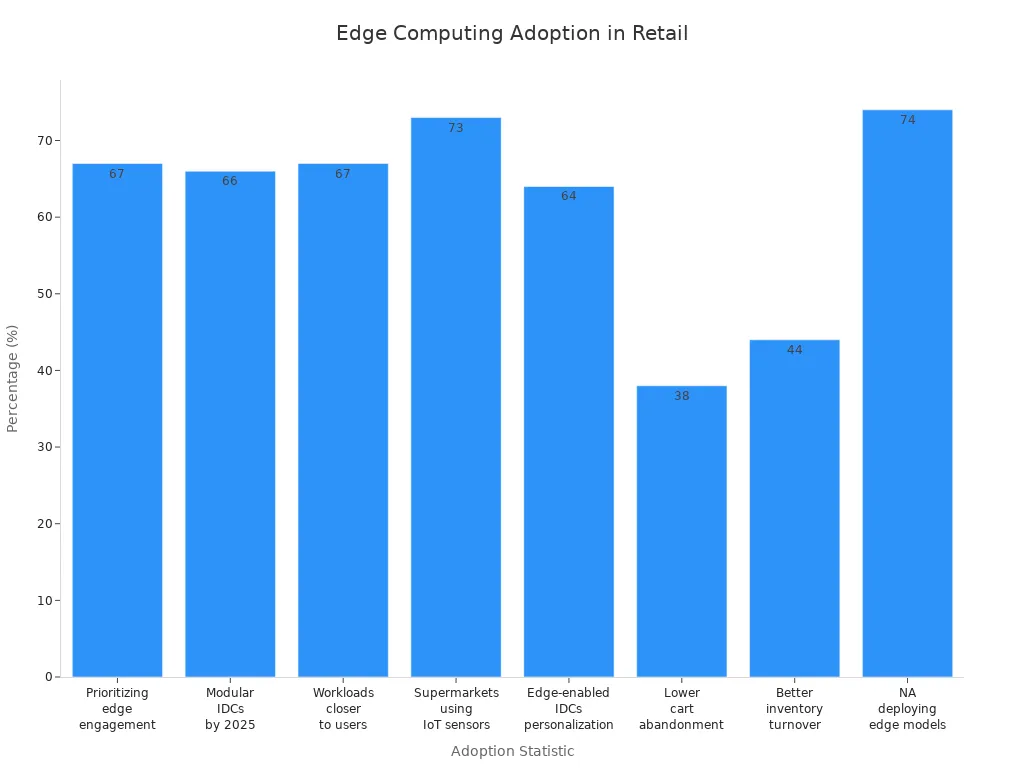
You need fast data processing to make stores work better and give smart shopping experiences. Edge computing for retail helps check things right away, gives real-time answers, and lets you use data to make each visit better.
Key Takeaways
Edge computing lets stores handle data right in the store. This helps them make quick choices and give better service to customers. Real-time inventory management with edge computing stops items from running out. It also keeps stock numbers correct and helps stores work better. Edge computing lets stores give shoppers special deals just for them. Stores can change offers based on what customers do. Using edge computing makes data move faster. This helps systems answer quickly and makes the store work better. Edge computing keeps data safe by working with it in the store. This helps keep customer info safe and lowers the chance of cyber attacks.
Edge Computing in Retail Today
Real-Time Data Processing
Edge computing changes how stores use data. With edge computing for retail, stores handle information right where it happens. This means stores do not wait for cloud servers to answer. They get answers fast and help customers better. Many stores use edge computing to gather data from IoT devices and sensors. These tools watch what happens in the store every second.
Here are some ways edge computing is used in retail today:
Stores collect data with IoT sensors and cameras.
AI makes choices and handles sales using live data.
Smart shopping carts use cameras and weight sensors for prices.
Stores watch things in real time and use local analytics to work better.
POS systems get checked early to stop problems before they start.
Stores use edge analytics to make shopping personal for each customer.
RFID and shelf sensors help stores see inventory better.
Real-time data processing at the edge makes stores faster and more accurate. The table below shows how this works:
Aspect | Explanation |
|---|---|
Local Data Processing | Stores handle data inside the store and make quick choices. |
Inventory Management | Stores update inventory right away and avoid running out. |
Customer Interaction | Stores give shoppers a personal experience with fast data use. |
Store-Level Decision Making
Edge computing helps each store make smart choices. Stores do not need to wait for data to go to a main server. They see what is happening and act fast. This helps keep shelves full, offer good deals, and help shoppers quickly.
Tip: Using edge computing in retail helps you spot trends and fix issues early.
Here is how edge computing helps stores make better choices:
Evidence Description | Impact on Real-Time Analytics |
|---|---|
Faster inventory updates | Stores change stock levels fast with real-time data. |
Personalized promotions | Stores give offers based on what customers do right now. |
Immediate insights | Stores react to shopping patterns and help customers quickly. |
Stores that use edge computing see better results. They manage inventory better, make checkouts faster, and sell more. Customers are happier because stores respond to them right away.
Overcoming Retail Challenges with Edge Computing
Reducing Data Latency
Running many stores is hard. One big problem is data latency. Cloud systems send data far away. This makes it slow to decide things. Edge computing fixes this by working close to the store. Smart shelves, cameras, and sensors collect data right there.
Here is how edge computing helps with data latency:
Local data processing means less waiting. Smart shelves and sensors give results fast.
Decentralization stops network slowdowns. Each store handles its own data.
Better data routing makes things quicker. You decide faster since data stays nearby.
Bandwidth efficiency keeps networks speedy. Only important data goes to the cloud.
Local caching lets you see data, like inventory, in seconds.
Note: Fast data checks help you give special offers, approve payments, and spot fraud right away.
Addressing Legacy System Limitations
Many stores still use old systems. These old systems make it hard to use new tech. They slow down changes and make it tough to help customers. Edge computing lets you add smart shelves and sensors to what you have. You do not need to replace everything. This helps you use real-time data for better choices.
Here are some problems and how edge computing helps:
Challenge | Description |
|---|---|
More endpoints, more traffic | You get more devices, like smart shelves and signs, each year. |
Latency matters | You need fast decisions for offers and payments. |
Security is non-negotiable | You must keep data safe as threats grow and networks get bigger. |
Stores like Casey’s and Jerry’s Foods made their old systems better with edge computing. They used gateways and middleware to connect old and new tech. This made their data work better and stores smarter. You can do this too to make your stores work well and stay ahead.
Key Benefits of Edge Computing for Retail
Real-Time Inventory Management
Edge computing helps stores keep track of products right away. You can see where items are from the warehouse to the shelf. Smart shelves and sensors update stock levels fast. This stops you from running out of things to sell. You always know what is in your store, so you make good choices.
Edge computing lets you watch and update stock in real time. This can make inventory almost 99% correct.
Your system matches what is on the shelves because of real-time updates.
You can find missing items and restock quickly with edge computing.
Real-time inventory management makes stores work better and have fewer mistakes. You save time because you do not count items by hand. This lets you help customers and grow your store.
Tip: Real-time inventory management shows you what you have all the time. This helps you plan and serve customers faster.
Customer Insights and Personalization
Edge computing gives you tools to learn about customers. You can see how people shop and what they like. This helps you make special offers and change your store layout.
Edge computing lets you give coupons and show smart signs right away. These things help customers enjoy shopping and come back.
You can use edge AI for facial recognition and self-checkouts. Smart mirrors and kiosks give quick tips and product info.
Edge computing helps you learn about customers. You can make your store look better and sell more.
These tools make shopping more fun and personal. You can give the best deals at the best time. This makes customers happy and brings them back.
Process Automation and Cost Savings
Edge computing lets you automate many store jobs. This saves money and helps your team do more. Real-time inventory and checkout systems work together to handle data fast. You do not need to send all data far away, so your network is quicker.
Edge computing saves money by making inventory smarter.
It cuts costs by handling data close to the store, so networks do not get slow.
You can make customers happier and earn more by using real-time data and special offers.
AI tools find problems like not enough workers or wasted time.
Real-time data from different systems helps managers fix things right away.
Predictive labor forecasting helps you plan for busy times and use your team well.
When you automate simple jobs, you make fewer mistakes and let workers do more important things. Your store can change fast to help customers.
Enhanced Security and Loss Prevention
Security is very important for stores. Edge computing helps keep stores and customers safe. You can check video and other data in the store, so you can stop problems fast.
Evidence Description | Source |
|---|---|
Local video checks help you spot trouble fast and keep stores safe. | |
Edge AI handles data in the store, making it safer from cyber threats. | |
Watching for trouble in real time can lower losses a lot. | |
Edge computing makes stores safer by spreading out data processing. |
Edge AI can watch for theft or fraud at checkout. Real-time alerts help you act before you lose money. Handling data in the store keeps private info safer. This protects your store and builds trust with customers.
Note: Better security and loss prevention keep your store safe and customers happy.
Using edge computing in stores gives you real-time inventory, better customer data, and smart automation. You also get better security and loss prevention. These things make your store work better, cost less, and help customers more.
Scaling Edge Computing Across Multiple Locations

Consistent Retail Experiences
You want every store to feel the same for customers. Edge computing helps you make stores work alike everywhere. Each store handles its own data, so you can react fast. You fix problems and help shoppers right away. Local choices let stores change to fit what people want. Stores run better because you manage things close by.
Evidence | Description |
|---|---|
Real-time data processing | Stores use data in the store, so they answer fast when customers need help or when stock changes. |
Localized decision-making | Stores decide what to do themselves, so each store can fit its own shoppers. |
Improved operational efficiency | Stores work better because they handle their own systems and do not depend on one big system. |
Edge computing keeps your brand strong and customers happy. You always know what is in stock. You give the same good service in every store.
Smarter Local Data Use
You can use store data to make each store better. Edge computing lets you see inventory right away, so you do not run out or have too much. Checkout is faster with edge POS systems. You learn about shoppers in the store and give them special offers.
Best Practice | Description |
|---|---|
Real-Time Inventory Management | Edge computing helps you watch stock all the time, so you do not run out or have too much. |
Faster Checkout Processes | Edge POS systems make buying things quicker, so customers are happier. |
Enhanced Personalized Shopping Experiences | Store analytics help you give shoppers deals based on what they do. |
You keep inventory matched across stores, so shoppers trust you. You change shelf prices fast with edge AI. You handle data better, so you make smart choices for each store.
Simplified Deployment
It is hard to use edge computing in many stores. The market changes quickly, so you must pick where to spend money. New providers join the edge space, so choices get tricky. You need to move to new systems, which can be tough. Many stores still learn how to use edge computing well.
Edge computing helps you grow by handling data close to the store.
You make things faster and handle lots of stock and customers easily.
Good apps help your stores work well.
You check data from edge devices right away, so you make smart choices and run stores better.
You make deployment easier with modular systems and local setups. Your stores get smarter and faster. You use edge computing in more stores, so your business grows strong.
Edge AI and Advanced Applications
In-Store Analytics and Optimization
Edge AI helps you see what happens in your store all the time. Smart cameras and sensors watch how people move, but do not use private details. These tools know if someone is a shopper, worker, or just walking by. Real-time analytics turn foot traffic into helpful business facts. You learn how people walk around and shop.
With this information, you can change your store layout to help customers find things faster. You can also make better choices about where to put workers and products. When you know where shoppers spend time, you can put popular items in the best spots. This helps you sell more and keep your store running well.
Computer vision powered by AI follows movement in your store.
Sensors can tell shoppers, workers, and passersby apart.
Real-time analytics show how people shop.
Privacy-first design keeps personal data safe.
These tools help you make shopping better for customers. You use data to make smart choices that help sales and your team. Edge computing lets you handle data in the store, so you can act fast and stay ahead.
Business Intelligence at the Edge
Edge AI gives you business intelligence right away. You do not have to wait for reports from far away. You see what is happening in your store right now. This helps you make smart choices quickly.
AI makes your work easier and helps you use resources well.
You can give customers special deals based on what they do.
Real-time insights help you decide what to do next.
Predictive analytics tell you when to add staff or restock.
Automation handles easy jobs, so your team can focus on big tasks.
Edge computing for retail lets you use and study data where it is made. You can spot empty shelves and see how people look at displays. You can react to changes in the store right away. This makes your store work better and helps you serve customers.
Retail analytics platforms work with edge computing to give you useful facts. You can make shopping better and keep the right amount of stock. Edge AI helps you make choices that help your business grow.
Staff Training and Efficiency
Edge AI helps you train your staff faster and better. AI-driven VR training works much better than old ways. Stores like Walmart saw more workers get involved and fewer people quit after using VR training. Cleveland Clinic made new staff ready in half the time with this technology.
AI checks skills and tracks how staff learn.
Johnson & Johnson saw more people use their learning platform and grow.
You can use special training to teach AI and real store jobs.
AI tools give feedback right away and help staff learn fast.
Voice AI lets workers finish jobs quickly and stay interested.
Edge computing lets you give training and help right in the store. Your team learns new things and works better. You can help staff do more and make fewer mistakes. This helps your store run well and keeps your team happy.
You can use edge computing to help staff work better and make your store a good place to work. When your team learns and grows, your whole business gets stronger.
The Future of Edge Computing for Retail
Emerging Trends
Many new trends are changing how stores work. Stores use edge computing to make shopping faster and easier. Big retailers use advanced technology to help customers and save money. The table below shows how some big stores use these tools:
Retailer | Use Case Description | Benefits |
|---|---|---|
Sam’s Club | Tried 'Seamless Exit' with computer vision and machine learning. | People wait less at exits, and the store saves 10-18% on computer costs each year. |
Walmart | Uses smart shelves to watch stock levels. | This stops empty shelves and helps shoppers find what they need. |
Amazon | Uses Dash Carts and 'Just Walk Out' for mobile checkout. | Shoppers have an easier time and do not need to wait in line. |
More stores use AI to guess what customers want and waste less. Edge computing for retail lets stores use data from sensors and cameras right away. This means stores can help customers quickly. Stores also use better security to keep information and devices safe. Many stores use less energy and help the planet by processing data close to where it is made.
Note: New rules say you must keep customer information private. You need to hide names and use strong security to follow laws like GDPR and CCPA.
Competitive Advantage
Edge computing gives your store a big advantage. When you use data close to where it is made, you get answers right away. This helps you make fast choices and keep track of inventory. You can give shoppers special deals and suggest products when they need them.
You update inventory right after each sale or restock.
You make fewer mistakes and keep shelves full.
You use screens to show shoppers new products.
You let computers help your team serve customers better.
Stores that use these tools can change fast when things happen. You can spend less money, help customers more, and keep them coming back. As more stores use edge computing, you will see even more ways to use technology to stay ahead.
Edge computing lets stores work smarter and faster. You can see good changes, like less stealing and more sales. The table below shows what you get:
Benefit Type | Evidence |
|---|---|
Significant Cost Savings | Edge AI surveillance helps cut losses from theft by up to 25%. |
Increased Revenue Potential | Personalized marketing with Edge AI raises sales by about 10-15%. |
Quicker choices help staff do their jobs better and make stores run smoother. |
Experts say edge computing helps stores work better, makes customers happier, and brings in new tech. You should set clear goals and check your results. When you spend money on edge solutions, you help your business grow strong.
FAQ
What is edge computing in retail?
Edge computing means you handle data near your store. You do not send all data far away. This helps you get answers quickly and help customers faster.
How does edge computing help with inventory?
You use edge computing to watch products all the time. Smart shelves and sensors show stock levels right away. This stops you from running out of things and keeps your store neat.
Is edge computing safe for customer data?
Yes! Edge computing keeps most data inside your store. You lower the chance of cyber attacks because you do not send everything far away. You keep customer privacy safe and earn trust.
Can you use edge computing with old systems?
You can add edge devices to what you already have. You do not need to change everything. This lets you use new tech and get real-time data without big changes.
What are the main benefits for franchise retailers?
Benefit | Description |
|---|---|
You help customers right away. | |
Lower Costs | You save money on data and staff. |
Better Security | You keep data safe in each store. |
See Also
Understanding AI-Driven Convenience Stores: Essential Insights for Retailers
Comparing Micromarkets and Smart Stores: Global Automation in Retail
The Future of Retail: Embracing AI-Enhanced Store Experiences
Transforming Retail: The Impact of Smart Electronics Vending Machines
Analyzing Walgreens Self-Checkout: Benefits and Hurdles in Retail
