Understanding the Technology Behind Cashierless Checkout Systems

You can now go into many stores and leave without waiting in line. Cashierless checkout systems let you shop by watching when you enter, what you pick up, and when you leave. They use cameras, sensors, RFID tags, and AI to do this.
In 2024, more than 60% of big stores around the world use these systems.
Step | Description |
|---|---|
1 | Entry authentication: Shoppers get in with a mobile app or card. This lets the system watch what they choose. |
2 | Product identification & tracking: Cameras, RFID tags, and sensors see what items you take or put back. |
3 | Real-time Virtual Cart Compilation: The virtual cart changes as you pick or return products. |
4 | Seamless Payment Integration: The system charges you at checkout. It works with many ways to pay. |
5 | Security Measures: Algorithms, facial recognition, and product weight checks make sure billing is right and stop stealing. |
Key Takeaways
Cashierless checkout systems use smart technology like cameras and AI. They watch what you buy, so you do not have to wait in line. You get into the store with a mobile app or card. This makes shopping fast and simple. These systems charge you when you leave the store. You do not need to scan items or stand at a register. Security tools like encryption and biometric authentication protect your personal data. Cashierless systems help stores save money on workers. They also make customers happy by giving faster service.
What Are Cashierless Checkout Systems
Definition and Main Features
Cashierless checkout systems are different from regular checkouts. You do not have to wait in line or scan things yourself. When you walk into the store, cameras and sensors start to watch you. They see what you pick up and what you put back. You do not need to scan barcodes or use a self-checkout machine. The store charges you when you leave, and you do not have to do anything.
These systems use special technology. They use AI-powered cameras, sensors, and machine learning. These tools work together to keep track of your shopping cart. Shopping is fast and easy. You do not need to talk to a cashier or use cash.
Tip: Before you go to a cashierless store, make sure you have the right app or card.
Differences from Traditional Checkout
You may wonder how cashierless checkout is different from other ways to shop. The table below shows how cashierless stores and mobile self-checkout are not the same:
Feature | Cashierless Stores | Mobile Self-Checkout |
|---|---|---|
Technology | AI-powered cameras, sensors, and machine learning | Smartphones, QR codes, NFC |
Checkout Process | Fully automated, no scanning required | Customers scan and pay via an app |
Implementation Cost | Very high (AI, hardware, software integration) | Low (uses existing retail infrastructure) |
Feasibility for Small Retailers | Limited due to cost and complexity | Highly adaptable and affordable |
Customer Learning Curve | Potentially confusing for new users | Simple and familiar |
Cashierless checkout does not make you scan items or use your phone to pay. The process is smooth and automatic. With mobile self-checkout, you must scan each item and pay with an app. Cashierless systems cost more to set up, but they give a new way to shop. Small stores may not use them because they are expensive and hard to set up.
How Cashierless Checkout Systems Work
Customer Journey Step-by-Step
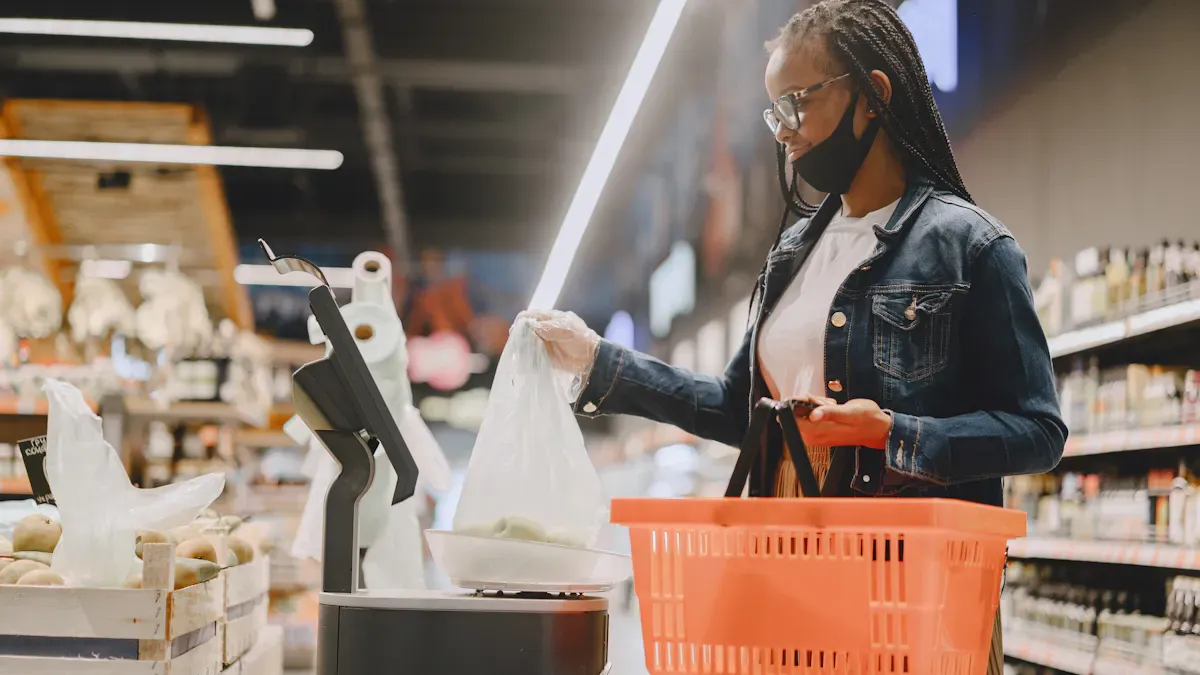
When you enter a store with cashierless checkout systems, you start a new kind of shopping experience. You do not need to wait in line or talk to a cashier. The process feels smooth and fast. Here is what you can expect:
Step | Description |
|---|---|
Entry | You check in using a QR code, barcode, or even your face. This links you to the system. |
Shopping | You pick up items you want. Cameras and sensors track what you take or put back. |
Payment Processing | When you finish, you walk out. The system checks your cart and charges you. |
Post-Exit | You get a receipt on your phone or app. You can see what you bought and how much you paid. |
You use your phone or a card to enter. The store uses computer vision and sensors to watch what you do. Pressure-sensitive shelves and high-resolution cameras help the system know which items you pick up. Machine learning algorithms update your virtual cart in real time. You do not need to scan anything or wait for approval.
Note: You can shop at your own pace. The system keeps track of your choices and updates your cart as you go.
Automatic Payment Process
You do not need to stop at a register or scan your items. The payment process happens automatically. Here is how it works:
Step | Description |
|---|---|
1 | The system uses cameras and sensors to track your shopping actions. |
2 | When you leave, the system checks your virtual cart. |
3 | Your account is charged using your linked payment method. |
You walk out of the store. The system reads your cart and processes your payment. You do not need to do anything extra. The store sends a digital receipt to your phone. This makes shopping easy and fast.
The technology behind cashierless checkout systems works together to give you a seamless experience. You get speed, accuracy, and less waiting. You can focus on shopping, not on lines or payment steps.
Technologies in Cashierless Checkout Systems
Cameras and Sensors
You see cameras and sensors all around in a cashierless store. These devices work together to watch what you do and what you pick up. Cameras take clear pictures of you and the items on the shelves. AI then looks at these pictures to figure out which products you choose. The system works well in different light and from many angles.
Evidence Description | Details |
|---|---|
Overhead Cameras | Cameras on the ceiling with wide lenses and infrared for real-time watching. |
AI Integration | AI analyzes images to recognize products and track your movements. |
Sensor Technology | RFID, weight sensors, and LiDAR check if items are taken or put back. |
Sensors like weight sensors and LiDAR help confirm when you take or return an item. Cameras need to work in bright or dark places. They use fast shutter speeds and special processors to keep every action clear.
Tip: You do not need to worry about missing a scan. The system tracks every move you make very accurately.
RFID and Item Tracking
RFID means Radio Frequency Identification. Many products, especially clothes or accessories, have RFID tags. Each tag has a special code. When you leave, sensors read these codes to know exactly what you took. RFID tags work even if you hide the item or turn it in your hand. This helps stop theft and makes tracking easy.
RFID tags help find items that cameras might miss.
Each product gets a unique RFID tag for correct identification.
RFID works even if you do not show the item to a camera.
RFID has some limits. The tags cost extra money, which can make things more expensive. Stores also need staff to help customers and fix problems, even with all the technology.
AI and Machine Learning
Artificial intelligence (AI) is very important in cashierless checkout systems. AI uses computer vision to recognize products and follow your movements. It checks when you pick up or put back an item. The system updates your virtual cart right away.
AI and machine learning analyze data from cameras and sensors in real time.
The system learns from new situations to get better at recognizing products.
If you return an item, AI removes it from your cart.
When you finish shopping, AI adds up your total and charges you automatically. You can pay with your app or get billed as you walk out. This makes shopping quick and simple.
Note: These technologies work together to give you a smooth, safe, and accurate shopping experience.
Security & Privacy
Data Handling and Protection
When you shop in a cashierless store, the system collects different kinds of data. This helps make shopping easy and safe for you. You might wonder what information the store gets from you. The system uses anonymization and pseudonymization. This means your name is not directly linked to your shopping data. You have to agree before the store can collect your data. If you want, you can shop as a guest. This way, you share less personal information.
Type of Data | Description |
|---|---|
Personal Data | Information about you when you enter the store, such as identity through face recognition. |
Product Interaction Data | Data on products you pick up or return, tracked by sensors and cameras. |
Behavioral Data | Insights into your behavior, like time spent in front of shelves and in-store actions. |
The system keeps track of what you pick up and how long you look at shelves. It also watches what you do even if you do not buy anything. You can feel safe because stores follow strict privacy rules. In the United States and Europe, stores must follow laws like GDPR, PSD2, and the EU Cybersecurity Act. These laws make sure your privacy is protected. They also make payment safe and keep records secure.
Tip: You can always ask about the store’s privacy policy before you shop.
Security Measures
Cashierless checkout systems use strong security tools to keep your data and payments safe. You get many layers of protection:
Security Measure | Description |
|---|---|
Track your actions and charge you automatically, reducing shoplifting risks. | |
Mobile Payment Security | Use encryption and authentication to keep your payment information safe. |
Tokenization Technology | Create one-time-use tokens for each transaction, so hackers cannot use stolen data. |
Biometric Authentication | Require fingerprint or facial recognition for extra security. |
Real-Time Fraud Detection | Watch for suspicious activity and ask for more proof if needed. |
Contactless Transactions | Use NFC to lower the risk of card skimming and ATM fraud. |
Remote Account Locking | Let you lock your payment account from your phone if you lose your device. |
You can trust these systems to help stop fraud and keep your information safe. Technology and strong rules work together to make shopping private and secure.
Benefits and Challenges
Shopper Advantages
There are many good things about cashierless checkout systems. Shopping is much faster and easier for you. You do not have to wait in long lines. You do not need to use cash. You can pay with your phone or card. This makes shopping safer and keeps your information private. You do not have to talk to a cashier if you do not want to. The system charges you the right amount, so you do not worry about mistakes. Shopping with this technology feels new and fun.
It is convenient and quick.
You do not need cash.
Your privacy is better.
The system bills you correctly.
Shopping feels modern and exciting.
Health and safety are important.
Some people like these systems more than regular checkouts. The table below shows what most shoppers like:
Checkout Method | Shopper Preference | Key Points |
|---|---|---|
Self-Checkout | Preferred by many | 77% of shoppers like it for speed; favored by younger shoppers for convenience. |
Traditional Cashiers | Preferred for larger orders | Shoppers prefer cashiers for assistance and larger baskets, leading to mixed satisfaction. |
Tip: If you want to shop fast, cashierless checkout is a great choice.
Retailer Advantages
Stores also get many benefits from cashierless checkout systems. They can make their stores more open and easy to walk through. Stores do not need as many checkout counters. This means they can show more products. Store owners save money because they need fewer workers. Workers can help you find things instead of working at the register. Stores also learn more about what you like to buy. This helps them keep the right items in stock and give you better deals.
Benefit | Description |
|---|---|
Removing checkout counters unlocks valuable floor space, allowing for better product display and shopping paths. | |
Enhanced Data Analytics | Retailers gain access to detailed, real-time information about customer behavior and preferences, enabling personalized marketing and inventory optimization. |
Reduced Labor Costs | Cashierless stores require fewer staff, leading to significant savings in payroll and allowing staff to focus on customer service. |
Increased Efficiency | Customers can shop and check out faster, leading to shorter wait times and improved customer satisfaction. |
Stores can spend less on workers by up to 10% by 2025. They can also move workers to help you find things or answer questions.
Common Challenges
There are some problems with cashierless checkout systems. The technology is very complicated. Stores use lots of sensors, cameras, and AI to track what you buy. Sometimes, these tools do not work well together. The system might have trouble knowing which items you picked up, especially when the store is crowded.
One big problem with cashierless checkout systems is that the technology is hard to manage. These systems use many sensors, cameras, artificial intelligence, and machine learning to follow customers and their shopping. Making sure all these tools work together in a busy store is not easy.
Technical problems, like finding the right products, helping many customers at once, and making sure payments work, are still big challenges.
Stores must also keep your data safe and protect the system from hackers. They use strong security and clear rules to help you feel safe.
You can see that cashierless checkout systems use AI, sensors, and apps. These tools help make shopping fast and simple. You can check out quickly and get the right bill. Security is strong with things like tokenization and biometrics. Stores spend less money and can help you better. There are some problems, like high costs and setup being hard. More stores are starting to use this technology. The market for it keeps getting bigger.
You will notice new ideas like hybrid checkout and smart loyalty programs.
FAQ
How do you enter a cashierless store?
You usually scan a QR code with your phone or use a special card. Some stores use face recognition. This step links you to the system so it can track your shopping.
What if you pick up an item and put it back?
The system uses cameras and sensors to notice when you return an item. Your virtual cart updates right away. You only pay for what you take out of the store.
Is your personal data safe in these stores?
Stores use strong security tools and follow privacy laws. They keep your data safe with encryption and tokenization. You can ask about their privacy policy before you shop.
What happens if the system makes a mistake?
You can check your receipt in the app. If you see a mistake, contact customer service. Most stores fix errors quickly and refund your money.
See Also
The Journey of Self-Checkout Technology Over Time
Analyzing Walgreens Self-Checkout: Benefits and Hurdles Faced
Discovering How Cloudpick Enables Cashier-Free Shopping Experiences
