How Smart Stores Drive Employee Engagement and Retention


Smart stores change how you do your job. They use technology and data to help everyone. This makes things fair and easy to understand. You can see what is in stock right now. You get work schedules that do not change a lot. Data helps leaders make good choices for you.
When you add a digital workplace solution, you show trust in your employees. You also give them more power at work. This helps your customers have a better time. When employees are happy, the business does better.
You can see these changes:
When employees care about their jobs, customers are happier.
Happy employees help customers feel satisfied.
Employees feel engaged when bosses notice their work and talk to them often.
Key Takeaways
Smart stores use technology to make work fair. They show everything clearly. This helps workers trust their managers. Employees feel important and respected.
Clear inventory management stops confusion. Workers do not get upset. They can help customers more easily. They do not waste time looking for things.
Data-driven management helps leaders choose wisely. Leaders use facts to decide. This makes employees happier at work. Fewer people leave their jobs.
Stable scheduling tools let workers pick their hours. Employees have more control over their time. This makes them like their jobs more. They stay loyal to the store.
Recognition programs make workers feel good. Employees feel noticed and valued. They want to stay longer. They help the store in a positive way.
Smart Stores and Employee Experience
Building Trust and Fairness
You want to feel trusted at work. Smart stores help you see that trust in action. When your manager uses clear data and open systems, you know what to expect. You do not have to guess about your schedule or worry about unfair treatment. Everyone follows the same rules. This makes your workplace feel safe and fair.
When you see the same information as your manager, you feel included. You know your hard work matters.
Smart stores use technology to make sure everyone gets the same chance. You can check your hours, see your tasks, and even track your progress. This helps you trust your team and your leaders. When you trust your workplace, you want to stay and do your best.
Transparent Inventory Management
Have you ever felt frustrated when you could not find what you needed to do your job? Smart stores fix this problem. You can see what is in stock right away. You do not have to waste time searching or asking around. This makes your day smoother and less stressful.
You know when new products arrive.
You can help customers faster.
You avoid mistakes and confusion.
When inventory is clear and easy to track, you feel more confident. You can focus on helping customers and working with your team. This boosts your mood and makes your job more enjoyable.
Data-Driven Management Practices
Smart stores use data to help you and your team grow. Your manager can see how things are going by looking at numbers like sales, customer ratings, and even how often people miss work. This helps your manager spot problems early and find ways to make things better.
Here is how data-driven management can help you:
Insight | Description |
|---|---|
Engagement Impact | Team members who are fully engaged are at least 1.8 times less likely to leave voluntarily within six months. |
Cost of Turnover | It can cost a business five times more to attract and earn a new customer than retain an existing one, which applies similarly to employees. |
You might wonder what makes people want to stay at their jobs. Here are some things that matter most:
Leadership that listens
Fair pay
Flexible hours
Chances to learn and grow
A positive culture
Smart stores use data to check these areas. Your manager can see what is working and what needs to change. This helps everyone feel heard and valued.
When your workplace uses data to make decisions, you know choices are fair and based on facts, not just opinions.
You feel more engaged when you see your efforts count. You know your manager notices your good work. This makes you want to stay and keep growing with your team.
Smart Store Tools for Engagement
Stable Scheduling Solutions
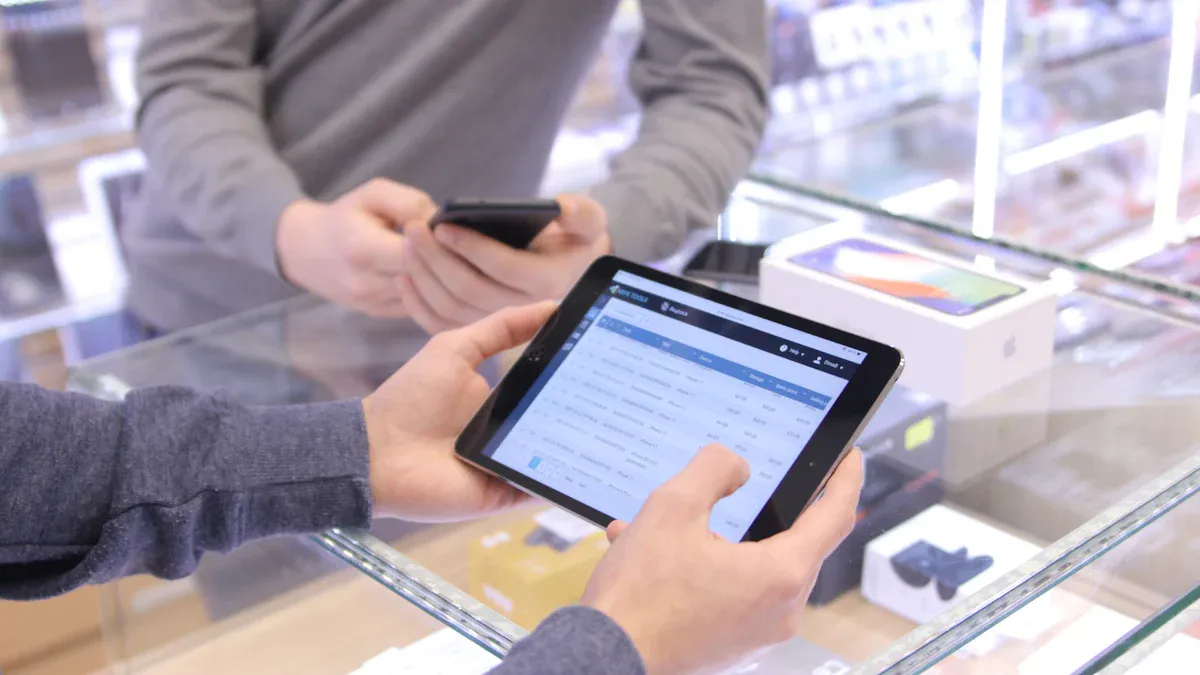
You want a schedule you can trust. Smart stores use apps to show your shifts. You can change your schedule if you need to. You can pick your favorite times and swap with friends. This gives you more say at work. You feel respected when you have control. When you know your hours early, you worry less. You can focus better at your job.
More than 80% of millennials would stay if they could control their schedule.
Legion’s customers saw a 53% rise in happy schedules.
Happy workers are 12% more productive.
Managers can post schedules fast with these tools. You see changes right away. You can ask for time off or swap shifts on your phone. This makes work easier and helps you feel loyal.
Communication Platforms
You need to talk to your team and boss easily. Smart stores use tools that keep everyone in touch. You can send messages and share files. You can even video chat if you need to. Tools like Trello put everything in one place. You do not waste time switching between apps.
Company values reach everyone in a fun way.
You feel more connected and important.
There is less confusion and teamwork gets better.
These tools help you know what is happening. You can see news, ask questions, and get answers fast.
Training and Support Systems
You want to learn new things and feel supported. Smart stores give you training tools to help you grow. You can watch lessons and practice with games. You can check how much you have learned. Some stores use games to make learning fun.
Benefit | Example | Impact |
|---|---|---|
Higher retention | 94% of employees stay longer at companies that invest in career development | Reduces turnover |
Faster productivity | Dematic cut onboarding time from 12 months to 8 weeks | Saves time and money |
Greater accessibility | Vision Australia reached 80% safety training completion | Boosts engagement |
You can also get help for your health and well-being. When you feel strong, you want to do your best. You want to stay with your team.
Recognition and Feedback Tools
You want people to notice your hard work. Smart stores use programs to celebrate what you do. Managers and coworkers can give you awards or thank you notes. You can get feedback and see how you are doing.
Practice | Description |
|---|---|
Formal Recognition | Awards and ceremonies for big achievements |
Informal Recognition | Everyday praise and thank-you notes |
Peer-to-Peer Recognition | Coworkers recognize each other |
Lakewood Health System saw a 17% rise in engagement and a 31% drop in people leaving after starting a recognition program. When you feel important, you want to stay and grow.
Smart stores use these tools to make your work life better. You feel respected, connected, and excited to come to work every day.
Smart Store Success Stories

Reduced Turnover with Stable Scheduling
You want to work where you feel valued. When you know your schedule ahead of time, you can plan your life. Many stores now use smart scheduling tools. These tools help you swap shifts and pick your favorite hours. You feel less stressed and more in control. Stores that use these tools save money, too. They can save about $1,000 for each worker by cutting hiring and training costs. If you leave, it can cost your store up to $15,000 to replace you. That covers hiring, training, and lost work. When you stay, everyone wins.
Tip: Stable schedules make you happier and help your store save money.
Higher Morale from Transparent Operations
You want to trust your team and your boss. Smart stores show you what is happening every day. You can see what is in stock and what tasks you need to do. You do not have to guess or worry about surprises. This open way of working makes you feel safe. You know everyone follows the same rules. When you see clear plans and open data, you feel proud to be part of your team. Your mood gets better, and you want to help more.
You get updates right away.
You know when new products arrive.
You see your progress and feel good about your work.
Measurable Gains in Engagement and Productivity
You want to know your work matters. Stores use key numbers to check how well you and your team do. These numbers look at how you help customers, how fast you work, and how happy shoppers feel. Managers also set up one-on-one talks with you. You can join fun team games online and take classes to learn new skills. These things help you work better and feel more connected.
Stores track how you help customers.
You get to talk with your boss often.
You can join team-building games and online classes.
When you feel engaged, you work harder and stay longer. Smart stores help you grow and make your job more fun.
Smart Store Trends
AI and Personalization
You see more stores using AI to make your work life easier. AI helps you get schedules that fit your needs. It looks at your past shifts, your skills, and even busy times in the store. You get a schedule that works for you and your team. AI-driven scheduling systems also help your manager fill shifts faster and fix problems before they start. This means you spend less time worrying about your hours and more time helping customers.
AI can even suggest training or tasks that match your strengths. You feel like your job fits you better every day.
Predictive Workforce Analytics
You might wonder how stores know when they need more help. Predictive analytics uses data to plan ahead. It looks at sales, busy times, and even weather to guess when the store will be busy. Managers use this to make sure you have the right number of people working at the right time. This helps you avoid feeling rushed or bored.
Here are some new advancements:
Advancement | Description |
|---|---|
AI Integration | AI helps plan staffing and workforce needs. |
Compliance with EU AI Act | Tools now check for fairness and protect your privacy. |
Predictive Modeling | Forecasts help lower turnover rates. |
Generative AI Integration | AI creates scenarios to prepare for future challenges. |
Some stores have seen a 35% drop in people leaving their jobs by using predictive analytics.
One big retailer saved $30 million with better scheduling.
Evolving Employee Roles
Your job in the store keeps changing. Automation now handles many simple tasks. You get to focus on more interesting work. You solve problems, help customers, and learn new skills. You also use new tools to work with your team and make decisions faster.
What’s Changing | How It Affects You |
|---|---|
Automation of routine tasks | You do more complex and creative work. |
More digital tools | You need to learn new tech skills. |
Ongoing learning | You keep growing and adapting. |
Role expansion | You take on new tasks and add more value. |
Fewer support roles | Some old jobs may go away, but new ones appear. |
Technology helps you work with others and get more done.
You can learn faster and even work from home when needed.
Smart stores use these trends to help you grow and enjoy your job more. You get more chances to learn, connect, and succeed.
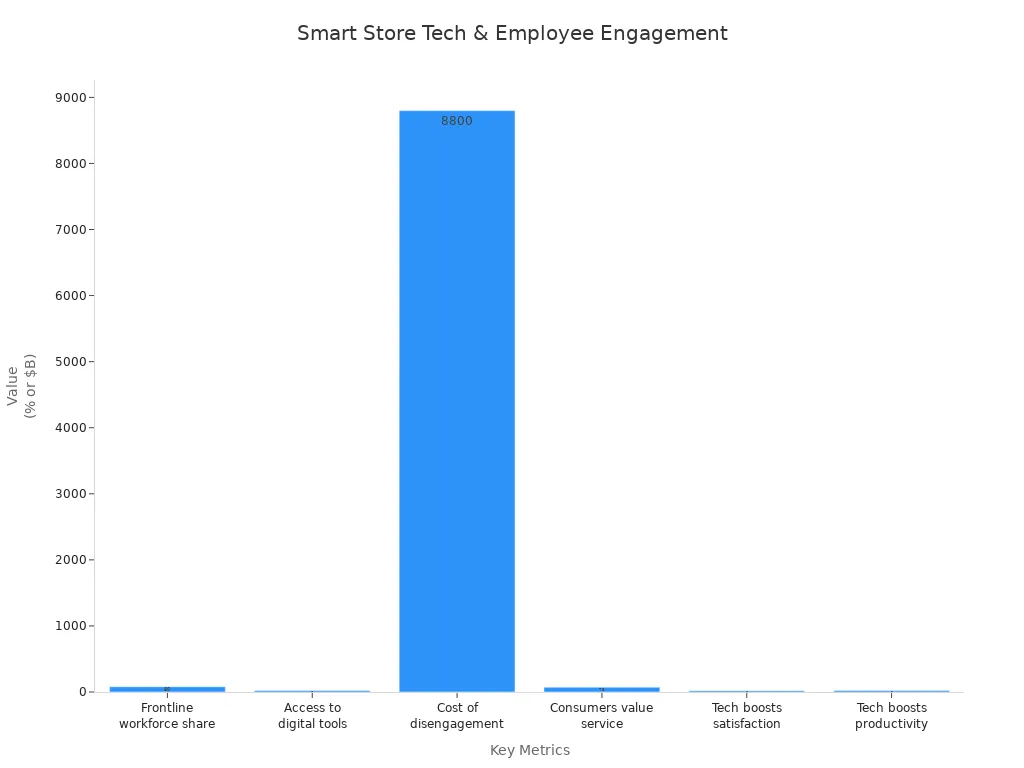
You can see how smart stores use technology and data to help you at work. When you get clear schedules, you feel safe and important. Open communication makes you feel valued. Companies that use digital tools have happier workers. They also get more work done. Look at the numbers below:
Metric | Impact on Business Outcome |
|---|---|
Employee Engagement | Drives customer satisfaction and loyalty |
Customer Experience | Directly linked to sales and profitability |
Overall Business Performance | Enhanced through improved employee engagement |
If you want your team to be happier, give them training. Make sure they work in safe places. Let them share feedback. Try new tech for scheduling and inventory. You can make a workplace where everyone wants to stay and grow.
FAQ
How do smart stores help you feel more engaged at work?
Smart stores give you clear schedules, open communication, and easy access to training. You see your progress and get feedback. You feel valued and connected every day.
Can technology really make your job easier?
Yes! You use apps to swap shifts, check inventory, and talk to your team. These tools save you time and reduce stress. You focus on helping customers instead of fixing problems.
What if you are not good with new technology?
Don’t worry! Most smart store tools are simple to use. You get training and support. You can always ask for help if you get stuck.
What are the biggest benefits of smart store tools?
Benefit | How It Helps You |
|---|---|
Stable schedules | Plan your life easily |
Fast updates | Stay informed every day |
Recognition | Get noticed for hard work |
Will smart stores replace your job with robots?
No. Smart stores use technology to help you, not replace you. You spend less time on boring tasks and more time helping customers and learning new skills.
See Also
Enhancing Office Efficiency Through Innovative Vending Solutions
The Future of Retail Lies in AI-Driven Stores
Comparing Micromarkets and Smart Stores in Global Retail
Understanding the Growth of AI-Enhanced Corner Stores
Transforming Retail: The Impact of Smart Electronics Vending
