Designing the ideal product assortment for autonomous stores in Convenience store chains & small-format grocery.

You design the ideal product assortment for an autonomous micro store by focusing on what customers want and need. You use ai and data to analyze sales trends and customer feedback. In autonomous stores, you optimize assortment to boost retail sales and enhance the customer experience. You tailor products to local preferences and balance variety with available space. You achieve success by setting clear objectives, monitoring performance, and making adjustments.
Localized assortment matches customer demographics.
Broad versus deep assortment helps you meet diverse needs.
Continuous monitoring ensures your store adapts to trends.
Key Takeaways
Focus on customer needs to design an ideal product assortment for your autonomous micro store.
Use AI and data analytics to track sales trends and adjust your product selection regularly.
Balance essential items, impulse buys, and local preferences to enhance customer experience.
Monitor performance metrics like sales velocity and inventory turnover to optimize your store.
Engage with customers through feedback loops to continuously improve your product offerings.
Autonomous Micro Store Requirements
Space and Layout Constraints
You face unique challenges when designing an autonomous micro store. Space is limited, so you must use every inch wisely. The layout should guide customers smoothly from entry to exit. You need to balance the number of products with the available shelf space. In a small-format grocery, you cannot offer the same variety as larger stores. Autonomous technology also shapes your design. You must leave room for sensors, cameras, and smart shelves. These devices help you track inventory and support the ideal product assortment. You want to avoid clutter, so customers can find what they need quickly.
Technology and Inventory Monitoring
You rely on advanced technology to keep your autonomous micro store running smoothly. AI and IoT work together to give you real-time updates on inventory. Smart devices collect data about stock levels and shelf conditions. Automated systems help you restock before you run out. Predictive analytics let you forecast demand and reduce out-of-stock incidents. For example, companies like Walmart use millions of IoT sensors to monitor inventory across their retail supply chain. These sensors confirm receipts and track stock movements without manual checks. By using data, you can reduce errors by up to 50% and avoid lost sales. You keep your store ready for every customer.
Customer Experience Expectations
You must meet high expectations in an autonomous micro store. Shoppers want a fast, easy, and personalized experience. They expect to find what they need without waiting. The table below shows what customers look for in autonomous stores:
Expectation | Description |
|---|---|
Speed | Customers want a quick shopping trip with no delays. |
Ease | The process should be simple and intuitive. |
Control | Shoppers like to feel in charge of their experience. |
Personalization | Tailored options make each visit feel unique. |
You need to use data to understand what your customers want. By focusing on convenience and seamless service, you build trust and loyalty in your autonomous micro store.
Core Convenience Product Selection
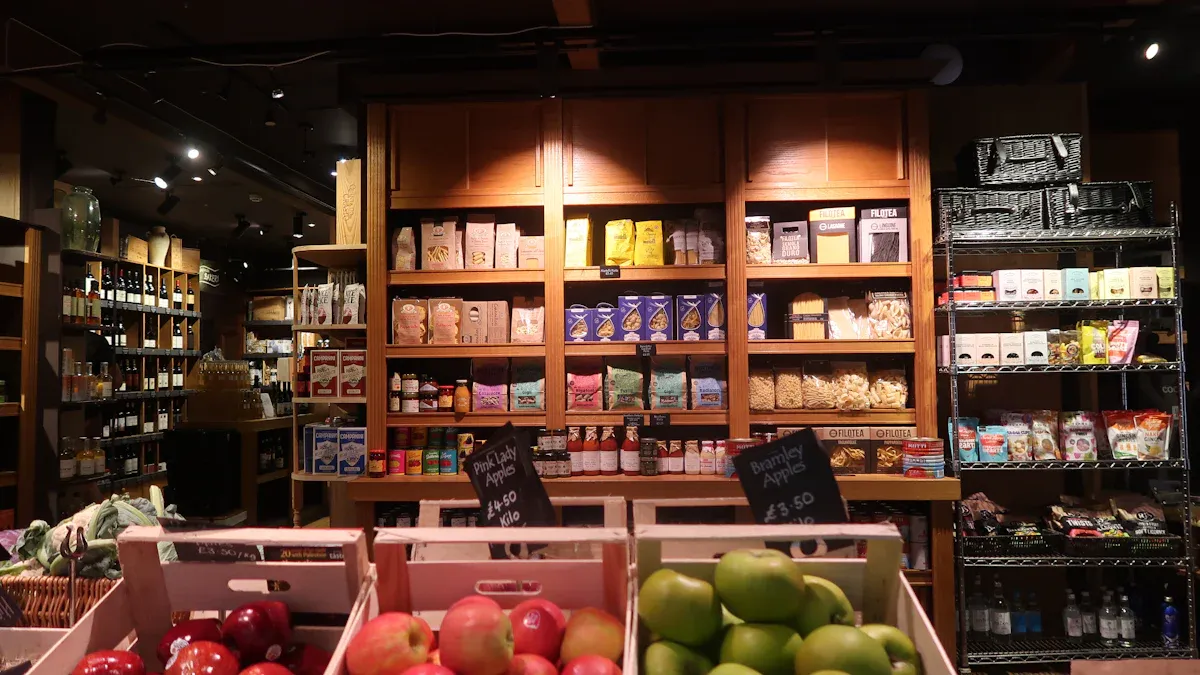
Designing the ideal product assortment for your autonomous micro store starts with understanding what your customers need every day. You must create an optimized product selection that balances essentials, impulse buys, and local preferences. This approach ensures your store delivers a strong customer experience and drives retail sales.
Essential Everyday Items
You want your micro store to offer the products customers reach for most often. These items form the backbone of your selection and keep shoppers coming back. You should focus on categories that meet daily needs and support quick shopping trips. The table below highlights the must-have product categories for convenience and small-format grocery stores:
Product Category | Examples |
|---|---|
Food | Dairy, bakery, snack foods, beverages, etc. |
Non-Food | Tobacco, grocery, confectionery, etc. |
Prepared Foods | Fresh or frozen meats, ready-to-eat meals |
Limited Produce Items | Seasonal fruits and vegetables |
You can also use a simple checklist to guide your selection:
Packaged snacks
Bottled water
Fresh produce
Dish soap
Paper towels
Toothpaste
You keep your store stocked with these essentials to meet the needs of busy customers. You use data and ai analytics to track which items sell fastest and adjust your assortment to match demand. This strategy helps you maintain an ideal product assortment and avoid out-of-stocks.
Impulse and On-the-Go Choices
Impulse purchases play a big role in the success of your autonomous micro store. Customers often grab snacks or drinks while on the move. You need to include products that appeal to quick decisions and satisfy cravings. The table below shows the most popular impulse and on-the-go choices in autonomous stores:
Product Category | Impulse Purchase Percentage |
|---|---|
Candy | |
Salty Snacks | 62% |
Baked Goods | 53% |
Healthier Options | 61% (seeking health benefits) |
Fresh-Prepared Foods | 51% (picking up hot food) |
Popular Hot Food Items | |
Grilled Meat Burrito | 47% |
Low-Carb Wrap | 43% |
Honey Chipotle Skewers | 41% |
Mexican Tortilla Chips | 37% |
Chicken Skewers | 36% |
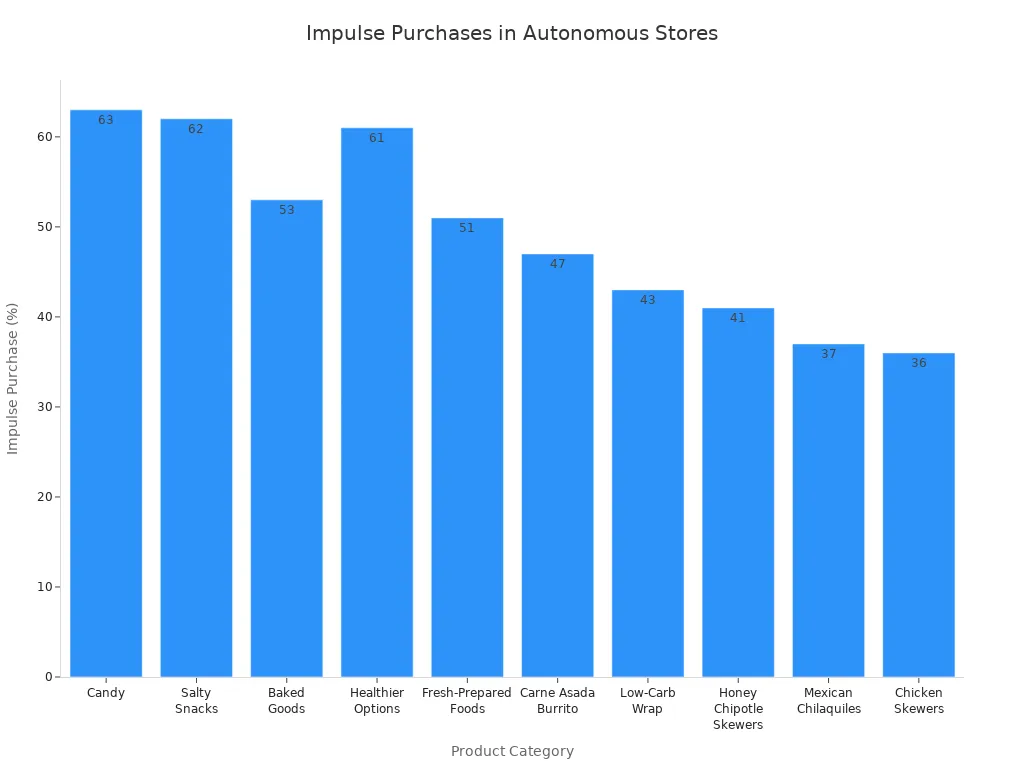
You place these items near checkout areas or in high-traffic zones to boost sales. You use data from your store to identify which products trigger impulse buys and adjust your selection regularly. This method keeps your micro store fresh and exciting for customers.
Localized and Demographic Products
You improve your ideal product assortment by tailoring your selection to local tastes and demographics. Customers in different neighborhoods have unique preferences. You use data and analytics to study what sells best in your area. For example:
In Pilsen, you stock Latin ingredients to serve the Mexican-American community.
In Albany Park, you offer Middle Eastern, Korean, and South Asian products for a diverse population.
Retailers like Kroger adjust up to 30% of their selection based on local customer preferences.
Localized merchandising strategies help you grow sales and reduce excess inventory. You see a 2-5% increase in top-line growth when you match your selection to local needs. You also lower your inventory costs by focusing on what customers actually buy. Autonomous technology and ai analytics make it easier to track these trends and update your micro store quickly.
Tip: You should review your store's data often and talk to customers about their favorite products. This feedback helps you refine your selection and keep your store competitive.
You create an ideal product assortment by balancing essential items, impulse choices, and local favorites. You use data, analytics, and autonomous technology to keep your micro store optimized for every customer.
Data-Driven Assortment Optimization
Understanding Customer Preferences
You need to understand what your customers want before you can optimize your micro store. You collect customer data from every transaction in your autonomous stores. You use ai-powered systems to analyze this data and spot trends. You also gather feedback from in-store terminals and online forms. This feedback helps you learn about customer needs and adjust your product selection.
Evidence | Description |
|---|---|
Customer Data Collection | You gather and analyze customer data, including sales and operational details, to adapt to changing preferences and identify trends. |
Customer Feedback | You collect feedback through in-store terminals or online forms and analyze it to understand shopper needs. |
Large Language Models | You use fine-tuned language models with recommender systems to guide customers and improve your understanding of their preferences. |
Recommender System | You use a recommender system that leverages customer databases and product recognition to provide tailored guidance in unmanned stores. |
You use these tools to create a personalized experience for every customer. You make sure your micro store meets the needs of your shoppers and keeps them coming back.
Analyzing Local Demand
You analyze local demand to keep your micro store relevant. You look at historical sales data to see which products sell best in your stores. You study customer preferences based on demographics. You consider regional factors like local tastes and seasonal trends. You use machine learning algorithms to find patterns in customer behavior and predict future trends.
Factors Influencing Product Assortment | Description |
|---|---|
Historical Sales Data | You analyze past sales to identify trends and popular products. |
Customer Preferences | You understand what local customers prefer based on demographics. |
Regional Factors | You consider local tastes and seasonal trends that affect demand. |
You combine these insights to tailor your product selection for each micro store. You make sure your autonomous stores offer the right products at the right time. You keep your inventory lean and avoid stocking items that do not sell.
Using Sales Data for Improvement
You use sales data to improve your micro store every day. You track consumer behavior analytics to understand what customers buy and when. You use predictive demand analysis to manage inventory and avoid out-of-stocks. You monitor real-time shopper behavior to spot changes in shopping patterns. You optimize your product selection to enhance the overall shopping experience.
AI-driven ERP systems boost productivity and improve predictions about sales and stock needs.
These systems analyze large data sets and suggest actions for your business.
Autonomous capabilities let you perform certain tasks without human intervention.
AI-powered POS and inventory management systems enable real-time inventory tracking.
Predictive analytics help you forecast future stock requirements.
Automated stock control optimizes product selection and reduces human error.
Smaller retailers compete effectively by using real-time data.
Accurate, real-time insights into stock levels streamline inventory management.
Optimizing restocking processes is crucial for managing inventory in micro stores.
Tip: You should review your sales data regularly. You can use analytics to spot slow-moving items and replace them with products that sell faster. You keep your autonomous micro store efficient and profitable by making data-driven decisions.
You rely on data, ai, and analytics to keep your micro store assortment optimized. You use technology to understand your customers, analyze local demand, and improve your store every day. You create a better retail experience for everyone who visits your autonomous stores.
Balancing Variety and Shelf Space
SKU Optimization
You must optimize SKUs in your autonomous micro store to boost efficiency and profitability. SKU optimization means you evaluate your product portfolio and remove underperforming items. This process lets you focus on high-performing products and manage inventory more effectively. You improve your micro store by keeping only the stock that sells well. You use ai and analytics to track sales data and identify which SKUs need work or should be removed. You also implement comprehensive inventory solutions to handle rapid product turnover. This approach helps your autonomous stores maintain strong stock availability and increase profits.
Review product movement patterns regularly.
Communicate with your team to enhance shelf strategies.
Use digital tools for inventory tracking and smart shelves to reduce errors.
Inventory Turnover Strategies
You need strong inventory turnover strategies to keep your autonomous micro store running smoothly. These strategies help you maximize space and meet customer demand. The table below shows effective methods for micro stores:
Strategy | Benefit |
|---|---|
Robotic efficiency | Operates 24/7 with minimal downtime, ensuring high productivity during fluctuating demand. |
Maximizes storage capacity, allowing for 60-70% more products in limited space. | |
Scalability | Easily expandable to meet growing business demands without large upfront investments. |
Enhanced order accuracy | Reduces picking errors, improving customer satisfaction and loyalty. |
Faster fulfillment times | Speeds up picking and packing processes to meet consumer demand for quick delivery. |
Reduced labor costs | Lowers operational costs by minimizing the need for manual labor. |
You use technology and analytics to monitor inventory turnover. You adjust your micro store’s product selection based on real-time data. This method keeps your autonomous stores efficient and responsive to customer needs.
Space Allocation Tactics
You must allocate space wisely in your autonomous micro store. Targeted retail strategies help you focus on high-margin, fast-moving items. You use systems like SpaceGrid II to maximize freezer space and keep products fresh. Compact designs make your micro store easy to navigate for customers. You deploy ai-driven inventory systems and digital signage to streamline operations. You group products logically and place bestsellers in prime locations. Planograms and shelf dividers help you organize products and prevent overcrowding. Digital price tags allow you to update pricing quickly and reduce waste.
Tip: Thoughtful product presentation and spacing create a more inviting shopping experience for your customers.
You balance variety and shelf space by using data-driven insights and technology. This approach ensures your autonomous micro store meets customer expectations and drives retail sales.
Technology in Assortment Planning
AI-Driven Selection
You use advanced ai to shape the product assortment in autonomous micro stores. Machine learning algorithms analyze historical sales data and external factors like weather and social media trends. These systems predict demand with high accuracy. You see automated replenishment orders and less waste. Computer vision technology powers 'just walk out' shopping, making the customer experience faster and more accurate. You also benefit from hyper-personalization. The store offers real-time recommendations and dynamic discounts to customers. You create a retail environment that adapts to every shopper.
Predictive inventory optimization helps you forecast demand.
Hyper-personalization tailors the shopping journey for customers.
Integration with supply chain logistics connects autonomous stores to robotic warehouses.
Real-Time Inventory and Restocking
You rely on real-time inventory tracking to keep your autonomous micro store efficient. IoT devices and machine learning monitor inventory levels continuously. The system triggers restocking alerts when product weights drop below set thresholds. You replenish stock before customers notice shortages. The store adapts restocking thresholds based on traffic and historical sales data. You respond quickly to changes in demand. This proactive approach keeps your micro stores ready for every customer and reduces out-of-stocks.
Tip: Use analytics to review inventory movement and adjust restocking schedules for your micro store.
Integration with Supply Chain
You connect autonomous inventory systems with supply chain management platforms to improve product flow in micro stores. This integration gives you end-to-end visibility and control. You align inventory levels with demand and production schedules. The table below shows common challenges and solutions for integrating autonomous micro store systems with supply chain platforms:
Challenge | Solution |
|---|---|
Cost of implementation | Careful planning and phased implementation |
Integration with existing systems | Investment in custom software and infrastructure upgrades |
Data privacy and security | Ongoing employee training for compliance and understanding |
Regulatory and legal challenges | Pilot programs to address compatibility before full-scale deployment |
You start with pilot programs in a limited area. You make adjustments before scaling up. You prioritize staff training to ensure smooth transitions. You create a seamless connection between your autonomous micro store and the supply chain, improving efficiency and customer satisfaction.
Ongoing Assortment Adaptation
Monitoring Performance Metrics
You must monitor performance metrics in your autonomous micro store to keep your product assortment optimal. Agentic ai systems allow you to evaluate and optimize your store in real time. You identify issues quickly and adjust your assortment before they impact sales or customer experience.
Continuous monitoring of performance metrics is essential for optimal product assortment in autonomous convenience stores. The implementation of agentic AI facilitates real-time evaluation and optimization, which is vital for effective merchandising and category management.
AI agents are always-on, allowing for quick identification of performance issues compared to traditional methods that rely on infrequent reviews.
You track metrics like sales velocity, inventory turnover, and shelf availability. You use analytics to spot trends and make data-driven decisions. This approach helps your micro store stay competitive and responsive to customer needs.
Responding to Trends and Seasons
You must adapt your autonomous micro store to seasonal changes and emerging trends. Customers expect fresh products and new experiences throughout the year. You use technology to manage inventory and minimize spoilage. You partner with local producers to offer unique items and create dedicated sections in your store. You implement loyalty programs to connect with customers and encourage repeat visits. You host community events to strengthen ties and build trust. You focus on sustainability by offering eco-friendly products and reducing food waste.
Leverage technology for inventory management to minimize spoilage and optimize stock levels.
Focus on local and unique products by partnering with local producers and creating dedicated sections in the store.
Implement loyalty programs to connect with customers and encourage repeat business.
Host community events to engage with customers and strengthen community ties.
Emphasize sustainability by offering eco-friendly products and reducing food waste.
You see American shoppers spending trillions at local stores, showing a strong preference for local shopping. Products marketed as sustainable grow much faster than others, highlighting the demand for eco-friendly options.
Customer Feedback Loops
You must listen to your customers to keep your autonomous micro store assortment relevant. You collect feedback through digital kiosks, mobile apps, and online surveys. You use analytics to analyze this feedback and identify areas for improvement. You face challenges like technical glitches, inventory management issues, and privacy concerns. Customers sometimes move products, confusing sensors and affecting inventory accuracy. You must manage restricted products and ensure proper billing. You address these challenges by updating your systems and training your staff.
Ongoing Adaptation Challenges | Description |
|---|---|
Customers worry about how their data is used. | |
Capital Expenditure Hurdles | High upfront costs for autonomous-first solutions. |
Retrofitting Existing Stores | Upgrading stores with sensors takes time. |
Product Displacement | Customers moving products can confuse sensors. |
Access Management | Restricted products require special handling. |
You create a feedback loop that helps you improve your micro store and enhance the customer experience. You build trust and loyalty by responding to customer needs and adapting your assortment.
You create the ideal product assortment by using technology, data, and ongoing optimization. You balance customer choice and localization, maximize sales, and tailor your mix to regional needs. The table below shows how assortment optimization increases profits and supports customer satisfaction:
Impact of Assortment Optimization | Profit Increase (%) |
|---|---|
Standard Optimization | 30 |
Optimization with SKU Pricing | 40 |
You help customers find what they want and keep your store competitive. Customers benefit from fewer stockouts and more relevant products. To improve, use retail planning solutions and build a culture of continuous improvement. Customers will notice the difference.
Retail planning tools forecast demand and optimize inventory.
Continuous improvement processes enhance your product mix.
FAQ
What is the best way to choose products for an autonomous micro store?
You should analyze sales data and customer feedback. Use AI tools to identify top-selling items and local preferences. Focus on essentials, impulse buys, and products that match your neighborhood’s needs.
How does technology help you manage inventory in autonomous stores?
AI and IoT devices track stock levels in real time. Automated alerts notify you when items run low. You can restock quickly and avoid out-of-stock situations.
Can you adjust your product assortment for different locations?
Yes. You should review local sales data and customer demographics. Tailor your assortment to match regional tastes and seasonal trends. This approach increases sales and customer satisfaction.
What performance metrics should you monitor in autonomous stores?
You should track sales velocity, inventory turnover, and shelf availability. These metrics help you optimize your assortment and respond to changes in demand.
How do you handle customer feedback in autonomous micro stores?
You collect feedback through digital kiosks, mobile apps, and online surveys. Analyze responses with AI tools. Use insights to improve your product selection and enhance the shopping experience.
See Also
Understanding Global Automated Retail: Micromarkets Versus Smart Stores
Essential Insights on AI-Driven Corner Stores for Retailers
Examining Walgreens Self-Checkout: Benefits and Retail Challenges
