How to make autonomous stores work with your existing payment infrastructure

You can integrate autonomous stores with your payment systems. This helps you see real changes. Easy payment is important for franchise and multi-location stores. Autonomous stores help customers skip long lines, making shopping easier for everyone. The table below shows how payment integration helps both customers and workers:
Aspect | Impact |
|---|---|
Cuts down waiting, makes shopping better, gets people to come back. | |
Operational Efficiency | Lets you handle more sales without more workers, lowers mistakes, makes work the same everywhere. |
Key Takeaways
Connect autonomous stores to current payment systems. This helps customers and makes work easier. - Use APIs and middleware to link payment systems. This lets data move fast and helps manage the store better. - Test everything well and train staff before using autonomous technology. This stops problems and makes the change easy. - Keep data safe and follow rules to protect customer information. This helps people trust your store. - Always try to get better by checking how things work and asking customers what they think. This helps you meet new needs.
Can You Integrate Autonomous Stores with Existing Payment Systems?
Integration Possibilities for Retailers
You can connect autonomous stores to your payment systems. Most stores use credit cards, mobile wallets, and digital payments. These choices make shopping easier for customers. People can pick how they pay. This makes checkout faster and less cash is needed. It also makes your store safer and more efficient.
To link autonomous technology with your store systems, you must connect inventory management, point-of-sale, and payment processing. Many stores build a mobile app for customers. The app lets shoppers pay quickly and keeps their payment details safe. You might have technical problems if your systems are old. Skilled developers can help everything work together. You should test both autonomous and regular checkout to stop issues.
Here is a simple table that shows the main steps for integration:
Step | Description |
|---|---|
1. Planning and Vendor Selection | Decide what your store needs, look at vendors, and pick a pilot project. |
2. Infrastructure Setup and Integration | Check your store layout, put in hardware, and connect software to payment systems. |
3. Calibration, Training, and Testing | Set up systems, teach staff, and run tests. |
4. Launch and Optimization | Start with a soft launch, watch how things go, and improve them. |
Tip: Try a pilot project first before using autonomous technology in all your stores.
Key Benefits for Retail Transformation
When you connect autonomous stores to payment systems, your business changes a lot. Customers can grab items and go. They do not wait in line or scan products. Your staff can do other jobs because AI and smart devices handle inventory and checkout. This lowers labor costs and mistakes.
Retail transformation gives you real-time inventory updates. Your shelves stay full, and you can restock fast. You make customers happier, sell more, and run your store better. Automation removes problems and makes shopping fun. For example, virtual mirrors and sizing tools help customers pick the right items. This builds loyalty and confidence.
How Autonomous Supermarkets and Payment Systems Work Together
Core Technologies: AI, Sensors, Cameras
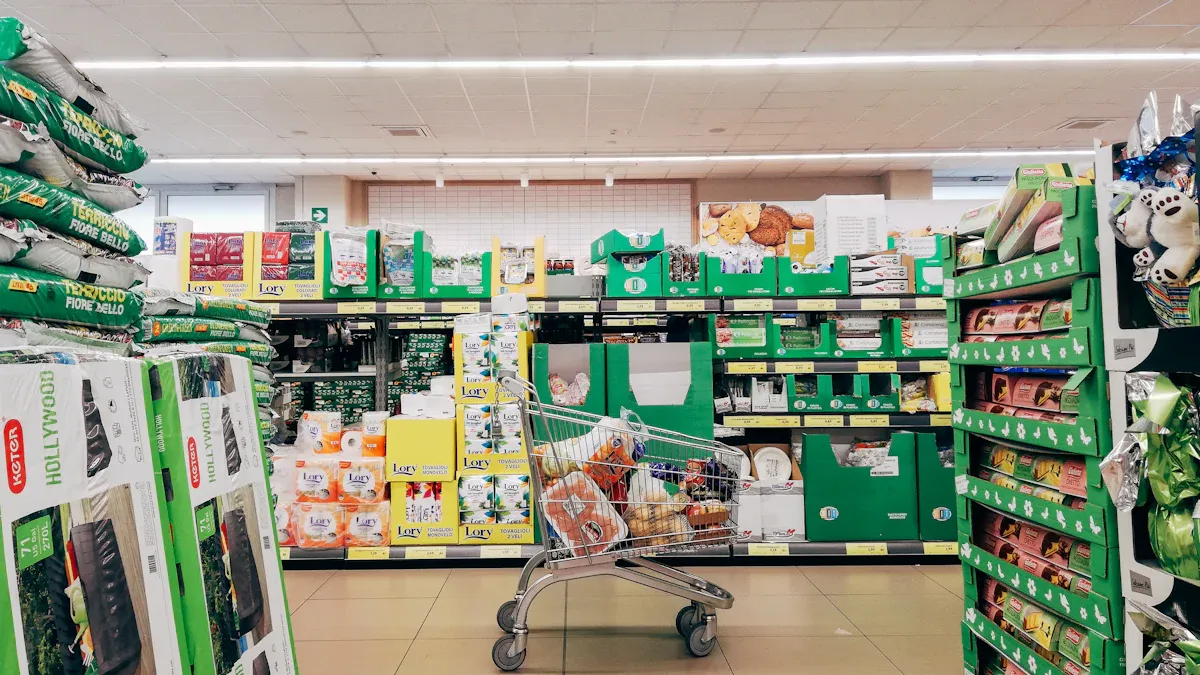
Autonomous supermarkets use new technology to help shoppers. iot devices watch what happens in the store. Cameras follow people and see what they pick up. Sensors can tell when you take something from a shelf. iot sends this information to computers. AI and machine learning study the data and know what you buy. Computer vision helps the system see things right away. Sensor fusion mixes data from all iot devices for better results. AI-driven personalization gives you special offers and ideas. These ai-powered retail tools help stores need less human help. Automation lets you shop without waiting or scanning items. iot and automation work together to make shopping quick and easy.
Payment Options and Customer Experience
Autonomous supermarkets give you many ways to pay. You can use a store app, scan your card, or use a mobile wallet. Some stores let you pay with cash or use loyalty programs. iot links your payment choice to your account. When you walk in, the system knows who you are. It connects your payment details to your shopping trip. When you leave, payment happens by itself. You get a digital receipt right away. Automation makes checkout smooth and fast. You do not wait in line or scan each item. Automation and iot make shopping simple. Autonomous supermarkets connect payment and retail systems. This helps keep shelves full and track inventory. You get better service, and stores work better. Automation and iot help staff do other jobs. Autonomous supermarkets use automation to make shopping easy for everyone.
Steps to Integrate Autonomous Stores with Retail Payment Infrastructure
Assess Current Retail and Payment Systems
First, look at your retail and payment systems. This helps you know what works and what does not. Here are some steps you can follow:
Check how your payment processing works. Find what is good and what is not.
Figure out how much time you spend fixing payments by hand. Count how often mistakes happen.
Look at your retail systems. See how they handle inventory, automation, and updates.
Find problems with checkout, automation, and keeping track of inventory.
See how your systems work with cashless payment options.
This check helps you plan your integration. You will see where automation can help your store. You will also find what your systems are missing.
Ensure Compatibility and Security
You need to make sure your retail systems work together and stay safe. Compatibility checks stop problems when you add autonomous stores. Security keeps payment data safe and helps customers trust you.
Compliance Requirement | Description |
|---|---|
Install and maintain firewall configuration | Safeguard cardholder information |
Avoid using vendor-supplied defaults | Prevent unauthorized access |
Ensure protection of cardholder data | Secure sensitive information |
Proper encryption methods | Protect data in transit |
Regularly use and update antivirus software | Defend against malware |
Develop and maintain secure applications | Ensure software security |
Restrict access to cardholder data | Limit data access to necessary personnel |
Assign unique IDs for access | Track user access effectively |
Restrict physical access | Protect data from unauthorized physical access |
Track and monitor access | Ensure accountability and security |
Regularly test security systems | Identify vulnerabilities |
Create and maintain security policies | Establish a security framework for personnel |
You need to connect many payment systems with different gateways. You must follow PCI DSS rules for each one. You also need to check if third-party providers follow the rules. Security tests check passwords, permissions, and encryption. This stops data leaks and keeps your store safe.
Integration Methods: APIs and Middleware
There are different ways to connect autonomous store technology with your payment systems. These ways help your systems share data right away.
RESTful APIs let your systems send and get data using the web.
API management tools like Apigee, MuleSoft, and Kong help you control API requests. They keep your connection safe and quick.
Middleware is a bridge for systems that do not match. It changes data so your retail and payment systems can work together.
iPaaS tools like Boomi, Workato, and Zapier have ready-made connectors. These tools make connecting easier and faster.
You can use these ways to connect inventory, payment gateways, and automation tools. This helps you get real-time inventory updates and makes your store run better.
Testing and Deployment
You need to test your setup before you start using it. Testing helps you find and fix problems early. Here are some best practices:
Start with one store or product. Learn and make changes fast.
Map out the customer’s path. Find problems and make sure automation helps.
Train ai well. Gather data and teach ai to spot products in different ways.
Focus on good data and analytics. Use real-time data to keep inventory right and improve your store.
Keep people in your store. Train staff to help customers and solve problems.
Tell customers how automation works and why it is good for them.
Plan for fixing and support. Set up rules for hardware, software, and tech help.
Try hybrid models. Use both autonomous checkout and regular lanes for all customers.
You can use steps to launch your system:
Plan and pick vendors. Decide what you need and choose a test project.
Set up your store and connect hardware and software.
Set up systems, train staff, and check security.
Start small, watch how things go, and make things better.
Tip: Real-time inventory and automation help you keep shelves full and customers happy. You can use real-time updates to restock fast and support your store’s change.
Overcoming Integration Challenges in Retail
Data Security and Compliance
You need to keep customer payment data safe in every store. Security helps stop theft and shoplifting. You must follow rules from different groups. The table below shows who makes these rules and what they do:
Regulatory Authority | Role in Payment Infrastructure |
|---|---|
Federal Reserve | Watches over big payment systems in the U.S. |
European Central Bank | Sets rules for payment systems in the Eurozone. |
You should use strong encryption and update your systems often. Always check for weak spots. Real-time monitoring helps you find theft and shoplifting quickly. Staff should learn how to handle data safely. This keeps your store safe and helps customers trust you.
Operational Efficiency and Staff Training
You can make your store run better with good training. Many workers do not get enough training. This can hurt how your store works. Trained staff help customers more and make them want to come back. A strong learning culture can help keep workers by 57%. You should focus on these training steps:
Onboarding new employees
Customer service skills
Sales techniques
Building product knowledge
Technology training
Health and safety training
Ongoing learning opportunities
A good training plan gives your team skills to stop theft and shoplifting. You can use real-time data to track theft and make your store better. Staff who know new technology can help customers have a good experience.
Enhancing Customer Experience
You want every customer to have a good time shopping. Automation can make things faster and safer. The table below shows ways to make shopping better:
Strategy | Description |
|---|---|
Automating interactions | Makes things work faster and meets customer needs. |
Personalizing services | Changes how you help each customer so they feel special. |
Ensuring ethical AI practices | Keeps customer trust by being fair and including everyone. |
Leveraging AI for insights | Looks at what customers like to make shopping better. |
You can use real-time alerts to stop theft and shoplifting. Personalization helps you connect with each customer. Ethical AI builds trust and keeps your store fair. Using these ideas makes your store safe and happy for everyone.
Best Practices for Retail Transformation
Change Management and Continuous Improvement
You need a strong plan when you move your retail business to an autonomous model. Change can feel hard, but you can make it easier with the right steps. Start by setting clear goals for your retail transformation. You should know what you want to achieve and how you will measure success.
You can use these steps to guide your change:
Define your objectives and key performance indicators (KPIs).
Review your current autonomous customer touchpoints.
Pick promotion strategies that match what your customers need.
Create educational content and offer incentives to help customers learn.
Use customer feedback tools like Zigpoll to collect opinions.
You should train your staff to support new systems. Launch pilot campaigns with goals you can measure. Watch your performance metrics every week. Collect and study customer feedback all the time. Make changes and grow the strategies that work best.
Tip: Continuous improvement helps you keep up with retail innovation. You can use real-time data to see what works and what needs to change.
Monitoring and Support
You must monitor your retail systems to keep them running well. Real-time monitoring lets you spot problems fast. You can fix issues before they affect your customers. Use dashboards to track sales, inventory, and customer behavior. Set up alerts for system errors or low stock.
Your support team should know how to help with both technology and customer service. Train them to answer questions and solve problems quickly. You can use real-time updates to keep your team informed. This helps you give a better experience to every shopper.
Innovation does not stop after launch. Keep looking for new ways to improve your retail operations. Listen to your customers and your staff. Try new ideas and measure the results. When you focus on real-time feedback and support, you build a stronger retail business.
You can set up autonomous stores with your payment and retail systems if you follow simple steps. First, check how your store works now. Then, make sure your systems can work together and stay safe. Use APIs and middleware to link your systems. Test everything before you start using it. AI and sensors help you keep track of inventory and make shopping special for each person. Real-time analytics help your store run better and stop mistakes.
Feature | Autonomous Retail | Attended Retail |
|---|---|---|
Operation Hours | Runs all day and night without workers | Only open when staff are there |
Accuracy | AI and sensors help stop pricing and inventory errors | Accuracy depends on how well staff are trained |
Efficiency | Real-time analytics make things work faster | Manual work can slow down how the store runs |
After that, look at what your store needs and think about what will happen in the future. You will see more shopping made just for you, better ways to manage supplies, and stronger security. Keep learning and be ready for new technology.
FAQ
What is an autonomous store?
An autonomous store uses technology like AI, sensors, and cameras. You do not need a cashier to shop. The system watches what you take and charges you by itself.
Do I need to replace my current payment system?
You do not always have to get a new payment system. Most modern payment systems can connect to autonomous technology. You can use APIs or middleware to link them.
How do customers pay in an autonomous store?
You can pay with a store app, credit card, or mobile wallet. The system connects your payment method to your shopping trip. You get charged when you leave the store.
Is my payment information safe?
You are safe if stores use strong encryption and follow security rules like PCI DSS. Always check if the store uses safe payment methods.
Can autonomous stores work with loyalty programs?
Yes, you can connect loyalty programs to autonomous stores. The system keeps track of what you buy and gives you rewards automatically.
See Also
The Future of Retail Lies in AI-Driven Stores
Cloudpick Revolutionizes Shopping With Cashierless Solutions
Comparing Micromarkets and Smart Stores in Global Retail
Modern Retail Benefits From AI-Enhanced Combo Vending Machines
Transforming Online Store Management With AI E-Commerce Tools
