Top 3 Key KPIs for smart store success now


You see fast growth in autonomous grocery and convenience stores. The global market size may reach $252.29 billion by 2030.
Year | Market Size (USD) | CAGR (%) |
|---|---|---|
2025 | 82.56 billion | 25.2 |
2026 | 103.39 billion | 25.0 |
2030 | 252.29 billion | 25.0 |
Tracking key KPIs in autonomous store management helps you work better. You can grow your business and make more money. You use AI and automation to make customers happier. This also helps them come back and makes your store run smoother. These key KPIs help you make things easier for shoppers. They also help you use more automation and keep customers coming back. Managing KPIs the right way in autonomous grocery stores keeps customers happy. It builds loyalty and helps your store do better. Check your management plans now. This can help you grow, work better, and keep customers loyal with advanced AI and autonomous checkout.
Key Takeaways
Sales per square foot shows how well your store uses space. Try to get a high number to help sales and make the layout better.
Average order value tells you how much each customer spends. Raise this KPI to make more money and help your marketing work better.
System uptime shows if your store works well all the time. Keep uptime high so transactions go smoothly and customers stay happy.
Use AI and analytics tools to watch these KPIs. These tools help you make smart choices and improve how your store works.
Check your strategies often and change them using KPI data. This helps your store stay strong and meet what customers want.
Key KPIs: Sales per Square Foot
What Is Sales per Square Foot
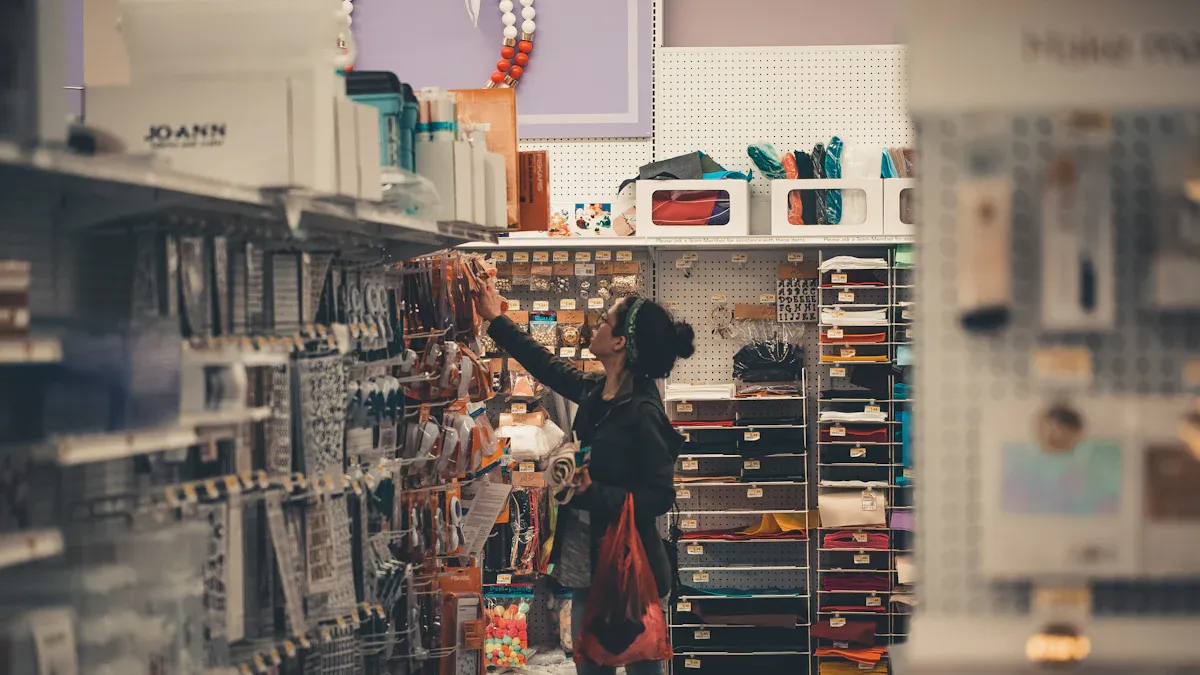
Sales per square foot is a very important kpi for small grocery stores. You find this number by dividing your total sales by your store’s floor area. This kpi shows how well you use your space to make sales. If you have a good grocery store pos system, you can check this number easily. It helps you see how your store is doing and helps you make smart choices about where to put things.
Store Type | Sales per Square Foot |
|---|---|
Convenience Stores |
This table gives a recent average for convenience stores. You can look at your own store’s number to see if you are above or below the average.
Why It Matters
Sales per square foot tells you how well your store uses its space. A high number means you sell more in less space. This kpi connects to how well your store is set up and how much money you make. In autonomous grocery stores, AI tools help you put products in better spots and use shelves well. For example, AI can make product placement 40% more accurate. This can help sales go up by 3-5% in some areas. If you use adaptive learning, your store can get a 20% higher conversion rate on displays after retraining.
Evidence Type | Description | Impact on Sales per Square Foot |
|---|---|---|
Product Placement Accuracy | AI-driven monitoring improves placement by 40%. | 3-5% sales lift in affected categories. |
Share of Shelf Improvement | AI compliance tools increase shelf share to 95%+. | Improved sales for brands. |
Cost-to-Serve Optimization | AI arranges shelves for efficiency and profit. | Maximizes profit per square foot. |
Adaptive Learning | AI improves layout recommendations over time. | 20% higher conversion rate on displays. |
Measuring with Grocery Store POS System
You need a good grocery store pos system to measure this kpi. The grocery store pos system tracks every sale and links it to your store’s layout. You can break down your results by department to see which parts sell the most. Use guest Wi-Fi analytics to watch how customers move and connect it to sales. The grocery store pos system helps you find trends and make your store better. You can also compare your sales per square foot to other stores like yours.
Tips to Improve
Put popular grab-and-go items near the front to get more impulse buys.
Use end caps to show off deals, seasonal things, and new products.
Add small display cases for baked goods to make baskets bigger.
Check your layout and flow with your grocery store pos system to see what works.
Break down your sales data by department to find ways to improve.
If you focus on these kpis and use a good grocery store pos system, you can make your store and sales better in your autonomous or small grocery store.
KPIs: Average Order Value
Understanding Average Order Value
Average order value is a key kpi for autonomous stores. This kpi tells you how much money you get from each order. Tracking average order value helps you see if customers buy more each time they visit. You want to know if your store layout, product mix, and promotions help sales go up.
The formula for finding Average Order Value (AOV) is: AOV = Total Revenue / Number of Orders. This formula helps you know the average money made from each order in autonomous and smart stores.
To use this kpi, you need your total sales and number of orders. You can compare your number to other autonomous stores or check if your kpis get better over time.
Impact on Autonomous Store Success
Average order value affects how much profit your store makes. If you raise this kpi, you earn more from each customer. This helps your store pay costs and grow faster. You also get better results from marketing because you make more money per sale. The table below shows how average order value links to your store’s success:
Aspect of Profitability | Explanation |
|---|---|
Profit Margins | Higher AOV spreads fixed costs across more revenue per order, enhancing profitability. |
Marketing Effectiveness | Increased AOV improves return on marketing investment as customer acquisition costs remain stable. |
Customer Lifetime Value | Stores with higher AOV typically enjoy better long-term profitability from each customer. |
When you focus on this kpi, your store can use technology to boost sales and keep customers coming back.
How to Measure
You can measure average order value with the right tools. Most autonomous store systems and grocery analytics platforms track this kpi for you. Here is how you do it:
Add up all your sales for a set time, not counting returns or canceled orders.
Count the number of orders in your store during that time.
Divide your total sales by the number of orders to get your average order value.
You can use analytics tools to study what customers do and see what helps this kpi go up. Many autonomous stores also track other kpis like online sales growth and customer retention to see how changes help their store.
Strategies to Increase
There are many ways to raise average order value in your store. Here are some proven ideas:
Use analytics to study what customers do and find trends.
Let AI change prices in real time to match the market and boost sales.
Watch your competitors to keep your store strong.
Offer Buy Now, Pay Later options to help customers buy more.
Show real-time inventory so customers know what is in stock.
Put payment options near the “Add to Cart” button to help customers finish buying.
Use digital marketing to show products that are in your store and ready for pickup.
Most autonomous stores use these kpis to find what works best. When you focus on average order value, you help your store grow, improve sales, and make your store more profitable.
KPIs for Autonomous Store: System Uptime

What Is System Uptime
System uptime means how often your autonomous store systems work right. You want your autonomous store to work all day and night without stopping. This kpi shows if your autonomous store network is reliable. When you have high uptime, your autonomous store can track inventory, take payments, and help customers without breaks. Most top stores want their autonomous store to work almost all the time. You need this uptime to keep your autonomous store open for every customer.
Value | |
|---|---|
Vision Accuracy | >95% |
SKUs per Unit | 40-80 |
Uptime | 24/7 |
Importance for Autonomous Stores
You need system uptime to keep your autonomous store running well. If your autonomous store stops, you cannot track inventory or let people check out. This can make you lose sales and upset shoppers. Many people like fast shopping in an autonomous store, but some still want staff help. If your autonomous store system breaks, customers may feel confused or worried. This can make fewer people finish buying and hurt your store’s name. You want your autonomous store to have quick checkout and no lines. High system uptime helps you do this and keeps your inventory numbers right.
Autonomous store checkout makes shopping quick and simple.
Customers like not waiting in long lines at an autonomous store.
If your autonomous store system breaks, customers may not buy anything.
Things like credit card check-in or no staff can make customers feel unsure.
Monitoring and Optimization
You can use different tools to watch your autonomous store system uptime. Simple tools like UptimeRobot or Uptime Kuma help you see if your autonomous store is online. Better tools like Sematext, Uptrends, or StatusCake give you more details. If you have many stores, Pingdom or Site24x7 can help you check all your autonomous store locations. You should also watch your inventory systems to find problems early.
Suggested Tools | |
|---|---|
Basic Monitoring | UptimeRobot, Uptime Kuma |
Advanced Monitoring | Sematext, Uptrends, StatusCake |
API Monitoring | Better Stack, New Relic |
Multi-location Monitoring | Pingdom, Site24x7, HetrixTools |
Downtime in an autonomous store can happen from software bugs, hardware trouble, network problems, or cyber-attacks. You can lower these risks by having backup systems, doing regular checks, and using strong security. Always test your plans so your autonomous store can fix problems fast. High system uptime means more sales go through and your inventory stays correct. If your autonomous store keeps uptime above 95%, you can get over 1,500 successful transactions.
You make your smart store better by watching three main KPIs. Sales per square foot tells you if you use space well. Average order value shows how much money each shopper spends. System uptime means your autonomous store works for all shoppers.
You check how stores do in different places.
You look at live data from autonomous pods and AI.
You work to get more sales and keep customers coming back.
Trend | Description |
|---|---|
Autonomous Checkout Systems | Easy payments and better shopping |
AI in Customer Experience | Voice shopping and AR for smarter choices |
Keep checking and making these KPIs better. Your autonomous store will stay ahead and get bigger.
FAQ
What is the most important KPI for a smart store?
You should focus on sales per square foot. This KPI shows how well you use your space to make money. It helps you see if your store layout works and if you need to change anything.
How can you track system uptime in an autonomous store?
You can use monitoring tools like UptimeRobot or Pingdom. These tools alert you if your system goes offline. You should check your system often to keep your store running smoothly.
Why does average order value matter?
Average order value tells you how much each customer spends. If you raise this number, you make more money from every shopper. This helps your store grow and stay profitable.
What technology helps improve these KPIs?
You can use AI-powered POS systems, real-time analytics, and smart shelf sensors. These tools help you track sales, watch customer behavior, and keep your store running without problems.
See Also
AI Tools Revolutionizing Management Of Online Retail Stores
Global Impact Of Automated Retail: Micromarkets And Smart Stores
What Retailers Should Understand About AI-Driven Corner Stores
