Key KPIs to track for autonomous store success in Franchise & multi-location retailers


You track KPIs to help stores work better and achieve autonomous store success while making more money. These metrics are crucial for franchise and multi-location autonomous stores. The main KPIs include cost per lead per location, conversion rate per location, number of store visit conversions, and ROAS per location.
KPI | Description |
|---|---|
Cost per Lead per Location | Checks how much it costs to get leads at each place. |
Conversion Rate per Location | Tells what percent of visitors buy something at each store. |
Number of Store Visit Conversions | Counts how many customers come in after seeing ads. |
ROAS per Location | Shows how much money is made for every dollar spent on ads. |
You deal with challenges such as maintaining brand consistency, ensuring smooth operations, providing effective training, and monitoring quality. Tracking KPIs is essential for addressing these issues and driving autonomous store success. You seek actionable plans, effective tools for data analysis, and improved scheduling to enhance store performance.
Key Takeaways
Watch important numbers like cost per lead and conversion rate. These numbers help you make your store better. - Use sales per square foot to see how well your store makes money. - Check how many customers come back and how much they spend over time. This helps you keep customers and make more money. - Use technology like AI and dashboards to make work easier and look at data better. - Look at your KPIs often and change them if your business goals change. This helps your store do better.
Essential KPIs for Autonomous Store Success
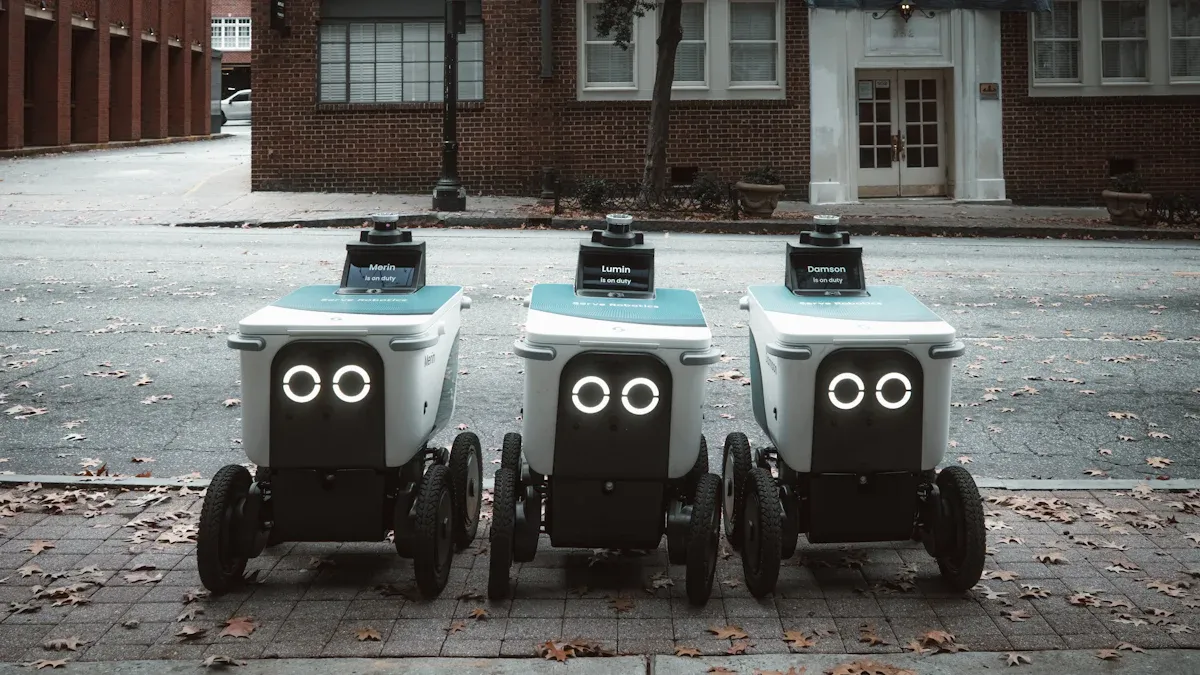
Sales Per Square Foot
Sales per square foot tells you how much money you make for each square foot of your store. This helps you see if your store space is used well. If this number is high, your products and displays work well. You can use this to check how different stores are doing and find ways to get better.
Inventory Turnover Rate
Inventory turnover rate shows how often you sell and restock items in a certain time. A high rate means you sell things fast and get money back quickly. This also means you do not have old products sitting around. In autonomous stores, AI helps keep the right items in stock by checking what people want right now. This means you do not need to lower prices as much and you spend less on holding items. Stores using AI for inventory often make 10-15% more money and cut costs by 5-10%.
Impact on Profitability and Inventory Management | |
|---|---|
Inventory Turns | Selling faster gives you more money and fewer discounts. |
GMROI | Good inventory helps you earn more from what you buy. |
Revenue Increase | Using AI can help you make 10-15% more money. |
Cost Reduction | Spending less on markdowns and storage saves 5-10%. |
Tip: Move inventory between stores to stop some stores from running out or having too much.
Customer Retention
Customer retention checks how many shoppers come back again. High retention means people like your store and trust your brand. In autonomous stores, you can keep customers by making checkout easy, giving special deals, and offering good service. Loyal shoppers are cheaper to serve and usually spend more.
Customer Lifetime Value
Customer lifetime value (CLV) is how much profit you get from a customer over time. To find CLV, look at how often they shop, how much they spend, and how long they stay with you. You also think about how much it costs to serve and get each customer. If you get people to shop more often, spend more, and stay longer, CLV goes up. Lowering service and getting new customers for less money also helps.
People who shop more often are worth more.
Bigger orders make CLV higher.
Customers who stay longer add more value.
Lower support costs mean you keep more money.
Spending less to get new customers raises CLV.
Same-Store Sales Growth
Same-store sales growth compares sales from stores open for at least a year. This helps you see if your current stores are doing better or worse. You can use this to check if new tech, ads, or changes help sales. If this number goes up, your stores are doing well and customers want what you offer.
Net Profit
Net profit is the money left after paying all bills, like rent and wages. This is a very important number for autonomous stores. Most regular stores keep 4% to 5% of their sales as profit. Quick commerce stores sometimes make even less, sometimes almost nothing. You should watch net profit to make sure your stores can last and beat others.
Regular stores: Net profit is usually 4% to 5%.
Quick commerce: Profit can be 0% to 3% or even less.
Cost of Goods Sold
Cost of goods sold (COGS) is how much you pay to get or make the things you sell. If you lower COGS, you make more money. You can do this by getting better deals, wasting less, and using data to know what to buy.
Food Cost Percentage
Food cost percentage matters for stores selling fresh or cooked food. This shows how much of your sales go to buying food. You find this by dividing food costs by total food sales. Keeping this number low helps you earn more. You can do this by watching inventory and stopping food from going bad.
Labor Cost Percentage
Labor cost percentage tells you how much you spend on workers compared to sales. Autonomous stores use tech to lower labor costs by automating jobs like checkout. Watching this number helps you balance tech and good service.
Average Unit Volume
Average unit volume (AUV) is the average sales per store in a set time. This helps you see which stores do best. High AUV means more customers or bigger sales per visit. You can use AUV to set goals and find your top stores.
Note: Watching these KPIs helps you know how your store is doing and make smart choices for success.
Financial Health Metrics

Profitability Analysis
You need to watch financial KPIs to see how your stores do. These numbers tell you if stores make money, spend too much, or keep shoppers happy. When you check these KPIs, you can find problems early and fix them fast. You also learn which stores do well and which ones need help.
Here is a table that lists important financial KPIs for autonomous stores:
KPI Type | Description |
|---|---|
Revenue Growth | Checks if sales go up over a set time |
Costs and Profitability | Looks at how costs and profits compare |
Operations | Checks if store work is done well |
Brand Acceptance | Shows if customers like and trust the brand |
Customer Satisfaction | Tells if shoppers are happy with what they buy |
Employee Satisfaction | Checks if workers feel good about their jobs |
Marketing Impact | Shows if ads and marketing work well |
You can make more profit by using tech and smart plans. For example, self-checkout and smart shelves help you serve people faster and keep items in stock. These tools cut wait times and make shopping easier. You can also use data to learn what people want and when they shop. This helps you stock the right things and put staff on busy shifts. Training your team to use new tech makes work smoother and helps customers more. Some stores save a lot of money each year by using automation and better plans.
Cost Control Strategies
You must keep costs low to help your stores stay strong and make money. Try these ways to manage spending:
Use AI to do simple jobs and help make smart choices.
Use cash tools to watch and control your money better.
Automate accounting to close books faster and see money clearly.
Lower payment costs by letting people pay in different ways.
Make invoice work faster to save money and follow rules.
Talk to suppliers to get better deals and prices.
Stop spending on things you do not need by checking buys.
Cut shipping costs by picking cheaper ways to send things.
Find new suppliers and buy more from fewer places.
Manage inventory better so you do not waste items.
Tip: Check your contracts often and look for new ways to save. Even small changes can help you reach success with your autonomous store.
Measuring & Improving KPIs
Data Collection Methods
You need good data to track your KPIs. Start by using dashboards like Glew.io or Metorik. These tools show numbers for all your stores right away. Set goals for each store and check them every week or month. You can track big KPIs like total leads and customer lifetime value. Also, watch local KPIs like customer acquisition cost and market share. Look at how changes in user experience change your KPIs. Track how well ads work and follow the customer journey to see how your store is doing.
Tip: Dashboards help you compare stores and find what needs work.
Best Practice | Description |
|---|---|
Centralized Dashboards | Watch KPIs for all stores at the same time. |
Performance Benchmarks | Make goals for each store and check progress often. |
Correlate UX Improvements | See if better user experience helps your KPIs go up. |
Calculation Formulas
You need to know how to figure out each KPI. Use these formulas to see how your store is doing:
Description | Formula/Calculation Method | |
|---|---|---|
Footfall | People who come into the store | Count of people who enter the store |
Conversion Rate | How many visitors buy something | (Conversions / Visitors) * 100 |
Marketing Efficiency Ratio | Sales made from marketing money | Total Sales / Total Marketing Spend |
Average Transaction Value | Average money spent per sale | Total Revenue / Total Transactions |
Sales per Square Foot | Money made for each square foot | Total Sales / Total Square Feet |
Note: Use these formulas to see if your store meets its targets.
Improvement Strategies
You can make weak KPIs better with smart ideas. Let local managers make choices and give rewards for good work. Make it easy for stores to talk to each other. Use merchant agents to make deals and look at store data. Campaign agents watch KPIs and give advice. Automation helps you do more and makes customers happy. AI agents check work, find skill gaps, and make training plans for your team.
Let managers fix problems quickly.
Use automation to save time and help customers.
Check results and reward the best workers.
Train staff with help from AI.
Callout: Making KPIs better helps your stores do well and stay strong.
KPI Tracking Tools
POS & Analytics Platforms
You need strong POS and analytics platforms to track your KPIs. These systems record every sale and collect data from each store. You can see which products sell best. You can also see which times are busiest. Many platforms let you compare sales between stores. You can spot trends and make quick choices. Some POS systems track inventory and customer visits. When you use analytics, you learn what works and what needs to change. This helps you improve your store’s performance and reach your goals.
IoT & Smart Devices
IoT and smart devices make KPI tracking easier and more accurate. These tools work together to give you real-time data. They help you run your store better.
Smart Shelves check stock levels and alert you when to restock.
RFID Tags track products and help manage inventory.
Temperature Sensors watch over perishable goods to stop spoilage.
Smart Carts scan items and guide customers in the store.
Digital Price Tags update prices instantly for accuracy.
Security Cameras and Sensors keep your store safe and prevent theft.
Automated Checkout Systems let customers pay quickly without waiting in line.
Smart Lighting changes brightness based on how busy the store is, saving energy.
In-Store Navigation Beacons help customers find products and get special offers.
Energy Monitoring Sensors track how much power you use and help cut costs.
Tip: Using these devices helps you save time, reduce mistakes, and keep your store running smoothly.
Dashboard Solutions
Dashboard solutions help you see all your KPIs in one place. You should look for dashboards with features that fit your store’s needs. The table below shows what to consider:
Feature | Description |
|---|---|
Data Integration | Connects to your POS, ecommerce, and ERP systems easily. |
Customization | Lets you focus on the metrics that matter most to your team. |
Real-Time Updates | Shows the latest numbers so you can act fast. |
User Experience | Offers support and easy navigation for all users. |
Scalability | Handles more data as your business grows, using cloud power. |
Alert Thresholds | Sends alerts for low stock or sudden drops in sales. |
Time-Based Comparisons | Compares data over time to spot trends and patterns. |
Data Validation Rules | Checks for errors to keep your reports accurate. |
Note: The right dashboard helps you make smart choices and keeps your team focused on what matters.
KPI Selection for Business Goals
Aligning KPIs with Objectives
You need to pick KPIs that match your business goals. First, think about what you want to do. Do you want to sell more, help customers better, or spend less money? When you know your goals, you can choose the right KPIs to see how you are doing.
The Franchise Automata framework helps you reach your business goals. It uses feedback from business KPIs and agentic workflows to meet big goals. This way, KPIs match what your business wants in autonomous franchise and multi-location stores.
Feedback from KPIs helps you make smart choices. This feedback shows what is working and what needs to change. Your system should check results and send them back to your team. This loop keeps everyone focused on your main goals.
The evaluation system gives feedback and shares results with agents and stakeholders.
It checks for mistakes and sees how strong the system is.
Feedback from business KPIs helps agents work together and lowers Franchise Automata loss.
Customizing Metrics
Each store is different. You might need to change your KPIs to fit your store. Many tools let you make custom dashboards and reports. These tools help you watch the numbers that matter most to you.
Tool | Key Features |
|---|---|
Sisense | Real-time dashboards, AI insights, and built-in analytics. |
Klipfolio | Real-time data, dashboard templates, and custom reporting tools. |
SimpleKPI | Custom dashboards, a big KPI library, and connects to many apps. |
Databox | Make your own metrics, AI summaries, and track goals with SMART objectives. |
Google Analytics | Web analytics, event tracking, and works well with Google tools. |
You can use these platforms to make reports for your store. Pick the features that help you see your most important numbers.
Review & Adjustment
You should look at your KPIs often. Business goals can change, so your KPIs should too. Check your numbers every month or every few months. If a KPI does not help you reach your goals, change it.
Have regular meetings to talk about your results. Ask your team what is working and what is not. Make small changes and see if things get better. This helps you keep getting better and stay on track.
Tip: Be ready to change. The best KPIs are the ones that grow with your business.
You help your store do well by watching the right KPIs. Store leaders use easy-to-read dashboards to make work better and see how ads do. Automation with AI helps stop mistakes and makes choices faster, so your team can focus on important things. To begin, make clear goals, use dashboards that show live data, and check your progress often. Doing these things helps your store grow, keeps customers coming back, and makes your store run really well.
FAQ
What is the most important KPI for autonomous stores?
You should focus on sales per square foot. This KPI shows how well you use your store space. High numbers mean your store layout and products work well.
How often should you review your KPIs?
You should check your KPIs every month. Regular reviews help you spot problems early. You can make changes before small issues become big ones.
Which tool helps track KPIs in real time?
You can use a dashboard solution like Sisense or Klipfolio. These tools show your numbers live. You see trends and can act fast.
How does automation improve KPI tracking?
Automation collects data without mistakes. You get reports quickly. This helps you make smart choices and save time.
Can you change your KPIs as your business grows?
Yes, you can. You should update your KPIs when your goals change. This keeps your tracking useful and your stores on the right path.
See Also
Comparing Micromarkets And Smart Stores In Global Retail
Understanding The Growth Of AI-Driven Convenience Stores
The Future Of Retail Lies In AI-Enhanced Stores
