Key technology requirements for autonomous retail in Convenience store chains & small-format grocery.


You need key technology requirements to create a successful autonomous retail environment in convenience store chains and small-format grocery. These include computer vision, AI, IoT devices, RFID, and contactless payments. Each technology works together to boost convenience, improve efficiency, and deliver a seamless customer experience. For example, computer vision automates checkout and enhances the experience for every customer. IoT and RFID provide real-time inventory tracking, making restocking fast and accurate. Contactless payment options add another layer of convenience and security.
Here is a quick overview of how technology drives measurable improvements:
Technology Used | Improvement | Description |
|---|---|---|
RFID & IoT | Enhanced Inventory Management | Real-time visibility of inventory leads to better in-stock rates and faster replenishment. |
Computer Vision | Checkout Automation | AI-powered image recognition automates checkout, improving customer experience. |
RFID | Real-time Inventory Tracking | Scannable tags offer updates on inventory levels, allowing for quick restocking. |
When you implement these key technology requirements, you create a store that offers true convenience, reliable efficiency, and a better customer experience in every small-format grocery setting.
Key Takeaways
Implement computer vision to automate checkout and enhance customer experience, allowing for faster shopping without traditional lines.
Utilize RFID and IoT devices for real-time inventory tracking, ensuring shelves are always stocked and reducing out-of-stock situations.
Adopt contactless payment options to speed up transactions and improve safety, making shopping more convenient for busy customers.
Integrate AI for personalized promotions and customer behavior analytics, providing tailored offers that enhance the shopping experience.
Ensure strong data privacy controls are in place to protect customer information, building trust and confidence in autonomous retail environments.
Key technology requirements for autonomous retail
Computer vision systems
You see computer vision systems at the heart of autonomous retail. These systems use ai to analyze video feeds from smart cameras. They track customer movements, product interactions, and shelf activity. You benefit from automation that recognizes when you pick up or put back items. This technology helps you skip traditional checkout lines. Ai algorithms identify products and match them to your virtual cart. You experience faster shopping and fewer errors. Retail stores use computer vision to monitor stock levels and detect misplaced items. Automation reduces manual labor and improves accuracy. You get a seamless experience every time you shop in an autonomous environment.
RFID and shelf sensors
RFID and shelf sensors play a major role in autonomous retail. You find RFID tags attached to products and shelves. These tags send signals to sensors, which track inventory in real time. Automation ensures you always see accurate stock levels. Retail teams use this data to restock shelves before items run out. You avoid out-of-stock situations and enjoy a better shopping experience. Ai systems analyze sensor data to predict demand and optimize inventory. Retailers like Kroger use RFID to manage perishable goods and reduce waste. Staff spend less time counting inventory and more time helping you. The table below shows how RFID and shelf sensors improve operations in small-format grocery stores:
Benefit | Description |
|---|---|
Inventory Accuracy | Achieving 95% or higher accuracy, RFID eliminates discrepancies found in traditional inventory methods. |
Real-Time Visibility | Provides full visibility into inventory levels, locations, and movement, enabling proactive management. |
Labor Efficiency | Automates manual processes, reducing inventory count time by up to 75%, boosting overall productivity. |
Enhanced Customer Experience | Enables more accurate product information and availability, improving customer satisfaction. |
You see how automation and ai work together to keep shelves stocked and customers happy. Retail stores rely on these technologies to maintain high standards and reduce errors.
Tip: RFID and shelf sensors help you find products faster and ensure you never leave empty-handed.
IoT device integration
IoT device integration brings flexibility and scalability to autonomous retail. You notice smart shelves, sensors, and RFID tags working together. These devices provide real-time data on product quantities, locations, and movement. Automation triggers alerts when stock runs low. Ai analyzes sensor data to optimize restocking and reduce waste. Retail stores use temperature and humidity sensors to protect perishables. You benefit from fresh products and safe storage conditions. The table below highlights common IoT devices in autonomous retail:
IoT Device Type | Function Description |
|---|---|
IoT sensors | Provide real-time visibility into product quantities, locations, and movement within the store. |
RFID tags | Help track inventory and minimize human error in stock management. |
Smart shelves | Automatically detect low inventory levels and trigger replenishment processes. |
Temperature and humidity sensors | Monitor conditions in cold storage areas to ensure perishables are kept within safe ranges. |
You see how automation and ai make retail operations more efficient. IoT devices process data locally, allowing teams to act quickly. You experience fewer disruptions and better service. Retail stores use edge computing to reduce latency and keep operations running smoothly. You benefit from lower bandwidth usage and improved security. IoT integration supports decentralized retail environments, making autonomous stores more flexible and scalable.
IoT devices enable real-time data processing, which enhances operational efficiency.
This integration allows for seamless automation across various retail functions, contributing to flexibility.
Edge computing processes data closer to the source, reducing latency and ensuring continuous operation.
Local data processing allows teams to act faster and avoid disruptions in operations.
It reduces the need for transmitting large volumes of data, lowering bandwidth usage and exposure to cyber threats.
This capability is crucial for maintaining operations in decentralized environments.
You see how autonomous retail uses ai, automation, and IoT to create a smarter, more responsive shopping experience. These technologies work together to deliver convenience, accuracy, and reliability every time you visit a store.
AI-powered autonomous retail
Customer behavior analytics
You experience the benefits of ai-powered autonomous retail every time you shop. Analytics help you get personalized offers and faster service. Ai tracks your browsing habits and shopping patterns. You see recommendations that match your preferences. Retailers use agentic ai to analyze customer data and adjust marketing strategies. You receive bespoke pricing based on your interactions. Ai-powered autonomous retail combines customer behavior data with macro factors to tailor promotions. You enjoy a shopping journey that feels unique and relevant.
Ai-powered analytics enable real-time decision-making for retailers.
You get personalized experiences through data-driven insights.
Agentic ai helps stores adjust offers and pricing based on your habits.
Ai-powered autonomous retail uses analytics to create a seamless shopping experience.
AI-driven inventory management
You notice that ai-powered autonomous retail keeps shelves stocked and products fresh. Ai-driven inventory management adapts to market shifts and seasonal trends. You find what you need because inventory aligns with actual demand. Retailers embed ai into smart inventory management software to boost agility and precision. You see fewer out-of-stock items and less waste. Ai-powered autonomous retail uses analytics to optimize demand forecasting. Solutions like RELEX help grocers reduce overstock and spoilage. You benefit from inventory optimization and cost savings.
Ai integration allows stores to track inventory and respond quickly to changes.
Smart inventory management transforms inventory into a strategic asset.
Ai-powered autonomous retail uses analytics to minimize food waste and improve stock levels.
You experience reliable product availability and better shopping outcomes.
Loss prevention algorithms
You shop with confidence in ai-powered autonomous retail environments. Loss prevention algorithms protect you and the store from theft. Ai uses predictive analytics and pattern recognition to spot risks. Behavioral analysis detects anomalies, such as loitering or suspicious actions. Object recognition tracks items and prevents tampering. Anomaly detection finds unusual patterns in transaction data. Real-time alerts notify staff about potential fraud.
Methodology | Description |
|---|---|
Predictive Analytics | Forecasts shrinkage trends and identifies high-risk periods or locations. |
Pattern Recognition | Detects theft or fraud patterns for targeted prevention. |
Behavioral Analysis | Spots anomalies in customer behavior, such as loitering. |
Object Recognition | Tracks item movements to detect tampering or hiding. |
Anomaly Detection | Finds unusual transaction patterns that may signal fraud. |
Real-Time Alerts | Sends immediate notifications for potential fraud based on new data. |
Ai-powered autonomous retail uses analytics and automation to keep your shopping experience safe and efficient.
Autonomous micro store solutions
Hybrid sensor setups
You step into an autonomous micro store and notice how technology works together to create a smooth shopping experience. Hybrid sensor setups combine different sensors, such as cameras, RFID, and weight sensors, to track products and customer actions. Sensor fusion lets the autonomous micro store use data from many sources, which improves accuracy and reliability. You see how these setups help the autonomous micro store know exactly where items are and what you pick up. No single sensor type can do this alone. The autonomous micro store uses hybrid fusion at different levels, including data, feature, and decision levels. This approach makes the autonomous micro store more precise and dependable. You benefit from fewer errors and faster service. The autonomous micro store uses these setups to boost operational efficiency and keep shelves stocked.
Hybrid sensor setups in autonomous micro stores use sensor fusion for better accuracy.
Multiple sensor types work together to track products and customer actions.
Fusion at data, feature, and decision levels improves reliability in autonomous micro stores.
Smart cameras and monitoring
You see smart cameras everywhere in an autonomous micro store. These cameras help the autonomous micro store monitor customer activity and keep the store secure. The autonomous micro store uses ai to analyze video feeds and predict shopping patterns. You get better service because the autonomous micro store knows what customers like and need. Smart cameras also help the autonomous micro store prevent theft and keep everyone safe. The table below shows how smart cameras help the autonomous micro store:
Role of Smart Cameras | Description |
|---|---|
Monitoring Customer Activity | Smart cameras and sensors collect real-time data on customer movements and preferences, enabling better inventory management and customer service in autonomous micro stores. |
Ensuring Security | Integration with ai allows for the analysis of data to predict shopping patterns, enhancing security measures and reducing theft in autonomous micro stores. |
Enhancing Convenience | Automated systems facilitate quick payments, minimizing wait times and improving customer satisfaction in autonomous micro stores. |
You notice how the autonomous micro store uses ai and smart cameras to make your shopping trip easier and safer.
Store format adaptation
You find that autonomous micro stores can fit almost any location. The autonomous micro store adapts its format to match the space and customer needs. You see autonomous micro stores in offices, schools, apartment buildings, and transit stations. The autonomous micro store uses ai and sensors to adjust inventory and layout. You get the products you want, even in small spaces. The autonomous micro store can change its design quickly to fit new trends or customer demands. You benefit from a flexible shopping experience. The autonomous micro store uses micro layouts and micro inventory systems to make the most of every inch. You see how the autonomous micro store brings convenience to places where traditional stores cannot go.
Tip: You can rely on autonomous micro stores for quick shopping in places like offices, schools, and apartment buildings. The autonomous micro store adapts to your needs and space.
Self-service payment and checkout
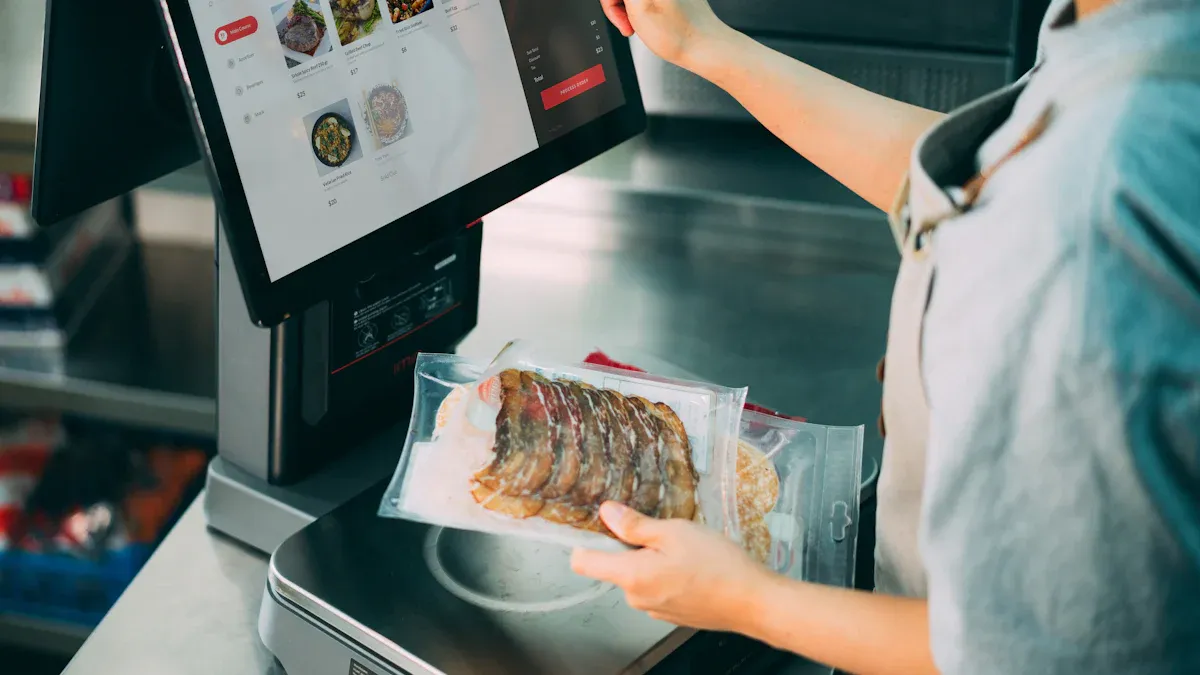
Contactless payment options
You experience fast and secure payments with contactless payment options in autonomous stores. You tap your card or phone on a reader to complete your purchase. You do not need to swipe or insert your card. This method reduces wait times and lowers the risk of germs spreading. You see checkout-free systems using contactless payments to make your shopping journey smoother. You enjoy frictionless checkout because you do not need to handle cash or touch shared surfaces. Many self-service stores use contactless payment to improve safety and speed.
Tip: You can use contactless payment for small purchases and large grocery trips. This option works well for busy shoppers who want to save time.
Mobile and digital wallets
You use mobile and digital wallets for quick payments in autonomous stores. You pay with apps like Apple Pay, Google Pay, or Samsung Pay. You scan your phone or smartwatch at the checkout station. You do not need to carry cash or cards. Checkout-free systems accept mobile wallets to make your experience easier. You see your transaction history in your app right after you pay. You enjoy self-service shopping because mobile wallets keep your payment information safe. You can link loyalty programs to your wallet for extra rewards.
Mobile wallets let you pay without physical cards.
Digital wallets store your payment details securely.
You get instant receipts and rewards after checkout.
Autonomous checkout systems
You notice that autonomous checkout systems have become common in small-format grocery stores. You scan items yourself or use checkout-free systems that track your purchases automatically. You do not wait in long lines. You see that 96% of grocery stores now offer self-checkout options. You benefit from fast and easy payments. Checkout-free systems use sensors and cameras to record what you buy. You finish your shopping without stopping at a traditional checkout counter. You enjoy self-service because you control the pace of your visit. Autonomous checkout systems help stores reduce labor costs and improve accuracy.
Type of Checkout System | How It Works | Benefit to You |
|---|---|---|
Self-service kiosks | You scan and pay for items yourself | Faster checkout, less waiting |
Mobile checkout-free systems | Sensors track your purchases | No lines, seamless experience |
Smart carts | Cart records items as you shop | Checkout-free, easy payment |
You see how autonomous checkout systems and checkout-free systems create a frictionless checkout experience. You spend less time in the store and enjoy more control over your shopping.
Store access and security
Smart entry/exit systems
You enter autonomous stores using smart entry systems. These systems check your identity with mobile apps or special cards. The store recognizes you and tracks your selections. You see advanced technology at work. IoT devices, computer vision, and machine learning monitor your movements and transactions. Security features help keep you safe and protect the store. You notice facial recognition, product weight checks, and security tags. These tools make billing accurate and help prevent theft.
Mobile apps or cards authenticate you before entry.
IoT devices and cameras watch customer activity.
Facial recognition and weight checks confirm purchases.
Security tags deter theft and fraud.
Tip: You can shop with confidence because smart entry systems keep the store secure and organized.
Identity verification tech
You find identity verification technology in many autonomous stores. These systems help control access and make shopping safer. Stores use different methods to check your age and identity. You see biometric age checks, digital IDs, and QR codes. Some stores combine payment and ID verification in one step. You experience faster and safer purchases, especially for age-restricted items.
Technology Type | Description | Location |
|---|---|---|
Automated age checks using AI-powered age estimation to control entry and deter underage access. | Glasgow, UK | |
PASS ID Payment | Combines ID verification and payment in a single step using a digital ID and QR code. | South Korea |
Biometric Age Verification | Testing biometric systems at self-service checkouts to streamline purchases of age-restricted goods. | Russia |
Note: You benefit from quick and secure shopping when stores use advanced identity verification.
Real-time security monitoring
You notice real-time security monitoring in autonomous stores. Cameras and sensors watch every area. The system tracks customer movements and product locations. You see alerts if something unusual happens. Staff receive notifications about suspicious activity. You feel safe because the store responds quickly to risks. Real-time monitoring helps prevent theft and keeps everyone protected.
Cameras and sensors provide constant surveillance.
Automated alerts notify staff about security issues.
Quick response times improve safety for shoppers and staff.
Security monitoring gives you peace of mind while you shop in autonomous stores.
Cloud & data management

Real-time data processing
You rely on cloud technology to process data instantly in autonomous stores. When you pick up an item, sensors send data to the cloud. The system updates your virtual cart and tracks your choices. You see real-time inventory tracking in action. This process helps stores keep shelves stocked and products available. You get accurate information about product availability. Cloud platforms handle large amounts of data quickly. You benefit from fast updates and smooth shopping. Stores use cloud-based analytics to spot trends and adjust inventory. You experience fewer out-of-stock items and better service.
Scalability and compliance
You notice that cloud solutions help stores grow and meet regulations. When a store adds new products or locations, the cloud manages more data without slowing down. You see stores expand easily because cloud systems scale up or down as needed. Compliance matters in autonomous retail. You trust stores that follow rules for data protection. Cloud providers offer tools to help stores meet privacy laws and industry standards. You feel safe knowing your information stays protected. Stores use automated checks to make sure they follow all regulations. You see stores adapt quickly to new rules and customer needs.
Cloud platforms support growth by handling more data as stores expand.
Automated compliance checks help stores follow privacy laws and standards.
Data privacy controls
You want your personal information to stay safe when you shop. Autonomous stores use strong data privacy controls to protect you. These controls include anonymization and pseudonymization, which remove or encrypt personal details. Stores ask for your consent before collecting data. You see stores collect only the data they need. Security measures like encryption and access controls keep data safe. Stores set clear policies for handling and disposing of data. Employees learn best practices for privacy. Third-party audits check that stores follow privacy standards. You trust stores that use these controls.
Data Privacy Control | Description |
|---|---|
Anonymization and Pseudonymization | Techniques to remove or encrypt personally identifiable information to safeguard customer privacy. |
Informed Consent | Obtaining clear consent from customers regarding data collection and its intended use. |
Data Minimization | Collecting only necessary data to reduce risks associated with excessive information storage. |
Robust Data Security Measures | Implementing strong security protocols like encryption and access controls to protect data. |
Transparent Data Handling Policies | Establishing clear guidelines for data management, including secure disposal of unnecessary data. |
Employee Training and Awareness | Training staff on privacy best practices and confidentiality protocols. |
Third-Party Auditing and Certification | Engaging auditors to validate compliance with data privacy standards, enhancing customer trust. |
Tip: You can ask stores about their data privacy controls to make sure your information stays secure.
Integration & interoperability
POS system integration
You need your autonomous store’s technology to work together. POS system integration connects your checkout, inventory, and payment systems. You see sales data update instantly when a customer buys something. Your inventory counts change in real time. This integration helps you avoid errors and keeps your store running smoothly. You can track which products sell best and restock them faster. POS integration also lets you offer digital receipts and loyalty rewards without extra steps.
Tip: When you connect your POS system with other store technologies, you save time and reduce mistakes.
Here is a table showing how POS system integration benefits your store:
Benefit | How It Helps You |
|---|---|
Real-time updates | Inventory and sales data stay accurate |
Faster restocking | You know what to reorder right away |
Digital receipts | Customers get instant proof of purchase |
Loyalty rewards | You offer points and discounts automatically |
You see how POS integration makes your store smarter and more efficient.
API and vendor ecosystem
You want your store to use the best technology from different vendors. APIs (Application Programming Interfaces) help you connect software and devices from many companies. You can add new features without changing your whole system. For example, you might use one company’s cameras and another’s payment app. APIs let these tools share data and work together.
You can choose the best solutions for your store’s needs.
You add new services quickly, like mobile checkout or smart shelves.
You avoid getting stuck with one vendor’s products.
Note: APIs help your store stay flexible and ready for new technology.
You build a strong vendor ecosystem by choosing partners who support open APIs. This approach lets you scale your store and adapt to changes. You keep your store competitive and future-proof.
Enhancing self-service shopping experience
Personalized promotions
You receive personalized promotions every time you shop in autonomous stores. Technology tracks your preferences and shopping history. The system sends you offers that match your interests. You see discounts on products you buy often. You get notifications about new items you might like. This approach creates personalized shopping experiences that feel unique to you. Stores use AI to analyze your choices and suggest deals. You save money and discover new products. Personalized shopping experiences help you feel valued as a customer.
You get special offers based on your shopping habits.
You see recommendations for products you might enjoy.
You receive alerts for sales and new arrivals.
Tip: Check your app or email for exclusive deals before you visit the store.
Digital receipts
You receive digital receipts after every purchase in autonomous stores. The system sends your receipt to your phone or email. You do not need to keep paper slips. Digital receipts help you track your spending and returns. You find your purchase history in one place. Stores use digital receipts to reduce waste and improve convenience. You can search for past purchases quickly. Digital receipts make self-service shopping easier for you.
Benefit | Description |
|---|---|
Easy Tracking | You see all purchases in your app or inbox. |
Less Waste | You avoid paper clutter and help the planet. |
Fast Returns | You show your digital receipt for returns. |
Customer support bots
You get help from customer support bots in autonomous stores. These bots answer your questions in real time. You ask about product locations or payment issues. The bot responds with clear instructions. You do not wait for a staff member. Customer support bots use AI to solve problems quickly. You get support any time, day or night. Bots make self-service shopping smoother and less stressful.
You chat with a bot for instant answers.
You solve problems without waiting in line.
You get help with returns, payments, and store policies.
Note: Use the store’s app or website to reach a support bot whenever you need help.
You now see how technology shapes the future of autonomous retail. Computer vision, AI, IoT, and contactless payments work together to create efficient and secure stores. In convenience store chains, these tools help you deliver a better customer experience. Review your current systems. Identify gaps. Start by adding one new technology at a time. This approach helps you build a smarter, more customer-friendly store.
FAQ
What is autonomous retail?
You shop in autonomous retail stores without help from staff. Technology like AI, sensors, and cameras tracks your purchases. You pay using contactless methods. The store manages inventory and security automatically.
How does computer vision help in autonomous stores?
Computer vision lets you skip manual checkout. Cameras watch what you pick up. AI matches items to your virtual cart. You get faster service and fewer mistakes.
Are autonomous stores safe for your data?
You benefit from strong privacy controls. Stores use encryption and anonymization. You give consent before sharing data. Security measures protect your information.
Can you use cash in autonomous stores?
Most autonomous stores accept digital payments. You use cards, mobile wallets, or contactless options. Some stores may not take cash. Check payment options before you shop.
What if you need help in an autonomous store?
You get support from AI-powered bots. These bots answer questions about products, payments, or returns. You chat with them using the store’s app or kiosk.
