The role of multi-sensor fusion in high-traffic autonomous stores in Convenience store chains & small-format grocery.

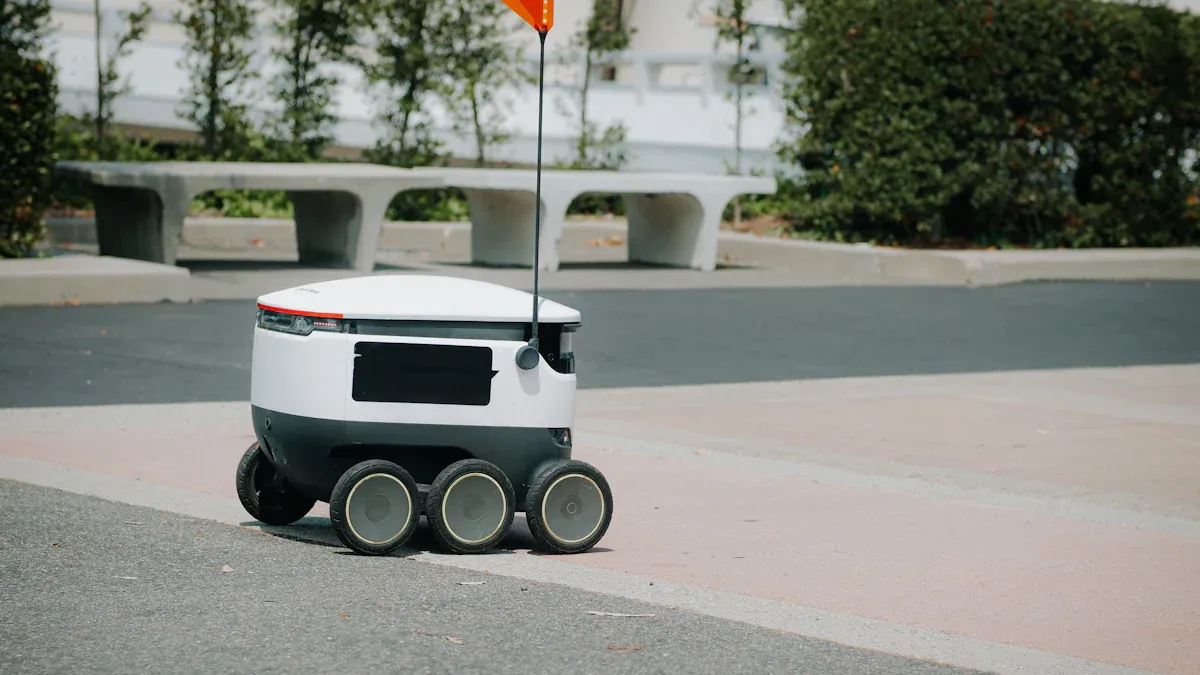
You need multi-sensor fusion to keep autonomous operations reliable, efficient, and scalable in busy convenience retail environments. Stores see more customers using checkout-free shopping, but you face challenges like connecting new technology with old systems, training staff, and protecting data. Multi-sensor fusion combines data from cameras, smart shelves, and RFID to help your convenience store overcome these problems. This technology lets you track items, improve security, and create smooth experiences for both retailers and customers.
Here are some common challenges in high-traffic autonomous convenience stores:
Challenge | Description |
|---|---|
Technology Integration | Connecting AI with old systems can be complex and disruptive. |
Lack of Technical Knowledge | Many stores need help from experts and extra staff training. |
Data Quality and Integration | Siloed data makes it hard for AI to work well. |
High Integration Cost | Starting costs can be high, so many stores begin with small projects for quick wins. |
Data Privacy and Security | Risks include unauthorized data usage and security vulnerabilities. |
Staff Training | Teams need training to effectively use new automation technologies. |
Key Takeaways
Multi-sensor fusion combines data from cameras, RFID, and weight sensors to create a complete view of your store, improving accuracy in tracking products and customers.
Implementing multi-sensor fusion helps reduce out-of-stock situations and manual inventory checks, leading to cost savings and more efficient operations.
Using multiple sensors increases system resilience; if one sensor fails, others can fill in the gaps, ensuring reliable performance even in crowded environments.
Real-time data processing from fused sensors allows for quick decision-making, enhancing the shopping experience by keeping shelves stocked and reducing wait times.
Strong privacy measures, like data anonymization and encryption, ensure customer data remains secure while enjoying the benefits of checkout-free shopping.
Multi-Sensor Fusion in Autonomous Stores
Core Principles and Definition
You need to understand what multi-sensor fusion means before you can see its value in autonomous stores. Multi-sensor fusion is the process of combining data from different types of sensors to create a complete and accurate picture of what happens in your store. You use cameras, weight sensors, RFID tags, and other devices to collect information. When you blend these data streams, you get a stronger system that supports automation and high accuracy in retail.
Multi-sensor fusion relies on several important principles. These principles help you make sure your store’s automation works well, even when things get busy or complicated. Here is a table that explains the core ideas behind multi-sensor fusion:
Principle | Description |
|---|---|
Data Association | You match data points from different sensors to the same real-world objects or events. This helps you know exactly what is happening in your store. |
State Estimation | You estimate the true state of your store based on all the sensor data. This is important for high accuracy, even when some data is uncertain. |
Sensor Calibration | You adjust your sensors so their data lines up. This removes errors and makes your system more reliable. |
You use these principles to make sure your multimodal sensing system works smoothly. When you combine data from many sources, you get better sensing and higher accuracy. This is the backbone of automation in modern retail.
Why Fusion Matters in High-Traffic Retail
You face many challenges in high-traffic retail environments. Customers move quickly, pick up items, and sometimes block sensors. You need a system that adapts to these changes and keeps working with high accuracy. Multi-sensor fusion gives you this power.
When you use multimodal sensing, you do not rely on just one sensor. If a camera view gets blocked, a weight sensor or RFID tag can still track the item. This makes your system resilient. You can trust the data, even when the store is crowded. Fusion helps you avoid mistakes, like missing a sale or counting the wrong item. You get high accuracy in every transaction.
You also need automation that scales. As your store gets busier, you want your sensing system to keep up. Multi-sensor fusion supports this by blending data from all your sensors in real time. You can handle more customers without losing accuracy. This means you deliver a smooth shopping experience, even during rush hours.
Multi-sensor fusion is not just about technology. It is about making your retail store smarter and more reliable. You use multimodal sensing to boost automation, improve accuracy, and keep your store running smoothly, no matter how busy it gets.
Key Sensor Technologies
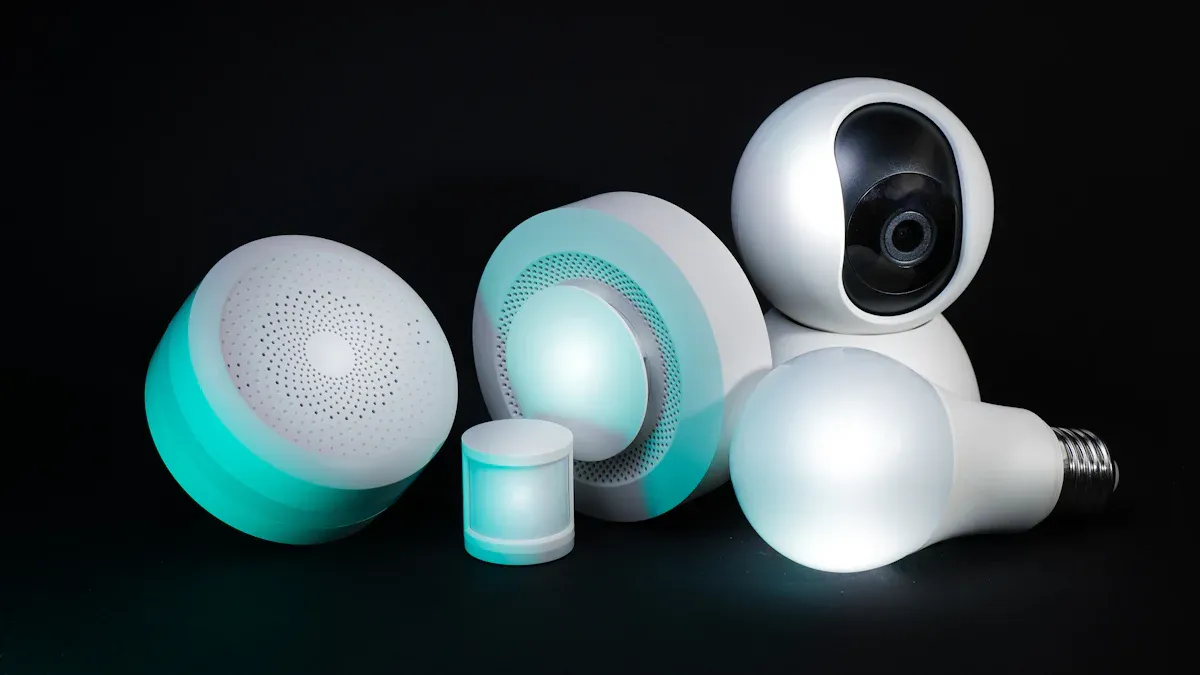
Cameras and Computer Vision
You use cameras as a primary sensor in autonomous stores. Cameras help you track products and customer movements. Computer vision technology allows you to recognize products, detect actions, and analyze customer behavior. You need different types of cameras for different tasks. Some cameras scan barcodes, while others identify products by shape and color. Multi-camera setups give you a full view of your store, reducing blind spots and improving sensing accuracy. High frame rates help you capture fast movements, like when customers drop products into carts. You need high sensitivity for low-light conditions, so your sensor works well at all times. The table below shows key camera features:
Camera Type | Description |
|---|---|
Single-Camera | Used for guided recognition or manual barcode scanning, requiring specific positioning of items. |
Multi-Camera | Provides a 360-degree view and reduces lens distortion, typically using 3 to 4 cameras. |
Resolution | 5 MP is generally sufficient for object recognition in most cases. |
Frame Rate | High frame rates (up to 120 fps) are necessary to avoid blur when items are dropped into carts. |
Chroma | Monochrome cameras are suitable for barcode recognition, while color cameras are needed for object identification. |
Shutter Type | Rolling shutter cameras are commonly used; global shutter cameras are recommended only if artifacts are present. |
Field of View | Determines the number of cameras needed; testing is recommended to ensure adequate coverage. |
Sensitivity | High sensitivity is important for low-light conditions, allowing cameras to operate effectively. |
Distance of Transmission | SerDes interfaces are preferred for long-distance transmission and high bandwidth needs. |
Processor Compatibility | The choice of processor affects camera selection; compatibility is crucial for system integration. |
RFID and IoT Devices
You use RFID and IoT devices as another sensor group. RFID tags attach to products, giving you automatic identification and tracking. IoT devices connect your sensors, sending real-time data to your system. This sensing technology helps you automate inventory counts and order placement. You reduce manual errors and improve accuracy. You can see inventory levels anytime, anywhere. The table below highlights the benefits of RFID and IoT devices:
Benefit | Description |
|---|---|
Automation | IoT solutions can automate physical inventory counts and order placement without human intervention, reducing procurement costs by up to 90%. |
Reduction of cash-in-inventory | More precise ordering and tracking of on-hand inventory levels, reducing carrying costs by up to 73%. |
Elimination of stockouts and shrinkage | Reduces human error and improves traceability, helping to eliminate stockouts and shrinkage. |
Real-time visibility | Users can access inventory levels and asset information anytime, anywhere. |
Increase in ROI | Reduction in labor required for inventory management improves the bottom line. |
Extension of salesforce | Reduces work hours required for cycle counting and order placement. |
Decrease in labor expenses | Eliminates the need for in-person visits with remote inventory tracking solutions. |
Increase customer reach | Allows distributors to take on buyers from a wider geographic area without physical visits. |
RFID and IoT sensors help you track products as they move through your store. You can manage high quality products and keep shelves stocked.
Weight and Smart Shelf Sensors
You use weight sensors and smart shelves to monitor products in real time. These sensors detect when customers pick up or put back products. You get instant updates on stock levels, so you know when to restock. Smart shelves help you avoid out-of-stock situations and improve sensing of customer choices. You can adjust prices with digital tags based on demand. Here are some ways weight and smart shelf sensors help you:
Weight sensors and smart shelves provide real-time data on stock levels.
They track which products customers pick up and put back.
You automate inventory management, reducing manual checks.
Smart shelves help you maintain optimal inventory and reduce out-of-stock scenarios.
You gain insights into customer behavior, which helps you improve product placement.
When you combine these sensor technologies, you get a complete view of your store. You support real-time operations and improve sensing accuracy. You can track products, monitor customer actions, and keep inventory levels correct. This makes your store smarter and helps you deliver a better shopping experience.
Data Integration and Sensor Fusion
Real-Time Data Processing
You need strong fusion to make your autonomous store work well. You collect data from many sensor types, such as cameras, RFID, and smart shelves. Fusion lets you combine this information quickly, so you can make decisions in real time. You use sensor synchronization to line up data from different sources. This helps you avoid mistakes and keeps your sensing system accurate. You also need regular calibration to make sure each sensor gives correct information. Fusion-aware tools help you see both 2D and 3D data, which improves labeling and tracking. You can use semi-automated labeling to speed up your workflow. Human-in-the-loop checks add another layer of quality. Cross-modality checks let you catch errors before they affect your automation.
Best practices for real-time data processing in fusion systems:
Best Practice | Description |
|---|---|
Sensor Synchronization Infrastructure | Use hardware or software to align sensor data and reduce errors. |
Accurate Calibration Procedures | Validate sensor calibration often, using automated methods when possible. |
Fusion-aware Tools | Use tools for 2D and 3D data to keep labeling consistent. |
Semi-automated Labeling | Mix model-assisted labeling with human checks for better quality. |
Cross-modality QA Mechanisms | Check quality across sensor types to stop errors from spreading. |
Handling Sensor Failures and Inaccuracies
You want your fusion system to stay strong, even if one sensor fails. You use redundancy by having more than one sensor type for each task. If a camera misses something, a weight sensor or RFID can fill the gap. You train your AI models often with new data to keep accuracy high. Proactive maintenance helps you spot problems before they affect your automation. You use advanced analytics to study customer behavior and inventory, which helps you prevent stockouts. Ethical AI guidelines keep your sensing fair and protect privacy.
Methods for continuous monitoring and resilience in fusion systems:
Method | Description |
|---|---|
Continuous AI Model Training | Update AI with new data to improve accuracy and robustness. |
Robust Sensor Redundancy and Fusion | Use multiple sensor types to keep the system accurate if one fails. |
Proactive Maintenance and Monitoring | Schedule checks to fix issues before they cause problems. |
Integration with Advanced Analytics | Use data to learn about customers and inventory, stopping stockouts. |
Ethical AI Governance | Follow rules to keep AI fair and protect privacy. |
Fusion gives you a complete view of your store. You get reliable automation, strong sensing, and accurate information for every transaction.
Checkout-Free Retail Experience
Seamless Shopping Journeys
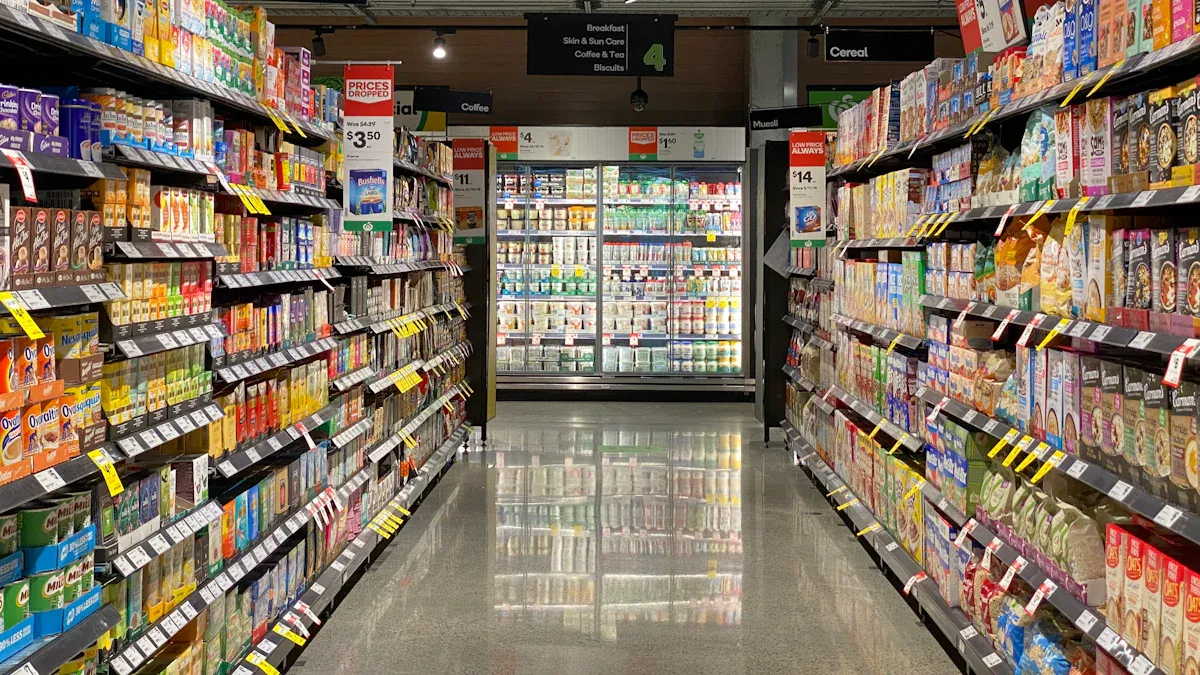
You want your shopping trip to be fast and easy. Multi-sensor fusion makes checkout-free retail possible in convenience retail stores. You do not need to wait in line or use self-checkout kiosks. The system uses weight sensors, RFID readers, and pressure mats to track every item you pick up. Cameras and computer vision add another layer of accuracy. When you walk in, you can use mobile scan-pay-go apps or just grab what you need and leave. The system records your choices and charges you automatically.
Multi-sensor fusion brings together data from many sensors. This reduces errors in item detection and inventory management. You get frictionless shopping because the system always knows what you take.
Here is how fusion works in checkout-free retail:
Function | |
|---|---|
Weight Sensors | Detect when items are removed from shelves |
Pressure Mats | Track shopper movements through the store |
RFID Readers | Identify tagged merchandise |
You can see how each sensor helps the system. Fusion combines their data for high accuracy. You do not need to scan items or use self-checkout. Scan-pay-go technology lets you shop and pay without stopping. This makes the customer experience smooth and enjoyable. You spend less time in the store and more time doing what you love. Convenience retail becomes truly convenient.
Customer Privacy and Security
You may worry about your data in a sensor-rich store. Stores use strong privacy and security measures to protect you. They follow privacy by design, which means they plan for security from the start. They use risk assessments and collect only the data they need. Data gets anonymized so no one can link it back to you. Stores use advanced encryption and strict access controls to keep your information safe.
Measure Type | Description |
|---|---|
Legislation | Laws protect data collected in autonomous stores. |
Anonymization | Data is changed so it cannot be linked to you. |
Privacy by Design | Security is built into the system from the beginning. |
Enhanced Data Security | Encryption and access controls keep customer data safe. |
You can trust that your privacy matters. Fusion systems in checkout-free retail use these steps to keep your data secure. You get the benefits of scan-pay-go and self-checkout without giving up your privacy. Cashierless shopping becomes safe and easy for everyone.
Challenges in High-Traffic Stores
Occlusion and Customer Density
You face unique challenges when your store gets crowded. Occlusion happens when one customer blocks another from the view of sensors. High customer density means many people move close together, making it hard for sensors to track everyone. These problems can lead to missed product picks or confusion about who took what.
In busy retail spaces, you often see these challenges:
Customers stand close together, making it hard for sensors to see each person.
People block each other, so cameras and other sensors miss important actions.
Overlapping movements cause confusion in tracking who interacts with which product.
You need a system that can handle these situations. Fusion helps you solve these problems by combining data from cameras, weight sensors, and RFID. When one sensor cannot see an action, another sensor fills in the gap. This teamwork between sensors boosts accuracy and keeps your store running smoothly.
Speed and Scalability
You want your store to work well, even when many customers shop at once. Rapid transactions and fast movements can overwhelm simple systems. Fusion technology gives you the power to track every action, even when things move quickly. By blending data from different sensors, you get a clear picture of what happens in your store.
Sensor fusion lets you keep up with high-speed shopping. You can track overlapping customers and fast product picks without losing accuracy. You also need strategies to keep your system efficient as your store grows. Here are some ways you can maintain performance:
Train your AI models often with new data to improve accuracy.
Use multiple sensor types for each task, so your system stays strong if one sensor fails.
Roll out new technology in phases to test and refine your setup.
Protect customer data with strong security protocols.
Monitor and maintain your system to prevent downtime.
Teach your customers how to use autonomous shopping tools.
Use analytics to optimize inventory and improve the shopping experience.
Fusion supports all these strategies. You can scale your store and handle more customers without losing control. With fusion, you create a reliable and efficient autonomous shopping environment.
Real-World Applications
Convenience Store Chains
You see multi-sensor fusion in action at leading convenience store chains. Amazon Go stands out as a prime example. When you enter the store, cameras and sensors track your movements and choices. You pick up items, and the system records each product. You do not need to scan anything or wait in line. The store charges your account automatically when you leave. This technology helps the store run smoothly, even during busy hours. You get a fast and easy shopping experience. Store managers report fewer errors and less shrinkage. They also see higher customer satisfaction.
Tip: Multi-sensor fusion helps you avoid mistakes in item tracking. You get accurate inventory and faster checkout.
Benefit | Result in Store Operations |
|---|---|
Faster checkout | No lines, quick exit |
Accurate inventory | Fewer out-of-stock items |
Reduced shrinkage | Lower losses from theft or error |
Higher satisfaction | Customers return more often |
Small-Format Grocery Stores
You find multi-sensor fusion in small-format grocery stores too. These stores use cameras, RFID tags, and smart shelves to track products. You pick up an item, and the shelf sensor detects it. The system updates inventory right away. You see fewer empty shelves and more products available. Store owners use real-time data to restock quickly. They spend less time on manual checks. You get a better shopping experience because the store stays organized.
You enjoy quick shopping trips.
You find products in stock more often.
You see fewer mistakes at checkout.
Store teams learn that combining sensors makes their work easier. They trust the system to track products and help customers. You benefit from a store that feels modern and efficient.
Benefits for Retailers and Shoppers
Inventory Accuracy and Cost Reduction
You want your convenience retail store to run smoothly and avoid mistakes. Multi-sensor fusion helps you track products with high accuracy. You use cameras, weight sensors, and RFID to collect information about every product on your shelves. This system updates inventory in real time, so you always know what products you have and what you need to restock. You reduce out-of-stock rates because you see which products move fast and which ones need attention.
You also save money. You spend less on manual inventory checks because the system gives you the information you need. You lower shrinkage because you track products from the moment they arrive until customers buy them. You avoid over-ordering and reduce waste. This means you keep your costs down and your store efficient.
Tip: Accurate information about products helps you make better decisions and keeps your convenience retail business strong.
Benefit | How It Helps You |
|---|---|
Real-time inventory | Know what products are in stock |
Lower shrinkage | Track products and reduce losses |
Fewer manual checks | Save time and money |
Less waste | Order only what you need |
Enhanced Customer Experience
You want your customers to enjoy shopping in your convenience retail store. Multi-sensor fusion gives you the information to make their experience better. The system understands how customers move and what products they like. You use this information to adjust your store layout and keep popular products easy to find.
When you use multiple sensors, you can respond quickly to what happens in your store. If a shelf runs low, you restock it before customers notice. You offer a smooth, checkout-free experience, so customers spend less time waiting. The system personalizes shopping by learning what products your customers prefer.
The integration of cameras and weight sensors gives you a detailed view of store operations. You use this information to make real-time changes that improve convenience for everyone. Customers find what they need, pay quickly, and leave happy. Your store becomes a place where convenience and technology work together.
You keep shelves full of products.
You help customers find what they want.
You make shopping fast and easy.
Future Trends in Sensor Fusion
Advances in AI and IoT
You will see big changes in autonomous stores as AI and IoT keep getting smarter. Today, computer vision systems use high-resolution cameras to watch how customers move and interact with products. These cameras send real-time visual data to your store’s system. You also use fusion to combine information from weight sensors and RFID tags. This gives you a clear picture of what happens in your store at every moment.
Artificial intelligence and machine learning play a key role. They process data from all your sensors and cameras. Over time, these systems learn and get better at spotting products and understanding customer actions. You can expect your store to become more accurate and efficient as these technologies improve.
You will notice that smarter sensors and deeper AI integration help your store run smoother and make fewer mistakes.
Here are some of the latest advances you might use:
Computer vision systems that track customer and product movements in real time.
Fusion of data from different sensors for a complete view of store activities.
AI and machine learning that improve accuracy and learn from every transaction.
Expanding to New Formats
Fusion technology will not stop at convenience stores. You will see it move into new retail formats, like larger supermarkets and specialty shops. These new systems use AI and automation to create better shopping experiences. Your store can respond to shopper behavior as it happens, giving each customer a more personal touch.
AI-driven personalization will change how you help your shoppers. Your system can suggest products or offer guidance based on what each person likes. This makes shopping easier and more fun for everyone.
Description | |
|---|---|
Computer Vision Systems | Use high-resolution cameras to monitor customer movements and product interactions in real time. |
Sensor Fusion | Combine data from many sensors to understand store activities accurately. |
Artificial Intelligence (AI) | Process sensor and camera data to improve how your store identifies products and customer actions. |
You will see fusion help stores of all sizes. As these trends grow, you can expect checkout-free retail to become even more common and reliable.
You see how multi-sensor fusion makes your store smarter and more reliable. This technology helps you manage inventory, improve security, and create a better shopping experience. You benefit from faster checkouts and fewer mistakes. Retailers save money and keep shelves stocked.
Multi-sensor fusion combines data from many sensors, making your store efficient and ready to grow.
You can expect new innovations to make these systems even stronger. If you want a competitive edge, consider using multi-sensor fusion in your store.
FAQ
What is multi-sensor fusion in autonomous stores?
Multi-sensor fusion means you combine data from cameras, RFID, and shelf sensors. You get a complete view of your store. This helps you track products and customers with high accuracy.
How does sensor fusion improve inventory management?
You use sensor fusion to update inventory in real time. Cameras, RFID, and weight sensors work together. You avoid out-of-stock items and reduce manual checks.
Is my personal data safe in sensor-rich stores?
Stores use strong encryption and anonymize your data. Privacy by design protects your information. You can shop with confidence.
Can sensor fusion handle crowded stores?
You benefit from sensor fusion because it uses multiple sensors. If one sensor misses an action, another fills the gap. Your store stays accurate, even when many customers shop at once.
See Also
Understanding Global Trends in Automated Convenience Retail Solutions
The Future of Retail: Embracing AI-Driven Store Innovations
Modern Retail Advantages of AI-Enhanced Combo Vending Machines
