The role of multi-sensor fusion in high-traffic autonomous stores in Universities & campus retail.

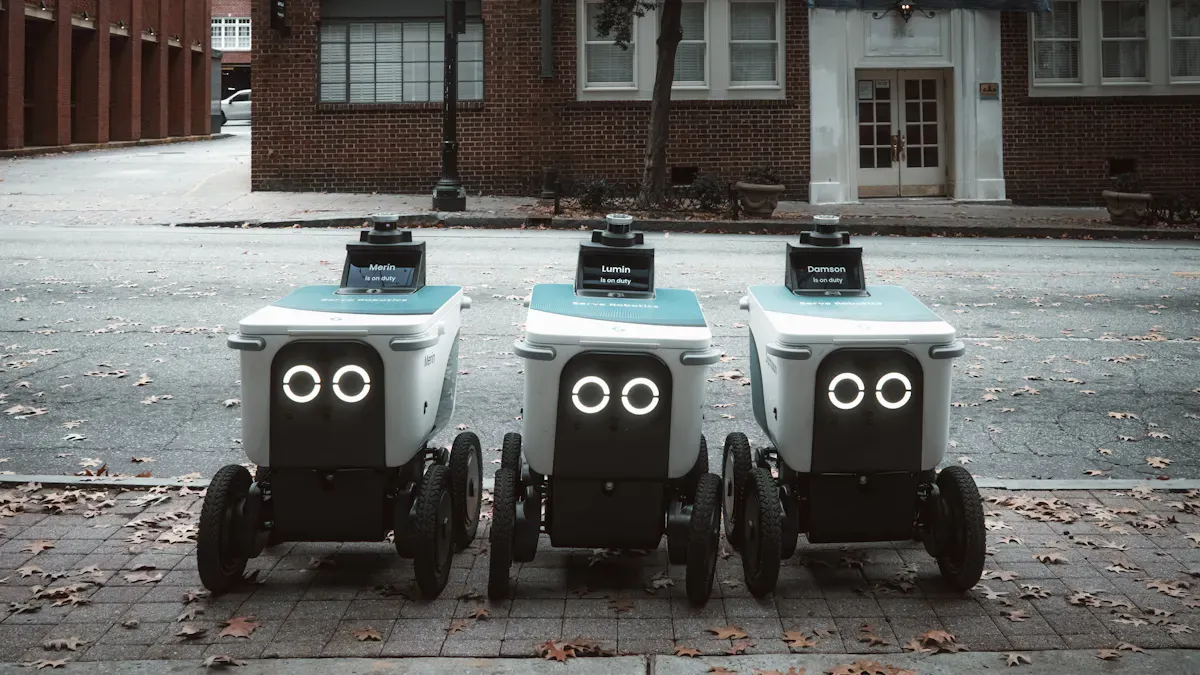
You face busy campus stores every day. Multi-sensor fusion helps you manage these spaces with confidence. When you combine cameras, RFID, and weight sensors, you get accurate data. Multi-sensor fusion improves reliability and keeps your store safe. Recent studies show that multi-sensor fusion removes distorted measurements, so you track movement and inventory better. Real-time monitoring lets you respond quickly. Multi-sensor fusion adapts to changing crowds and keeps your store running smoothly.
Key Takeaways
Multi-sensor fusion combines data from cameras, RFID, and weight sensors to improve accuracy in tracking inventory and customer movement.
Real-time monitoring allows stores to respond quickly to changes, ensuring smooth operations even during peak traffic times.
Using multi-sensor fusion enhances theft prevention by providing comprehensive surveillance and tracking capabilities.
The technology creates a frictionless shopping experience, allowing customers to pick items and check out automatically without waiting in line.
Adapting to crowd density with sensor fusion helps optimize store operations, ensuring customer comfort and safety.
Multi-sensor fusion in autonomous stores
Definition and principles
You see sensor fusion everywhere in autonomous stores. Sensor fusion means combining information from different sensors to get a clear picture of what happens in your store. Multi-sensor fusion uses cameras, RFID tags, and weight sensors together. This approach helps you track items and people with more accuracy. Autonomous stores rely on sensor fusion to make decisions quickly and keep operations smooth.
The core principles of sensor fusion guide how you use these technologies. You match data points from different sensors to the same object. You estimate the true state of your store by looking at all sensor data. You calibrate sensors so they work together and give reliable results. The table below shows these principles:
Principle | Description |
|---|---|
Data Association | Matching data points from different sensors to the same real-world objects. |
State Estimation | Estimating the true state of the environment based on sensor data. |
Sensor Calibration | Adjusting sensors to ensure data accuracy and reliability. |
Multi-sensor fusion lets you reduce errors and improve reliability. You get a more complete view of your store. Sensor fusion helps you spot problems faster and react to changes in real time. Autonomous stores use sensor fusion to keep inventory accurate and monitor customer movement.
Role in campus retail
You manage busy campus stores with sensor fusion. Multi-sensor fusion helps you handle high traffic and keep your store safe. Autonomous stores use sensor fusion to track inventory, monitor shelves, and follow customer paths. You can adapt to changing crowds and make sure transactions happen smoothly.
Sensor fusion supports theft prevention and seamless checkout. You see fewer mistakes and faster service. Multi-sensor fusion gives you the tools to create a frictionless shopping experience. Autonomous stores on campus rely on sensor fusion to meet student needs and keep operations efficient.
Tip: Use sensor fusion to improve store safety and boost customer satisfaction. Multi-sensor fusion helps you stay ahead in campus retail.
Sensor fusion technologies
Cameras and computer vision
You use cameras and computer vision to watch over your store. These tools help you see what happens in every corner. Cameras give you a wide view, so you can monitor many items at once. Computer vision lets you track where customers go and what they do. You can spot which products they pick up or put back. The table below shows how cameras and computer vision help you manage your store:
Description | |
|---|---|
Extensive Coverage | Cameras provide a wide field of view, allowing for monitoring of multiple items simultaneously. |
Precise Localization | Cameras enable accurate tracking of customer positions and movements within the store. |
Item Identification | Computer vision algorithms analyze visual data to identify and classify items, even in crowded environments. |
Tracking Customer Interactions | Cameras help in understanding customer behavior by monitoring their interactions with products. |
Sensor fusion combines these camera images with other data. You get a clear map of your store and know what happens in real time.
RFID and inventory tracking
You use RFID tags to track every item. RFID gives you real-time updates on what is in stock. You can see through stacks of products and count items quickly. This helps you stop theft and keep shelves full. RFID also makes checkout faster. You do not need to scan barcodes—just drop items in the bin and pay.
“With RFID, you can see effectively through things. If you have five pairs of jeans stacked up and each pair of jeans is tagged with an RFID tag, you can count the number of jeans much easier than you can with computer vision. You can approximate where a specific tag is, which helps with localization.”
Sensor fusion uses RFID data with camera and weight sensor data. You get better accuracy and fewer mistakes.
Weight sensors and shelf monitoring
You place weight sensors under shelves to measure product weight. These smart scales tell you when someone picks up or returns an item. You get alerts when stock runs low. The table below shows how weight sensors help you:
Feature | Description |
|---|---|
Continuous Monitoring | Smart scales monitor product weight in real-time, providing data on inventory changes. |
Real-time Data Processing | Data is sent to a central server, ensuring up-to-date knowledge of product availability. |
Adjustable Restocking Thresholds | The system can modify restocking thresholds based on various factors, adapting to retail scenarios. |
Restocking Alerts | Alerts are triggered when inventory falls below set thresholds, providing details like product name and location. |
Sensor fusion blends weight data with camera and RFID data. You know exactly what is on each shelf.
Data integration and synchronization
You need all your sensors to work together. Sensor fusion brings data from cameras, RFID, and weight sensors into one system. You use precise timing and positioning to match data from different sources. This helps you avoid errors and keep your store running smoothly.
Gadgeon's Multi-Sensor Integration Services let you combine data from many sensors.
You can use Bluetooth, Zigbee, or Wi-Fi to connect your sensors.
MuleSoft's Anypoint Platform helps you sync data in real time, so you always know what happens in your store.
Sensor fusion solves the limits of each sensor. You get a full, accurate picture of your store, even when it is busy.
Managing high traffic with multi-sensor fusion
Real-time monitoring
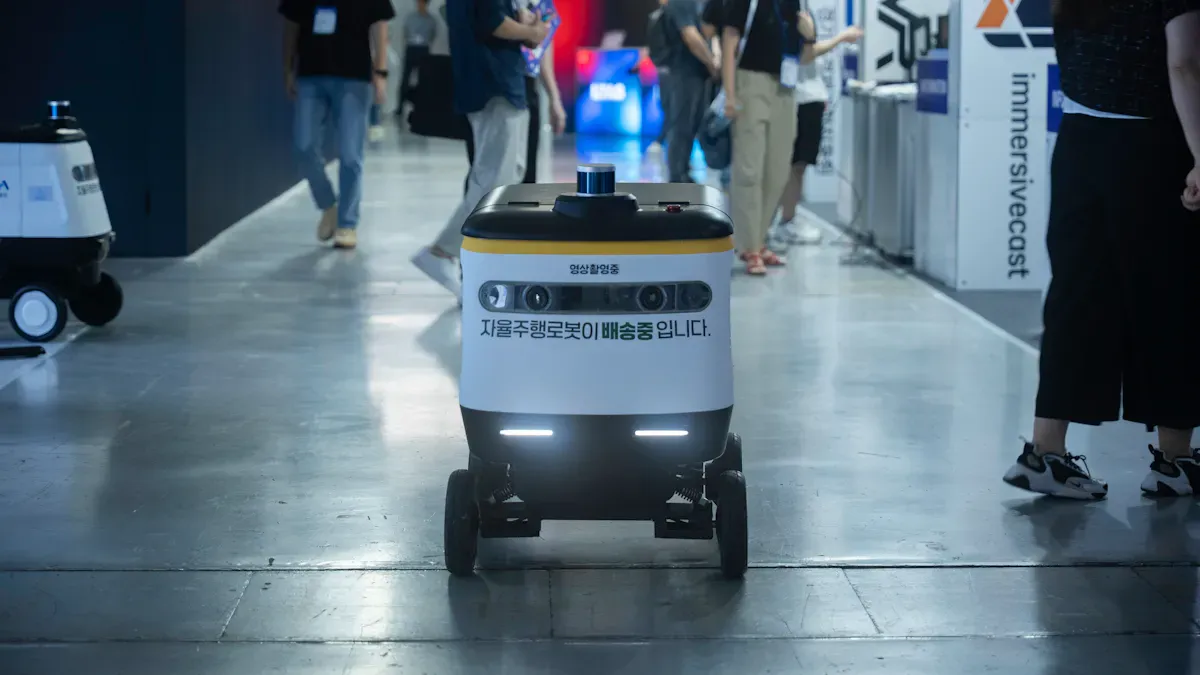
You need to keep your autonomous store running smoothly, even when students rush in between classes. Multi-sensor fusion gives you real-time data from every corner of your store. You use sensor fusion to combine information from cameras, RFID, weight sensors, and lidar. This helps you track every item and person with high accuracy. Real-time monitoring lets you see changes as they happen. You can spot empty shelves, crowded aisles, or unusual movement right away.
Sensor fusion helps you get a clear view of your store. You use real-time localization to know where customers are and what they do. Lidar sensors give you detailed maps of the store layout. You can follow customer paths and see which areas get busy. Multi-sensor fusion methods help you react fast. You can send staff to restock shelves or guide customers to less crowded areas. Real-time alerts help you prevent accidents and keep everyone safe.
Note: Real-time monitoring with sensor fusion improves accuracy and reduces errors. You can trust the data to make quick decisions.
Crowd density adaptation
You face changing crowds every day. Multi-sensor fusion helps you adapt to these changes. You use sensor fusion to combine data from Wi-Fi, cameras, and automatic counting systems. This gives you a full picture of crowd density and movement. You can see how many people enter, where they gather, and how fast they move.
Multi-sensor fusion lets you understand crowd behavior in real time.
You can track density, flow rate, and movement patterns.
Sensor fusion methods help you get more information from fewer sensors.
You can adjust store operations based on real-time crowd data.
When you know where crowds form, you can open more checkout lanes or direct traffic. You use navigation and localization data to guide customers. Lidar sensors help you map busy zones and keep pathways clear. Multi-sensor fusion methods let you change store settings quickly. You can adjust lighting, music, or air conditioning based on crowd size. This keeps your store comfortable and safe.
Simultaneous transactions
You need to handle many transactions at once, especially during peak hours. Multi-sensor fusion makes this possible. You use sensor fusion to track every item and customer in real time. Autonomous systems use AI and machine learning to predict what products students want. This helps you keep shelves stocked and avoid long lines.
Predictive inventory optimization uses sales data to keep the right products on hand.
Hyper-personalization gives students real-time offers based on their shopping habits.
Behavioral biometrics and anomaly detection spot unusual activity and prevent theft.
Dynamic pricing changes prices in real time to match demand.
Robotic integration lets autonomous robots restock shelves and check inventory.
Edge computing processes data locally for faster response.
Sensor fusion and localization work together to track each transaction. You use lidar and cameras to follow customer movement. RFID and weight sensors confirm what items leave the shelves. Multi-sensor fusion methods make sure every purchase is accurate. You can process many transactions at once without mistakes.
Tip: Use multi-sensor fusion to boost operational efficiency. You can serve more students, reduce wait times, and keep your store secure.
Multi-sensor fusion gives you the tools to manage high-traffic autonomous stores. You get real-time insights, accurate localization, and smooth navigation. Sensor fusion methods help you adapt to changing crowds and handle many transactions at once. You improve safety, efficiency, and customer satisfaction with every step.
Accuracy & reliability
Error reduction
You want your autonomous store to work without mistakes. Multi-sensor fusion helps you reach this goal. When you combine data from cameras, RFID, weight sensors, and lidar, you get a clear view of every item and person in your store. This approach increases accuracy and reduces errors. You can trust the information you see because each sensor checks the others. If one sensor misses something, another sensor catches it.
Real-time data from lidar and cameras lets you spot problems as they happen. You can track items with RFID and confirm their location with weight sensors. Localization helps you know exactly where each product sits on the shelf. Lidar gives you precise distance measurements, so you avoid confusion between similar items. You use real-time alerts to fix errors before they affect your customers.
Real-time monitoring with multi-sensor fusion improves accuracy.
Lidar and localization work together to reduce mistakes.
You get fewer inventory errors and better customer service.
Theft prevention
You need to keep your store safe, especially during busy times. Multi-sensor fusion gives you strong tools for theft prevention. You use real-time video from cameras to watch high-traffic areas. Lidar sensors help you track movement and spot unusual behavior. Thermal imaging detects people even in low-light conditions. Localization lets you follow each customer’s path and see if someone tries to hide an item.
Here is how different sensors help you prevent theft:
Sensor Type | Contribution to Theft Prevention |
|---|---|
Thermal Imaging | Detects heat signatures, useful for identifying individuals in low-light conditions. |
Lidar | Provides accurate distance measurements, enhancing object classification. |
Visible Light Cameras | Captures real-time video footage, aiding in behavior detection and monitoring. |
You also use real-time alerts to respond quickly. Surveillance cameras in high-traffic areas help deter theft. Retail fraud and burglary can cause big losses and stop your store from running smoothly. Enhanced monitoring strategies keep your store safe. Lidar and localization give you the power to track every movement. You can spot theft attempts and act before they succeed.
Seamless checkout
You want your customers to enjoy a fast and easy checkout. Multi-sensor fusion makes this possible. Real-time data from cameras, RFID, weight sensors, and lidar lets you track every item a customer picks up. Localization helps you know which products leave the shelves. Lidar gives you exact positions, so you never miss a transaction.
You can use biometric multi-factor authentication to make checkout secure. Emotion assessment tools help you see if customers feel happy with their experience. Mobile counters let students pay anywhere in the store. Computer vision and lidar enable cashierless systems. Customers can simply walk out, and the system charges them automatically. Beacons help with navigation and send real-time offers. RFID tags support services like 'Buy Online, Return In Store.' Weight sensors in smart shelves and carts track items and quantities with high accuracy.
Amazon’s Just Walk Out technology uses ceiling cameras and shelf sensors to identify items.
Customers get charged automatically as they exit, with zero wait time at checkout.
Real-time localization and lidar make every step smooth. You give your customers a frictionless shopping experience. You also improve accuracy and reduce mistakes at checkout.
Tip: Use multi-sensor fusion to create a seamless, secure, and fast checkout process. Your customers will notice the difference.
Navigation and localization
Customer movement tracking
You need to know where customers go in your store. Navigation and localization help you track every step. In a busy campus store, people often stand close together. Sometimes, one person blocks another from the camera. Overlapping movements can confuse sensors. Multi-sensor fusion solves these problems. You combine data from cameras, weight sensors, and RFID. If one sensor misses an action, another sensor fills the gap. This system adapts to changes in movement. You get high-precision localization even when the store is crowded.
You use a localization system to follow each customer. The localization system matches data from different sensors. You see who picks up which item. You know when someone puts a product back. Indoor autonomous navigation helps you track paths in real time. The localization system gives you accurate information. You can trust the localization performance, even during peak hours. Global localization lets you see the whole store at once. Vehicle localization helps you track carts and robots as they move. Robot navigation uses the localization system to avoid obstacles and reach the right spot.
Multi-sensor fusion improves localization performance.
The localization system adapts to crowded spaces.
Global localization gives you a full view of customer movement.
Service delivery optimization
You want to make shopping easy for everyone. Navigation and localization help you do this. You use indoor autonomous navigation to guide customers. The localization system powers interactive maps. Customers find products faster. You use heat maps to see where people go most. This helps you place popular items in the best spots.
You analyze foot traffic with the localization system. You learn when the store gets busy. You adjust staff schedules and restocking times. Global localization helps you send offers to students’ phones when they enter the store. Proximity marketing uses the localization system to engage customers at the right moment. Vehicle localization tracks delivery robots as they bring products to shelves. Robot navigation ensures these robots move safely and efficiently.
Indoor autonomous navigation improves the shopping experience.
The localization system supports service delivery.
Global localization and vehicle localization keep your store running smoothly.
Enhancing customer experience
Frictionless shopping
You want shopping to feel easy and natural. Multi-sensor fusion helps you reach this goal in your campus store. When you walk in, the system starts tracking your movements and actions. You do not need to scan items or wait in line. You simply pick up what you need and leave. The store charges you automatically.
Many stores use advanced systems like Cloudpick. These systems use computer vision and sensor fusion to follow your actions. You get a true "grab-and-go" experience. Here is how these systems work:
Track your location and posture as you move through the store.
Identify which products you pick up or put back.
Complete checkout automatically when you exit.
You save time and avoid the hassle of traditional checkout. The process feels smooth and modern.
Fast service during peak hours
You often shop between classes or during lunch breaks. Stores get crowded at these times. Multi-sensor fusion helps you get fast service, even when many students shop at once. The system tracks everyone in real time. It knows who picks up each item. You do not have to wait for a cashier.
The store can handle many transactions at the same time. You spend less time waiting and more time doing what matters. Staff can focus on helping you instead of scanning items. You get in and out quickly, even during the busiest hours.
Tip: Multi-sensor fusion keeps lines short and service fast, so you never miss your next class.
Accessibility
You want everyone to enjoy shopping, no matter their abilities. Multi-sensor fusion makes stores more accessible. The system can guide you with voice prompts or visual cues. If you use a wheelchair or have trouble reaching shelves, the store can help you find products faster.
Stores can adjust lighting, sound, or shelf height based on your needs. You get a shopping experience that fits you. Multi-sensor fusion helps create a welcoming space for all students.
Accessibility Feature | How It Helps You |
|---|---|
Voice Guidance | Gives directions and assistance |
Visual Cues | Highlights products and paths |
Adjustable Shelves | Makes items easy to reach |
You feel included and supported every time you shop.
Challenges & multi-sensor fusion methods
Sensor interference
You face sensor interference in busy campus stores. Sensors sometimes miss actions when customers stand close together. People block each other, so cameras and other sensors lose track of movements. Overlapping actions confuse the system. You need to solve these problems to keep your store running smoothly. Multi-sensor fusion methods help you combine data from different sensors. You get a clearer picture and reduce errors. You can use multiple sensor types for each task. This makes your system strong if one sensor fails.
Privacy concerns
You must protect student privacy in your store. Multi-sensor fusion methods collect a lot of data. You need to keep this data safe. Privacy preservation mechanisms help you protect sensitive information. Entity tree embedding algorithms reduce information loss and improve how you represent data. You can keep location privacy and service quality high. The table below shows how privacy concerns are addressed:
Key Aspect | Description |
|---|---|
Protects sensitive data in multi-party data sharing. | |
Entity Tree Embedding Algorithm | Reduces information loss and improves data representation. |
Efficacy | Keeps privacy and service quality strong. |
You must use strong security protocols and teach customers about privacy features.
Maintenance and costs
You need to keep your system working and control costs. Multi-sensor fusion methods require regular maintenance. You must train your AI models often with new data. You should roll out new technology in phases to test and refine your setup. You need to monitor and maintain your system to prevent downtime. The list below shows common maintenance and cost challenges:
Customers stand close together, making it hard for sensors to see each person.
People block each other, so cameras and other sensors miss important actions.
Overlapping movements cause confusion in tracking who interacts with which product.
You can use analytics to optimize inventory and improve the shopping experience.
Advanced fusion methods
You can use advanced multi-sensor fusion methods to solve many challenges. These methods combine data from cameras, LiDAR, RFID, and weight sensors. You get better environmental perception and object detection. Advanced multi-sensor fusion methods help you plan paths and navigate safely. They work well even in low visibility or bad weather. You can rely on these methods to keep your store safe and efficient. Multi-sensor fusion methods improve reliability and help you adapt to dynamic environments.
Tip: Use advanced multi-sensor fusion methods to overcome operational challenges and create a better shopping experience.
Future outlook
Emerging sensor technologies
You will see new sensor technologies change campus retail in the next five years. Stores will use advanced computer vision and sensors to track products and people. These tools will help you manage inventory in real time. You will notice checkout-free technology become common. This means you can pick up items and leave without waiting in line. Sensors and cameras will track your purchases and charge you automatically. You will enjoy a faster and easier shopping experience.
Computer vision will help you find products quickly.
Sensors will update inventory as soon as you take or return an item.
Checkout-free systems will save you time.
AI and machine learning
You will benefit from AI and machine learning in autonomous stores. These tools will work with multi-sensor fusion to improve store operations. You will see how AI helps with localization by combining data from cameras, RFID, and weight sensors. This makes it easier to know where every product and person is in the store. In robotics, AI will use localization to help robots restock shelves and guide customers. In healthcare, wearable devices will use sensor fusion and localization to track your health. Autonomous vehicles will use localization to move safely around campus.
AI will help with object recognition and localization.
Robots will use localization for navigation and service.
Wearable devices will use localization to monitor health.
Impact on campus retail
You will see big changes in campus retail because of these technologies. Stores will use localization to track inventory and customer movement. You will get personalized offers based on your location in the store. Staff will use localization to restock shelves at the right time. You will notice fewer errors and faster service. Localization will help with security and theft prevention. You will enjoy a safer and more efficient shopping experience. As localization improves, you will see even more innovation in campus retail.
Tip: Stay updated on new localization tools to keep your store ahead of the curve.
You see how multi-sensor fusion transforms your campus store. You get faster service, better accuracy, and a safer shopping space. Autonomous systems help you handle busy times with ease. You still face challenges, but you can solve them with advanced multi-sensor fusion methods. You should stay curious about new technology. The future will bring even more ways to improve your store.
FAQ
What is multi-sensor fusion in autonomous stores?
Multi-sensor fusion means you combine data from different sensors like cameras, RFID, and weight sensors. This helps you get a clear and accurate view of your store’s activity.
How does multi-sensor fusion help during busy times?
You use multi-sensor fusion to track customers and products in real time. This lets you handle many shoppers at once. You keep lines short and make shopping faster.
Is customer privacy protected in autonomous stores?
You protect customer privacy by using secure data systems. Stores use privacy-preserving technology and strong security protocols. You can trust that your personal information stays safe.
What happens if one sensor fails?
You do not lose track of items or people. Multi-sensor fusion lets other sensors fill in the gaps. Your store keeps running smoothly, even if one sensor stops working.
Can multi-sensor fusion prevent theft?
Yes. You use cameras, RFID, and other sensors together. This helps you spot unusual behavior and stop theft quickly. You keep your store safe for everyone.
See Also
The Future of Retail: Embracing AI-Driven Stores
Comparing Micromarkets and Smart Stores in Global Retail
Transforming Online Retail Management with AI Tools
Understanding the Growth of AI-Enhanced Corner Stores
Revolutionizing Retail: The Impact of Smart Vending Machines
