Operational challenges of autonomous stores in Convenience store chains & small-format grocery and how to solve them.


You face several operational challenges when running autonomous stores in convenience store chains and small-format grocery. These challenges can affect your efficiency, profitability, and customer satisfaction.
Inaccurate sales tracking can cause poor decisions and missed sales.
Limited online presence can reduce your ability to reach customers.
Slow checkout processes can frustrate shoppers and decrease sales.
Solving these operational challenges is vital if you want frictionless checkout, better customer experiences, and improved business outcomes. This article shares practical solutions for each challenge.
Key Takeaways
Address labor shortages by implementing automation technologies like Autonomous Mobile Robots and hands-free picking systems. This boosts efficiency and reduces the need for staff.
Utilize real-time tracking and automated replenishment systems to manage inventory effectively. This helps avoid stockouts and reduces waste, ensuring customer satisfaction.
Focus on customer experience by providing user-friendly technology and strong onboarding. This builds trust and encourages customers to adapt to autonomous shopping.
Plan for upfront technology investments and understand ongoing savings. Automation can significantly reduce operational costs and improve profit margins over time.
Implement strong theft prevention and data privacy measures. Use AI-driven systems to enhance security and ensure customer data is protected, building trust in your store.
Key Operational Challenges in Autonomous Stores
Running autonomous stores brings several operational challenges that you must address to succeed. You need to plan carefully and use technology to solve these problems. The main challenges include labor shortages, supply chain volatility, and the complexity of scaling up operations.
Labor Shortages and Automation
You often face labor challenges when operating autonomous stores. Finding enough staff can be difficult, especially for small-format grocery locations. Automation helps you overcome these issues and keeps your store running smoothly.
Autonomous Mobile Robots (AMRs) move carts and products using sensors and artificial intelligence. These robots reduce manual work and increase efficiency.
Hands-Free Wrist-Mounted Picking gives workers real-time guidance. This technology improves speed and accuracy while reducing fatigue.
Voice-Directed Picking lets workers pick items without using their hands. This method increases picking speed and accuracy.
Conveyor and Sortation Systems automate the movement and sorting of goods. You can minimize manual handling and boost throughput.
Cashierless store technologies allow you to operate with fewer staff and longer hours. This solution is especially useful for autonomous stores in apartment complexes or busy city areas.
Żabka, a Polish convenience retailer, shows how autonomous stores can solve labor shortages. By using automation and partnering with AiFi, Żabka places stores closer to customers and reduces the need for staff. You can extend operating hours and improve customer convenience with similar strategies.
Supply Chain and Demand Fluctuations
Managing the supply chain in autonomous stores requires quick thinking and smart technology. You must respond to demand changes and keep shelves stocked with the right products.
Daily supplier deliveries help you match orders with actual demand. You avoid overstocking and reduce waste.
Real-time data lets you react quickly to demand surges and inventory needs. You can adjust orders and keep popular items available.
High inventory turnover reduces risks with perishable goods. You keep products fresh and avoid losses.
Early warnings for waste management help you redirect products before they expire. You save money and reduce waste.
Tight planning systems connect with transaction systems for accurate order processing. You process orders faster and avoid mistakes.
C2FO’s Early Pay platform helps you build strong supplier relationships. By offering early payments, you maintain healthy working capital and improve inventory management. You can fulfill orders on time and handle supply chain volatility better.
Scalability and Complexity
Expanding autonomous stores across multiple locations brings new challenges. You must integrate technology, gain customer trust, and follow regulations.
Technology integration issues can slow down your expansion. You need systems that work well with your current retail setup.
Consumer acceptance and trust take time to build. Some shoppers may feel unsure about automated shopping experiences.
Regulatory compliance varies by location. You must follow privacy laws and technology regulations, which can delay your plans.
Challenge | Solution |
|---|---|
Technology integration | Use scalable platforms and plan carefully |
Consumer acceptance | Educate customers and offer support |
Regulatory compliance | Stay updated on laws and adjust operations |
You must plan each step and use automation wisely. When you solve these challenges, you make your autonomous stores more efficient and ready for growth.
Complex Inventory Management in Convenience Formats
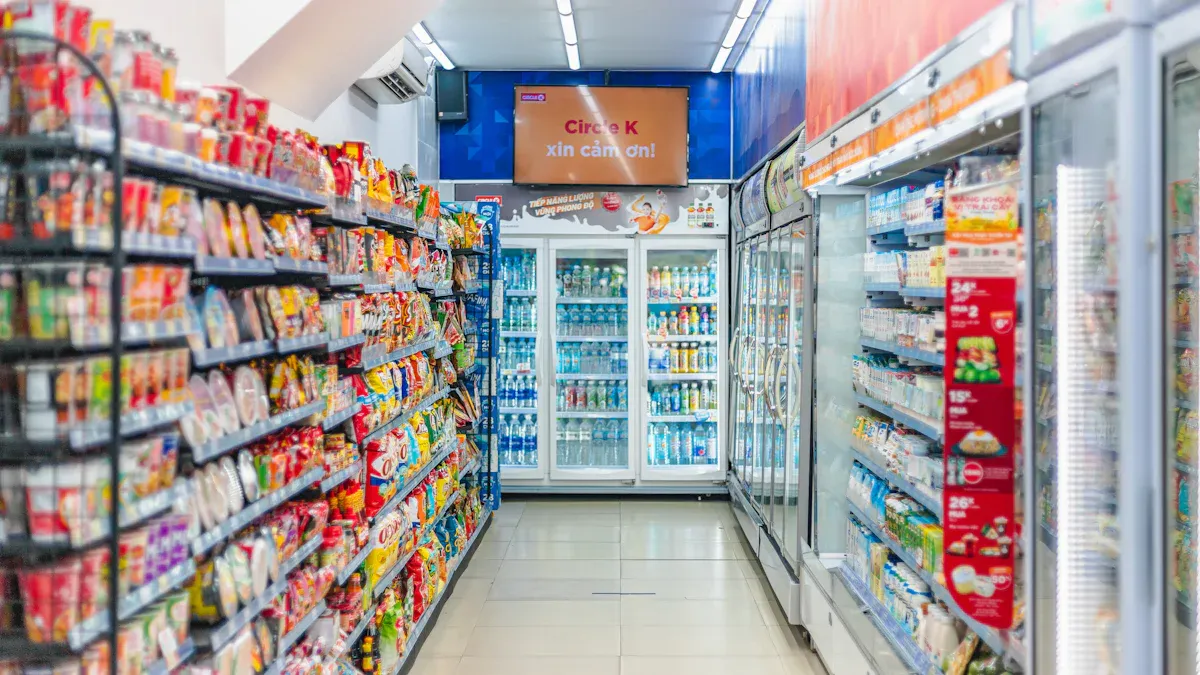
Managing inventory in convenience stores can be challenging. You need to keep track of many products, restock quickly, and handle items that expire fast. Complex inventory management requires smart solutions and advanced technology to help you stay organized and efficient.
Real-Time Tracking Solutions
Real-time tracking solutions give you instant updates on inventory levels. You can see what is in stock and what needs to be reordered. This technology helps you avoid running out of popular items, especially during busy times. You also reduce mistakes when fulfilling online orders because the system updates inventory data right away.
You can achieve inventory accuracy rates above 98% with real-time tracking.
Immediate visibility lets you restock shelves faster and avoid stockouts.
Real-time data improves order accuracy and customer satisfaction.
Mobile-enabled cycle counting and alerts reduce manual labor, so your staff can focus on helping customers.
You can manage freshness better by knowing which items are close to expiring.
Tip: Use real-time tracking to keep your inventory accurate and your customers happy. This technology helps you make better decisions and reduces waste.
Automated Replenishment
Automated replenishment systems use technology and data to keep your store stocked. These systems analyze sales trends and inventory levels to order products automatically. You save time and reduce errors because you do not need to reorder items by hand.
Benefit | Description |
|---|---|
Improved Inventory Management | Automated systems keep inventory at the right levels, so you avoid stock-outs and empty shelves. |
Cost Savings | Automation cuts labor hours for manual reordering by up to 95%. You can use your staff for other tasks. |
Enhanced Customer Satisfaction | Products are available when customers want them, which improves loyalty and order speed. |
Operational Efficiency | Advanced algorithms handle purchasing, freeing up your team for more important work. |
Data-Driven Insights | Automated systems give you real-time analytics, so you can make smart decisions based on trends. |
Automated replenishment helps you keep inventory fresh and available. You can respond quickly to changes in demand and avoid overstocking. This system supports complex inventory management by using technology to simplify your daily tasks.
Managing Perishables and Expiry
Handling perishables and expiry dates is a big part of complex inventory management. You need to track which items will expire soon and make sure you sell them before they go bad. Advanced technology helps you monitor shelf life and reduce waste.
Strategy | Benefit |
|---|---|
Fewer misplaced or expired items. | |
Faster shelf-life management | You follow FEFO (First Expired, First Out) and lose less stock. |
Automated shelf-life tracking | You prevent expired products and stay compliant. |
Continuous inventory monitoring | You adjust stock proactively and reduce waste. |
Expiry tracking | You avoid losing stock to expiration. |
Real-time traceability | You meet food safety rules and prepare for audits. |
You can prioritize items with the closest sell-by dates for sale.
Waste goes down because you catch products before they expire.
Customers get fresher products, which improves quality and trust.
You follow safety rules for food and medicine.
Intelligent food logistics use environmental data, like temperature, to adjust how you transport and store items. If something is close to expiring, you can send it on a shorter route to make sure it stays fresh. This approach keeps your inventory safe and your customers satisfied.
Note: Managing perishables with technology helps you reduce losses and keep your store running smoothly. You protect your profits and build customer trust.
You can solve complex inventory management challenges by using real-time tracking, automated replenishment, and smart expiry management. Advanced technology gives you the tools to keep inventory accurate, reduce waste, and improve customer satisfaction.
Customer Adaptation and Experience in Autonomous Stores
You must focus on customer adaptation to succeed with autonomous stores. Customers need to feel comfortable with new technology and trust the shopping process. You can improve customer experience by using user-friendly technology, effective onboarding, and strong remote support.
User-Friendly Technology
Customers expect a smooth and easy shopping journey. You should use intelligent agents, digital assistants, and humanoids to help customers in real time. These agents sense customer needs and respond quickly. Humanoids can recognize facial expressions and alert managers if a customer feels unhappy. You can also make the mobile app simple to use and provide clear in-store signage. Automated systems must be accessible to every customer, with easy interfaces and support for those unfamiliar with technology.
Feature | Description |
|---|---|
Intelligent Agents | Store agents and digital assistants help customers instantly. |
Real-time Sensing | Agents adapt to customer needs and improve satisfaction. |
Facial Expression Recognition | Humanoids spot unhappy customers and alert staff for quick help. |
Tip: Prioritize a seamless experience for every customer. Clear instructions and helpful technology make shopping easier.
Onboarding and Education
You can help customers adapt by guiding them through onboarding and education. A strategic onboarding journey shows customers how autonomous stores solve their problems. Progressive information disclosure keeps things simple and reduces confusion. Personalized welcome messages make each customer feel valued. Training programs and interactive tutorials teach customers how to use new systems. These steps build confidence and turn hesitant visitors into loyal customers.
Intuitive training programs give customers the information they need.
Interactive tutorials help customers learn by doing.
Continuous education keeps customers informed and reduces support needs.
Handling Customer Issues Remotely
You must support customers even when staff are not present. Autonomous stores use AI shopping agents and support agents to help customers remotely. Shopping agents guide customers through personalized interactions. Support agents answer questions quickly and use past interactions to solve problems. These agents can reach out to customers about delays or concerns. You provide 24/7 support and higher customer satisfaction with these technologies.
Note: Address privacy concerns by explaining how customer data is protected. Use secure systems and follow privacy laws to build trust.
You can create a positive customer experience by focusing on user-friendly technology, strong onboarding, and reliable remote support. Customers will feel confident and satisfied when shopping in your autonomous store.
Operational Costs and ROI
Upfront Technology Investment
When you start operating a grocery store with autonomous technology, you need to plan for a large upfront investment. The minimum capital required for launching an autonomous convenience store is over $65,300. This amount covers setup, equipment, and permits. You must consider this cost before you begin operating a grocery store. The estimated payback period for this investment is 27 months. You can expect to recover your costs within a little over two years if you manage your store well.
You pay for advanced checkout systems and smart shelves.
You invest in security cameras and sensors.
You need to budget for software and hardware maintenance.
Tip: Careful planning helps you avoid surprises and control your operational costs from the start.
Ongoing Expenses and Savings
After you launch, you will notice that ongoing operational costs are lower than in traditional stores. Autonomous stores reduce costs by eliminating the need for cashiers and full-time staff. You do not have to worry about volatile labor costs. Traditional grocery store operations often struggle with high staffing expenses. When you operate a grocery store with automation, you gain efficiency and save money over time. You can nearly double your profit margins compared to traditional stores.
Aspect | Description |
|---|---|
Reduced Labor Costs | Automation reduces the need for large teams, leading to significant savings in labor expenses. |
Optimized Operations | Smart store solutions streamline processes, further reducing overhead costs. |
Impact on Profitability | Cutting 10% of labor costs in a business where labor is 70% of expenses boosts profitability by 7%. |
Note: Managing operational costs is easier when you use automation and smart technology.
Measuring ROI and Profitability
You need to measure your return on investment to see how well your autonomous store is performing. You can track several metrics to understand your results. AI systems help you save time in meetings, reduce inventory costs, and increase sales. You spend less time tracking data and more time improving your store.
Metric | Description |
|---|---|
Time saved in meetings | Reduction of 25-80% in time spent discussing decisions due to AI implementation. |
Reduced inventory costs | AI helps maintain optimal inventory levels, reducing excess capital tied up in stock. |
Increased sales | Proper product placement and timing lead to higher sales, enhancing overall ROI. |
Less data tracking confusion | Teams can focus on valuable work instead of tracking data, improving efficiency. |
When you operate a grocery store with autonomous technology, you see long-term savings and higher profits. You can focus on growing your business and serving your customers better.
Tip: Use data and technology to track your progress and make smart decisions for your store.
Security, Shrinkage, and Data Privacy
Theft Prevention Technologies
You need strong theft prevention technologies to protect your autonomous store. Smart systems use cameras and sensors to watch for suspicious activity. Spatial intelligence analyzes data to spot theft patterns. Integrated video solutions give you a clear view of your store, so you can act fast and prevent losses. AI-driven monitoring systems flag unusual behavior and help you respond quickly.
Technology | Description |
|---|---|
Spatial Intelligence | Algorithms analyze camera and sensor data to detect theft patterns and anomalies. |
Integrated Video Solutions | Real-time visibility helps you prevent losses before they happen. |
AI-Driven Monitoring Systems | Detects and flags suspicious activity, improving loss prevention. |
You can also improve your store layout to remove blind spots. Training your team in loss prevention and using technology for cash handling makes your store safer.
Loss Detection and Response
Autonomous stores use advanced tools to detect and respond to losses in real time. Agentic AI connects different data sources for quick monitoring. The system looks for suspicious actions and sends alerts when it finds something wrong. It works in a loop: it sees data, checks for problems, and then acts to fix them. This process helps you keep your store secure and maintain high customer service standards.
Real-time monitoring spots theft or mistakes fast.
Analytics help you understand patterns and prevent future losses.
Quick alerts let you respond before problems grow.
Tip: Fast response to loss keeps your store safe and builds trust with shoppers.
Data Privacy Compliance
Protecting customer privacy is important in autonomous stores. You must follow strict rules to keep data safe. Many stores use anonymization and pseudonymization to hide personal details. You should always get clear consent from customers before collecting data. Only collect what you need, and keep strong security measures like encryption and access controls.
Data Privacy Control | Description |
|---|---|
Anonymization and Pseudonymization | Remove or encrypt personal information to protect privacy. |
Informed Consent | Ask customers for permission before collecting data. |
Data Minimization | Collect only the data you need to reduce risks. |
Robust Data Security Measures | Use encryption and access controls to keep data safe. |
Transparent Data Handling Policies | Set clear rules for managing and disposing of data. |
Employee Training and Awareness | Teach staff about privacy and confidentiality. |
Third-Party Auditing and Certification | Use outside experts to check your compliance and build trust. |
Some autonomous stores use anonymous computer vision to track purchases without storing biometric data. This method creates a unique avatar for each shopper, so no facial recognition is used. You must explain your privacy policies and get informed consent to keep customer service strong. Data minimization and secure systems help you meet privacy laws and reassure shoppers.
Note: Clear privacy practices and strong security build trust and improve customer service in your autonomous store.
You face many challenges when running autonomous convenience stores. You must manage inventory, keep costs low, and protect customer data. Practical solutions like AI-powered systems, automated inventory, and smart layouts help you solve these problems. When you use these strategies, you improve efficiency, build customer trust, and boost profits.
Benefit | Description |
|---|---|
Enhanced Customer Experience | Checkout lines disappear, making shopping in convenience stores fast and easy. |
Increased Operational Efficiency | Staff focus on important tasks, and stores run smoothly. |
24/7 Operation Potential | Convenience stores stay open all day, serving more customers. |
Rich Data Insights | You learn what customers want and keep stores stocked. |
Reduced Shrinkage and Theft | AI keeps stores safe and inventory accurate. |
Scalability and Adaptability | You can grow convenience stores and update them quickly. |
You can apply these strategies to your own convenience stores. Start by picking a busy location, choosing reliable technology, and training your team. Test your systems and listen to customer feedback. Make changes to improve your convenience stores.
AI models help you detect products and bill customers correctly.
Clear communication and support build trust in convenience stores.
Automation lowers costs and increases profits.
Personalized engagement makes shopping in convenience stores better.
The future of convenience stores looks bright. You will see more electric vehicle charging stations, better loyalty programs, and smarter technology. Stores will offer healthier products and focus on sustainability. You can lead the way by using these trends in your convenience stores.
FAQ
What makes autonomous grocery stores different from traditional stores?
You experience cashierless shopping in autonomous grocery stores. You use ai-powered systems for checkout. You get convenient access to products. You see fewer staff. You find faster service. You notice advanced management of inventory and loyalty programs.
How does ai improve inventory management in cashierless stores?
You rely on ai for real-time tracking. You see automated replenishment. You benefit from artificial intelligence predicting demand. You get alerts for expiry dates. You trust ai to reduce waste. You enjoy better grocery management and access to fresh products.
Can autonomous grocery stores handle changing consumer behavior?
You see ai analyze trends. You notice artificial intelligence adjusting inventory. You find cashierless stores updating loyalty offers. You get personalized recommendations. You experience management adapting to your needs. You enjoy grocery retail that responds quickly to unique challenges.
How do cashierless stores protect customer privacy?
You trust ai systems to anonymize data. You see artificial intelligence use secure access controls. You get informed consent before data collection. You rely on management to follow privacy laws. You experience cashierless shopping with safe grocery retail practices.
What are the benefits of loyalty programs in autonomous grocery stores?
You earn rewards for shopping. You get personalized offers. You enjoy convenient access to discounts. You see ai track your purchases. You benefit from management using artificial intelligence to improve loyalty. You experience better grocery retail and customer convenience.
See Also
Comparing Micromarkets And Smart Stores In Global Retail
Examining Walgreens Self-Service Checkout: Benefits And Hurdles
Understanding The Growth Of AI-Driven Convenience Stores
