Peak passenger flow meets AI retail for smoother journeys

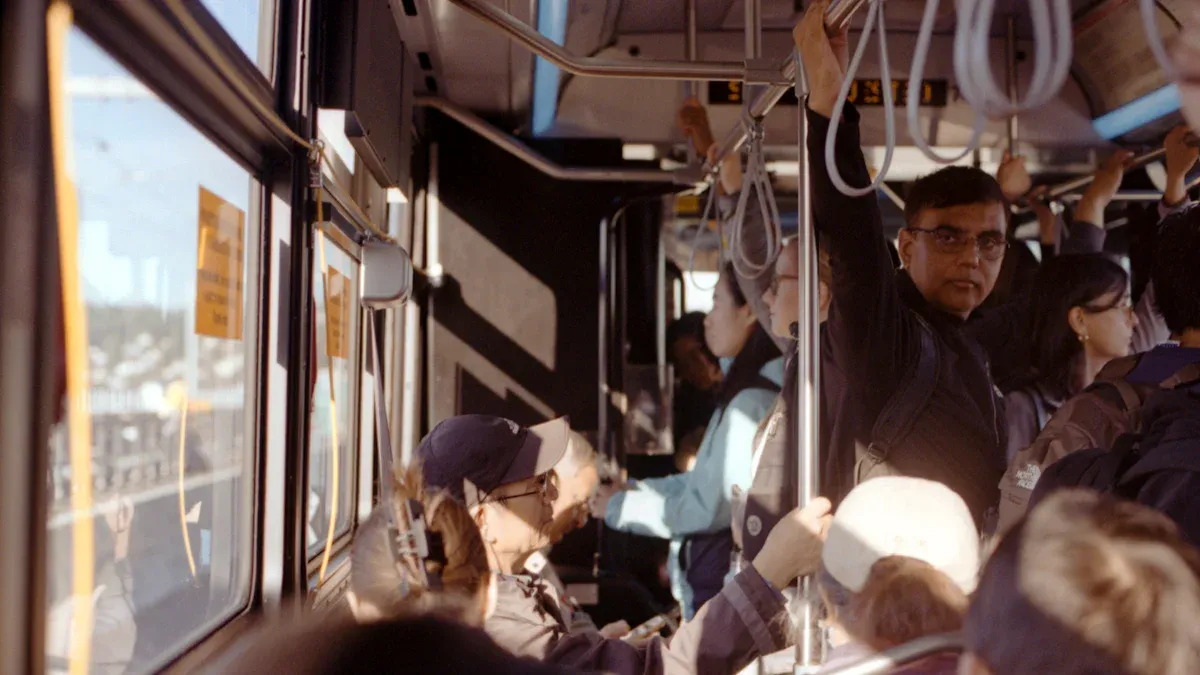
You see crowds at the airport during peak passenger flow when many people travel. Lines get longer, and it becomes harder to find what you need. This can lead to stress. AI retail solutions step in to help. At airports like Heathrow, Schiphol, Dubai, and Changi, smart systems are designed to manage peak passenger flow more efficiently, helping to move people faster and reduce congestion. You’ll notice baggage arrives quicker, and there are fewer lost bags. Passengers feel happier overall. The main question is: How does AI retail make your trip easier during peak passenger flow?
Key Takeaways
AI retail solutions help airports during busy times. They make wait times shorter and help people move faster. Predictive analytics let airports know when crowds will come. This helps them put workers and resources where they are needed. Automated checkout systems make shopping faster. Travelers spend less time in lines and have more time to enjoy their trip. Real-time monitoring and visual detection systems help staff see crowds fast. Staff can act quickly to help, making travel better. Personalized offers and dynamic pricing give travelers deals that fit them. This makes shopping more fun and helps people buy things faster.
Peak passenger flow challenges

Defining peak passenger flow
Peak passenger flow happens when lots of people travel at once. This is common during holidays, weekends, or big events. You see crowds at check-in, security, and boarding gates. Passenger flow means how people move in places like airports, train stations, or bus terminals. Managing passenger flow helps you move safely and quickly.
Airports use numbers to check how well they handle busy times. These numbers include average wait time, predicted wait time, queue length, and how many people pass each area every hour. Long lines show the system is stressed. If airports do not watch these numbers, you might face delays and miss your flight.
Passenger flow bottlenecks in travel hubs
Bottlenecks happen when too many people are in one spot. These bottlenecks are common at check-in, security, and passport control. Crowding also happens at baggage reclaim, which can make you worry about missing your next flight. Early congestion can start when flights arrive close together or weather causes delays.
Here are some challenges you face during busy times at airports:
Waiting in line at check-in, security, and passport control
Crowded terminals during busy hours
Not getting updates when delays or problems happen
Long waits at baggage reclaim, which can make you miss connections
Gate changes that are not planned well
You want airports to stop crowding so you can move easily. When airports use ai and smart systems, they can spot early signs of crowding and fix it before it gets worse. This helps you have a better trip and spend less time waiting.
AI-driven retail intelligence

Predictive analytics for passenger flow
Your trips feel easier when airports use predictive intelligence. AI-powered insights help workers get ready for busy times. They use flight schedules and past data to plan. Predictive crowd-flow insights show where crowds might form. Airports can then change staff shifts and baggage carousel use. This helps cut down wait times and keeps you moving.
Retail intelligence uses different analytics to guess how many people will come. You see these systems when lines move faster and bags come on time. Airports use real-time monitoring software, simulation, and IoT sensors. These tools track lines, crowd size, and how long people stay. This helps airports spread out arrivals and stop crowding.
Type of Predictive Analytics | Description |
|---|---|
AI and IoT Sensors | Watch and improve how people move in terminals. |
Real-time Monitoring Software | Give info on lines, crowd size, wait times, and flow. |
Simulation Techniques | Spread out arrivals to stop crowds. |
You benefit from predictive intelligence because it changes with the crowd. Airports like Heathrow, Schiphol, Dubai, and Changi use advanced analytics to share info. This makes baggage reclaim better and cuts down on crowding. Wi-fi analytics also help track how people move, making your trip easier.
Visual detection and people counting
Visual detection and people counting systems use intelligence to watch crowds in real time. AI-driven sensors, like Time-of-Flight technology, count people even in busy spots. These sensors work all day and night, no matter the light or colors. You get good data that helps airports control crowd size and plan routes.
Retail intelligence uses computer vision to spot and follow people as shapes. This keeps your privacy safe while collecting info on visits, trips, wait times, and line length. All video stays at the airport unless picked for safe cloud reports.
AI-driven flow monitoring shows real-time crowd size in stations and trains.
Automatic Passenger Counting (APC) systems track people getting on and off.
Data-driven scheduling systems help plan how many trains or buses to run.
Real-time monitoring stops crowding and delays.
You see fewer crowds and move faster because these systems show where people are. Staff can act quickly. Retail intelligence gives airports tools to make your trip better and keep things running well.
Smart solutions for peak times
Queue management with AI
You see shorter lines when airports use ai-powered queue management. These systems count how many people wait at each checkpoint. They find bottlenecks and send alerts to staff right away. Isarsoft’s smart queue management system works in many airports. It checks queue lengths and makes things clearer for everyone. Staff can act fast and guide you to less crowded spots.
Solution | Description |
|---|---|
Isarsoft’s smart queue management system | Used in airports to manage customer flow at key checkpoints, monitor queue lengths, detect bottlenecks, and improve queue time transparency. |
These systems help you by cutting average wait time by 18%. During busy hours, ai queue management lowers wait time by 40% compared to old ways. They manage customer flow 60% better. You wait less and enjoy your trip more. Airports get a 340% return on investment in the first year. Staff use data to make choices and keep lines moving.
AI queue management systems cut average wait time by 18%.
These systems lower wait time by 38% and give a 340% ROI in the first year.
Good systems cut average wait time by 40% compared to old methods.
Customer flow is managed 60% better during busy hours.
Tip: Watch for digital screens showing queue times. These help you pick the fastest line.
Automated checkout and payment
You shop faster when stores use automated checkout and payment systems. These systems work without cashiers. You scan your items and pay quickly. Stores need fewer staff and give better service. You skip long waits, which matters in busy places like airports and train stations.
Automated checkout systems use ai and sensor data. You shop and pay without waiting. This makes your trip easier and helps you catch your flight or train. Stores earn more because customers are happier. With fewer staff, stores save money and focus on helping you.
Automated checkout solutions handle more sales during busy times. They cut waiting and make paying simple. You enjoy shopping more. Shoppers want fast and easy transactions with less help. These systems give that, leading to happier customers and better store efficiency.
Note: Automated checkout systems help you spend less time shopping and more time traveling. 😊
Real-time inventory and location intelligence
You find what you need faster when stores use real-time inventory and location intelligence. These tools track products and show where items are in the store. Staff get updates and restock shelves quickly. You avoid empty shelves and wasted time searching.
Retailers use location intelligence to study areas and pick the best places for stores. They find good spots based on who lives nearby and other stores. You see stores where travelers need them most. Location intelligence helps businesses know where customers come from. For example, a company can spot neighborhoods with high demand. This leads to better marketing, special offers, and prices for each area.
Retailers use location intelligence for area study and site picking.
It helps find the best store spots based on people and other stores.
You get campaigns that fit your needs. Stores use real-time alerts to update staff and keep products ready. You have a smoother shopping trip and find what you want without waiting.
Block Quote: Location intelligence helps stores serve you better. You see more choices and faster service.
Retail intelligence and non-aero revenue
Optimizing store layouts and promotions
Some airport stores are easy to shop in. Others feel crowded or confusing. Retail intelligence and non-aero revenue grow with smart layouts and good promotions. AI helps airports and stores see how you move around. Sensors and cameras make heatmaps. These show busy spots and quiet corners. Managers use this data to put popular products where you see them first. They also fix places where people do not stop.
Foot traffic and heatmap analysis shows where you walk most.
AI-powered product placement puts bestsellers in high-traffic zones.
Personalized store layouts match your shopping style and needs.
Real-time layout adjustments keep stores fresh and ready for busy times.
Walmart uses AI to track what you buy and where you shop. This keeps shelves full and layouts simple. You find what you want faster. Stores do not run out of things as often.
Different layouts work for different stores. Here is a quick guide:
Retail Floor Plan | Description | Use Case |
|---|---|---|
Grid Layout | Straight aisles for easy navigation | Large retailers, grocery stores |
Loop Layout | Guides you through all product categories | Mall clothing stores, boutiques |
Diagonal Layout | Improves visibility and flow | Tech or beauty stores |
Forced-Path Layout | Directs you along a set path for full exposure | Ikea and similar stores |
When airports use these ideas, tenants sell more. Airports make more non-aero revenue.
Personalized offers and dynamic pricing
You want deals that fit your needs. AI helps stores send you special offers based on what you like and your travel plans. Dynamic pricing uses real-time data to set prices. Prices match demand and what you might pay. You get discounts or bundles when you need them most.
Dynamic pricing helps airports and stores stay competitive. Prices can change during busy or slow times. This keeps products selling and grows non-aero revenue. You feel important because offers match your interests and timing.
Tip: Watch for digital coupons or price drops on your phone while you shop. These often use AI to give you the best deal.
Retail intelligence and non-aero revenue strategies help airports solve common problems:
Challenge | Impact on Revenue |
|---|---|
Directly impacts revenue | |
Manual POS reconciliation | Delays revenue validation |
Lack of store-level insights | Affects decision-making |
When stores know what you want and offer fair prices, shopping feels easy and fun.
Case studies in passenger flow management
Airports using AI for peak passenger flow
Many airports use ai to fix busy travel problems. These airports have smart systems that help things run smoothly. You move faster because of these systems. Here are some real examples:
Changi Airport in Singapore uses ai cleaning robots and automated immigration. Robots clean quickly. Automated gates help you get through immigration faster.
Heathrow in London uses ai for baggage tracking and crowd control. You get your bags sooner. Staff can see crowded spots before they get worse.
Schiphol in Amsterdam uses ai chatbots for help and ai for flight scheduling. Chatbots help you. You see fewer delays.
Hartsfield-Jackson in Atlanta uses ai to predict flight delays and manage gates. You find your gate easily. You have fewer delays.
Dubai International Airport has smart gates with ai face recognition. You clear immigration quickly. You wait less.
Frankfurt Airport uses FraportGPT, an ai digital assistant. This tool helps staff make better choices. They handle more passengers even with fewer workers.
You see airports work better and earn more money. Miami International Airport cut average processing time by 12%. Big airports made $15 million to $25 million more in aeronautical revenue. Many airports cut aircraft turn time by 5 to 12 minutes. Live CCTV and sensors help staff spot crowding and stop delays. Real-time tracking of ground equipment makes things run better.
Intelligent displays and passenger guidance
You get help from smart displays and guidance systems in airports. These tools help you find your way and feel less stressed. Digital signs show real-time queue updates and give directions. You see which lines are shortest and where to go next.
Interactive kiosks let you enter your flight details. You get step-by-step routes. Displays show clear info and make your trip easier. These systems change with real-time conditions. They guide you to the fastest queues.
Evidence Description | Impact on Navigation and Congestion |
|---|---|
AI-powered digital signage gives real-time queue updates and directions. | Makes your trip better and helps airports run well. It lowers crowding. |
Interactive kiosks let travelers enter info for personal routes. | Gives step-by-step directions. Helps manage crowds and cuts wait times. |
Displays give clear info to lower passenger stress. | Makes info easy to find. This lowers travel worry and helps you move smoothly. |
Systems change with real-time conditions and guide you to short lines. | Cuts crowding and wait times. You move through the terminal faster. |
Tip: Look for digital signs and kiosks in airports. These tools help you find your gate and avoid crowded areas.
You move around airports more easily and see less crowding. Airports use these systems to make your trip better and more fun.
Benefits and implementation
Enhanced passenger experience
When airports use ai retail solutions, your trip gets easier. These systems help control how people move. For example, facial biometrics let you check in from home. You do not have to wait in long lines. You get through the airport much faster. Bag scanning technology makes security checks quicker. You spend more time shopping and less time waiting. These changes make people happier and less stressed when they travel. Privacy-compliant signals keep your information safe and help staff guide you. Airports use operational intelligence to see how people move and react fast to changes.
Tip: Try using automated check-in kiosks and smart bag scanners. These tools help you save time and enjoy your trip.
Operational efficiency and revenue growth
Airports and stores can see everything with ai systems. Staff know where crowds are and can stop them early. Proactive operations help fix problems before they get big. You have fewer delays. Real-time data helps staff change schedules and keep lines short. Stores make more non-aero revenue because you have more time to shop. You find what you want and get special deals that fit you. Airports use operational intelligence to work better and earn more money. Everyone gets faster service and a nicer shopping trip.
Benefit | Impact on Passengers | Impact on Operators |
|---|---|---|
Faster check-in | Less waiting | More efficient staffing |
Smart bag scanning | Shorter security lines | Improved flow management |
Personalized offers | Better shopping experience | Increased retail revenue |
Real-time guidance | Easier navigation | Reduced congestion |
Overcoming adoption challenges
You might ask why some airports do not use ai retail solutions yet. Travel operators have some problems:
It is hard for managers to add ai solutions because they are complex.
Not enough skilled workers makes it slow to start.
Some airports do not have enough money to upgrade.
Operators can fix these problems by starting with simple systems and teaching staff. They can use privacy-compliant signals to keep your data safe. Airports should buy technology that helps them see everything and act fast. You notice things get better when airports use easy tools and talk clearly.
Note: Airports that solve these problems give you a better trip and work more smoothly.
AI retail solutions make it easier to move through airports. You feel less worried and more sure of yourself. Digital signs show you where to go and help you shop. Stores use real-time analytics to give better service and earn more money. The table below explains how these tools make travel smoother and help people spend more.
Evidence Description | Impact on Passenger Experience and Revenue |
|---|---|
Digital wayfinding helps you find your way and feel calm. It makes you want to look at more stores. | You spend more money and check out more shops. |
77% of flyers do something after seeing ads in airports. | More people look at and buy things in airport stores. |
Food and drink pre-ordering means you wait less and stores make money. | Service is faster and customers are happier. |
Real-time analytics show how people move, so stores can plan better. | Stores make more money by picking the best spots. |
Digital wayfinding helps stores earn more by sending people to them and letting you book ahead. | More people walk by and buy things. |
You check in faster and shop smarter. As more people fly, AI will help airports handle bigger crowds and spot busy spots. In the future, you will see new systems that make travel even easier.
FAQ
How does AI help you move faster in airports?
AI watches crowds and guesses where it will get busy. You see lines that are not as long. You get updates right away. Staff can show you where there are fewer people. You wait less and have more time to enjoy your trip.
What is non-aero revenue, and why does it matter?
Non-aero revenue is money from airport shops, restaurants, and services. This helps you get better stores and deals. Airports use this money to make your visit nicer.
Tip: Check airport stores for special deals. These deals help airports earn more non-aero revenue.
Are AI retail systems safe for your privacy?
Yes, airports use technology that keeps your privacy safe. AI only tracks how people move, not who they are. Your information stays private and is not shared.
Feature | Privacy Level |
|---|---|
People counting | High |
Heatmaps | High |
Personalized offers | Secure |
Can you use AI-powered services if you do not like technology?
Yes, you can. Most AI tools work without you doing anything. You still get faster lines and better shopping. You do not need to use any special apps or devices.
See Also
Exploring The Advantages Of AI-Driven Vending Machines
The Future Of Retail Lies In AI-Enabled Stores
Transforming Online Retail With AI-Driven Management Tools
Boosting Customer Experience With Cloudpick's Smart Checkout Solutions
Achieving Cashierless Shopping Convenience With Cloudpick Technology
