How AI is transforming retail labor cost management in 2026


In 2026, you can see AI in retail transforming how you manage workers every day. Smart scheduling with AI assists in putting the right staff on the job, effectively matching workers to peak customer times. This not only helps stores save money but also plays a crucial role in reducing retail labor costs. AI forecasting tools analyze historical sales data, weather patterns, and local events to predict when stores will experience high traffic. These innovative AI tools streamline workforce planning, making it faster and more efficient. Retailers that adopt this technology can quickly adapt to changes, ensuring they keep labor costs from escalating.
Key Takeaways
AI-driven scheduling helps put workers on shifts when stores are busy. This lowers overtime costs by more than 20%. Chatbots and virtual assistants answer customer questions. This saves money on labor and makes service faster. Automated shift management keeps track of schedules and how workers do their jobs. This helps stores save a lot of money on labor. Predictive analytics lets stores guess how many workers they need. This helps them have the right number of staff and not waste money. Using AI tools can make workers happier. These tools help make fair schedules and stop last-minute changes.
Reducing retail labor costs with AI tools

AI-driven scheduling in retail
AI-driven scheduling changes how you manage your team. This technology helps you put workers on the job when stores are busy. It stops you from having too many people working at once. You can use predictive forecasting to plan shifts for busy times. This keeps costs and revenue balanced. Service stays strong because you have enough staff.
You can cut overtime costs by more than 20% with ai-powered labor scheduling.
Automated scheduling lowers yearly labor mistakes by at least 15%.
Ai systems use accurate demand forecasting to stop overstaffing.
Automated compliance management helps you avoid expensive labor law mistakes.
Optimization algorithms match worker skills to business needs, which makes things run better.
You can see how ai-driven labor scheduling works in real stores. The table below shows how retailers get more efficient and spend less on labor:
Retailer | Efficiency Gain | Labor Cost Reduction |
|---|---|---|
Major U.S. Grocery Chains (Walmart, Kroger) | Up to 15% | N/A |
Texas Convenience Store Chain | N/A | 8% |
UK Retail & Services Business | 30% | N/A |
Dynamic scheduling systems help you plan shifts and see results. Ai in retail lets you make smart choices and reach your labor management goals.
Chatbots and virtual assistants
Chatbots and virtual assistants help with customer service jobs. These ai tools answer questions and fix problems without needing a person. Vodafone uses the ai assistant TOBi, which solves 70% of customer questions. This change made cost-per-chat drop by 70%. Klarna’s ai chatbot handles two-thirds of customer chats, doing the work of 700 full-time agents. This helped Klarna earn about US$40 million more profit in 2024.
The table below shows how chatbots make customer service better:
Improvement Type | Description |
|---|---|
Average Speed of Answer (ASA) | Automation gives help right away, cutting wait times a lot. |
24/7 Support | Chatbots work all day and night, so urgent questions get answered fast. |
Multilingual Assistance | Chatbots talk in many languages, saving money for global support. |
Handling FAQs | Quick answers to common questions lower costs and free up your team. |
Ai-powered automation helps your team and cuts costs. Chatbots give fast, reliable service and keep labor costs low.
Automated shift management
Automated shift management helps you track schedules, check performance, and stop mistakes. Labor is 40-60% of retail costs. Even small changes in scheduling can save a lot of money. Tracking systems show the money you save and prove ai tools are worth it. Better productivity, less overtime, and fewer people quitting all help lower retail labor costs.
Watching key performance indicators (KPIs) shows the value of automated shift management.
You can turn improvements into money saved and see how it helps your business.
Here is a table showing how retailers save money with automated shift management:
Retailer Type | Labor Cost Reduction | Annual Savings |
|---|---|---|
Specialty Retailer (150 stores) | $450,000 | 74% drop in predictive scheduling penalties |
National Electronics Retailer (300+ locations) | 12.4% reduction | $2.3M |
Ai applications in retail labor management help you automate shift planning and save money. Automation lets you focus on your customers and grow your business.
Tip: Pick one area, like labor scheduling or chatbots, and check the results. You will see how ai makes your retail business more efficient and saves money.
Automation and ai in retail operations
Inventory management automation
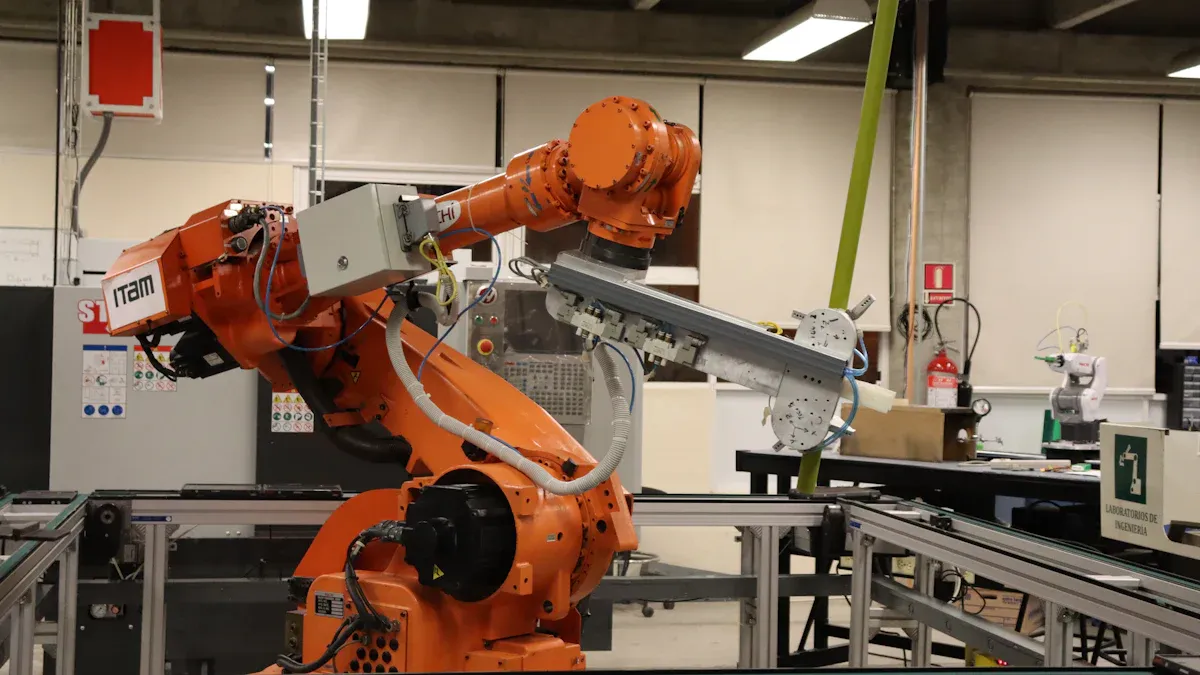
Automation changes how you keep track of store inventory. AI helps you see where products are at all times. This means you make fewer mistakes. You do not have to count items by hand anymore. Your team can spend more time helping shoppers. Automation gives you the right numbers, so you do not run out or have too much. You can plan deliveries better and waste less time. Many stores see inventory go down by 14% or more with automation. You also pay less for keeping extra stock. The table below shows some good things about automation:
Benefit | Description |
|---|---|
Inventory Reductions | Retailers can achieve inventory reductions of 14% or more shortly after implementing automation. |
Reduced Holding Costs | Automation minimizes costs associated with storing excess inventory, leading to lower expenses. |
Improved Operational Efficiencies | Optimized stock levels prevent overstocks and stockouts, enhancing sales opportunities. |
Self-checkout systems
Self-checkout lets shoppers scan and pay for items by themselves. Stores need fewer cashiers, so labor costs go down. One worker can watch many self-checkout lanes at once. This means you can use staff in other parts of the store. Some stores cut staff costs by up to 40%. Many stores want to have fewer cashiers or move them to other jobs. Here are some ways self-checkout helps:
Staff can help with stocking or customer service instead.
56% of retailers plan to reduce staff, while 26% will move staff to other tasks.
Workflow optimization
AI makes daily work in stores easier. Automation can handle returns and order processing. This helps stores work better and spend less on labor. AI tools use real-time data to plan schedules and manage resources. You can use predictive analytics to guess what you will need and avoid problems. The chart below shows how much money you can save with automation:
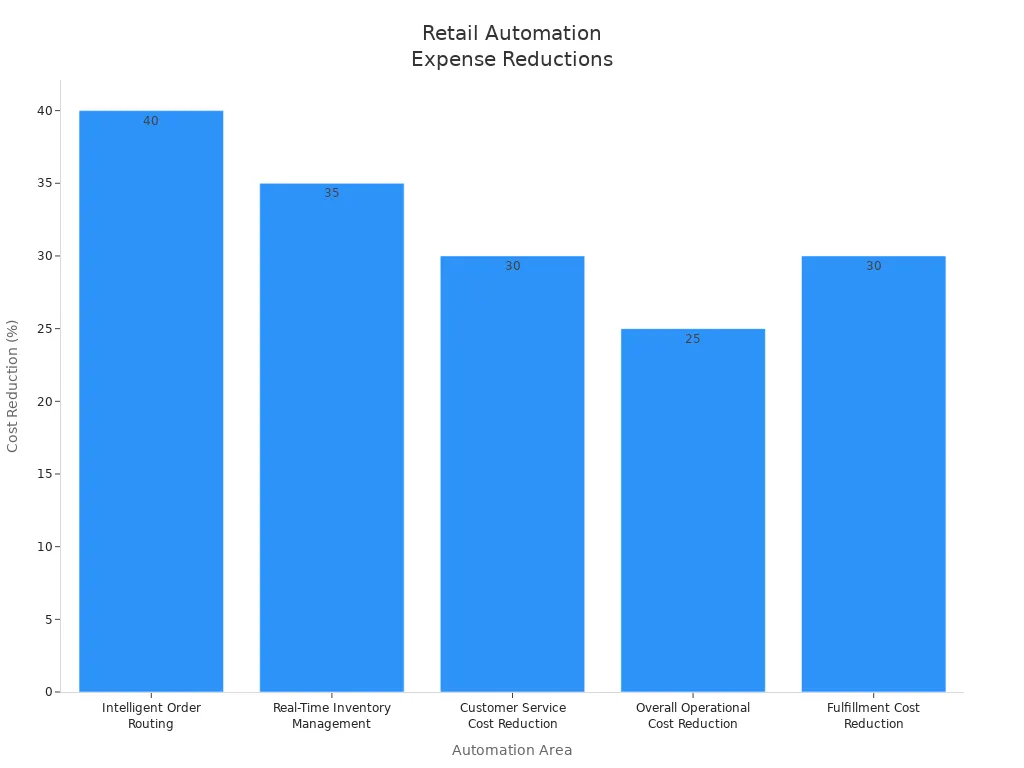
You can see up to 25% lower costs and 30% less spent on order fulfillment. When you automate work, you save time and money. Your team can focus on helping customers.
AI-powered forecasting tools for workforce planning
Predictive analytics in retail
Predictive analytics helps you pick the right number of workers. AI-powered forecasting tools check old sales, weather, and local events. These tools spot patterns to show when your store gets busy. You do not have to guess anymore. AI can look at many things at once. This gives you forecasts that fit your store’s needs. Small stores use predictive analytics to plan for busy times. You can schedule enough workers and stop extra labor costs.
Here is a table showing how AI-powered forecasting tools help with workforce planning:
Evidence Type | Description |
|---|---|
Pattern Recognition | AI finds links between things, like weather and customer visits. |
Multi-variable Analysis | AI checks many things that change labor costs, like seasons and events. |
Real-time Adjustment | AI updates forecasts fast, so schedules change as needed. |
Reduced Labor Waste | Good forecasts stop too many or too few workers, saving money. |
Improved Budget Accuracy | Better labor cost guesses help you plan and use money well. |
Enhanced Schedule Stability | Good forecasts make steady schedules, so workers are happier. |
Optimized Staffing Mix | AI suggests the best mix of worker types to save money. |
Retail Implementation | Forecasting in stores uses seasons and events to plan for staff. |
Demand forecasting
Demand forecasting helps you match workers to busy times. AI-powered forecasting tools show when your store will get crowded. Walmart uses AI to check weather, events, and shopping trends. This helps them put the right number of workers on the floor. You can do this in your store too. AI tools work fast and help you plan ahead. You can see demand patterns and get ready for busy times. This means better schedules and lower costs.
AI-powered forecasting tools help you guess customer demand.
You can stop having too many or too few workers.
Your team can help customers better when it is busy.
You save money by using workers in the best way.
Smarter scheduling
Smarter scheduling uses AI-powered forecasting tools to plan shifts. AI checks sales data and what workers like. You can make fair schedules and stop last-minute changes. Automation does simple jobs, so you can help your team more. AI tracks how workers do and helps you reward the best ones. You also follow labor laws and avoid big mistakes.
Benefit | Description |
|---|---|
Demand Forecasting | AI looks at data to guess customer traffic and set staff levels. |
Task Automation | Simple jobs are done by automation, so managers do bigger tasks. |
Performance Analytics | AI tracks how workers do to find top workers and help with training. |
Employee Engagement | AI checks how workers feel and helps fix problems early. |
Compliance and Risk Management | AI makes sure you follow labor laws and avoid legal trouble. |
Cost Savings | Reports show up to 12% less labor cost from better shifts and less overtime. |
Tip: Use AI-powered forecasting tools to make steady schedules. Workers will be happier, and your store will work better.
You can see ai changing how you manage labor every day. By reducing retail labor costs, you boost efficiency and keep your team happy. Start with a pilot program and train your staff so they feel confident using ai tools. Use automation to handle routine tasks and set up real-time monitoring for key metrics. When you use ai for smarter scheduling and forecasting, you gain long-term cost savings and better staff morale. Take action now to stay ahead in retail by reducing retail labor costs with ai.
Tip: Engage your team early and show them how ai makes their work easier.
FAQ
What is AI-driven scheduling in retail?
AI-driven scheduling uses smart software to plan work shifts. You get the right number of workers for busy times. This helps you save money and keep customers happy.
How do chatbots help reduce labor costs?
Chatbots answer customer questions fast. You do not need as many workers for simple tasks. Your team can focus on harder jobs and help more people.
Can automation improve inventory management?
Automation tracks products in real time. You see what you have and what you need. This stops mistakes and saves money on extra stock.
Is AI forecasting hard to use?
You can use AI forecasting tools with simple training. The software checks sales and events. You get easy reports to help you plan your team.
See Also
The Future of Retail: Embracing AI-Driven Stores
Transforming Online Retail Management with AI Tools
Understanding the Growth of AI-Enhanced Corner Stores
Upcoming Changes to Walmart Self-Checkout by 2025
Modern Retail Benefits from AI-Enhanced Combo Vending Machines
