Is Cashierless Store Technology Worth the Investment

You can see that cashierless store technology helps stores make more money. Many stores use automation and AI to make checkout faster and save money. Customers want shopping to be quick and simple, so stores must keep up. Recent results show big changes:
Retailer | Implementation | ROI Results |
|---|---|---|
Target | Express Self-Checkout lanes | Transaction times are 8% faster, NPS is 5 points higher |
Walmart | Mobile scan-and-go, AI inventory systems | Logistics costs are 30% lower, EPS is up 26.18% from last year |
Stores can spend less, sell more, and make shopping better for customers by using these systems.
Key Takeaways
Cashierless store technology helps stores sell more and spend less. It makes shopping quicker and more fun for people.
Using cashierless systems can cut labor costs by 60-70%. This lets workers spend more time helping customers and keeping the store clean.
Real-time inventory management lets stores restock faster and waste less. This helps stores keep better track of sales.
Customer satisfaction goes up with cashierless technology. Shoppers like how easy and fast checkout is.
Think about the total cost and possible ROI before buying cashierless systems. Make sure they fit what your store needs.
ROI Overview
ROI Drivers
You want your store to make money quickly. Cashierless store technology helps you do that by lowering costs and boosting sales. You can see rapid ROI because you need fewer cashiers. Automated checkout lets you move staff to other jobs, like helping customers or stocking shelves. This makes your store run better.
You save money because you do not need as many checkout stands. This gives you more space to display products and sell more items.
Customers spend less time waiting in line. They enjoy shopping more and may buy extra things on impulse.
You can open new points of sale in different places. This helps you reach more shoppers and grow your business faster.
When you compare cashierless store technology to traditional checkout, you notice big differences. Traditional models need more staff and space. They also have longer lines and more mistakes. With cashierless systems, you get smoother operations and happier customers.
Key Metrics
You should look at key numbers to see how well cashierless store technology works for your store.
Forty in-store transactions now take only one labor hour with self-checkout. This shows you use your workers’ time better.
At Parker’s stores, 68% of shoppers use self-checkout. This means most people like the new system.
In convenience stores, shoppers usually buy fewer than four items. This makes self-checkout even more popular.
You see shorter wait times and smoother flow in your store. Fewer scanning mistakes and billing problems happen.
You get better data on what sells and what does not. This helps you manage your inventory and reduce waste.
Your store runs well during busy and slow times.
Note: When you track these metrics, you can see how cashierless store technology helps you save money and increase sales. You also notice that your store becomes more flexible and ready for the future.
Cashierless Store Technology Benefits
Labor Savings
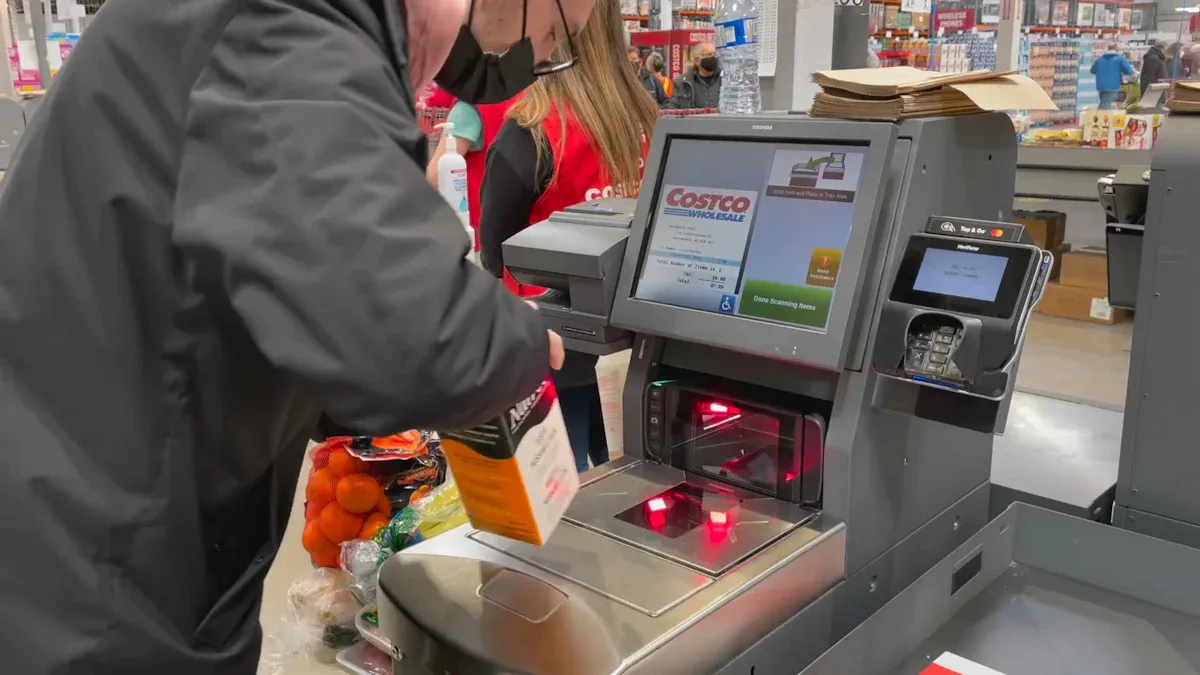
Cashierless store technology helps you spend less on workers. Many stores see labor costs go down by 60-70%. You do not need as many cashiers at the checkout. You can move your workers to other jobs, like helping shoppers or stocking shelves. This change lets you run your store with fewer people and still keep things working well.
Labor costs can drop by 60-70% with cashierless store technology.
You can use your team for customer service and store upkeep.
You can open more checkout points without hiring more staff.
Tip: When you pay less for workers, you can spend more money on other parts of your store.
Operational Efficiency
Cashierless store technology makes your store work better and faster. This system gives you tools to manage your store right away. You can check what is in stock and restock shelves quickly. You can also stop theft before it happens. The system gives you data to see how shoppers move and what they buy.
Feature | Description |
|---|---|
You see inventory levels right away, so you can restock on time and offer better choices. | |
In-Store Analytics | You track customer actions and use this data to place products in the best spots. |
Shrink Prevention | You reduce shoplifting and mistakes because every item is tracked in the virtual cart. |
Rear Loading for Stocking | You restock shelves from the back, so you do not disturb shoppers. |
You can keep your store neat and ready for busy times. You also waste less time and money.
Customer Experience
You want shoppers to have a good time in your store. Cashierless store technology makes shopping faster and easier. Shoppers do not have to wait in long lines. They feel in control and can check out when they want. Most people like how easy and free this system feels.
Factor | Impact on Customer Satisfaction |
|---|---|
Convenience | Positive |
Empowerment | Positive |
Positive | |
Data Privacy Concerns | Negative |
Some shoppers worry about data privacy. You can help them feel safe by telling them how you protect their information.
Note: Happy shoppers are more likely to come back and shop again.
Data Accuracy
Cashierless store technology helps you track your inventory and sales better. Computer vision tools show you what is on your shelves right now. You make fewer mistakes when scanning items, so your sales numbers are correct. You also know right away when you need to restock, so you do not run out of popular things.
Benefit | Description |
|---|---|
You get real-time insights into product movement and inventory levels. | |
Fewer scanning mistakes | You make fewer errors in scanning and billing, so your sales tracking is more accurate. |
Computer vision lets you track inventory as it moves.
You keep shelves full and avoid out-of-stock items.
You improve sales tracking and reduce mistakes.
The digital twin of your store helps you see everything that happens on your shelves. You can guess what you need to order and keep your store running well.
Challenges and Barriers
Implementation Costs
You have to pay a lot at first for cashierless store technology. The cost changes based on your system and store size. Smart carts can cost from $5,000 to $10,000 each. A full setup like Amazon Go can cost about $1,000,000 for one store.
Technology Type | Cost Range |
|---|---|
Smart Carts | $5,000 - $10,000 |
Amazon Go | $1,000,000 |
You should think about these prices before you buy. High costs can make it hard for small stores to use this technology.
Integration Issues
It can be hard to add cashierless technology to your old systems. Some problems you might face are:
Keeping track of what is in stock all the time.
Watching the store’s temperature and keeping food fresh.
Tracking people in the store but still keeping their privacy.
Stopping theft and keeping your things safe.
All these systems must work together. If they do not, you could lose items or upset customers.
Security Concerns
Security is a big worry for cashierless stores. Without cashiers, some people may try to steal. Theft can be five times higher than with regular checkouts. About 39% of grocery shrink comes from self-checkout lanes. You need workers and security to watch for stealing and damage.
You also have to keep customer data safe. Cashierless systems must follow rules like GDPR and stop hacking or fraud. You are in charge of keeping shopper information safe.
Customer Adoption
Some shoppers feel worried about cashierless stores. Surveys say 19% of people do not like being watched in stores. Many are scared about privacy and data safety. Some do not like checking out by themselves. Others miss talking to store workers. You need to help shoppers feel safe and happy with the new system.
Real-World Evidence
Case Studies
You can find out how cashierless store technology works in real life. Many stores have tried these systems and got good results. The table below shows what happened when two stores used this technology:
Case Study Description | Key Outcomes | ROI Metrics |
|---|---|---|
Retail chain with AI-driven inventory management and cashless payments | 20% increase in sales per square foot, 15% reduction in operational costs | 10% net profit margin increase in the first year |
Specialty retailer with automated kiosks and personalized marketing | 25% rise in repeat purchases, 30% increase in customer retention rates | Enhanced customer engagement and tailored offerings |
These stores made more money and kept more customers. They also spent less on running their stores each day.
Industry Trends
More stores are using cashierless systems every year. Here are some trends that are changing the industry:
You can skip long lines and shop faster for more convenience.
Shopping feels smoother and more fun for customers.
Stores need fewer cashiers, so workers can do other jobs.
Stores use data to learn what shoppers want and need.
New technology helps stores stand out and get more shoppers.
Big companies are leading the way. Amazon Go lets you walk in, grab things, and leave without waiting at a register. Zippin and Standard Cognition help other stores use cashierless systems too. Alibaba’s Freshippo uses this technology to make shopping better for its customers.
Self-checkout transactions could be almost 40% of all retail sales in the world by 2026. This means more people want fast and easy shopping.
ROI Results
You might wonder if cashierless store technology is worth it. The numbers show strong results:
Metric | Value |
|---|---|
Average loss per store | ~$102,000/year |
Estimated loss reduction | 40% |
Annual savings with AI | $4.08M/year |
Payback period for deployment | 1–2 years |
Forrester's payback estimate | 6 months |
ESL systems payback period | 18 months |
Five-year ROI for ESL systems | 277% |
Most stores get their money back in one or two years. Some systems, like ESL, pay for themselves in just 18 months and give a five-year return of 277%. Stores save money by losing less and letting workers do better jobs.
Note: Smaller stores or simple shops may see profits faster. Bigger supermarkets might need more time to get the same results.
Alternatives Comparison
Self-Checkout
You can find self-checkout stations in lots of stores now. These let you scan and pay for things by yourself. Most people like using them because it saves time. About 66% of shoppers pick self-checkout instead of waiting for a cashier. You can finish shopping faster and skip long lines. Stores like self-checkout too because they need fewer workers at the front. This helps them spend less money and change the store layout more easily. Self-checkout is good for people who want to shop quickly.
Tip: Self-checkout is best if you have just a few things or want to leave fast.
Hybrid Models
Hybrid models use both self-checkout and regular cashier lanes. You get more choices this way. If you want help, you can go to a cashier. If you want to be quick, you can use self-checkout. This makes shopping easier for everyone. Stores that use hybrid models see customer happiness go up by 20%. Staff have more time to help you find things or answer questions. Hybrid models also help stores keep better track of what they have.
Shopping is faster and easier for everyone
Staff can help customers more often
People spend less time in the store
Stores get better data to manage inventory
Feature | Traditional Checkout | Cashierless Store Technology |
|---|---|---|
High | Low | |
Higher | Lower | |
Infrastructure Needs | Extensive | Minimal |
Traditional Checkout
Traditional checkout means a cashier scans and bags your items. Some people like this because they get help or need to return something tricky. Staff can also tell you about other things you might want to buy. This way feels normal and easy for most shoppers. But it costs more since stores need more workers. You might wait longer in line, especially when the store is busy. Traditional checkout does not have as many ways to pay, which can be hard for some people.
Weaknesses of Traditional Checkout Systems | |
|---|---|
Staff can help you for better service | Stores pay more because they need more workers |
Feels normal and easy for shoppers | Not many payment choices for today’s shoppers |
Good for tricky returns or special buys | Slower than self-checkout kiosks |
Staff can suggest things to buy | Long lines when the store is busy |
Note: Traditional checkout is good for hard purchases, but it can be slow when lots of people are shopping.
Recommendations for Retailers
When to Invest
You should think about cashierless store technology if shoppers want faster checkout. Many people leave stores if they do not see tech options like self-checkout or Wi-Fi. If you notice long lines or hear people complain about slow service, it might be time to upgrade. Make sure your store has finished going digital before you buy new systems. This means your store must let people pay quickly and avoid problems. You also need to check that your inventory and facilities work well with new technology.
Tip: If most shoppers use phones or ask for tech, your store is ready for the next step.
Key Considerations
You need to look at some important things before you decide. The table below shows what you should check:
Key Consideration | Description |
|---|---|
Total Cost of Ownership | Includes hardware, software, integration, maintenance, training, and operational adjustments. |
Financial Returns | Considers labor savings, inventory accuracy, shrinkage reduction, and sales increases. |
Implementation Scale | Analyzes ROI across pilot programs, departmental, store-wide, and enterprise implementations. |
Time-to-Value | Measures the time from investment to achieving positive ROI. |
Operational Context | Accounts for store format, product categories, inventory turnover, and existing technology. |
Most stores get their money back in 12 to 30 months. Over five years, ROI can be between 180% and 400%. You will see the best results in stores with high-margin products or where theft is a big problem. If you add the technology in steps and set clear goals, you can get 30-50% higher returns.
ROI Evaluation Steps
You can follow these steps to see if cashierless store technology is right for you:
Check your store to see if you have space for cameras and sensors.
Set up the equipment, like cameras, sensors, and payment tools.
Train your workers so they know how to use and fix the system.
Test everything to find and fix problems, trying for an issue rate of 0.5%.
Track your results with data to see how many sales you make and how long shoppers wait.
Note: You can do even better by making a store app, using sensor fusion, and giving shoppers more ways to pay.
You notice that cashierless store technology makes shopping quicker and cuts worker costs. It also helps you get better data about what sells. Many young people like how fast and easy it is. Some older shoppers still want to use regular checkout lanes. The price to start can be high, and some people worry about privacy. If you want to do well, you need to know what your shoppers like. You should teach your workers new skills and get ready for changes.
Think about what your store needs and how your customers shop
Compare the cost now to how much you might save later
Help your workers as their jobs change
You make a smart choice when you use new technology but also care about what makes shoppers feel good.
FAQ
What is cashierless store technology?
Cashierless store technology lets you shop without waiting in line. You grab what you want, and sensors or cameras watch what you take. You pay as you leave, and you do not need to stop at a register.
How much money can you save with cashierless systems?
You can save up to 70% on labor costs. These systems also help cut down on mistakes and stealing. Most stores get their money back in one or two years.
Are cashierless stores safe for your data?
Most cashierless systems use strong security to protect your data. They follow rules like GDPR to keep your information safe. You should always check how each store keeps your data private.
Will older shoppers like cashierless stores?
Some older shoppers still like talking to cashiers. Stores can have both cashierless and regular checkout lanes. This way, everyone can choose what they like and feel happy.
See Also
Transforming Retail: Cloudpick's Cashierless Shopping Experience
Walgreens Self-Checkout: Balancing Convenience With Retail Hurdles
Upcoming Changes to Walmart's Self-Checkout Experience in 2025
The Future of Retail: Embracing AI-Driven Store Innovations
Comparing Micromarkets and Smart Stores in Global Retail Automation
