How to scale autonomous retail from one site to many in universities and campus retail


You can scale autonomous retail across campus by using ai-powered autonomous retail solutions that provide students with 24/7 access and consistent convenience. Autonomous stores like autonomous a-pops support fully autonomous operation and checkout-free shopping, helping you transform campus retail. You see revenue grow and shrinkage drop to zero, even in high-theft college areas. The future of campus retail relies on a unified technology foundation and seamless campus shopping. Take advantage of ai retail opportunities to improve the student experience and deliver reliable shopping for college students.
Metric | Value |
|---|---|
Shrinkage Rate | Reduced from 20% to 0% |
Revenue Growth | 3.6x more than traditional vending |
Zero Shrinkage | Achieved in high-theft areas |
Unit Revenue | Doubled compared to previous vending |
Overall Shrinkage | 0% across all deployments |
Revenue Comparison | 3x compared to traditional solutions |
Key Takeaways
Understand each campus's unique needs to effectively place autonomous retail stores. Analyze student demographics and preferences to maximize accessibility.
Align stakeholders, including university administration and IT departments, to create a strong foundation for autonomous retail. Regular meetings keep everyone focused on shared goals.
Standardize technology across campuses to ensure smooth operations. A unified system simplifies training and enhances the shopping experience for students.
Implement seamless payment integration to streamline the checkout process. This encourages more frequent shopping by making transactions quick and easy.
Use data analytics to monitor performance and improve operations. Regularly review sales and inventory data to make informed decisions and enhance the student shopping experience.
Assessing Campus Needs for Autonomous Retail

Understanding Diverse Campus Environments
You must understand that every campus has unique needs when you plan autonomous retail expansion. Some campuses have large populations, while others serve smaller groups of students. The location of each campus also shapes your approach. Urban campuses may need more retail points to serve students who move quickly between classes. Rural campuses might benefit from retail solutions in areas that traditional stores cannot reach.
You can use autonomous retail to give students access to nutritious food and essential items at any hour.
These solutions help you operate with minimal staff, which is important for campuses with limited resources.
You increase sales during less busy periods because students can shop whenever they want.
You should study customer preferences and location demographics for each campus. This helps you place retail stores where students need them most. Autonomous retail works well in places that traditional retailers cannot serve. You can set up these stores quickly and keep operational costs low. Unmanned retail options fit the busy schedules of students. They can grab what they need as they move around campus, without causing crowding or needing extra staff.
Stakeholder Alignment Across Campuses
You need to align many groups when you bring autonomous retail to multiple campuses. University administration, IT departments, and student organizations all play a role. You can look at models that have worked in other universities. For example, strategic IT alignment has helped many campuses match retail projects with their goals.
Portfolio implementation strategies improve governance and get senior management involved.
University-industry partnerships work best when all stakeholders agree on their ambitions.
You should hold regular meetings with these groups. This keeps everyone focused on the same goals. When you align stakeholders, you create a strong foundation for autonomous retail across all campuses.
Building a Foundation for AI-Powered Autonomous Retail
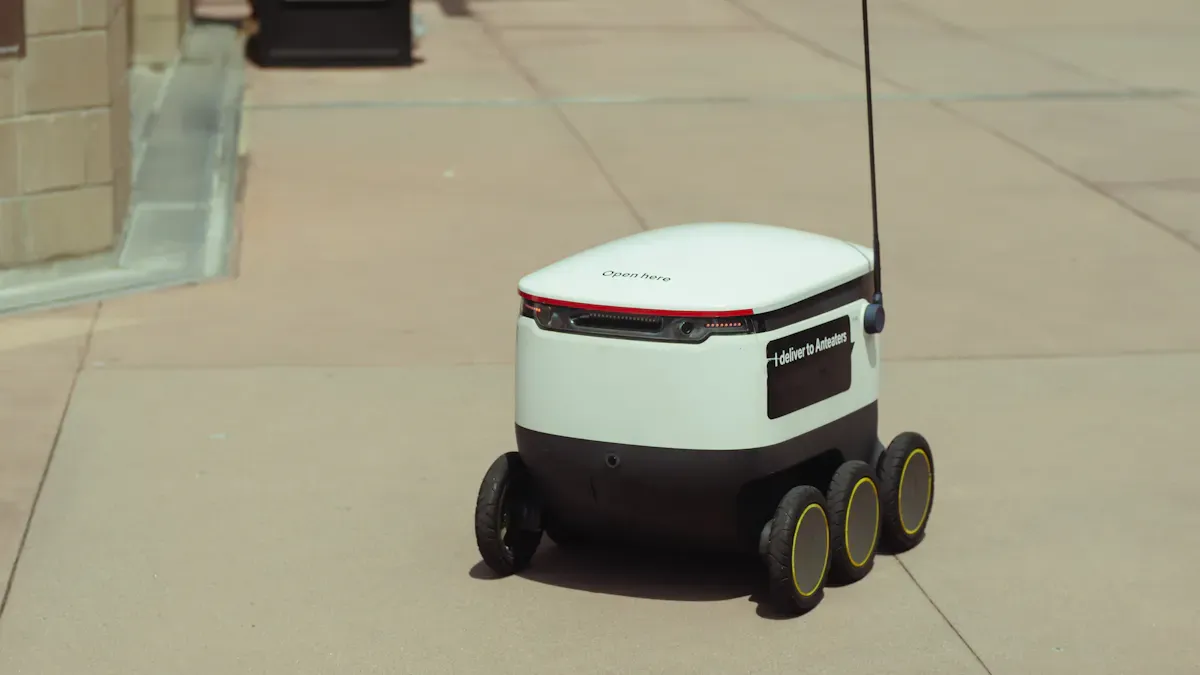
Standardizing Technology Across Campuses
You need a strong technology foundation to scale ai-powered autonomous retail across many campuses. Each campus has different needs, but you can use a scalable solution that adapts to any environment. When you choose the right ai systems, you make sure every store works the same way. This helps you keep operations simple and reliable.
Ai technology lets you monitor inventory, track sales, and manage security without much staff. You can use sensors, cameras, and smart shelves to collect data. Ai analyzes this data and helps you restock products before they run out. You also get alerts if something goes wrong. This makes your autonomous stores work smoothly, even when you have many locations.
Tip: Start with one set of ai tools for all your campuses. This makes training easier and keeps your technology costs low.
You should also think about how your technology will grow. Ai-powered systems can handle more stores as you expand. You do not need to change your setup each time you add a new location. This saves you time and money. When you use the same ai platform everywhere, you give students a familiar shopping experience. They know what to expect, no matter which campus they visit.
Seamless Payment and Application Integration
You must make payments easy for students. A smooth checkout process helps students shop more often. Many campuses use ai to power autonomous checkout. Students can walk in, pick up what they want, and leave. The system charges their account automatically.
Some universities use Grubhub with Amazon's Just Walk Out technology. Students pay with meal plans or saved payment methods. This type of integration removes the need for cash or cards. It also matches Generation Z's love for fast and simple shopping. At Loyola University Maryland, this setup has made autonomous retail more popular.
Students do not wait in line.
Payments happen in the background.
The system works with campus apps and student IDs.
Ai makes sure every transaction is safe and quick. You can connect your autonomous retail stores to campus apps. This lets students use one app for food, books, and other items. You also get data on what students buy. Ai uses this data to suggest new products or deals.
Note: Seamless payment and application integration increases user adoption. Students return to stores that save them time and effort.
You should test your payment systems before you launch. Make sure every student can use their preferred method. Ai can help you spot problems and fix them fast. When you build a strong foundation, you set up your autonomous retail for long-term success.
Operational Strategy to Scale Autonomous Retail
Streamlined Multi-Site Deployment
You need a clear plan to deploy autonomous retail across every campus. Start by creating a step-by-step process for each new location. This helps you keep operations smooth and reduces confusion. Use a modular approach so you can adjust for different campus sizes and needs. High footfall locations require more units and faster restocking, while smaller sites may need fewer resources.
Set up approval workflows to decide who can make important choices.
Assign roles so each team member knows their job.
Use explainable outputs to show why decisions happen, which builds trust with campus leaders.
Train your staff and prepare them for new technology.
Form governance boards to oversee policies and manage risk.
You should focus on data quality. Accurate and timely data helps you make better decisions for each campus. Use unified access systems so your team can connect to all retail units easily. Standardized APIs and secure authentication keep your network safe and efficient.
Tip: Start with a small group of autonomous stores. Expand only when you see reliable results. This reduces risk and helps you learn what works best for each campus.
Centralized Inventory and Maintenance
Managing inventory across many campus locations can be hard. You can use ai-driven inventory management to make this easier. Connect all your data sources to a central system. This lets you see what sells best and where you need to restock. Machine learning can trigger automated replenishment when products run low. This keeps shelves full and students happy.
A governed framework helps you keep everything running well. You can reduce stockouts by 18% and cut manual restock work by 60%. This boosts efficiency and saves time for your team. Use proactive maintenance to plan repairs before problems happen. Predictive maintenance uses data to forecast equipment failures. You can fix issues during quiet times, which means less disruption for students.
Maintenance Strategy | Description |
|---|---|
Proactive Maintenance | Plan and prevent issues before they occur. This improves service reliability and the student experience. |
Predictive Maintenance | Use data and analytics to predict equipment failures. Fix problems during low-traffic periods to reduce costs and keep stores open. |
Standardization Across Locations | Use the same maintenance practices for every campus. This improves your brand image and makes operations more efficient. |
You should standardize your maintenance routines. This gives every campus the same high level of service. Students expect convenience and reliability, no matter which campus they visit.
Ensuring 24/7 Access and Security
You must provide 24/7 access to autonomous retail units. Students want to shop at any time, especially in high footfall locations. Security is important when you offer round-the-clock access. Use ai-powered monitoring for constant surveillance. This system can spot threats and respond right away.
Drones add another layer of security. They give you aerial views and can detect problems quickly. Smart visitor access control lets you keep the environment open but safe. You can use time-limited QR codes for visitors, which helps you manage who enters each store.
Technology | Description |
|---|---|
AI-powered monitoring | Provides 24/7 surveillance with real-time monitoring and instant deterrence against intruders. |
Drone security | Offers aerial surveillance and rapid response capabilities, enhancing visibility and threat detection. |
Smart visitor access control | Facilitates secure access while maintaining an open environment, using time-limited QR codes for visitors. |
Use strong identity and access management. Give each person only the permissions they need.
Protect data with encryption and tokenization.
Keep audit trails so you can check what happens in each store.
You should avoid over-automation. Start with a limited scope and expand as you see success. Clear context management helps you avoid errors. Design your systems to remember important details and keep information consistent.
Note: Reliable 24/7 access and strong security build trust with students and campus leaders. This makes autonomous retail a safe and convenient choice for every campus.
Delivering Consistent Campus User Experience
Unified Store Design and Interface
You want every student to feel comfortable when they enter an autonomous retail store. A unified design helps students know what to expect. You can use the same colors, signs, and layout in every location. This makes shopping simple and familiar for students, even if they visit different campuses. A clear interface on screens and kiosks helps students start shopping right away. You can show easy instructions and friendly icons. Students will not feel lost or confused.
Frictionless checkout lets students finish shopping without waiting in line. This improves convenience and makes the experience smooth.
A simple interface reduces stress and helps students enjoy shopping more.
Students praise easy-to-use systems. They return for more shopping because they trust the experience.
You can use technology to offer personalized shopping experiences. The system can remember what students like and suggest new items. This makes shopping feel special and adds more convenience.
Tip: Keep the design and interface the same in every store. Students will feel confident and happy with their shopping experience.
User Education and Feedback Loops
You need to teach students how to use autonomous retail stores. Clear signs and short videos can show each step of the shopping process. You can hold short training sessions during busy times. Students learn best when you keep instructions simple and direct.
Students like self-checkout because it is easy and quick.
If students have a good experience, they will come back for more shopping.
Delays or problems can make students unhappy. Fast help and clear support improve the experience.
You should ask students for feedback after they finish shopping. You can use surveys or suggestion boxes. This helps you learn what works and what needs to change. When you listen to students, you improve the shopping experience and build trust.
Personalized shopping experiences grow when you use feedback. You can add new products or change the store layout based on what students say. This keeps the shopping experience fresh and exciting.
Note: Happy students tell their friends about good shopping experiences. This brings more students to your autonomous retail stores and helps your campus retail grow.
Data-Driven Growth and Overcoming Challenges
Performance Analytics for Campuses
You can use data to improve every campus autonomous retail operation. AI tools help you track sales, monitor inventory, and measure the shopping experience. You see which products sell best and which need restocking. This helps you make smart choices for each campus. You can compare results across locations and spot trends early.
AI-powered dashboards show you real-time data. You can check revenue, shrinkage, and customer visits. When you use analytics, you find ways to boost the shopping experience and increase revenue. For example, AI-powered Autonomous Points of Purchase (A-POPs) led to a 0% shrinkage rate and a 53% revenue increase. These systems worked well even in places where other retail formats failed.
You should run pilot programs before you expand. This lets you test new technology and gather feedback. You can adjust your approach based on what you learn. AI helps you collect and analyze this feedback quickly. You improve the shopping experience for all students.
Addressing Shrinkage and Resource Allocation
You face many challenges when you scale autonomous retail across campuses. Higher operating costs, the need for digital solutions, and integration with campus systems are common issues. Security and compliance also matter. You must keep student data safe and follow rules.
Challenge Type | Description |
|---|---|
Higher Operating Costs | Increased costs require new operational models. |
Need for Effective Digital Solutions | Digital tools must boost efficiency without raising expenses. |
Integration with Campus Systems | Smooth integration is key for real-time management. |
Security and Compliance Issues | Protect sensitive data and follow changing regulations. |
Robust Inventory Management | Keep stock levels steady for smooth operations. |
AI can help you solve these problems. Automated inventory tracking keeps shelves full and reduces waste. Strong data security, like encryption and regular training, protects student information. You should design stores that include all students to improve the shopping experience.
You avoid common pitfalls by starting simple and building on real experience. Do not treat autonomous retail as a one-time project. Listen to AI experts and use their advice to improve your process. When you use data and feedback, you create a better shopping experience for every campus.
You can scale autonomous retail across every campus by focusing on technology standardization, operational efficiency, and user satisfaction. Standardized systems help you deliver faster checkouts and precise inventory management. The table below shows how technology standardization improves operational efficiency for campus shopping.
Evidence Description | Impact on Operational Efficiency |
|---|---|
Faster checkouts and precise inventory management | Enables frictionless omnichannel retail, enhancing customer experience and operational flow. |
Accelerated innovation through standardized infrastructure | Facilitates quicker deployment and scaling of new business models, improving responsiveness to market changes. |
Optimized workflows via automation | Reduces manual work, allowing staff to focus on value-added activities, thus increasing overall efficiency. |
Real-time monitoring of sales and inventory | Provides immediate insights for decision-making, enhancing responsiveness and operational agility. |
You must embrace innovation and continuous improvement. This approach lets you enhance AI systems, workflows, and campus shopping experiences. When you use data and a unified strategy, you build sustainable growth for campus retail. Students enjoy dependable shopping, and you create a trusted campus environment.
FAQ
How do you choose the best location strategy for autonomous retail on campus?
You should study student movement and busy spots. A strong location strategy helps you place stores where students need them most. Use data to guide your choices. This makes your autonomous retail more successful.
Why does location strategy matter for scaling autonomous retail?
Location strategy shapes how many students visit your stores. You reach more students when you pick high-traffic areas. This boosts sales and keeps your stores busy. Good planning leads to better results.
What tools help you build a location strategy for campus retail?
You can use heat maps, student surveys, and AI analytics. These tools show where students gather. They help you create a location strategy that matches real campus needs. Data-driven tools make your choices smarter.
How does location strategy affect inventory management?
A smart location strategy means you stock the right products in the right places. You avoid waste and empty shelves. You use sales data to adjust your inventory. This keeps students happy and your stores efficient.
Can you change your location strategy as campus needs shift?
Yes, you can update your location strategy as student habits change. Review data often. Move or add stores when you see new trends. This keeps your autonomous retail flexible and ready for growth.
Tip: Review your location strategy every semester to stay ahead of campus changes.
See Also
Comparing Micromarkets And Smart Stores In Global Retail Automation
Launching An AI-Driven Corner Store With Low Startup Costs
Transforming Online Store Management With AI E-Commerce Solutions
Discovering Sensi Retail: A Cannabis Dispensary Focused On Equity
Enhancing Employee Efficiency Through Smart Vending Machines In Offices
