System uptime requirements in airport retail


Every system needs to meet system uptime requirements to function effectively in airport retail. If something fails, the consequences extend beyond just slow service. Downtime can disrupt check-in, boarding, and payment systems. Some airports resort to manual operations when systems fail, leading to significant delays. The table below illustrates common disruptions, highlighting the critical importance of maintaining system uptime.
Source | Description |
|---|---|
Phosphorus | System downtime makes interconnected systems weak. This leads to big disruptions at many airports. |
Acronis | Failures in the MUSE platform cause problems in check-in, boarding, and kiosks. This affects major European airports. |
Airport Technology | IT failures hurt transport systems. Some airports must use basic operations. This causes big delays. |
Key Takeaways
High system uptime is very important in airport retail. Try to reach 99.99% uptime to avoid downtime. This helps everything run smoothly.
Downtime can cause big delays and money loss. Keeping systems working keeps passengers happy and helps the airport make money.
Spend money on regular maintenance and monitoring tools. These tools help find problems early and stop sudden breakdowns.
Use technology like self-checkouts and real-time analytics. This makes customers happier and helps things run better.
Be ready for emergencies with a strong disaster recovery plan. This helps you recover fast from failures and keeps services working.
System uptime requirements in airport retail

Defining uptime in airport retail
It is important to know what system uptime means in airport retail. Uptime shows how long systems work without stopping. Even short downtime can cause big problems in airports. Systems must run almost all the time for passengers and staff.
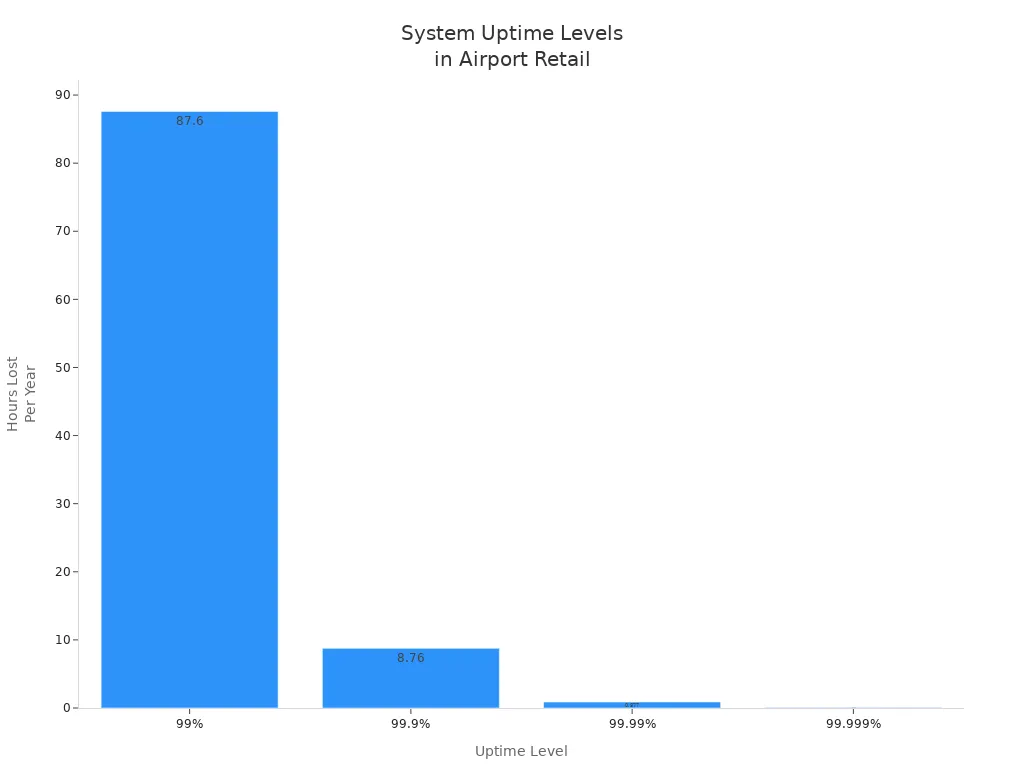
The table below shows how much downtime happens at different uptime levels. Only the highest uptime levels are good for airport retail. Lower uptime means too much downtime and risks for your operations.
Uptime Level | Hours Lost Per Year | Description |
|---|---|---|
99% | 87.6 hours | Unacceptable for critical infrastructure |
99.9% | 8.76 hours | Risky for safety-critical systems |
99.99% | 52.6 minutes | Acceptable for most airport monitoring zones |
99.999% | 5.26 minutes | Target for mission-critical airport systems |
Airport retail is not like other stores. Passengers have little time and must hurry. The shopping area uses extra waiting time, but you must also deal with time limits and flight schedules. Passengers come early for check-in and security, which changes how they shop. These things make high uptime and reliability very important.
Airport retail is different from regular stores because:
Passengers need to catch flights, so time is short.
Flight delays can change how people shop.
Large spaces make passengers feel nervous, which changes their actions.
You must give fast and reliable service to help them.
Why uptime matters for airport operations
System uptime is very important for airport retail and airport operations. When systems work well, passengers move easily through the airport. Staff can focus on hard tasks instead of fixing simple problems.
High uptime in airport retail gives many good things:
Self-service systems help passengers find answers, so they wait less.
Staff can help with bigger problems instead of simple questions.
Passengers feel more sure and less worried when systems work.
Meeting system uptime requirements also protects your money. Non-aeronautical revenue is about 40% of airport income. This depends on passengers shopping easily. If systems stop working, you lose sales and hurt the airport’s finances.
Note: Studies show that 20% of visitors feel nervous in big spaces like airports. Reliable digital tools, like wayfinding systems, make passengers 28% more likely to recommend the airport. This proves system uptime is important for satisfaction and safety.
If you do not meet system uptime requirements, bad things can happen. The table below shows how delays from downtime cost money.
Consequence | Financial Impact |
|---|---|
Cost of delays to airlines (2018) | $87 billion (IATA, 2019) |
Projected cumulative cost of delays by 2035 | $33 billion (IATA, 2019) |
Downtime causes:
More stress and a worse travel experience
Lost sales and money problems for airlines and stores
You must keep systems available and reliable to make airport retail work well. Meeting system uptime requirements helps you avoid expensive problems and keeps passengers and staff happy.
Uptime benchmarks and 99.99% uptime
Industry standards for airport retail
It is important to know why 99.99% uptime matters in airport retail. This number shows how often systems should work. In airport retail, downtime cannot last long. Passengers want quick and dependable service. If you do not reach this uptime, you could lose sales and hurt your reputation.
99.99% uptime means systems are almost always working. There are only about 52 minutes of downtime each year. This equals about 4.33 minutes of downtime every month. This short time proves how important it is to keep systems running. You need to plan for high uptime to meet these needs.
99.99% uptime in airport retail means:
Systems are working most of the time.
Only about 4.33 minutes of downtime each month.
Passengers and staff can trust your technology.
You should try for 99.99% uptime to match what the industry expects. This level helps your airport retail run smoothly and stay strong against other stores.
99.99% uptime and cost considerations
You may ask what is needed to get 99.99% uptime in airport retail. Getting this uptime costs a lot. You must pay for materials, workers, research, and after-sales help. These projects are big and take a long time. They can last from 3 to 7 years.
Service Level Agreements in airport retail usually aim for 99.99% uptime. You must keep systems running all day and night. Maintenance contracts often last more than 10 years. These long deals help you keep high uptime.
Costs for 99.99% uptime include:
Upgrading hardware and software
Skilled workers for support
Ongoing research and development
Reliable after-sales service
You must balance the need for 99.99% uptime with the costs. Some airports spend a lot to make sure systems are always available. Others may allow a little more downtime to save money. You should choose what works best for your airport retail. Remember, high uptime keeps your money safe and passengers happy.
High availability challenges in airport environments
Continuous operations and high traffic
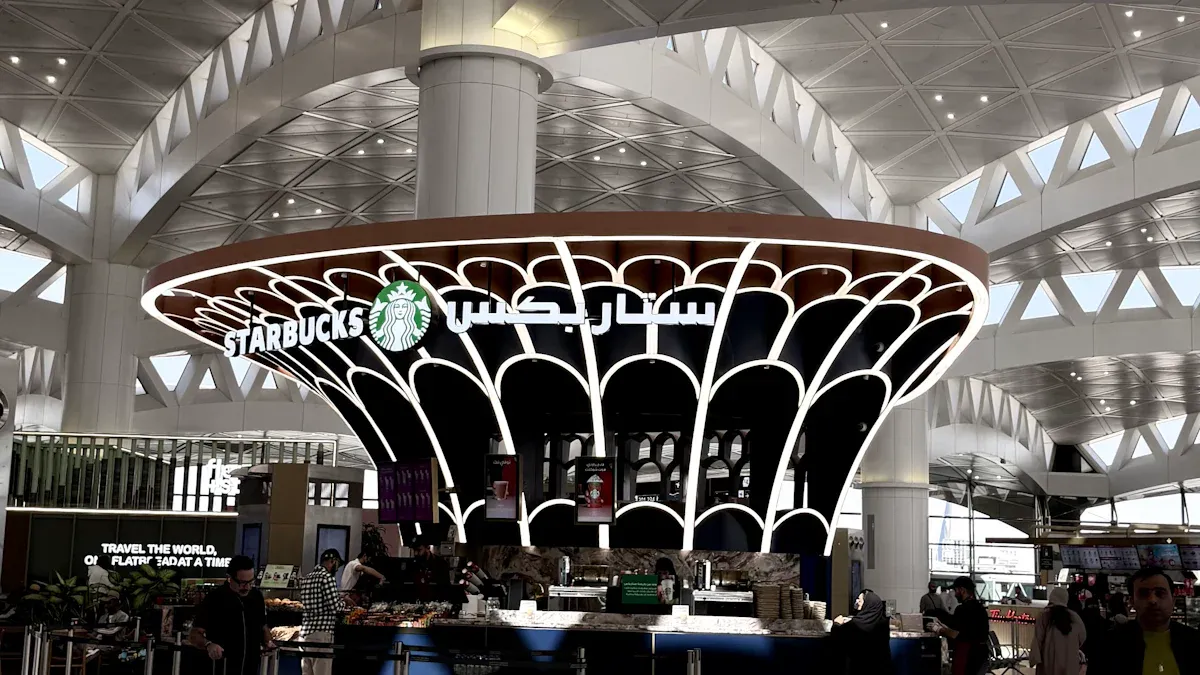
Keeping systems running in airport retail is hard. Airports are open all the time. You must help passengers every hour of the day. Systems need to work without stopping. Regular stores can close and fix things, but airports cannot. If systems break, many people can be delayed and confused.
In airports, downtime can cause big delays and safety problems. This is not like regular stores, where downtime is not as serious.
Airports are busy with lots of people moving in groups. Busy times make systems work harder. You need systems that can handle this. Cleaning and fixing things happen often each day. These jobs should not stop your service.
Aspect | Airports | Traditional Retail |
|---|---|---|
Operating Hours | Open for part of the day | |
Maintenance Requirements | Needs lots of care | Planned care |
Cleaning Frequency | Cleaned many times a day | Cleaned once at night |
Regulatory Oversight | Lots of rules (FAA, TSA) | Not many rules |
Impact of Downtime | Affects thousands of people | Affects fewer people |
Security and compliance needs
You must keep systems safe from hackers. Airports have strict rules for safety. You must follow rules like ISO 27001 and IEC 62443. These rules help keep systems safe. Splitting networks helps stop problems from spreading.
Airports must:
Use strong cybersecurity to protect systems.
Watch systems all day and night.
Follow TSA and FAA rules for safety.
Use firewalls for extra protection.
If you do not follow these rules, bad things can happen. You might lose money or pay fines. Your reputation can be hurt. Backup plans can slow work and cost more.
Type of Impact | Description |
|---|---|
Financial Impact | Lost ticket money, paying passengers, extra staff, and reputation damage. |
Legal Impact | Must report problems by law, or pay fines if rules are broken. |
Manual backup plans can make work slower and cost more. |
Limited onsite IT support
Not every airport has skilled IT workers. This makes keeping systems running harder. Some rules say you must fix things fast, sometimes in 15 minutes. It is hard to help many airports at once. Hardware can be different, and remote tools may not work well. These problems can cause more downtime.
Common challenges:
Skilled workers are needed to fix things quickly.
Helping many airports at once is hard.
Hardware and remote tools may not always work.
“ManageEngine has helped us run airport IT in tough places and big airports in India and around the world.” - Kalidasan Shanmugakani, Cybersecurity program director and chief security officer, WAISL Limited
Remote access and screen sharing can help fix these problems. These tools let you help airport systems from far away. This keeps systems working for passengers, even if IT workers are not there.
Achieving high availability in airport retail
High availability solutions
High availability helps airport retail work well. It means your systems stay online, even if something breaks. There are many ways to do this. Some airports use tools that let you update important systems without stopping them. This keeps your service running during updates. You also spend less money on equipment at the airport. High availability lets your systems grow and handle more people. Your systems can get bigger without breaking.
Benefit | Description |
|---|---|
Keeps things working during updates. | |
Lower on-site infrastructure and facility costs | Saves money on running the store. |
Enhanced scalability and resilience | Lets systems change and stay strong. |
You can use new technology to make high availability better. Mobile apps help you talk to travelers before they come. Online pre-ordering lets people shop early. This makes shopping less stressful and faster. Self-checkout systems help people buy things quickly. Just-walk-out technology lets people shop without waiting in line. QR code scanning gives fast info about products and deals. Digital tools send alerts and messages to people. These tools make shopping better and help your store work well.
Technology | Purpose |
|---|---|
Mobile apps | Connects real and online shopping, with special offers. |
Online pre-ordering | Lets people shop before flying, so they wait less. |
Self-checkouts | Makes buying things easy and fast. |
Just-walk-out technologies | Lets people shop without lines. |
QR code scanning | Gives quick info and deals. |
Advanced digital tools | Sends alerts and makes shopping personal. |
Self-checkout systems help you serve more people faster. Passengers have a smooth shopping trip and feel less stress. High availability solutions keep your store strong and working well.
Disaster recovery planning
You need to be ready for problems you do not expect. Disaster recovery planning helps you fix things fast if something fails. You should make a plan for all kinds of risks. This means power loss, cyberattacks, and broken machines. You must back up your data often and test your plan. Give each team member a job for emergencies. Mix crisis plans with business plans. This helps you keep your store running when things go wrong.
You should also check your supply chain and follow rules. Business plans in airports look at supply chains and rules. This keeps your store open and protects your service. Planning ahead means less downtime and happier customers.
Maintenance without disruption
You must keep systems working without stopping service. Good planning helps you do maintenance at the right time. This stops problems during busy hours. Preventative maintenance makes your machines last longer. Predictive maintenance uses data to guess when things will break. This helps you fix things before they stop working. Predictive maintenance can cut surprise breakdowns by over 90 percent.
You can use data to find problems early. This saves resources and money. Custom plans fit how you use your machines. You should fix the most important things first. This stops you from doing extra work. Saving money comes from fixing things only when needed. You keep your systems working and make your store better.
Good planning sets maintenance times.
Preventative care makes machines last longer.
Predictive care uses data to guess problems.
Custom plans save money and work better.
Fix important things first.
Save money by doing less extra work.
Monitoring and proactive support
You must watch your systems all the time. Real-time tools like the Total Airport Management Suite help you see how people move. This helps you use your staff better and cut wait times. AeroCloud Optic uses AI to watch passengers. You can manage lines and make your store better with it. Liverpool John Lennon Airport uses AeroCloud Optic to make good choices and improve sales.
Isarsoft Perception looks at data to help with flights. It helps you act early, stop delays, and make passengers happy. IoT sensors watch machines and tell you if something is wrong. You can fix things before they break. Predictive maintenance can cut surprise breakdowns by half. Airports say they spend 20 to 40 percent less on repairs. Machines last about 25 percent longer with good monitoring.
You should use self-checkout with real-time watching to help customers. These systems help you find problems early and keep your store open. Proactive support keeps your systems working and makes shopping easy for everyone.
Tip: Use self-checkout and predictive maintenance together. This makes your store work better and keeps airport retail strong.
You need to keep system uptime high in airport retail. This helps protect your money and keeps customers trusting you. Spending money on high availability and disaster recovery is smart. It gives you good protection and helps you fix problems fast. You can use tools like diagnostic models and real-time analytics. Predictive maintenance also helps you check airport systems. The table below shows the best ways to do this:
Best Practice | Description |
|---|---|
Effective Periodic Maintenance | Regular checks stop downtime and keep airport equipment ready. |
On-Site Operations Management | Special programs help airport operations work well. |
Continuous Monitoring | Finding problems early stops expensive airport disruptions. |
FAQ
What does 99.99% uptime mean for airport retail?
You get almost no downtime. This means your systems can only be offline for about 4 minutes each month. You keep your store running and your customers happy.
Why is system uptime so important in airports?
You serve travelers who have tight schedules. If your systems stop, you lose sales and cause stress. High uptime helps you avoid these problems.
How can you improve system uptime in airport retail?
You can use real-time monitoring, predictive maintenance, and backup systems. These tools help you spot problems early and fix them fast.
What happens if you do not meet uptime requirements?
Impact | Result |
|---|---|
Lost sales | Less money for you |
Delays | Unhappy passengers |
Fines | Extra costs for airport |
Do you need special IT support for airport retail systems?
You often need skilled IT staff. Some airports use remote support tools. These help you fix issues quickly, even if your team is not on site.
See Also
Boosting Workplace Efficiency Through Innovative Vending Machines
Enhancing Customer Experience with Cloudpick's Checkout Technology
Space-Efficient Snack Vending Machines for Contemporary Offices
