Comparing vending machines vs. autonomous micro stores in Universities & campus retail.

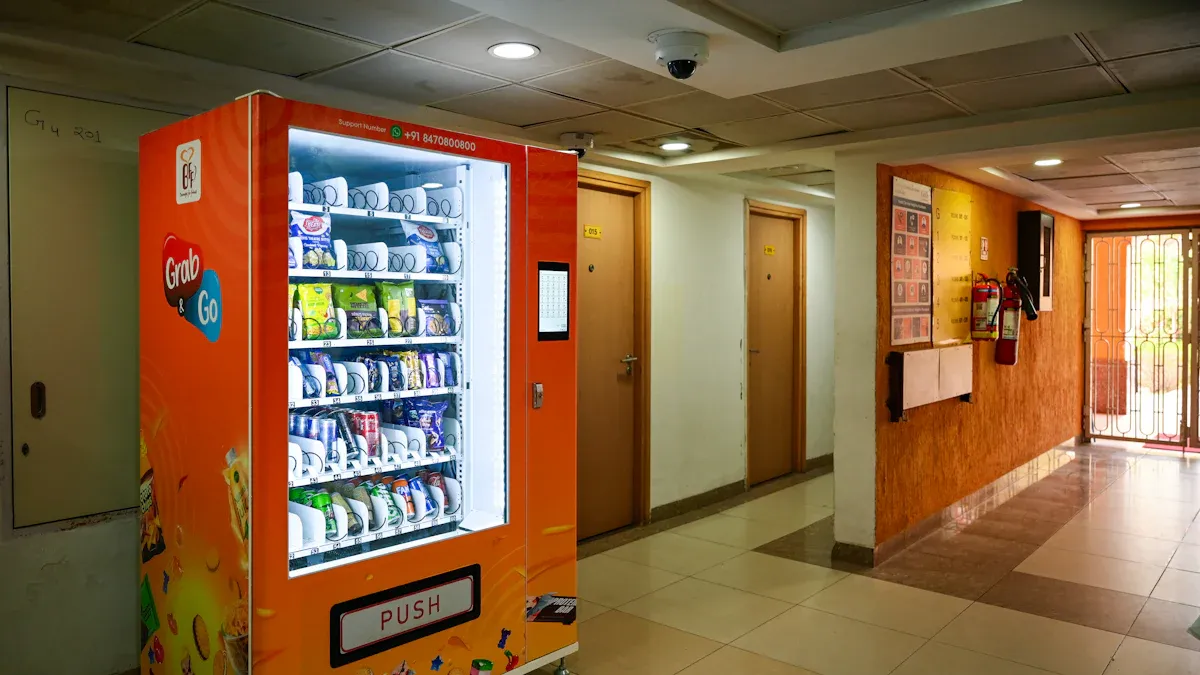
For most campus retail needs, vending machines offer a simple, proven solution. You find vending machines everywhere, from dorms to libraries. These machines provide snacks and drinks fast. Autonomous micro stores bring a new level of convenience. You walk in, pick products, and pay without a cashier. Both vending and micro store options matter when you consider cost, product selection, technology, and control. Vending machines remain a top choice for reliability and ease. You must weigh vending flexibility against advanced features in newer vending options.
Key Takeaways
Vending machines offer a budget-friendly option for quick snacks and drinks, requiring less space and staff.
Autonomous micro stores provide a wider variety of fresh food and a modern shopping experience with self-checkout technology.
Consider your campus size and budget when choosing between vending machines and micro stores; small campuses may benefit more from vending.
Both options can be customized to meet student needs, but micro stores offer more flexibility in product selection and seasonal items.
Use a mix of vending machines and micro stores to maximize convenience and sales potential on campus.
Definitions & Differences
Vending machines overview
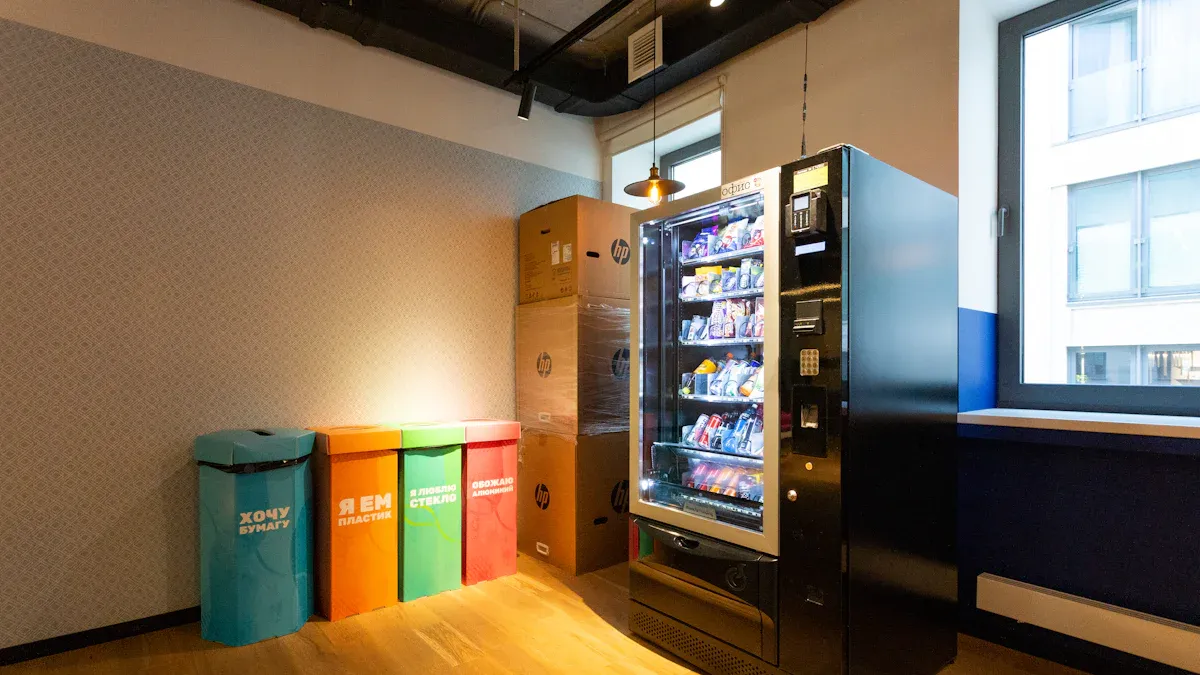
You see vending machines everywhere on campus. These machines offer snacks, drinks, and other quick items. You press a button, and the machine dispenses your choice. Vending machines use simple technology, like coils and motors, to deliver products. You pay with cash, card, or sometimes a mobile app. Vending machines require little staff and only need restocking when supplies run low. You rely on vending for fast, reliable access to food and drinks.
Autonomous micro stores overview
Micro markets bring a new shopping experience to campus. You walk into a micro market, pick up items from open shelves or coolers, and check out at a self-service kiosk. Micro markets use advanced technology, such as computer vision, RFID scanners, and smart weight sensors. These features help track products and make checkout easy. Micro markets offer a wide range of fresh foods, healthy snacks, and drinks. You enjoy more choices and a modern retail feel compared to vending machines.
Key operational differences
Micro markets and vending machines work in different ways. You can see the main differences in the table below:
Aspect | Vending Machines | Micro Markets |
|---|---|---|
Management | Remote monitoring | Daily on-site management |
Inventory | Simple, less frequent restocking | Complex, frequent restocking |
Staff | Minimal | Team needed for oversight |
Operating Costs | Lower | Higher |
Maintenance | Infrequent visits | Daily upkeep required |
Product Variety | Limited by space and mechanics | Wide range, including fresh items |
Checkout Experience | Simple, sometimes frustrating | Smooth, self-checkout kiosks |
Freshness & Quality | Shelf-stable, few fresh options | Focus on fresh, high-quality items |
Micro markets use AI and computer vision to track what you take or return. Vending machines rely on mechanical parts and buttons. Micro markets let you interact with products directly, while vending machines limit your choices to what fits inside. You get more fresh options and a smoother checkout in micro markets. Vending machines offer quick, reliable service with fewer staff and lower costs. You must decide which fits your campus needs best.
Cost & Investment
Vending machines—costs
You often see vending machines as a budget-friendly choice for campus retail. You do not need to spend much to get started. Many vending machines come with zero installation fees, especially when you partner with a full-service provider. You only pay for the products and basic maintenance. Vending machines require less space, which helps you save on rent or facility costs. You can place vending machines in small corners or busy hallways. You do not need a large team to manage vending machines. You only need someone to restock and check the machines from time to time. Vending machines offer passive revenue, so you can focus on other campus needs.
Vending machines have lower initial setup costs.
You often pay nothing for installation with a service provider.
Vending machines need less space and simple maintenance.
You do not need a large staff for vending machines.
Micro stores—investment
Micro markets bring a modern look and more product variety, but you must invest more at the start. You need to buy furniture, coolers, and payment kiosks. Micro markets use advanced technology, so you pay more for setup. You also need more space for micro markets. You must hire staff to check inventory and keep the area clean. Micro markets require daily management and frequent restocking. You spend more time and money to keep micro markets running smoothly.
Aspect | Vending Machines | Autonomous Micro Stores |
|---|---|---|
Generally lower | Higher due to technology integration | |
Ongoing Operational Costs | Lower due to simpler maintenance | Higher due to restocking needs |
Space Requirements | Requires less space | Requires more space |
Maintenance Needs | Simpler maintenance | More complex maintenance |
ROI for campus retail
You want to know how fast you can earn back your investment. Vending machines give you steady income with little effort. You do not need to worry about daily operations. Micro markets can bring higher returns because they offer more product variety and a better shopping experience. Some micro markets reach up to 171% ROI, but you must manage them closely. You need to decide if you want simple vending or advanced micro markets for your campus. Both options help you serve students and staff, but your budget and goals will guide your choice.
Product Variety
Vending machines—selection limits
You often find vending machines filled with snacks, sodas, and bottled water. These machines work well for quick cravings, but you face limits on what you can buy. The design of vending machines restricts the size and type of products they can hold. You usually see chips, candy bars, and soft drinks. Sometimes, you get a few healthier options, but the selection stays small.
Many students and staff want more choices than traditional vending can offer. You might look for healthier snacks, allergy-friendly foods, or organic items, but these are often missing.
Here is a table showing the types of products students and staff request that you rarely find in standard vending machines:
Product Type | Description |
|---|---|
Healthier Snacks | Options like fruit snacks and trail mixes |
Low-Calorie Beverages | Beverages that are lower in calories |
Allergy-Sensitive | Gluten-free and other allergy-friendly choices |
Organic Items | Snacks and drinks made from organic ingredients |
Non-GMO Goods | Products that are free from genetically modified organisms |
You see that vending machines do not always meet the changing needs of your campus community. The limited space and mechanical setup make it hard to add new or seasonal products.
Micro stores—expanded options
Micro markets give you a much wider range of products. You walk into a micro market and see open shelves, coolers, and even fresh food displays. You can pick up salads, sandwiches, yogurt, and healthy drinks. Micro markets use advanced technology to track what you buy, so you get more choices and fresher items.
Micro markets let you choose from fresh fruit, protein bars, and allergy-friendly snacks.
You find low-calorie drinks, organic foods, and non-GMO products.
The system updates inventory quickly, so you always see new and popular items.
Micro markets use robotic systems and smart shelves to rotate products based on demand, time of day, or even the academic calendar. You get access to seasonal treats, exam-time snacks, or special event foods right when you need them.
Universities now invest in micro markets that offer salads, sustainable meals, and other healthy options. You see a shift toward wellness and convenience. Micro markets help you eat better without giving up speed or ease.
Meeting campus needs
You want your campus retail to match what students and staff want. Micro markets help you do this by offering more variety and healthier choices. You can adjust the products in micro markets for holidays, sports events, or busy exam weeks. The technology in micro markets makes it easy to swap out items and keep up with trends.
Vending machines still play a role. You can move them to new locations or rebrand them for special events. This flexibility helps you reach more people in different parts of campus.
Feature | Vending Machines | Micro Markets |
|---|---|---|
Seasonal Adaptability | Can be relocated and rebranded | Dynamic product rotation |
Product Update Speed | Slower, manual restocking | Fast, tech-driven inventory changes |
Range of Healthy Options | Limited | Wide and growing |
Micro markets use technology to meet the growing demand for fresh and healthy food. You get more nutritious meals and snacks, which improves your campus dining experience.
You see that both vending machines and micro markets can adapt to campus needs, but micro markets give you more flexibility and choice. You help your campus community stay healthy and satisfied by choosing the right mix of vending and micro markets.
Technology & Payments
Vending machines—payment features
You see vending machines on campus with many payment options. You can use credit and debit card readers, mobile wallets like Apple Pay and Google Pay, and QR code payments. Some vending machines accept prepaid and loyalty cards. You also find NFC and contactless payments. Cutting-edge vending machines even support cryptocurrency payments. You benefit from mobile payment integration, campus card and meal plan options, and loyalty programs. These features make vending easy and fast for students and staff.
Credit and debit card readers
Mobile wallets (Apple Pay, Google Pay)
QR code payments
Prepaid and loyalty cards
NFC and contactless payments
Cryptocurrency payments
You enjoy vending that fits your lifestyle and budget. You can use subsidized or discounted options for certain student groups.
Micro stores—advanced tech
Micro markets use advanced technology to improve payments. You enter a micro market, select items, and leave without waiting in line. Smart sensors and cameras track your choices for instant checkout. The cashier-less system gives you a seamless shopping experience. Micro markets offer contactless shopping, so you can shop anytime. You do not need to worry about delays or long lines. Micro markets use technology to make vending more efficient and enjoyable.
Smart sensors and cameras for instant checkout
Cashier-less entry and exit
Contactless shopping experience
Micro markets help you save time and enjoy shopping on campus.
User accessibility
You want vending machines and micro markets to be accessible for everyone. Both options offer features for students with disabilities. You find biometric and barcode scanners for quick sign-in. Audio assistance provides spoken guidance for those with visual impairments. Large touchscreens with big icons and letters make interaction easy. ADA height compliance ensures kiosks are reachable for wheelchair users. Headphone jacks let you listen to audio prompts privately.
Feature | Description |
|---|---|
Biometric and Barcode Scanners | Help users sign in and select products quickly. |
Audio Assistance | Provides spoken guidance through the steps, aiding those with visual impairments. |
Large Touchscreen | A 43-inch screen with large icons and letters for easy visibility and interaction. |
ADA Height Compliance | Ensures the kiosk is accessible for wheelchair users, making all functions reachable. |
Headphone Jack | Allows users to listen to audio prompts privately, enhancing the shopping experience. |
You see that vending and micro markets support accessibility and payments for all campus users. You make campus retail more inclusive and convenient.
Security & Risks
Vending machines—security
You see vending machines in many places on campus. These machines face risks like vandalism and cyber attacks. People sometimes damage screens, pry open doors, or add graffiti. You can protect vending machines by using strong housings and adding cameras.
Vending machines on university campuses face risks such as vandalism, which includes damage to screens, attempts to pry open doors, and graffiti. Implementing strong physical security measures like sturdy housings and surveillance systems can significantly deter these threats.
You must also think about cybersecurity. Connected vending machines can become targets for hackers.
A university experienced a cyber attack through its own vending machines, which were compromised and used to launch attacks on the university's network. This incident underscores the cybersecurity risks associated with IoT devices on campus.
The incident involved hijacked vending machines making abnormal DNS requests, highlighting the cybersecurity risks associated with connected devices on campus.
You need to update software and monitor network activity to keep vending safe.
Micro stores—risk factors
Micro markets use advanced technology to improve security. You find AI cameras and sensors that track movement and help prevent theft. These stores use predictive theft analytics to spot suspicious behavior. Micromarket24’s MarktGo at Bremen Airport shows how micro markets use these tools to reduce risks. You get better protection against theft and vandalism compared to vending machines. Micro markets also help you control food access and keep products safe.
Operational control
You want strong control over vending and micro markets. Vending machines let you monitor sales and refill products from a distance. You can set alerts for low stock or tampering. Micro markets give you real-time data on food access and inventory. You can adjust security settings and track every transaction. The table below shows how you manage risks in both systems:
System | Security Tools | Control Features |
|---|---|---|
Vending | Cameras, sturdy housing | Remote monitoring, alerts |
Micro markets | AI sensors, analytics | Real-time tracking, access logs |
You improve campus safety by choosing the right mix of vending and micro markets. You protect food access and keep your retail spaces secure.
Maintenance & Operations
Vending machines—management
You manage vending machines with simple routines. You focus on restocking snacks and drinks, checking for repairs, and keeping the machines clean. Service arrangements depend on the equipment type and how often students use the machines. You often work with dedicated service teams who handle repairs and maintenance. You track operating costs by looking at energy use, labor, and historical service data. Vending machines require less operational complexity, so you spend less time on daily tasks. You rely on remote monitoring to alert you to problems quickly. This technology helps you keep vending running smoothly and ensures convenience for everyone.
Aspect | Vending Machines | Autonomous Micro Stores |
|---|---|---|
Service Arrangements | Vary considerably based on equipment type and usage | Typically more integrated with campus systems |
Operational Complexity | Generally lower, focused on restocking and repairs | Higher, involving software and hardware maintenance |
Support Structures | Often requires dedicated service teams | May utilize existing campus resources for support |
Micro stores—operational efficiency
Micro markets use advanced systems for inventory management. You monitor shelves and coolers with smart sensors and software. You handle more complex maintenance, including software updates and hardware repairs. Micro markets integrate with campus systems, so you can use existing resources for support. You benefit from real-time inventory management, which helps you keep products fresh and available. Remote monitoring technology reduces the need for on-site staff. You manage inventory and solve issues from your computer or phone. This approach improves operational efficiency and boosts convenience for students and staff.
Alert operators to problems quickly, ensuring continuous operation.
Provide operators with sales and inventory data for informed decision-making.
Require minimal labor, focusing only on restocking and monitoring.
Staffing and remote support
You need fewer staff for vending machines because you only restock and check for repairs. Micro markets require more attention, but remote monitoring cuts down on labor costs. You use inventory management tools to track sales and stock levels. You make decisions faster and keep products available for everyone. Both vending and micro markets rely on technology to improve convenience and reduce staffing needs. You create a smooth retail experience by using remote support and efficient inventory management.
Benefit | Autonomous Micro Stores | Vending Machines |
|---|---|---|
Real-time Inventory Management | Yes | Yes |
Reduced Labor Costs | Yes | Yes |
Improved Customer Experience | Yes | Yes |
You improve campus retail by using technology for inventory management and remote support. This strategy keeps vending and micro markets running efficiently and ensures convenience for students and staff.
User Experience

Vending machines on campus
You see vending machines in many places on campus. You get snacks and drinks fast. You do not wait in long lines. You press a button and receive food right away. You find vending machines in dorms, libraries, and hallways. You use them when you need healthy snacks or drinks between classes. You enjoy healthy options like granola bars, fruit cups, and water. You use vending machines for quick meals when you have a busy schedule. You rely on vending for healthy choices and easy access. You benefit from vending machines that operate all day and night. You find healthy food whenever you need it.
Convenience is a major advantage. You grab food without waiting. You do not waste time. You get healthy options quickly.
Campus micro stores experience
Micro markets give you a better shopping experience. You walk in and see open shelves with healthy food. You pick up salads, sandwiches, and healthy drinks. You use self-checkout kiosks for a smooth process. You enjoy an interactive shopping experience. You choose healthy options and fresh food. You find micro markets in student centers and high-traffic areas. You get healthy snacks for study sessions or group meetings. You see micro markets that operate 24/7. You access healthy food at any time. You enjoy an enhanced experience with more healthy choices and easy payment. You feel comfortable shopping for healthy options in micro markets.
Feature | Vending Machines | Micro Markets |
|---|---|---|
Healthy options | Yes | Yes |
Better shopping experience | Sometimes | Always |
Accessibility | High | High |
Food freshness | Limited | High |
Interactive shopping experience | No | Yes |
Student and staff feedback
You hear positive feedback from students and staff. You learn that vending machines provide healthy snacks fast. You see that micro markets offer a better shopping experience with more healthy options. You notice that both vending and micro markets meet student needs. You find that students appreciate healthy food choices and easy access. You hear that micro markets help students with busy schedules. You see that vending machines and micro markets improve accessibility for everyone.
You value healthy food and a better shopping experience. You choose vending machines and micro markets that fit your campus needs.
Suitability for Campus
Small vs. large campuses
You need to choose the right retail solution for your campus size. Small campuses often benefit from vending machines. You place vending in dorms, hallways, and study lounges. You save space and reduce costs. Micro markets work well in larger campuses. You set up micro markets in student centers or athletic facilities. You offer more products and fresh food. You help students find healthy snacks and meals. You use vending for quick access and micro markets for variety.
High-traffic areas
You must focus on high-traffic areas to maximize sales and convenience. You place vending machines and micro markets where students gather. You look for high-traffic locations like libraries, cafeterias, and main entrances. You consider community needs and identify spots that lack retail options. You target underserved markets to reach more people. You select high-traffic areas with constant movement. You see that transportation hubs and university campuses need quick access to food and supplies.
High foot traffic areas are essential for placement.
Community needs guide your choices.
Underserved markets help you target locations.
University campuses and transportation hubs are ideal for vending and micro markets.
You improve campus retail by placing vending and micro markets in high-traffic areas.
Customization
You customize vending machines and micro markets to fit campus needs. You use AI vending machines that learn from sales data. You improve inventory management and customer satisfaction. You add grab and go vending machines for speed and cashless transactions. You choose new vending machines with sensors and flexible layouts. You offer diverse products and attract more customers. You adjust micro markets for holidays, sports events, and exam weeks. You create a retail experience that matches student preferences.
AI vending machines learn from sales data.
Grab and go vending machines enhance convenience.
Advanced sensors and flexible layouts allow diverse offerings.
You make campus retail successful by customizing vending and micro markets for your students.
Decision Guide
Key factors
You need to look at several key factors before you choose between vending machines and micro markets. Start by thinking about your campus size and the number of students. Small campuses often use vending machines for quick snacks and drinks. Large campuses may need micro markets for more variety and fresh food. You should also check your budget. Vending machines cost less to install and maintain. Micro markets need more money at the start but can bring higher sales.
You must consider the space you have. Vending machines fit in small areas. Micro markets need more room for shelves and self-checkout kiosks. You want to know how much time your staff can spend on daily tasks. Vending machines need less attention. Micro markets require more work but offer self-service convenience stores with self-checkout kiosks. You should also think about technology. Automated retail options like self-service convenience stores use self-checkout kiosks and automation to improve the shopping experience.
Factor | Vending Machines | Micro Markets |
|---|---|---|
Startup Expenses | Low | High |
Product Variety | Limited | Wide |
Space Needed | Small | Large |
Staff Time | Minimal | More |
Technology Level | Basic | Advanced |
Potential for Higher Sales | Moderate | High |
Action steps
Write down your campus goals for automated retail.
List your available spaces for vending or self-service convenience stores.
Estimate your budget for startup expenses and ongoing costs.
Survey students and staff to learn what products they want.
Compare the higher sales potential of vending machines and micro markets.
Visit other campuses to see self-service convenience stores in action.
Test self-checkout kiosks and self-checkout systems for ease of use.
Track sales and feedback after you install vending or micro markets.
Adjust your product mix and self-checkout options to boost higher sales.
Review your expenses and sales data every semester to improve your self-service food and beverage solutions.
Tip: You can mix vending machines and micro markets to meet different needs. Use vending for quick snacks and self-service convenience stores with self-checkout kiosks for higher sales and more choices.
You can use this guide to make smart decisions about automated retail on your campus. Focus on self-checkout, higher sales, and the best experience for your students and staff.
You now see the strengths of both vending machines and autonomous micro stores. Small campuses benefit from simple vending solutions. Large campuses gain more value from micro stores with fresh food and advanced technology. Review your campus needs, budget, and available space. Choose the option that matches your goals. Remember, you can combine both for the best results.
Make your decision based on what helps your students and staff most.
FAQ
What is the main difference between vending machines and micro stores?
You use vending machines for quick snacks and drinks. Micro stores let you pick fresh food from shelves and pay at a kiosk. Micro stores offer more choices and a modern shopping experience.
How much space do you need for each option?
You place vending machines in small areas like hallways or lounges. Micro stores need more space for shelves, coolers, and kiosks. You set up micro stores in student centers or busy spots.
Are micro stores more expensive than vending machines?
You spend less money on vending machines. Micro stores cost more because they use advanced technology and need more staff. You may earn higher sales with micro stores.
Can you customize products in vending machines and micro stores?
You change products in vending machines by restocking. Micro stores use smart systems to update inventory quickly. You offer seasonal items and healthy choices in both, but micro stores give you more flexibility.
Which option is easier to maintain?
You find vending machines easier to manage. You only restock and check for repairs. Micro stores require daily upkeep and software updates. You use remote monitoring for both to save time.
See Also
Comparing Micromarkets And Smart Stores In Global Retail
The Emergence Of 24-Hour Vending Cafes: A New Trend
Fast Food Automation: The Role Of Vending Machines
Creative Vending Machine Sites: Expanding Beyond Conventional Areas
Transforming Retail: The Impact Of Smart Electronics Vending Machines
