Streamlining Inventory Backlogs with AI-Powered Unmanned Warehouses

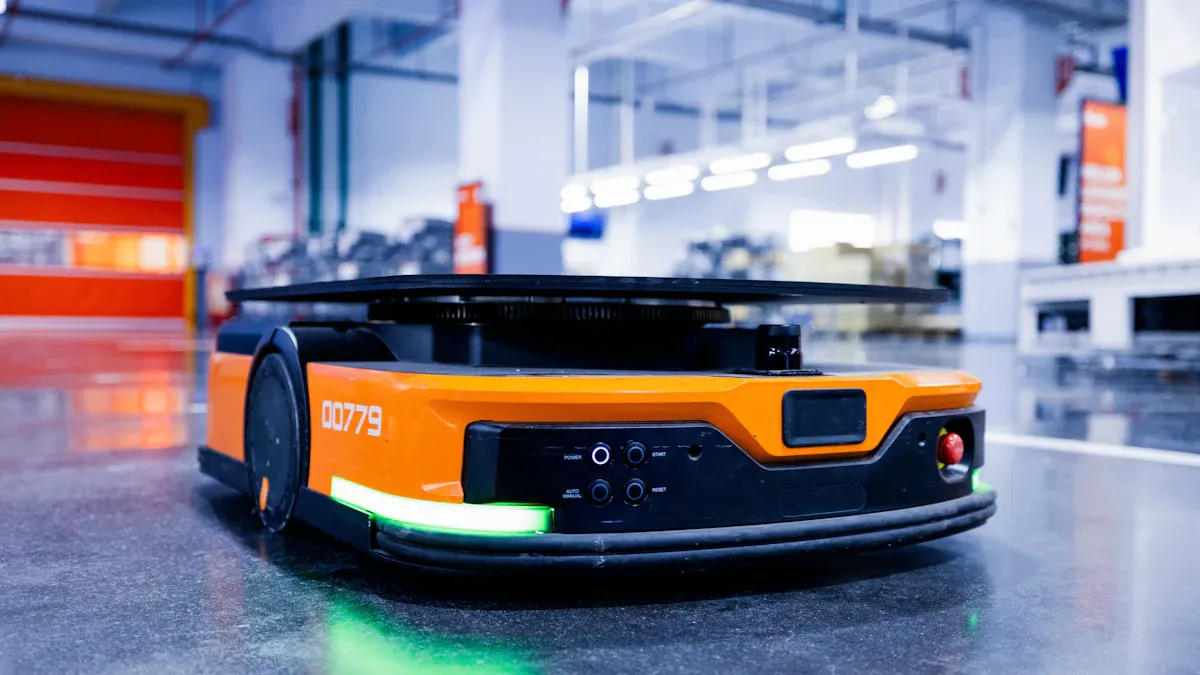
Think about your warehouse. Is it helping your business grow, or is it just costing you money? You have pressure to do better. Your warehouse stores raw materials and spare parts. But it often sits unused. That wastes money. An AI-powered unmanned warehouse runs your warehouse for you. It gives you live data to keep inventory in check. Live data helps you sell and replace stock faster. Smart warehousing uses AI. Your warehouse becomes a flexible center. It stops delays and backlogs. It changes how you work. Your warehouse runs smoothly. Smart warehousing matters. Technology is a must. The solution fits your warehouse perfectly. Old-style warehousing is not enough anymore. This new approach is the answer.
Key Takeaways
Old-style warehouses keep your money stuck in products that just sit there. AI-powered unmanned warehouses let that cash flow again.
AI provides you with live inventory information. This data prevents having too much stock or running out of items.
Automated systems reduce errors and costs. They make things more accurate and faster.
Smart warehousing makes your warehouse a place that earns money. It helps you work better and grow more.
Begin with a demo or consultation. See how AI can change your warehouse.
The Costly Reality of Traditional Warehousing
Inventory Backlogs as Capital Traps
Your warehouse holds more than products. It holds your money. When raw materials and spare parts sit idle on shelves, they stop working for you. This creates a capital trap. You paid for those goods. Now they gather dust instead of generating revenue.
Consider the numbers. Industry benchmarks show average carrying costs reach 20–30% of inventory value each year. Electronics and high-tech sectors face even steeper figures, often 30–40%, because products become obsolete quickly. Industrial equipment typically falls between 22–28%. Most companies that perform a thorough calculation discover their true costs land between 25–35%. These percentages represent storage, insurance, taxes, handling, and the opportunity cost of tied-up capital.
APQC's cross-industry benchmark reports a median near 10% of average inventory value. That methodology includes opportunity costs, storage, insurance, taxes, handling, administration, shrinkage, and obsolescence. Retail references run higher. Shopify's guidance uses a 20–30% range for many retail businesses due to broader assortments, seasonal demand, returns, promotions, and markdowns. A 20% rate fits within several commonly cited ranges. A 30% rate deserves investigation, especially when slow-moving stock or expensive financing drives it upward.
Pressure on Global Logistics and Manufacturing Leaders
Major logistics providers feel this pressure daily. DHL, Kuehne+Nagel, DB Schenker, FedEx, UPS, and A.P. Moller - Maersk manage enormous volumes of goods. Their warehouses hold inventory for countless clients. Every idle pallet represents someone's trapped capital.
Manufacturing giants face similar challenges. Siemens, Bosch, GE, Samsung Electronics, Toyota Motor Corporation, and Foxconn maintain vast supplies of components and spare parts. These companies need inventory management systems that prevent overstocking. Without proper inventory tracking, excess materials accumulate. Warehouse management systems help, but traditional approaches still leave gaps.
Your operation likely mirrors these struggles. You might use warehouse management systems already. Yet you still see backlogs forming. You watch inventory pile up despite your best efforts. The problem is not your team. The problem is the model itself. Traditional warehousing relies on manual checks and reactive decisions. This approach cannot keep pace with modern supply chain demands.
The solution requires a fundamental shift. You need smart warehousing that uses real-time data. You need automation that removes human error. You need technology that transforms your warehouse from a cost center into a strategic asset. The next section explores how AI-powered unmanned warehouses deliver exactly this transformation.
The AI-Powered Unmanned Warehouse Solution
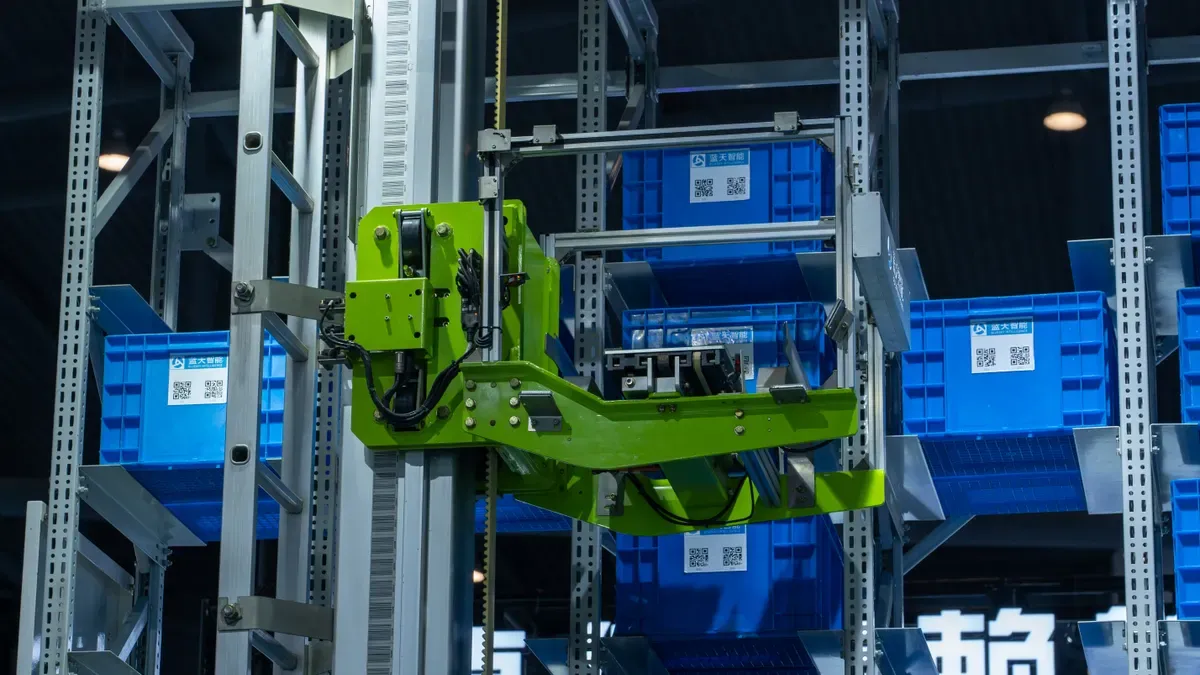
An AI-powered unmanned warehouse is a fully automated facility. It operates with minimal human intervention. AI handles oversight and decision-making. This technology transforms your approach. You shift from reactive responses to proactive control. The warehouse runs itself. You set the strategy. The technology executes the tactics. This represents a fundamental change in warehousing. Your facility becomes more than a storage space. It becomes an active participant in your supply chain. This is your warehousing future.
End-to-End Automation and Real-Time Inventory Sync
End-to-end systems cover every step. It starts when goods arrive at inbound storage. Automated storage and retrieval systems move items to proper locations. Robots handle putaway and retrieval. Conveyors manage outbound operations. Your team focuses on exceptions. The machines handle routine work. This flow eliminates delays. You process orders faster. Warehouse automation streamlines your entire operation.
Real-time inventory sync eliminates guesswork. Every scan and movement updates your digital records instantly. You see exactly what you have. You know where everything sits. This live data reduces overstocking risks. You avoid capital traps. Your warehouse management systems integrate with this real-time data. You make decisions based on current information. You never rely on outdated reports.
The evidence supports this approach. A McKinsey report highlights that these systems can reduce inventory carrying costs by up to 35%. Order accuracy improves to over 98%. Research found that data entry mistakes occur in up to 27% of manual operations. Automated systems achieve error rates between 0.001% and 0.041%. That means 99.959% to 99.99% accuracy. Your inventory management improves dramatically. You save money on carrying costs. You reduce waste from errors.
Key performance metrics track this value. The table below shows the main metrics you monitor. These metrics are part of your inventory management systems and solutions.
Metric | Description |
|---|---|
Productivity improvement | Tracks faster order processing and shorter cycle times |
Cost reduction per order | Monitors decreases in labor expenses and fulfillment cost |
Inventory accuracy | Evaluates alignment between physical stock and digital records |
Order picking accuracy | Measures reduction in picking errors and return rates |
Equipment uptime | Tracks how predictive maintenance reduces unexpected downtime |
Warehouse capacity utilization | Assesses how efficiently storage space is used |
These metrics give you real-time visibility into your operation. You see exactly how your warehouse performs each day. This real-time data supports your decisions. Smart warehousing relies on warehouse automation principles.
AI-Driven Oversight and Seamless Employee Access
AI provides continuous oversight. It records every transaction automatically. The system generates procurement insights from usage patterns. You know when to reorder. You know how much to buy. This intelligence prevents shortages and overstocking. You optimize your inventory management. You make informed decisions. The system learns from your patterns. This represents intelligent warehousing in action.
Employee access becomes seamless. Your team enters the warehouse using ID cards or face recognition. Face recognition offers clear advantages. The table below compares access methods.
Access Method | Limitation | Face Recognition Advantage |
|---|---|---|
Manual guard checking | Slow, depends on human accuracy | Automated identity verification |
RFID card access | Cards can be lost or stolen | Access linked to the actual person |
PIN or password | Can be shared or forgotten | Contactless and identity-based |
Basic CCTV | Records incidents after they happen | Real-time alerts and verification |
Manual entry register | Inaccurate or incomplete | Digital access logs |
Face recognition solves these problems. It verifies identity automatically. It links access to the actual person. It provides contactless verification. It generates real-time alerts. It creates digital access logs. Security improves without slowing operations. The system uses real-time data for access control.
This approach lowers costs. You need fewer staff for manual checks. Your inventory records stay accurate. Your team accesses only authorized areas. Your operational efficiency improves across every metric. Warehouse automation delivers these cost savings.
Smart warehousing delivers these benefits and solutions. Intelligent warehousing combines automation and robotics with AI oversight. Your warehouse management systems integrate with automated storage and retrieval systems and other tools. The result is a facility that works for you. It never makes entry mistakes. It always knows where your inventory sits. It operates continuously. Your warehouse becomes a strategic asset. This is the power of an ai-powered unmanned warehouse.
From Passive Storage to Agile Hubs
Your warehouse can be more than just a place to keep goods. It can become an agile hub that helps your business run better. This change affects how you handle inventory in every way. Smart warehousing makes your facility a responsive center. It reacts to demand shifts right away. It knows what you need before you do. Moving from passive storage to active management is the future of warehousing.
Transforming Inventory Management with AI
Old warehouses hold inventory and wait for orders. An ai-powered unmanned warehouse works differently. It studies patterns all the time. It sees which items sell fast and which ones just sit there. This intelligence changes how you manage inventory completely.
AI finds hidden patterns in your supply chain data. These patterns show trends you cannot see by hand. Machine learning algorithms look at past movements. They connect events that seem unrelated. A supplier delay in one region might affect demand in another. AI spots these links right away. You get insights that would take days to find through manual analysis.
Real-time data flows through every part of your operation. Each scan updates your records. Each movement triggers new analysis. This constant flow of information powers your decisions. You know exactly what sits on your shelves. You understand why it sits there. You see when it will move. This visibility removes guesswork from your planning.
Advanced analytics predict supply chain events with great accuracy. You see seasonal spikes before they arrive. You get ready for supplier disruptions ahead of time. You adjust your buying based on predicted demand. This proactive approach stops problems before they start. Your warehouse automation systems handle these adjustments smoothly.
Optimizing Turnover and Powering Smarter Decisions
Inventory turnover shows how quickly you sell and replace stock. Higher turnover means less money stuck in storage. AI directly improves this key metric. Retailers using AI with good data see sustained inventory turnover gains near 25–30% over multi-year changes. Mature setups reach up to 30% improvement. In the United States, AI adoption has raised inventory turnover ratios from 3–4 to 5–6. These numbers mean real money freed from your shelves.
AI-driven optimization delivers efficiency gains across your whole operation. Companies report 15–30% improvement in overall supply chain efficiency and inventory turnover rates through AI-driven optimization. Your warehouse becomes a profit center instead of a cost center. Every square foot works harder. Every dollar invested returns more value.
Data-driven decision making turns your supply chain into an intelligent network. Real-time insights help you make informed choices quickly. You respond to market changes the moment they happen. You never wait for monthly reports. You never rely on outdated information. Your decisions reflect current reality, not past patterns.
AI improves demand forecasting accuracy by automating error-prone data entry. It gives deeper analytical insights than old methods. End-to-end visibility helps you spot delays and bottlenecks early. You take corrective actions before small problems become major disruptions. Generative AI lets your team ask specific questions and get insights within minutes instead of days.
Precise demand forecasting aligns your inventory with actual consumer needs. AI combines real-time sales data, market trends, and predictive models. It creates highly accurate forecasts that prevent shortages. Smarter inventory planning predicts seasonal demand shifts and supplier delays. You keep optimal stock levels automatically. Your customers find products available when they need them. This removes the frustration of out-of-stock items.
AI models keep learning from new data. They adapt quickly to demand spikes or supply disruptions. Your operation stays agile in volatile markets. Your warehouse automation and robotics work together seamlessly. Automated storage and retrieval systems move products efficiently. Your warehouse management systems coordinate every activity. This integration creates intelligent warehousing that powers your entire business. The transformation delivers measurable results. Your warehouse becomes your competitive advantage.
Achieving Strategic Gains with Automation
Quantifying Cost Reduction and Precision Gains
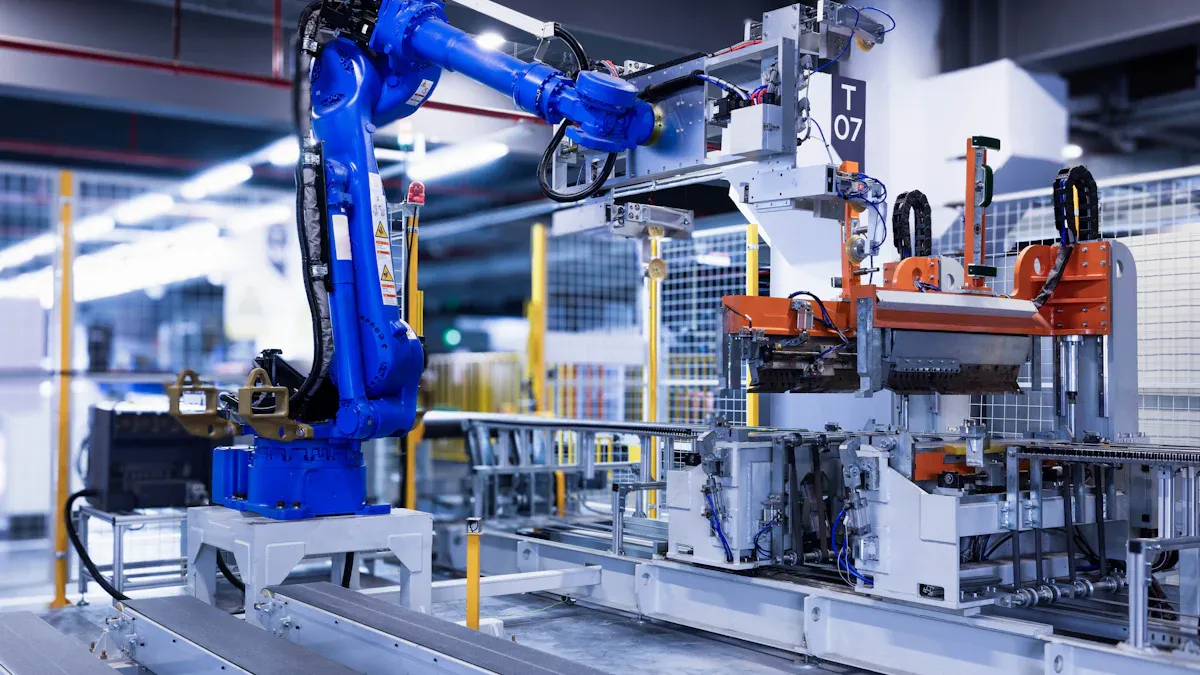
The numbers tell a clear story. Robot and AGV picking systems are 99.5% accurate or higher. Workers with good training can only reach 99.5% accuracy. Paper-based methods fall to 90–96%. This difference matters for your business. Every error causes returns, rework, and unhappy customers. Warehouse automation closes that gap.
AI inventory management cuts stock errors by up to 47% compared to manual work. Manual counts have error rates near 50%. AI systems are 99% accurate. So error rates drop to about 1%. One case study had order errors fall from 4.8% to 0.4%. That is a drop of 91.7%. Your customers get the right items the first time.
Top setups pick over 300 items per hour per station, with accuracy near 99.9%.
The return on investment is clear. Payback takes 6 to 18 months. Top solutions pay back in under 6 months. Labor productivity goes up 30–50% with better planning. Shipping costs fall 15–25% with optimization. Perfect orders top 99%, cutting costly returns. Your warehouse handles more volume without big cost jumps. This protects your margins as you grow.
Smart warehousing learns all the time. Each transaction feeds the system. Each cycle makes the next decision better. Your warehouse management systems run everything. Automated storage and retrieval systems move items with care. Real-time data flows through each step. You see exactly what happens and when. This visibility changes how you plan.
Taking the Next Step Toward an Unmanned Future
You have seen the facts. Old warehousing locks up your money. AI unmanned warehouse tech sets it free. The choice is clear. You need to take action.
Start with a talk. Share your work challenges. Show your current numbers. See how smart warehousing fits your place. Watch a live demo of automation. See how real-time tracking stops overstocking. Notice how AI records every transaction by itself.
Your rivals are already looking at these tools. The tech is ready now. The results are proven. Only timing matters. Each month you wait loses you money from idle stock and mistakes.
Book your talk or demo today. Find out how smart warehousing makes your warehouse a key asset. Learn how real-time data helps you decide better. See how automation lowers your holding costs. Your future success depends on what you do now. Take that step.
Old-style warehouses can't keep up with today's inventory amounts. Waiting to change costs you more every day. Your money stays stuck on shelves. You fall behind your rivals with each passing quarter.
AI-powered unmanned warehouses change the game. They turn your warehouse into a smart hub. This tech does more than just automate jobs. It changes how your whole business works. Live data guides every choice you make. Smart warehousing makes storage work for you. It boosts how fast you sell and replace stock. It helps your business grow. It gives you clear, proven results.
The market backs this up. Experts predict AI-powered warehouse automation will jump from $11.2 billion in 2024 to $45.1 billion by 2030. This tech is a must-have investment, not a nice extra.
Your rivals are already moving ahead. Book your consultation now. Find out how smart warehousing can work for you.
FAQ
How does an AI-powered unmanned warehouse handle sudden demand changes?
The system studies patterns all the time. It sees changes coming before they happen. Live data moves through every part of the operation. Your warehouse changes on its own. It never waits for a person to give directions. You avoid running out of stock or having too much without manual checks. This type of warehouse handles ups and downs with ease.
What happens to current employees when you adopt this technology?
Your team moves to more valuable tasks. They deal with unusual cases and big-picture choices. Machines handle everyday jobs. Face recognition lets people in safely. Your workers get more done. This technology helps your people instead of replacing them. Your warehouse runs better when skilled workers keep an eye on things.
How secure is an unmanned warehouse facility?
Face recognition and ID cards control who gets in. AI records every transaction by itself. Digital logs keep track of all movement. You get instant alerts when something looks wrong. Your inventory records stay correct. Today's warehousing needs strong security.
How quickly does this warehousing solution pay for itself?
Most operations get their money back in 6 to 18 months. The best setups recover costs in under 6 months. Worker output goes up 30-50%. Shipping costs drop 15-25%. Your warehouse starts making money instead of losing it. This system changes your cost structure from the ground up. The automation gives you clear, measurable results.
What makes smart warehousing different from traditional warehouse management?
Smart warehousing uses AI to watch over everything. Your warehouse sees what is happening at all times. This approach removes guesswork. You make choices based on what is true right now. Your warehouse works as a flexible center for your whole business.
See Also
The Future of Retail: How Artificial Intelligence Is Revolutionizing Stores
Transforming Online Retail Management with Artificial Intelligence Tools
Understanding the Emergence of AI-Driven Convenience Stores for Retailers
Modern Retail Advantages of AI-Integrated Combo Vending Machines
Launching a Low-Cost AI-Enabled Corner Store: A Step-by-Step Guide
