Discover the AI Unmanned Warehouse Solution That Integrates with Your Financial Systems

You wait for approvals. You fill out forms. You chase signatures for basic office supplies. This wastes hours each week and puts extra work on your finance and operations teams.
An ai-driven unmanned warehouse solution changes everything. You tap your ID card, grab what you need, and walk out. The system logs every withdrawal on its own, syncing with your financial systems in real-time. This automation removes manual steps completely.
What if your supply room could run itself? Imagine ai in warehouse management giving you full visibility into every transaction. This warehouse approach changes your supply chain and logistics operations. The data goes straight to finance, improving management and boosting efficiency across your whole logistics network. Your systems stay correct. Your warehouse stays full. Your supply chain stays smooth.
Key Takeaways
An AI-powered warehouse without people removes manual work. Workers pick up supplies and walk out. The system records everything on its own.
Real-time integration with financial systems keeps records accurate. No manual data entry. No errors.
Real-time tracking helps cut down on waste. Companies can lower their inventory costs by as much as 35%. Customer service levels improve by 65%.
The solution helps save time. Finance teams can focus on analyzing data. Employees skip approvals and forms.
Top companies rely on this solution. JPMorganChase and Goldman Sachs use it. It gives dependable outcomes.
The Manual Supply Chain Problem
You deal with a frustrating problem every day. Your supply chain wastes your time. Getting office supplies needs many signatures and approvals. You fill out paper forms. You wait for managers to say yes. This makes extra work for your finance team.
Time-Consuming Approvals and Signatures
Your supply chain relies on paper steps. You need approval for simple things like pens. You fill out a form. You walk it to your manager. Your manager signs it. You take it to finance. You wait for the final okay. This takes hours.
Real examples show these paper bottlenecks cause real issues. Companies face big problems because of paper-based steps. They can't see how well their suppliers are doing. They find it hard to make sure all suppliers follow the rules. Different teams and departments create more problems. Data does not match across different systems. Your systems do not talk to each other. Costly mistakes happen with manual steps.
Lack of Real-Time Accountability
You don't have real-time info on what you use from inventory. You don't know who took what. You don't know how much stock is left. You can't watch your warehouse well. You lack proper tracking of supply levels. This lack of tracking creates waste.
When business owners can't see inventory levels in real time, buying decisions become reactive instead of planned. This limited view directly leads to rush orders, late restocking, and wrong guesses about what's needed. All of these force staff to spend extra time on manual follow-ups, fast shipping, and fixing order mistakes. These reactive steps increase the workload for office workers and create waste through rushed buys, too much stock, or running out of stock. Instead, companies could plan and buy in a cost-smart way.
You can't watch your inventory without proper controls. You order supplies without knowing current stock levels. You overstock some items. You run out of others. Your warehouse work suffers from this lack of coordination. Your warehouse work needs better tracking. Your logistics team struggles to keep up. Your supply chain works less well. Your use of resources becomes reactive.
Your current systems do not give you the improvement you need. You have no way to see how supplies are used. You can't find waste. Your warehouse lacks clear info. You manage your warehouse without good data. An AI-driven solution changes this. Without AI, it stays a black box. Your inventory management stays reactive. Your logistics never reaches its full potential.
How the AI-Driven Unmanned Warehouse Solution Works
The ai-driven unmanned warehouse solution replaces every manual step with a streamlined process. You walk to the supply room. You tap your ID card on the reader. You pick the items you need. You leave. No forms. No signatures. No waiting for approvals. The entire transaction takes seconds.
Simple Employee Workflow
Your daily routine becomes effortless. You approach the warehouse entrance. A sensor reads your ID card instantly. The door unlocks. You enter the supply area. You select your items from clearly labeled shelves. You exit through the checkout zone. The system recognizes you and your selections without any action from you.
This workflow removes friction completely. You never chase a manager for approval again. You never fill out a paper slip. You never wait for finance to process a request. The automated systems handle everything behind the scenes. Your only task is to take what you need.
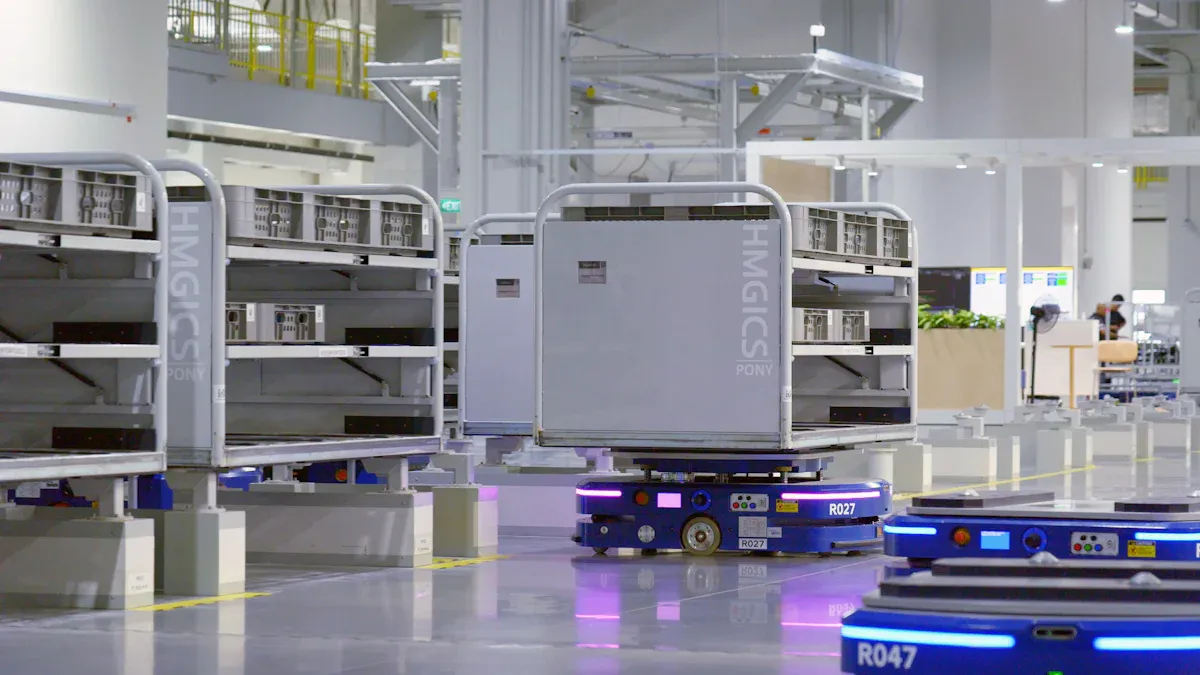
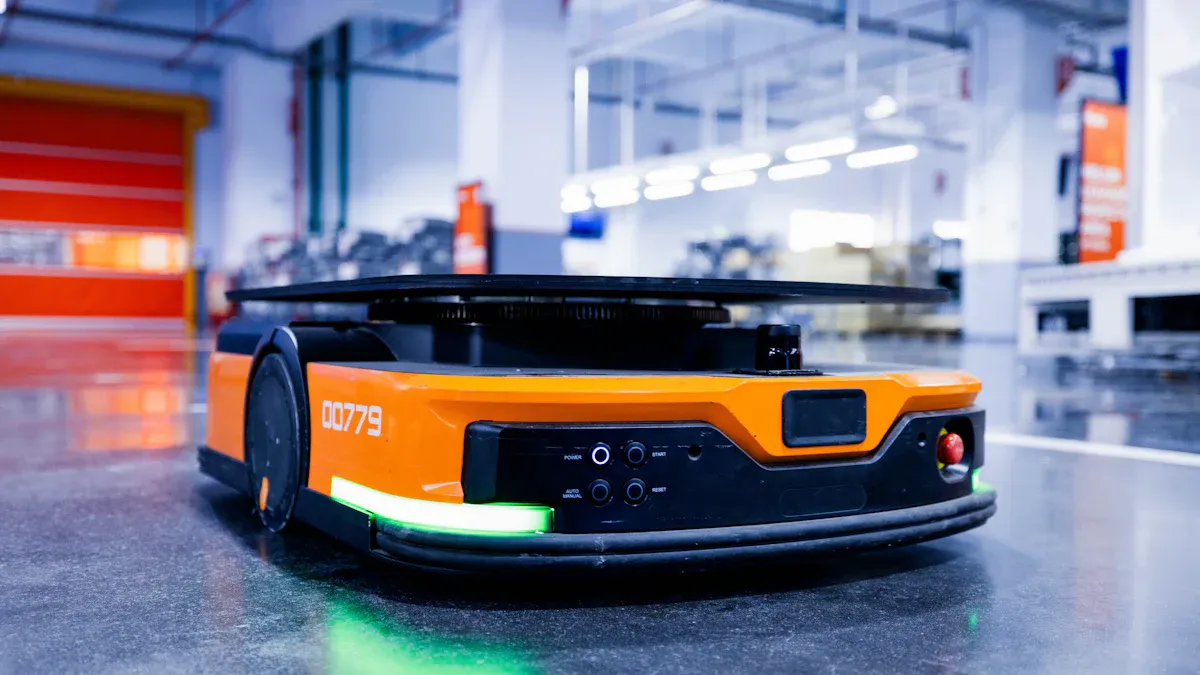
The warehouse uses advanced technology to make this possible. Computer vision cameras capture images of every shelf. These cameras track supply quantities and locations in real time. The system knows exactly what you take before you reach the door. Autonomous mobile robots, or AMRs, navigate the warehouse floor. They use sensors and machine learning to move goods to picking stations. They transport items efficiently without human guidance.
Automated storage and retrieval systems, known as AS/RS, add another layer of capability. Robotic cranes and shuttles retrieve items from high-density racks automatically. These automated picking systems work continuously. They never tire. They never make mistakes from fatigue. They pull exactly the right items for restocking and order fulfillment.
Real-Time Logging and Financial Integration
Every withdrawal logs automatically the moment you leave. The system records what you took, when you took it, and who took it. This data flows directly into your corporate financial systems. No manual entry. No transcription errors. No delays.
IoT integration connects all the components. Cameras and sensors link to your warehouse management system through APIs and middleware. This connection enables seamless data flow. Your inventory counts update instantly. Your financial records reflect every transaction immediately.
This integration delivers remarkable accuracy. The system eliminates human error from the equation. You never worry about mismatched records. You never reconcile paper forms against digital entries. The ai in warehouse management ensures every detail matches perfectly.
The real-time monitoring capability transforms your oversight. You see exactly what leaves your warehouse at any moment. You know your current inventory levels without conducting manual counts. You track usage patterns across departments and teams. This visibility gives you control you never had before.
Your financial systems receive clean, structured data with every transaction. The automation removes the administrative burden from your finance team. They focus on analysis instead of data entry. They identify trends instead of fixing errors. Your warehouse operations become a source of strategic insight rather than operational headaches.
The ai-driven unmanned warehouse solution creates a closed loop of efficiency. You take supplies. The system records the transaction. Your financial records update. Your inventory levels adjust. Your supply chain stays accurate. Your logistics run smoothly. Your management gains reliable information for better decisions.
This optimization extends beyond the supply room. The real-time inventory visibility helps you forecast demand accurately. You order precisely what you need. You avoid overstocking and stockouts. Your warehouse operates at peak performance. Your monitoring capabilities catch issues before they become problems.
The system also strengthens accountability. Every withdrawal ties to a specific employee. You know exactly who uses what supplies. This transparency reduces waste and misuse. Your inventory management improves dramatically. Your warehouse becomes a model of operational excellence.
The integration with your financial systems ensures complete audit trails. Every transaction leaves a digital footprint. Your auditors find everything they need instantly. Your financial reporting becomes faster and more reliable. Your warehouse operations support your broader business goals.
Seamless Integration with Financial Systems

Your AI-driven unmanned warehouse links directly to the financial software you already use. This connection removes the need to type in data by hand. You never export spreadsheets or re-enter numbers into another system. The link happens on its own, creating a steady digital path from the moment an employee takes a supply to the moment your financial records update.
Automated Data Sync for Accurate Records
The system uses several connection methods to keep your records correct. Each method serves a different purpose in your operation.
Integration Pattern | Description |
|---|---|
API-led | Uses clear APIs for direct, request-response talks, good for real-time data sharing and transaction updates. |
Event-driven | Systems talk through events (like inventory changes or order status updates), allowing quick, separate, real-time reactions to system changes. |
Batch | Data moves in set, bulk intervals, good for large, non-urgent data syncing like end-of-day financial reports. |
Your warehouse management system acts as the main hub. Middleware, such as a Robotics Manager or Warehouse Execution System, connects your WMS to the physical robots. This middleware turns high-level commands into specific tasks, ensuring smooth, two-way data flow. Pre-built connectors for popular ERP systems cut down the time, cost, and risk of your integration project. A modern robotics platform also offers a strong, well-documented API using REST with JSON, allowing direct system-to-system communication.
This connection removes manual data transfers, cutting both time needs and error risks. Each link removes a manual step and a spot where mistakes could happen.
Real-time data syncing keeps your inventory levels, order status, and payment processing perfectly matched. This match prevents overselling and backorders. It creates a steady digital path from order completion to revenue recognition. Your records stay correct because the system handles every transaction on its own.
The system also handles network failures smoothly. Local caching stores stock transactions on PDA devices during outages. Delta synchronization finds missing updates and syncs small changes when the connection returns. A Flink push-pull mechanism uses push mode for real-time updates and pull mode to hold transactions during ERP failure, then sends them again in the right order. A watermark mechanism ensures event-time processing keeps time order, stopping data duplication or loss. Consistency checks verify that missed transactions are not duplicated before updating your ERP.
Enhanced Accountability and Audit Trails
Every inventory change and movement logs on its own. The system creates a lasting, easy-to-keep audit trail. This constant logging gives better traceability through detailed records. Every transaction is recorded and checkable, directly supporting financial accountability.
The automated system audits and tracks inventory more than 20 times faster than manual methods. It automatically creates discrepancy reports and keeps an electronic audit trail, which is key for SOX compliance. The system provides documented proof of inventory status at entry and storage. This proof directly supports the trustworthiness of your financial data and lowers fraud and error risk.
Your finance team gains real-time cash visibility and faster payment processing. They no longer manually export and import records from one system to another. They focus on analysis instead of data entry. They spot spending trends across departments. They catch unusual usage patterns quickly. Your warehouse operations become a source of smart insight rather than operational headaches.
The integration keeps your financial reporting accurate and on time. Your auditors find everything they need right away. Your management makes decisions based on reliable data. Your supply chain runs smoothly because every transaction connects to your financial systems. This unified data approach turns your warehouse from a cost center into a strategic asset.
Stronger Inventory Management and Control
Real-time tracking changes how you run your warehouse. You see every item move right when it happens. You know exact stock levels without counting by hand. This view stops overstocking and understocking. Both problems waste money. Both problems break your supply chain.
The table below shows how AI tools improve inventory control and cut waste.
AI Mechanism | How It Improves Inventory Control | How It Reduces Waste |
|---|---|---|
Accurate Demand Forecasting | Looks at past sales, seasons, and deals to guess future demand, stopping overstock and stockouts. | Stops buying too much and old stock by matching stock levels with real demand. |
Real-Time Inventory Visibility | Uses cameras and sensors to track stock levels and quickly flag items in wrong spots or missing. | Cuts waste and loss by catching errors early, stopping delays and extra orders. |
Picks best storage spots based on how products move and how often they are ordered, saving travel time. | Uses space better, stops overstock in easy-to-reach zones, and lowers risk of damaged or forgotten stock. | |
Sustainability Optimization | Watches energy use and adjusts stock levels to save storage space. | Cuts waste by stopping overstock, spoilage, and old stock, and also lowers energy use. |
Less Waste Through Real-Time Tracking
Perpetual inventory management gives you 24/7 visibility. RFID and checkout systems count your stock as soon as it arrives. Tools like Modula WMS give real-time views and automate stock tracking. This automation cuts manual work and gives you more control.
Perpetual inventory management is a method where you count your stock as soon as it arrives using RFID and checkout systems, so you always know your stock levels.
Cloud-based inventory systems let you track your warehouse from anywhere. You watch operations from far away. You adjust stock levels based on predicted demand. Real-time data analysis helps you spot problems before they grow.
Best Stock Levels and Cost Savings
AI-driven planning gives clear money benefits. Companies cut inventory holding costs by 15-25%. They lower safety stock needs by 20-30%. They reduce write-offs of extra stock by up to 40%. Demand forecast accuracy improves by 10-20%.
Transport costs: cut by 5-10%
Delivery reliability: raised by up to 20%
Extra stock: cut by 35%
Losses from out-of-stock: cut by 65%
Buying costs: cut by 15-45%
Stock costs: cut by 25-35%
Stock turnover: improved by 15%
Service levels: improved by 65%
According to McKinsey, early users of AI in supply chain get 15% lower logistics costs, 35% better stock levels, and 65% better service levels. Nearly 40% of businesses report clear results from their AI investments.
Your AI warehouse management systems deliver this planning. Your warehouse runs with precision. Your logistics network stays efficient. Your management gets reliable data for decisions. Your monitoring catches waste early. Your controls stop losses. Your stock planning becomes a competitive edge.
Automation Benefits for Financial Enterprises
Your team stops waiting for approvals. They stop chasing signatures. They stop filling out paper forms. The AI-driven unmanned warehouse solution removes these delays completely. Your employees tap their ID cards, grab supplies, and return to work. The entire process takes seconds instead of hours.
Reduced Administrative Work and Faster Operations
Your finance team gains back hours every week. They no longer type data into spreadsheets. They no longer reconcile paper slips against digital records. The integration between your warehouse and financial systems handles this work automatically. Your staff focuses on analysis, forecasting, and strategic planning instead of data entry.
Your employees move faster too. They never interrupt their workflow to request supplies. They never wait for manager approval. They never visit the supply room twice because they forgot a form. This automation removes friction from daily operations. Your teams complete tasks quicker. Your projects finish on schedule. Your overall efficiency improves across departments.
The real-time logging captures every transaction instantly. Your warehouse records update the moment an employee leaves with supplies. Your financial systems reflect the change immediately. You never wonder about current stock levels. You never question whether records match reality. The data flows automatically, keeping every system accurate.
This optimization transforms your warehouse operations. Your staff spends less time on administrative tasks. Your managers spend less time reviewing requests. Your finance team spends less time correcting errors. Everyone redirects their energy toward work that matters. Your supply chain runs smoother because fewer bottlenecks slow it down.
Trusted by Industry Leaders
Leading financial enterprises trust this solution. JPMorganChase uses it in their facilities. Goldman Sachs relies on it for daily operations. Morgan Stanley, HSBC, and UBS have deployed it across their offices. These organizations demand precision, security, and reliability. They choose this ai in warehouse management solution because it delivers.
Property management giants also depend on this technology. JLL and CBRE manage thousands of commercial spaces. They use this system to control supplies across their portfolios. ISS A/S, a global facility services leader, integrates it into their operations. These companies serve the most demanding clients in the world. They cannot afford mistakes.
When industry leaders trust a solution, they validate its performance. Their continued use proves the system works under real-world pressure.
This trust comes from measurable results. The ai system reduces waste through precise monitoring. It prevents overstocking and stockouts through accurate inventory management. It strengthens accountability through complete audit trails. Your logistics become more predictable. Your management gains reliable information for decisions. Your supply chain efficiency improves noticeably.
The monitoring capabilities give you complete visibility. You track every item from arrival to consumption. You identify usage patterns across teams. You spot unusual activity quickly. This oversight protects your resources and your budget. Your warehouse operations become a model of control.
Your inventory stays accurate without manual counts. Your systems stay synchronized without manual entry. Your logistics stay efficient without constant oversight. The automation handles the routine work. You focus on strategic decisions. This solution delivers the optimization your enterprise needs.
The ai-driven unmanned warehouse solution changes how you work. You no longer need manual approvals or paper forms. Your financial systems update on their own with each transaction. This connection gives you live updates on your inventory.
Your warehouse work gets more efficient. Companies say they cut inventory costs by up to 35% and improve service levels by 60%. Most get their money back within 18 to 24 months. This automation makes your supply chain work better.
Big companies trust this solution. JPMorganChase, Goldman Sachs, and HSBC use it every day. Their success shows how useful ai is in warehouse management.
Your logistics get better. You track items exactly. You manage inventory with more accuracy. Your managers get good data to make decisions. This improvement cuts waste and makes your logistics network more accountable.
Think about how this solution could make your work smoother. Check out what it can do for your finance team today.
FAQ
How long does integration take?
Most setups finish in weeks, not months. The system uses pre-built connectors to link to your current financial software. Your team needs minimal training. The ai-driven unmanned warehouse solution works with your current systems without causing problems. Your warehouse operations continue normally during setup.
What happens during a network failure?
The system keeps transactions on devices locally. When your connection comes back, it syncs all missed updates on its own. A check stops duplicate entries. Your data stays accurate. Your financial systems receive complete records. You never lose transaction history.
How does the system protect sensitive information?
Access controls limit who sees inventory data. Each withdrawal is linked to an employee ID. The monitoring system marks unusual activity right away. Your management team gets alerts for suspicious patterns. This security setup meets company rules.
What is the typical return on investment?
Most companies get back their investment in 18 to 24 months. Companies report cutting inventory costs by up to 35%. Service levels improve by 65%. This automation reduces administrative work significantly. Your efficiency gains grow across departments. The optimization extends throughout your logistics network.
Does the solution work with existing warehouse layouts?
Yes. The system fits your current space without big changes. Cameras and sensors go on your shelves. The ai in warehouse management platform maps your space on its own. Your supply chain continues running during installation. This ai technology scales with your needs. Your logistics operations improve without facility changes.
See Also
AI E-Commerce Solutions Revolutionize Online Store Administration
The Future Of Retail Belongs To AI Powered Stores
How AI Combo Vending Machines Enhance Modern Retail Operations
