How frictionless checkout improves the customer experience in Hospitals & healthcare facilities

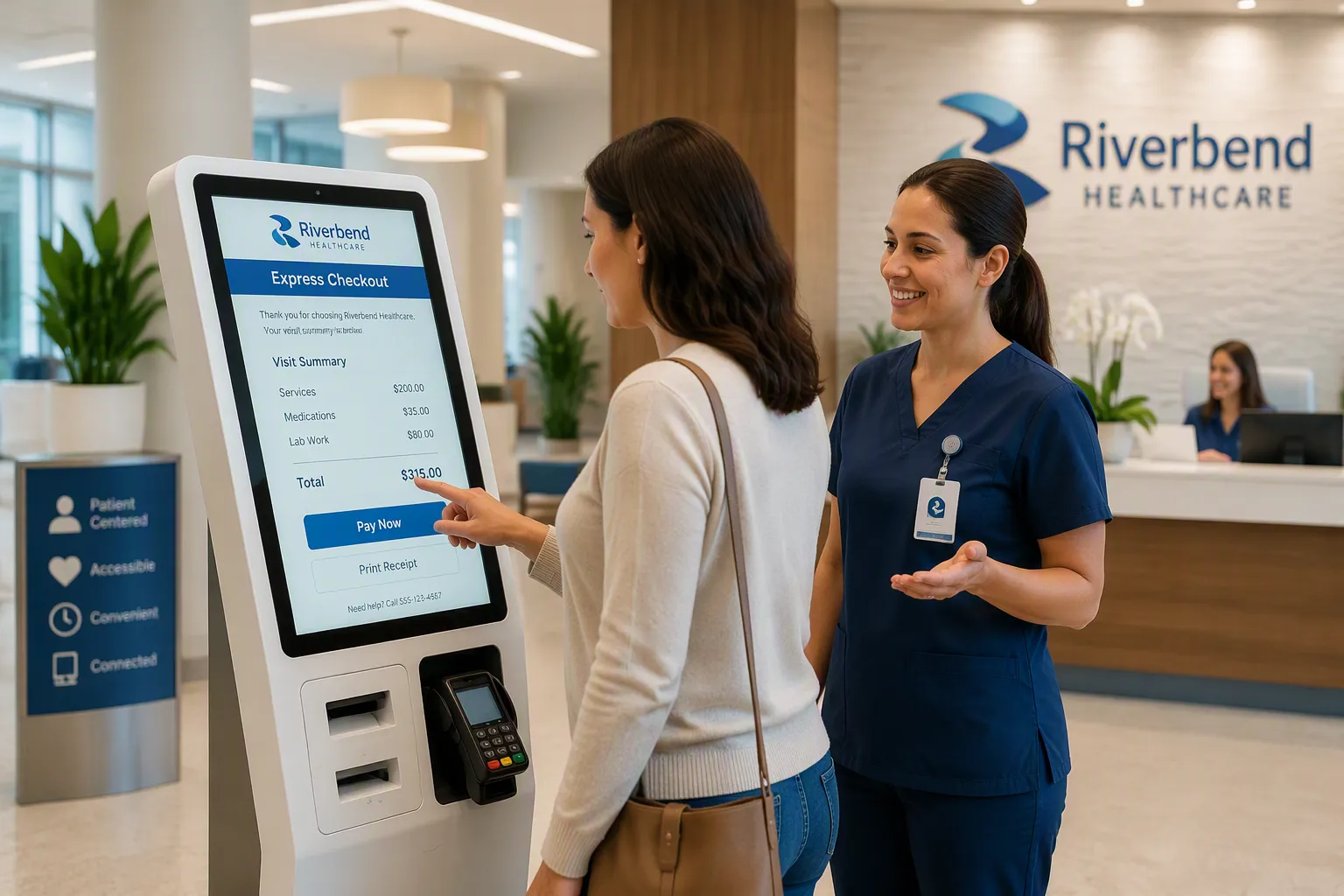
Imagine you are a visitor at a hospital cafeteria. After a stressful visit, you face a long, slow checkout line. You hold a tray, waiting as each person pays. Or picture yourself as a patient ready for discharge. Billing delays keep you from leaving. These moments create real friction. Frictionless checkout removes these barriers. This technology reduces shopping trip times by 75%. It transforms waits into seamless experiences. How does it cut wait times? How does it boost your satisfaction? And can it justify the investment? These questions find answers here. You deserve a frictionless experience that respects your time. This technology delivers that relief.
Key Takeaways
Frictionless checkout cuts wait times by 75%.
Long waits hurt patient satisfaction scores.
Automated systems reduce staff burnout.
Frictionless checkout boosts revenue and loyalty.
Start with a pilot in one area.
The High Cost of Slow Checkout in Healthcare
Patient Wait Times and Satisfaction
You arrive for an appointment. You check in. Then you wait. That wait shapes your entire experience. Research shows a direct link between lobby wait times and your satisfaction. The numbers tell a clear story.
Metric | Finding |
|---|---|
Lobby wait time vs. overall rating | Correlation coefficient of -0.255, the strongest among time metrics |
Lobby wait time vs. lobby wait rating | Correlation coefficient of -0.611 |
Impact of wait time increase | Every 10-minute increase (after 42-min average) leads to a 1-star drop (from 5 to 3 stars) |
Exam room time vs. overall rating | Correlation coefficient of -0.005, showing negligible impact |
The clinical ambulatory patient experience is heavily influenced by time spent waiting for provider care. Longer wait times negatively impact the likelihood to recommend, overall satisfaction, and perceptions of information, instructions, and treatment provided by physicians and caregivers.
You might think the exam room matters most. The data says otherwise. Exam room time shows almost no correlation with your rating. The lobby wait drives your perception. Every extra ten minutes past the 42-minute average drops your rating by a full star. That single finding explains why checkout speed matters so much.
Staff Burnout and Operational Inefficiency
Your care team feels the pressure too. Administrative staff juggle many duties. They handle billing forms. They manage insurance paperwork. They schedule appointments and maintain records. This workload creates significant job stress.
Administrative staff duties include handling billing and insurance forms alongside scheduling and records management.
This diverse workload, combined with cross-departmental coordination, creates significant job stress.
The study explicitly links this stress to burnout among hospital administrative staff.
Manual payment tasks consume valuable time. They also increase error rates. Reducing these manual duties through technology allows staff to redirect effort toward patient care, mitigating burnout.
Consider the retail side of your facility. The gift shop or cafeteria runs on manual cash management. Managers spend hours on cash reconciliation. They should focus on strategic tasks instead. This time diversion leads to delayed reconciliations and unbalanced tills. Checkout bottlenecks appear during peak hours. Customers grow frustrated. Sales slip away. Manual processes degrade both operational efficiency and customer service quality.
Frictionless checkout addresses these problems directly. It removes the manual steps that slow everyone down. Your staff gains time for meaningful work. Your patients experience shorter waits. The cost of slow checkout extends far beyond a single transaction. It touches satisfaction scores, staff retention, and your bottom line.
How Frictionless Checkout Works in Healthcare
Your facility handles two distinct checkout scenarios. The first is retail checkout. This covers gift shops, cafeterias, and pharmacies. The second is clinical checkout. This handles discharge billing and payment for services. Frictionless checkout serves both areas with the same core technology. That technology combines computer vision, artificial intelligence, and real-time analytics. It removes unnecessary steps, delays, and cognitive load from every transaction.
Computer Vision and Real-Time Analytics
Picture yourself walking through your hospital's gift shop. You pick up a snack and a magazine. Computer vision cameras track each item you select. The system identifies them instantly. No barcode scanning required. No waiting in line. The AI processes your selections in real time. It builds a digital cart as you move through the store. When you walk out, the system finalizes the transaction automatically. This technology reduces shopping trip times by 75%. You save minutes on every visit. Your staff saves hours previously spent on manual checkout.
The same real-time analytics support clinical checkout. The system pulls billing data from your electronic health records. It calculates charges automatically. It removes the manual steps that slow discharge. Every extra step you remove saves your patient energy. The system cuts the cognitive load to almost zero. Your patients complete their departure without frustration.
Seamless Payment and Digital Health Access
Payment happens without friction. In retail areas, the system charges your account automatically as you exit. In clinical settings, you receive a secure payment link via SMS. No portal login needed. You skip the portal altogether. No passwords to remember. No multiple app logins to manage. You can pay hours later, when the fog lifts. This respects your post-treatment cognitive state. One-tap biometrics make payment fast. Face ID and Touch ID confirm your payment in seconds. A single-page accordion flow simplifies the checkout. Every tap matters. Every unnecessary step can cost a conversion.
Digital health access ties everything together. The system integrates with your electronic health records. Digital patient check-in automates intake through self-service kiosks and mobile check-in. Image-based scanning of driver's licenses and insurance cards populates patient fields automatically. This reduces manual data entry. It prevents administrative errors. The system works seamlessly with existing EHRs and patient management systems. Your data stays consistent and up to date.
Frictionless checkout transforms both retail and clinical experiences. You gain speed. You gain accuracy. You gain patient trust.
Quantifiable Results of Frictionless Checkout
Time Savings and Increased Staff Hours
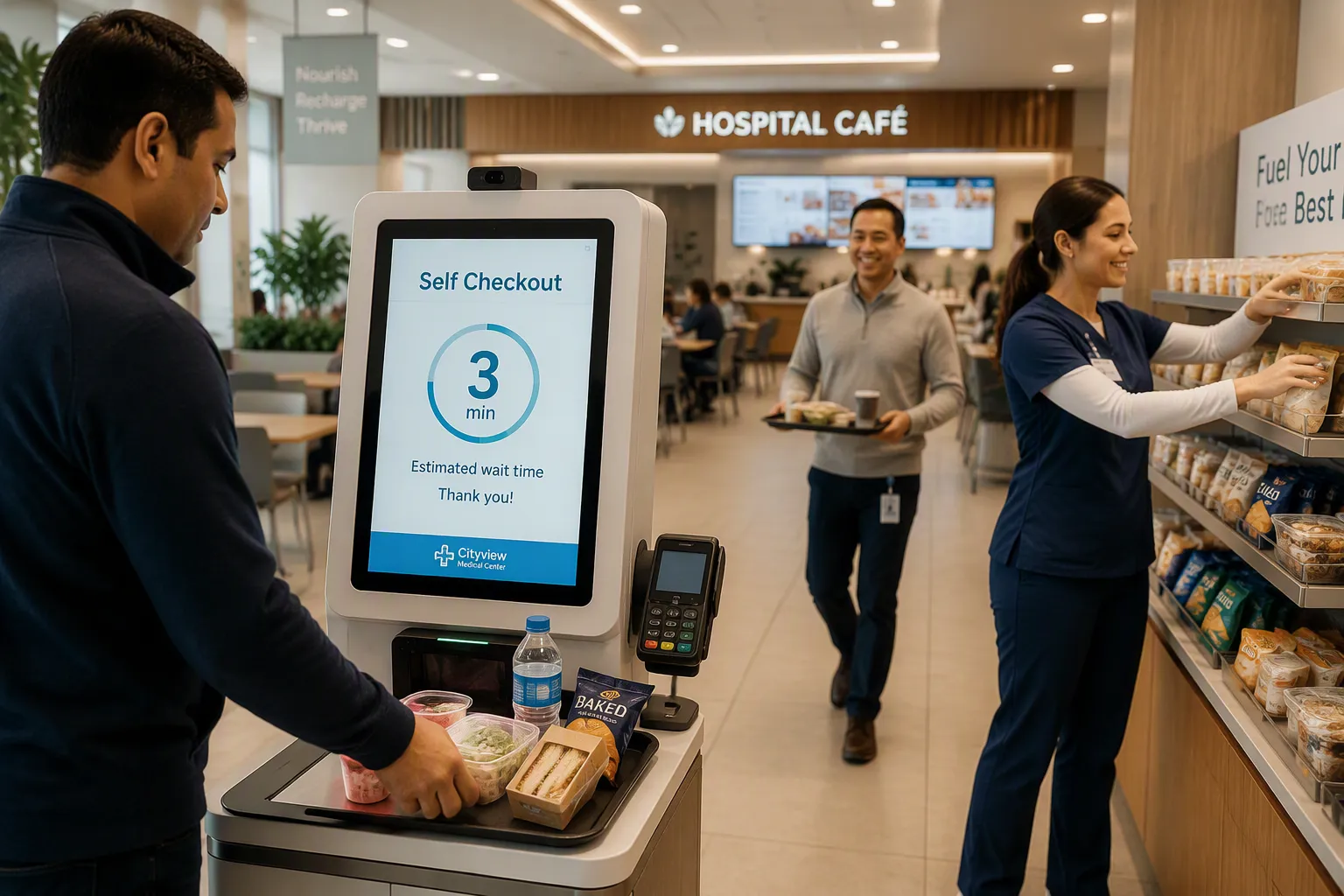
You want proof that this technology works. Real-world results deliver that proof. BayCare St. Joseph's Hospital implemented frictionless checkout in its cafeteria. The transformation was dramatic. Wait times dropped from 25 minutes to just 3 minutes. That represents an 88% decrease in waiting time. Your visitors experience this difference immediately. They move through the cafeteria with ease. They return to their loved ones faster. They leave with a positive impression of your facility.
Metric | Before Implementation | After Implementation |
|---|---|---|
Cafeteria wait time | 25 minutes | 3 minutes |
This single change frees your staff from constant register duty. Consider the math. A cashier spends hours each shift processing transactions. Frictionless checkout eliminates that burden. Those hours return to your team. They redirect their energy toward patient care. They stock shelves. They assist visitors who need help. They maintain a clean and welcoming environment. The technology does not replace your staff. It elevates their work.
The 75% reduction in shopping trip times compounds these savings. Every transaction becomes faster. Every customer moves through more quickly. Your staff handles the same volume with less effort. Peak hours no longer create chaos. The lunch rush becomes manageable. Your team works calmly instead of scrambling.
Revenue Recovery and Patient Loyalty
Frictionless checkout also protects your revenue. Manual billing processes introduce errors. These errors cost you money. They delay payments. They frustrate patients. Automated systems eliminate these mistakes. They calculate charges accurately. They process payments instantly. Your facility recovers revenue that previously slipped away.
Retail areas see immediate gains. Faster checkout encourages more purchases. Customers browse without worrying about long lines. They add items to their carts. They complete their purchases without hesitation. Improved purchase frequency follows naturally. A visitor who skips the gift shop due to time constraints now stops by. A staff member grabs a coffee during a short break. These small transactions add up. They boost your retail revenue significantly.
Enhanced consumer engagement strengthens these results. Patients interact with your digital systems. They appreciate the convenience. They remember the positive experience. This memory shapes their loyalty. They choose your facility for future care. They recommend you to family and friends. Patient loyalty translates directly into sustained revenue.
The financial benefits extend beyond retail. Clinical checkout becomes faster and more accurate. Patients complete their discharge without billing delays. They receive clear, correct invoices. They pay promptly through secure links. Your accounts receivable cycle shortens. Your administrative costs decrease. The return on investment becomes clear.
You measure success through multiple metrics. Wait times drop. Staff hours increase. Revenue grows. Patient satisfaction scores rise. Each metric reinforces the others. The case for frictionless checkout grows stronger with every data point. Your facility transforms from a source of frustration into a model of efficiency. Patients notice. Staff notice. Your bottom line notices.
Implementation Roadmap and ROI Justification
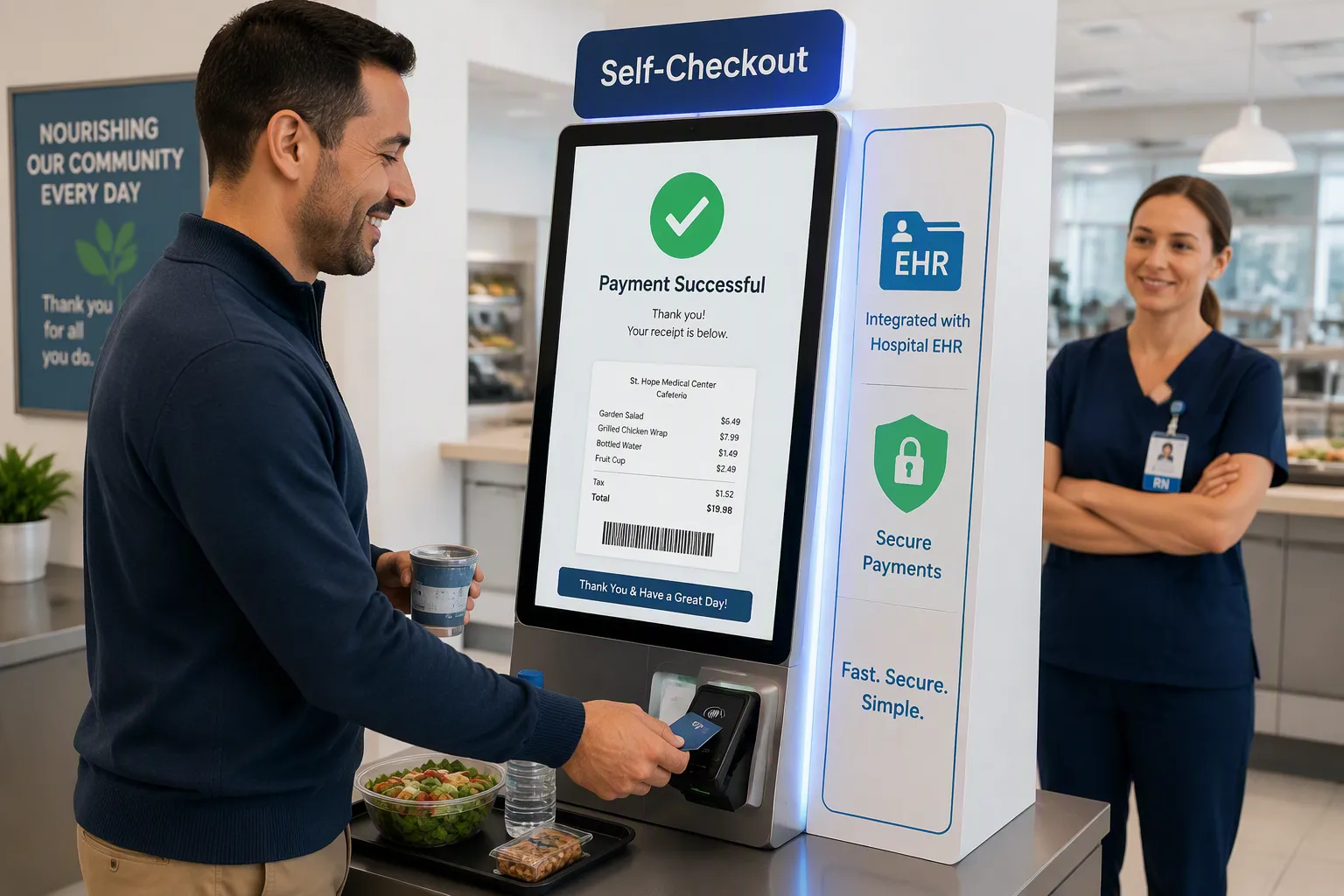
You start your journey with a single pilot. Choose a high-traffic retail area. Your hospital cafeteria or gift shop works well. This location proves the technology quickly. You measure results. You build confidence. Then you scale to clinical checkout. This phased approach minimizes risk. It also generates early wins that justify further investment.
Integration with Existing Systems
Your existing systems form the foundation. The technology must connect with your electronic health records. It must also link to your point-of-sale systems. This interoperability matters more than any single feature. You need seamless data flow across platforms.
Consider the key integration points:
Connect with EHR and EMR workflows for patient intake and discharge processes
Enable automatic posting of payment data to ERP, POS, and back-office systems
Support patient check-in through kiosks, reception desks, and unattended terminals
Ensure automation handles billing, invoicing, and reconciliation without manual effort
Your vendor should offer strong onboarding support. They should train your finance and operations teams. They should guide you through the transition. A good partner makes integration smooth.
Security and compliance remain critical. Look for systems that protect data integrity. Blockchain technology offers robust audit trails. This feature ensures every transaction leaves a verifiable record. Your compliance team will appreciate this transparency.
The user experience matters for your patients too. Choose an intuitive interface. Make it mobile-friendly. Keep the design transparent and simple. Patients should understand every step. They should never feel confused about charges or payments.
Fee structures deserve careful attention. Some vendors charge high percentage fees per transaction. These fees erode your margins. Look for zero-fee models instead. This approach protects your revenue. It also makes scaling more affordable as transaction volumes grow.
Measuring Success and Scaling
You need clear metrics from day one. Track wait times before and after implementation. Monitor staff hours saved. Measure patient satisfaction scores. Watch retail revenue trends. Each metric tells part of the story.
Start with a simple dashboard. Record baseline data before you launch. Compare results weekly. Share findings with your leadership team. Early wins build momentum. They also justify the next phase of investment.
Your pilot should run for a sufficient duration to provide enough data and allow for adjustments. You can refine workflows. You can address technical issues. You can train staff more thoroughly.
Once your retail pilot succeeds, plan your clinical expansion. Discharge billing presents different challenges. You must integrate with your EHR system. You must handle insurance coordination. You must manage complex payment scenarios. The technology supports these requirements. Your implementation team must configure it properly.
The market demands this transformation. Frictionless digital experiences are no longer optional. Patients expect them. Your competitors will adopt them. Early adoption gives you a strategic advantage. It positions your facility as a leader in patient experience.
Your roadmap should include regular reviews. Assess performance regularly. Identify improvement opportunities. Expand to additional locations. Add new payment methods. Enhance your analytics capabilities. Each iteration strengthens your system.
The return on investment becomes clearer with each phase. Reduced wait times improve satisfaction scores. Automated processes reduce administrative costs. Faster checkout increases retail sales. Accurate billing accelerates payment collection. These benefits compound over time. Your facility can achieve these results with frictionless checkout. Start small. Measure carefully. Scale strategically. The path leads to better patient experiences and stronger financial performance. You have the roadmap. Now take the first step.
Frictionless checkout delivers real results. You reduce wait times in retail and clinical settings. Your staff gains hours for patient care. Patient loyalty grows stronger. Your facility sees strong ROI. The 75% reduction in shopping trip times transforms your operations. This statistic proves the technology works. You can start today. Review your current checkout friction points. Identify one high-traffic area. Your hospital lobby retail store offers an ideal starting point. Pilot frictionless checkout there. Measure the immediate improvements. See the measurable gains for yourself. The path to better patient experiences starts with a single deliberate step. Take that step now. Your patients and staff will thank you for it.
FAQ
How does frictionless checkout protect patient data?
Your facility's data security remains a top priority. The system uses blockchain technology to create verifiable audit trails. Every transaction leaves a permanent record. This transparency helps your compliance team monitor all activity. Patient information stays protected through secure, encrypted connections throughout the entire payment process.
How long does implementation take?
You should plan for an adequate pilot period to evaluate performance. This allows time for workflow adjustments and staff training. Your vendor should provide onboarding support during this phase. You can then scale to additional areas with confidence.
Will this technology replace my staff?
No. Frictionless checkout elevates your team's work rather than replacing them. Your staff redirects their energy toward patient care. They assist visitors who need help. They stock shelves and maintain welcoming environments. The technology handles repetitive transactions. Your people focus on meaningful human interactions.
What if a patient prefers traditional checkout?
You can offer multiple payment options. Some patients will choose the frictionless experience. Others may prefer conventional methods. The system accommodates both approaches. Your staff remains available to assist anyone who needs help. This flexibility ensures every patient feels comfortable and respected during their visit.
How does this integrate with current systems?
The technology connects directly with your electronic health records and point-of-sale systems. It also links to your ERP and back-office platforms. Payment data posts automatically across all systems. This interoperability eliminates manual data entry. Your records stay consistent and current without extra effort from your team.
See Also
A Historical Look At Self-Checkout Systems Over Time
How Walgreens Self-Checkout Offers Convenience Yet Faces Hurdles
Cloudpick Checkout Systems Improve Efficiency And Customer Access
