Everything Retailers Need to Know About Cashierless Checkout Systems

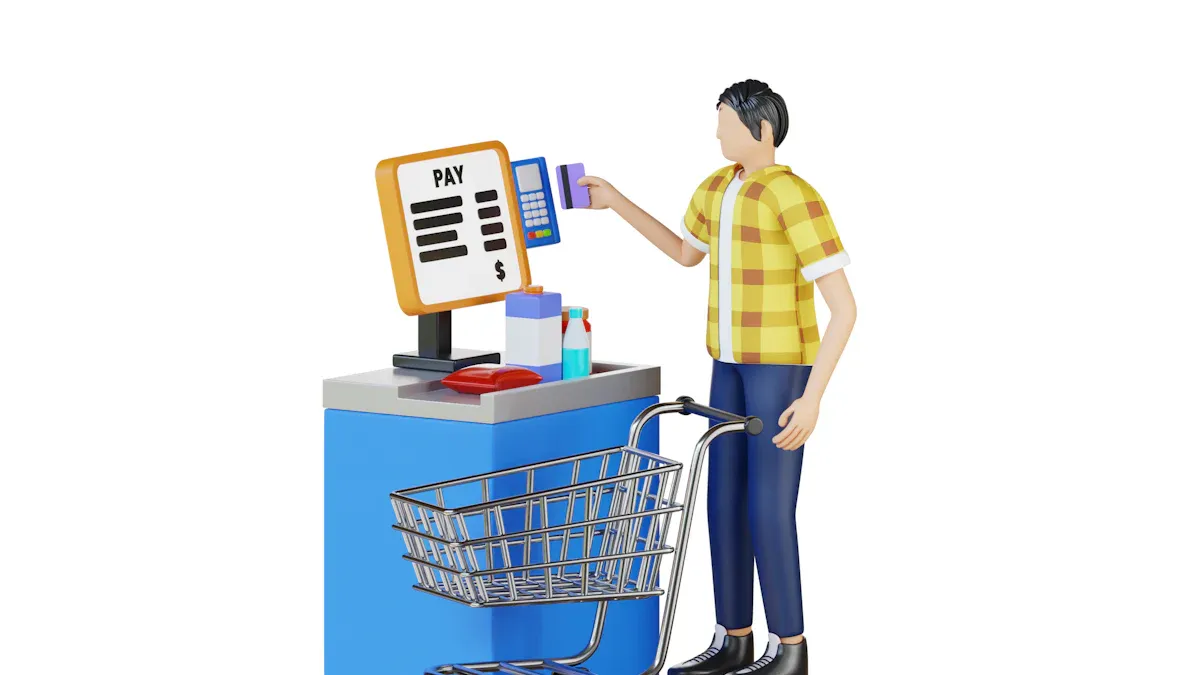
Cashierless checkout systems let shoppers take items and leave without standing in a checkout line. The system spots each item chosen and charges a payment method on its own. These systems matter to you right now. Shopper expectations are changing. Labor pressures stay high. Amazon Go-style stores are raising the competitive bar. Analysts expect the global self-checkout market to pass $11 billion by 2030. You should understand how cashierless checkout systems work, weigh their good points and bad points, and decide whether one fits your store. The stakes are high. These choices touch your store's operations, customer experience, and bottom line. Being clear on each factor will guide your decision today.
Key Takeaways
Cashierless checkout systems use computer vision and sensors to track items on their own. Shoppers skip lines and get charged right away.
These systems cut running costs and open up floor space. Workers shift to helping customers. Shoppers get through the store faster.
Starting costs go from $100,000 for kiosks to $500,000 for large supermarkets. Retailers should test pilots before full rollouts.
Privacy and accuracy are still very important. Technologies track faces and movements. Recognition accuracy is over 99%. Biases and data rules create risks.
Pick the system that fits your store. Computer vision is best for big chains. Mobile self-scanning works for smaller stores and costs less.
What Are Cashierless Checkout Systems?
Definition and Core Concept
A cashierless store has a few different names. You might hear it called a till-less store, a checkout-free store, or a just walk out store. All of these names mean the same core idea.
A cashierless store (also called a till-less store, checkout-free store or just walk out store) lets customers shop for products and leave without having to wait in line to pay at a checkout.
Pick out the products you want, then head out the door. The system takes care of payment on its own. No cashier scans your items, and there is no line to wait in.
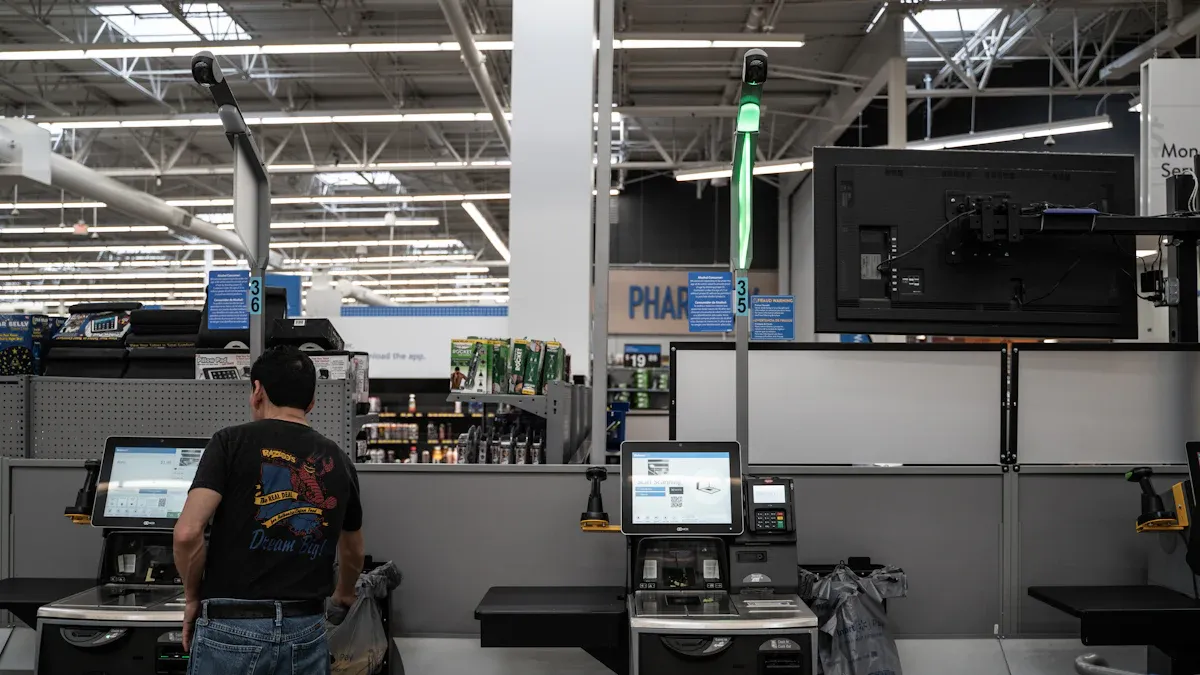
These systems spot what you choose and charge a payment method by themselves. They do this with artificial intelligence, computer vision, sensor technology, and the Internet of Things. This technology spans a range. Early self-checkout terminals from the 1990s are at one end. Scan-as-you-go devices, smart carts, and computer vision-powered store automation are at the other. The most advanced systems today track which items you pick up and put into baskets, carts, or pockets. When you leave the store, they charge you.
The table below shows the differences between cashierless checkout systems and traditional checkout lanes.
Defining Feature | Cashierless Checkout Systems | Traditional Checkout Lanes |
|---|---|---|
Core Technology | AI-powered cameras, sensors, and machine learning track items automatically | Barcode scanners, POS terminals, and human cashiers |
Checkout Process | Fully automated; no scanning or cashier interaction required; charges applied upon exit | Manual scanning by cashier; payment handled at register |
Customer Effort | No barcode scanning, no app use, no waiting in line | Requires queuing, item scanning, and interaction with cashier |
Implementation Cost | Very high due to AI, hardware, and software integration | Lower; relies on existing retail infrastructure |
Feasibility for Small Retailers | Limited due to cost and complexity | Highly adaptable and affordable |
Customer Learning Curve | Potentially confusing for new users | Simple and familiar |
Labor Requirements | Fewer staff needed; workers redeployed to customer service | Requires considerable staff, especially during peak hours |
Store Layout Impact | Removes checkout counters, freeing floor space for products | Checkout counters and queueing areas consume selling space |
Data & Analytics | Real-time shopper behavior data enables personalized marketing and inventory optimization | Limited behavioral data collection |
Shopper Benefits | Faster shopping, no cash needed, improved privacy, accurate billing | Familiar experience; preferred for larger orders and assistance |
Common Store Formats
Cashierless checkout is no longer just for grocery stores. Convenience stores lead the market with a 29.2% share of store formats. Computer vision and AI make up 27.4% of the technology segment. Autonomous checkout is 23.8% of applications. Retail chains make up 36.2% of end users.
Today you can find these systems in many places. Amazon Go led the way with the cashierless grocery store idea. Zippin, a San Francisco-based company, leads stadium deployments with 56 such stores at last count. AiFi has six known permanent store locations plus portable stores. Standard AI works in convenience stores, campus stores, and two stadiums. Trigo teams up with large grocery chains in Europe and the U.K., including Tesco and ALDI. Grabango helps convenience store chains like Circle K and AM/PM. Mashgin runs self-service computer vision checkout machines in airports, sports arenas, and cafeterias. Giant Food's Scan It gives shoppers handheld barcode scanners in about 120 of its 164 grocery stores.
The market's store formats include convenience stores, grocery and supermarkets, specialty retail, quick service restaurants, stadiums, airports and transit hubs, and corporate and campus retail. Fully autonomous stores, stadiums, airports, and transit hubs are expected to grow fastest through 2036. New launches show this trend. Amazon brought portable Just Walk Out retail lanes to concerts and live events. AiFi launched autonomous checkout in hospital stores. Zippin opened five new autonomous stores at NRG Stadium for the 2025 NFL season. The technology keeps spreading to new places.
How Cashierless Checkout Systems Work
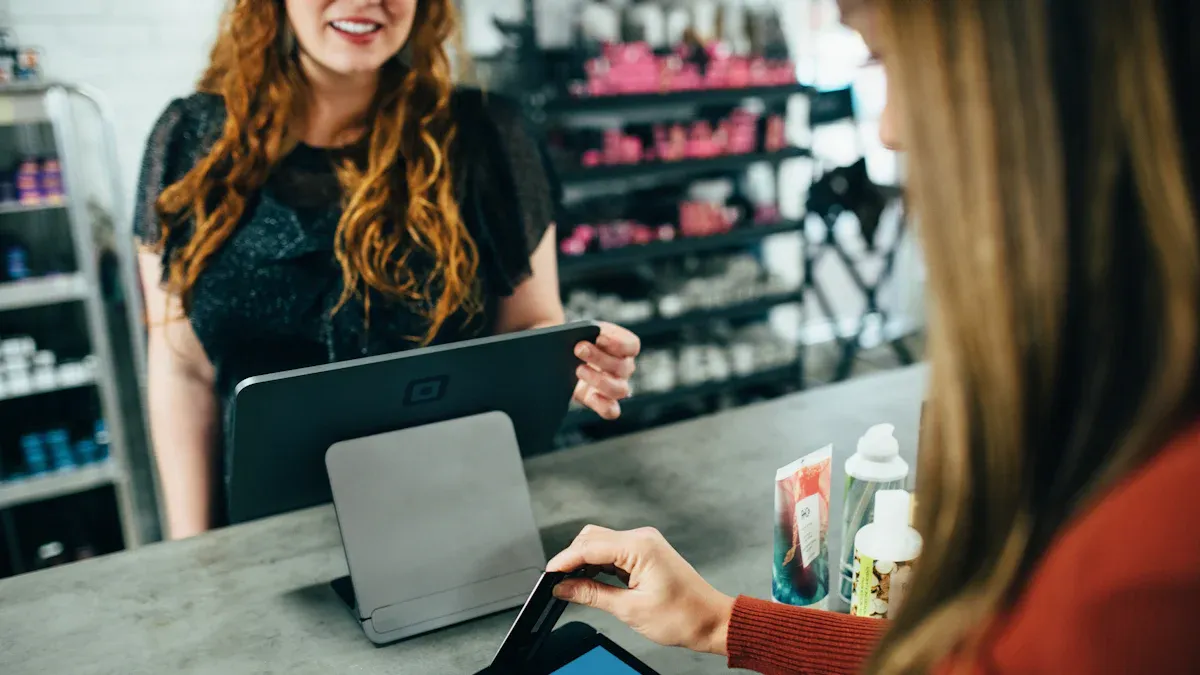
To understand how cashierless checkout systems work, split the technology from the shopper's path. Each half explains the full process.
Key Technologies Behind the Scenes
Cameras in the ceiling of a cashierless store take pictures of each product you pick up. A computer program trained on thousands of images figures out the object and its price. The system ties that product to your visit. This link makes sure you pay for what you take.
Computer vision does the main tracking job. Machine learning handles object recognition. Deep learning models go through many video frames each second. When you pick up an item, the model adds it to a virtual cart. If you put it back on a shelf, the model takes it out. Weight sensors help by catching small changes in shelf weight.
RFID tags add another layer of accuracy. Each tag holds a unique electronic label for its item. At an exit lane, sensors can read a whole basket of tagged products at once. This lets you pay, pack, and leave without scanning each item. Shelf sensors, which mix weight sensors, RFID readers, and cameras, take the system even further.
Many systems depend on sensor fusion. This method blends cameras, weight scales, RFID, and lidar into one view. It cuts down errors when one shopper blocks another. It also stops wrong charges when several people shop from the same shelf. Modern systems report product-recognition accuracy above 99%. The system watches behavior and can send an alert when a human needs to check a risk.
Amazon's Just Walk Out stores show how cashierless checkout systems work in real life. Overhead cameras and shelf sensors track every selection. When you pick up a product, it goes into a virtual cart. If you put it back, the system takes it out. When the gate opens for a group, everyone enters with one payment method. The system charges that account for whatever anyone leaves with.
The Shopper Journey
From your side, the process feels simple. The steps below cover the full trip.
Enter the store. You sign in with a special mobile app or a card. Many stores ask you to scan a QR code from your phone at a turnstile. Amazon Go uses this entry method. The system gives you a temporary numeric code that works as your digital signature.
Pick up your items. You shop like normal. Cameras watch your movements, weight sensors track shelf changes, and RFID tags identify products. The system keeps a virtual cart up to date in real time. Every return takes the item off your total.
Walk through access control. For entry-authentication stores, you head to the exit. Going through the gate ends your session and starts payment processing. Some stores use exit-authentication, so you scan your payment method before leaving. Others use RFID lanes. Those lanes read every product's tag at once.
Receive your charge. The system works out your total on its own. It charges your linked payment method and sends a receipt. If you shopped as a group, you get one receipt for everyone's items.
This handoff takes seconds. You skip the line, and the store avoids a queue. That exit moment is the core of how cashierless checkout systems work. A clear picture of that flow helps you judge any vendor's system.
Main Benefits for Retailers
Operational and Cost Advantages
You can lower running costs a lot once the technology gets better. Amazon's Go store costs show this trend. Running a 1,000-square-foot Go store cost $4,000,000 in December 2017. By 2021, that dropped to $159,000. That is a 96% drop. The first Go store cost over $10,000,000 to run, says Brad Stone's Amazon Unbound.
Metric | Value |
|---|---|
Operating cost per 1,000-sq-ft Go store (Dec 2017) | $4,000,000 |
Operating cost per 1,000-sq-ft Go store (2021) | $159,000 |
Cost decline since 2017 | 96% |
A few things cause these savings. A new camera system with a wider view means you need fewer cameras in each store. Remote switches and on-site edge compute services cut some costs. Better computer vision means fewer remote workers are needed to watch tricky transactions. A better supply chain also helps. Cutting prepared-food shipping time from eight days to three days should save almost $1,000,000 each year. It also saves thousands of hours of store labor, partly by reducing food waste. You also free up floor space when checkout counters are removed. And you move workers to customer service instead of registers.
Customer Experience and Sales Impact
Shoppers feel the change when they leave. Cashierless systems, self-checkout apps, and Scan & Go remove checkout lines and cut waiting. Stores use these tools to boost satisfaction and efficiency. One review of a single shopper found that self-scanning can slow the trip down while making checkout faster. Long checkout lines still cause strong bad feelings. So moving time from checkout to browsing can still raise satisfaction.
People already want this format. A survey cited in Loss Prevention Media found that 60% of shoppers would pick "just walk out" cashierless shopping like Amazon Go. A Raydiant survey of 1,000 U.S. consumers found that 60% chose self-checkout over store workers when asked. Faster trips and shorter waits can raise how often people visit and how much they buy over time.
Key Challenges and Limitations
Technical and Infrastructure Hurdles
You will run into real technical problems when you grow past a test store. Your backend systems must work and stay watched at many locations. Staff need new training on smart-checkout workflows. You must test each system well before a full launch. Shoppers also need clear guidance to use the checkout the right way. Every store has its own layout and local conditions, so you must adjust the service for each site.
The hardware itself needs careful planning. You need cameras to record visual data for item recognition. A video processing unit, like an Nvidia Jetson GPU, handles real-time computer vision. A QR scanner at entry or on a fridge starts the shopping session. An on-site model server keeps processing steady and fast. Stable, fast network bandwidth is a must because live video streams must reach the model without delay. Store size and product count decide how many cameras or shelf units you need. Full-store automation may require layout changes and turnstiles. Smart fridges cut the need for global changes. You must also link inventory, POS, and accounting systems so vision events update sales and product availability.
Cost, Privacy, and Adoption Concerns
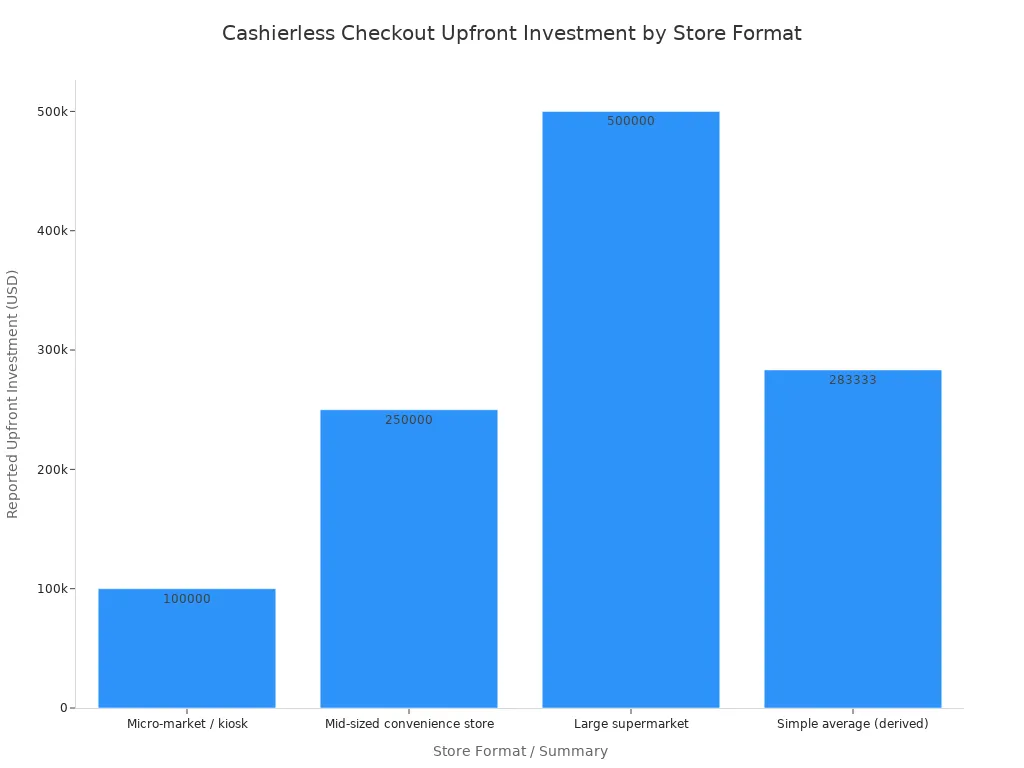
Upfront costs differ by store format. A micro-market or kiosk runs about $100,000. A mid-sized convenience store costs around $250,000. A large supermarket reaches $500,000. These figures cover upfront hardware only, so software setup and integration can push your total higher.
Privacy concerns also shape adoption. Amazon Go's Just Walk Out technology tracks faces, hand gestures, and voice prints. Consumers cannot change facial features, fingerprints, or their voice if that data leaks. A MIT study found a false match rate of 0.8% for lighter skin tone versus 34.7% for darker skin tone. That bias can lead to overcharging or undercharging. GDPR treats biometric identifiers as special-category data. The EU AI Act classifies biometric identification as high-risk. Human intervention stays event-driven, not scheduled. The system assigns confidence scores to predictions. Low confidence flags a transaction for review. Critical uncertainty requests human help. Exceptions include camera obstruction, sensor failure, and payment failure.
What Retailers Should Consider Before Implementing
Assessing Store Fit and Readiness
Begin by looking at your store's foot traffic and profit margins. Places with lots of people, like airports, city convenience stores, and hospital campuses, picked up cashierless checkout the quickest. Formats with high margins make the money spent worth it. Grocery and mass merchandise stores with thin margins only automate certain sections. They carry so many different products that changing the whole store becomes harder.
Costs now work better for mid-size operators. Sensor arrays and computer vision costs have fallen about 40% since 2023. The Loop NanoStore shows how this fits. This 150-SKU convenience store sits inside a Shell station in Campbell, California. It runs all day and night and sells fresh produce, not just snacks. Its tech-friendly customers support this format. Analysts think there will be 12,000 checkout-free stores around the world by 2027, and 67% of consumers are interested. Try a pilot first. NCR Voyix says you should set goals for adoption and satisfaction, estimate gains in efficiency and savings on labor, and track maintenance work and reductions in cash handling.
Choosing the Right System and Vendor
Compare the types of systems. Computer vision vendors like Amazon Just Walk Out, Zippin, AiFi, Trigo, and Standard AI use cameras and shelf sensors to spot items. Mobile self-scanning vendors ask customers to scan each item with a phone.
Factor | Computer Vision Vendors | Mobile Self-Scanning Vendors |
|---|---|---|
Upfront investment | High | Low |
Deployment time | Months | Weeks |
Building work | Usually yes | Rarely |
Privacy exposure | Camera profile under strict GDPR rules | No facial recognition |
Best fit | Chains and large-format stores | SMEs, franchises, campuses |
Customer effort | None | Scanning each product |
Match the system to your store's size. A chain with dozens of stores gets the best results from computer vision. A single minimarket, hotel store, or campus franchise may find self-scanning opens the same door at a lower cost. Also think about practical issues. Some systems have trouble with group shopping. Many retailers like providers that keep data private. Cash support matters too: Grabango lets customers pay a cashier who knows their items, and AiFi offers kiosks where customers load a card with cash. Standard Cognition reports 98% accuracy in existing layouts. Zippin offers turnkey small stores or no-wiring shelf sensors. Check retrofit capability before you choose.
Your choice depends on four things: store format, budget, shopper base, and tech readiness. Convenience stores with limited SKUs pilot faster than large supermarkets. Mid-size stores can now afford this because sensor prices have fallen. Your shoppers must want the experience. Your backend must manage the data load.
Cashierless checkout does not fit every store. Run a pilot before rollout. Good pilots pair new tech with shopper education and loyalty programs. Amazon Go puts staff at entrances to help first-time shoppers. Start small, get feedback, expand.
The tech keeps evolving. Computing costs fall while accuracy rises. Retailers who test now will lead the market. Those who wait risk falling behind.
FAQ
How much does a checkout-free system cost?
Upfront hardware costs go from $100,000 for a micro-market or kiosk to $250,000 for a mid-sized convenience store. A large supermarket can hit $500,000. Software setup and integration make the total go higher. Sensor and computer vision costs have fallen about 40% since 2023.
Which store formats benefit the most?
Formats with heavy foot traffic and high margins pick up the technology fastest. Airports, city convenience stores, and hospital campuses lead the way. Grocery stores with thin margins automate only certain sections. Run a pilot before a full rollout. Analysts expect 12,000 checkout-free stores worldwide by 2027.
What happens when shoppers change their minds?
Cameras and shelf sensors track every selection. The system takes items you return out of your virtual cart. Weight sensors catch shelf changes too. Your virtual cart updates in real time. You pay only for items you keep.
How accurate is the tracking technology?
Modern systems report product-recognition accuracy above 99%. Computer vision and sensor fusion limit errors when shoppers block each other. Sometimes the system flags a transaction for human review. This can happen when confidence scores sit low or cameras face obstruction.
How do customers without smartphones pay?
Entry works through a mobile app or a card. Some providers support cash payments. Grabango lets customers pay a cashier. The cashier knows their items. AiFi offers kiosks. Customers load a card with cash there. Group visits link to one payment method per account.
See Also
Discover How Cloudpick Delivers Cashierless Shopping Convenience To Your Store
Walmart Self-Checkout Access Updates: What Changes Are Coming In 2025
Examining Walgreens Self-Checkout: Retail Convenience And Challenges Explored
Self-Checkout Cash Errors: Causes And Solutions For Smooth Transaction Experiences
Tracing The Historical Evolution And Development Of Self-Checkout Technology
