The Ultimate Guide to Frictionless Checkout for Passenger Satisfaction in 2026

Picture this: you pull a suitcase, hold a passport, and balance a boarding pass while a long line moves slowly. Your flight leaves soon. Every minute counts.
Frictionless checkout stops that mess. This smooth approach lowers stress, speeds up shopping, and builds one connected system for staff and passengers. You take what you need and go.
In 2026, improving passenger experience with seamless systems is not a choice. It is the new normal. An airport that uses frictionless checkout gives travelers time back.
Airport self-service kiosks and mobile checkout tools change the passenger journey. This guide covers the technology, setup, and measurement behind a smooth checkout.
Key Takeaways
Frictionless checkout reduces wait times and eases passenger stress at every airport stop.
Biometric and contactless payment systems make check-in, security, and boarding faster in seconds.
One connected platform brings together staff, passengers, and operations. This helps travel run smoother and brings in more revenue.
Watch how long people wait and how happy they are. Use this to plan your staff better and make the passenger experience nicer.
Being open about data builds passenger trust and turns following the rules into a competitive edge.
Why 2026 is the Year of Frictionless Travel
The Evolution of Airport Passenger Experience
Over the last twenty years, airports have changed a lot. In the early 2000s, ICAO made rules for travel documents that machines can read and that have biometrics inside. The first ePassports came out in 2006 in the U.S. and many EU countries. By 2023, over 160 countries were using them.
Then came known-traveler programs. Global Entry started in 2008, and TSA PreCheck began in 2013. Airlines tested biometric boarding in 2018. Delta Air Lines worked with CBP to offer optional facial-recognition boarding in Atlanta. IATA One ID tests in 2024 found that processing time went down by up to 40%.
This change went from sharing hardware to using standard platforms to running a full digital system. The old way saw each checkpoint as a separate event. Now, biometric identity links a traveler to a safe record early on. That same check works at check-in, bag drop, security, and boarding.
Key Drivers: Post-Pandemic Recovery and Cost Pressures
IATA says business travel will come back to 80% of what it was before the pandemic by 2026. That forecast shows a key moment for investing in frictionless travel solutions. Passenger numbers keep going up, and travel retail sales grow too.
The market shows this trend. The travel retail market will be worth USD 76.63 billion in 2026. It is expected to grow at 5.6% each year until 2033. Asia Pacific has 48.2% of the market. North America is growing the fastest at 23.3%. Leisure travelers make up 59.5% of the people who buy travel services.
Cost pressures also push adoption. Flight disruptions in November 2025 affected 43,987 flights worldwide. That was up 40% from October. These disruptions cost between USD 75 billion and USD 88 billion each year across regions. Airports feel pressure to speed up the shopping process and ease staff workload. Touchless self-service tech, biometrics, and self-check-in help limit physical contact and build trust again. Self-service kiosks and mobile tools cut wait times. They also give passengers more control over their trip.
Improving Passenger Experience with Frictionless Checkout
Zero Lines, Zero Stress: The Passenger Benefit
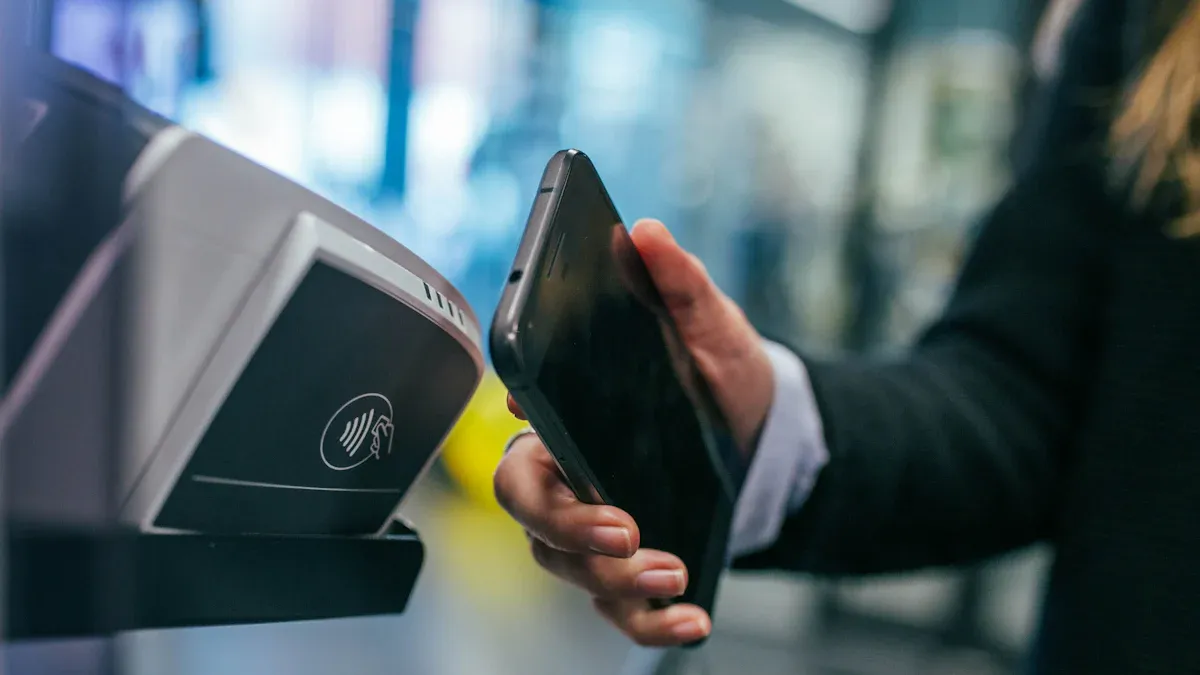
Frictionless checkout takes away the lines from your airport trip. You can order from anywhere with mobile apps, QR codes, or self-service kiosks. You no longer stand in line while your flight is boarding. This ease gives you time back. Shorter waits change your whole airport experience. You walk to your gate without stress. The frictionless model makes every second count. Your trip becomes smoother from beginning to end.
Spending more time in the terminal becomes a good thing. You go through security with few other choices. The airport setting itself shapes your trip. Transaction friction either protects or wears away that time. When you order in under one minute, you finish purchases you might otherwise skip. This creates a good passenger experience and a better shopping experience. The industry calls dwell time "value time" now. Your passenger journey turns into a chance to relax. You browse more, buy what you want, and enjoy your time.
Operational Efficiency and Revenue Gains for Operators
Frictionless checkout changes how you move through the terminal. For airport operators, faster ordering links directly to higher revenue. Digital ordering channels raise the average ticket value. They cut down on abandoned purchases. Staff move to food preparation and guest support instead of running registers. This better efficiency for operators lowers labor costs. It also improves service quality. You see fewer bottlenecks at every touchpoint.
Friction-Removal Mechanism | Effect on Passenger Behavior / Dwell Time | Commercial Revenue Outcome |
|---|---|---|
Mobile order & pay, QR/NFC ordering, self-service kiosks, contactless payment | Removes queues so passengers order from anywhere instead of standing in line | Higher throughput, fewer abandoned purchases, staff redeployed to preparation and guest support |
One-tap ordering and sub-minute purchase | Converts uncertain dwell time into completed transactions before passengers skip buying | Increased average ticket value and reduced abandoned purchases |
Digital marketplaces / multi-outlet discovery | Encourages cross-outlet browsing within a single interface | Higher average spend, reduced congestion, improved discoverability |
Longer passenger dwell time creates high-value retail opportunities inside the terminal. Passengers past security are captive with limited alternatives. The airport environment itself drives commercial revenue. Dwell time is the underlying asset that transaction friction either protects or erodes.
Airports now move toward total ecosystem revenue management. Smart space management maximizes value per square meter. Removing transactional friction means passengers spend time and money rather than queueing. The checkout-free shopping model represents this shift. An integrated system delivers one connected checkout system across shops, restaurants, and services. This is the true power of frictionless checkout in 2026.
The Airport Blueprint for a Frictionless System
Biometric and Contactless Payment Integration
You begin with identity. A biometric profile connects your face to a safe token when you check in. That same token proves who you are at security, lounge access, and boarding. The IATA One ID program leads this move toward contactless travel. It uses Proof of Concepts to test technical standards and shape airline interoperability profiles. The One ID Interoperability Standard works with the Contactless Travel Directory. This builds a network effect that grows on itself and speeds up wide adoption. The Aviation Security Trust Framework swaps paper approvals for digital attestations that can be verified by cryptography. Standards like W3C Verifiable Credentials Data Model, Decentralized Identifiers, and OpenID for Verifiable Credentials handle onboarding and identity checks across the distribution chain.
Payment takes the same route. Contactless payments bring speed, safety, and ease to every deal. A contactless tap approves in 2 to 4 seconds. The full tap-to-receipt time stays under 5 seconds. An EMV chip insert takes 12 to 20 seconds from start to approval. You save 10 to 15 seconds each time you pay. That adds up to a 25 to 35 percent drop in payment time. Faster payment handling counts at every frictionless checkout point. You tap, you go, and you never stop moving.
Payment Method | Authorization Time | Tap-to-Receipt Time |
|---|---|---|
Contactless tap | 2–4 seconds | Under 5 seconds |
EMV chip insert | 12–20 seconds | — |
One Connected System for Staff, Passengers, and Operations
One data platform links every touchpoint as one. You go through your passenger journey without showing a paper ticket or a card twice. Computer vision at boarding spots oversized carry-on before you get to the gate. This allows proactive upgrades and bag transfers. It also cuts down gate crowding. Context-aware offers for dining, duty free, and lounges come to you based on your remaining dwell time. The airport moves from generic promotions to relevance-driven conversion. Real-time data lets staff move lanes and workers around based on real passenger flow. End-to-end biometric journeys across check-in, security, lounge access, and boarding lower staffing costs at each touchpoint. They also lift passenger satisfaction scores. That dual gain makes biometric investment a top buying priority.
You will hit integration problems. Legacy systems were not made to link with modern software. Custom development and careful testing bridge old and new systems without service breaks. Delays in syncing data between departments hurt operational decisions. Dynamic pricing modules, IoT sensors, and AI-driven predictive resource allocation fix this. Cloud computing gives you scalable, easy-to-reach data sharing. Real-time POS data capture speeds reconciliation and shows you how outlets are doing. Automated reconciliation cuts manual work. Better commercial transparency lowers billing fights. Stronger revenue assurance boosts non-aero revenue management.
Your blueprint works when identity, payment, and operations share one layer. A passenger who taps through security, orders from a self-serve kiosk, and boards with a glance never feels the seams. That is the aim of every frictionless checkout deployment. You build the system once, and every touchpoint gets better.
Measuring the Impact on Passenger Satisfaction
Key Metrics: Satisfaction, Frequency, and Volume
You cannot improve what you do not track. After you start a frictionless checkout system, you need clear data to show it works. Begin with key performance indicators. Watch wait times at check-in, security, and immigration. Measure how well baggage handling works. Check your Net Promoter Score to see how passengers feel. These numbers show where frictionless checkout helps and where problems remain.
Several methods help you see the whole picture:
AI and machine learning predict problems and suggest fixes before satisfaction drops.
IoT sensors track queue lengths, conditions, and equipment status across terminals.
Cloud tools give live reports that work with your airport systems.
Natural language processing turns open-ended feedback into clear, useful insights.
Biometric data and digital ID measure passenger flow and dwell time more exactly.
Automated dashboards compare your performance to peers and goals in real time.
Open-ended feedback catches what numbers alone may miss. Self-service kiosks, mobile apps, and gate displays lower uncertainty and perceived wait. People counters and crowd sensors find tight spots. You then move staff to busy areas. Comparing with other airports shows where to improve. These data points help you refine the frictionless experience. You learn which touchpoints need work. You see how use rates and transaction volumes change over time. That knowledge leads to smarter choices.
Optimizing Staffing for High and Low Traffic Periods
Staffing efficiency depends on live data. You need to match worker numbers to actual passenger flow. The effect on passenger experience becomes clear when you track congestion in real time.
Use live monitoring and adjustments: Track passengers with biometric scanners, boarding pass scans, and foot traffic sensors. Change staff levels based on current congestion at security or baggage claim. Use AI dashboards that warn operators when numbers differ from forecasts.
Queue length measurement lets teams watch checkpoint load all the time. When a queue gets too long, you open more lanes. Predicted wait time comes from current queue length and processing speed. Live wait time data guides passengers to shorter lines. Bottleneck detection finds spots where flow slows. You respond by opening lanes, redirecting passengers, or adding staff before things get worse. Checkpoint analytics measure security and passport control performance. You adjust lanes and share wait times with passengers.
During slow times, you cut staff and shift them to maintenance or training. During busy hours, you scale up fast. This flexibility lowers costs and keeps service quality high. Shorter waits and better staffing create a smoother trip for every traveler. Your frictionless checkout system gives the data. Your team acts on it. That cycle of measurement and response defines success in 2026.
Overcoming Challenges: Privacy, Security, and Adoption
Building Trust with Transparent Data Practices
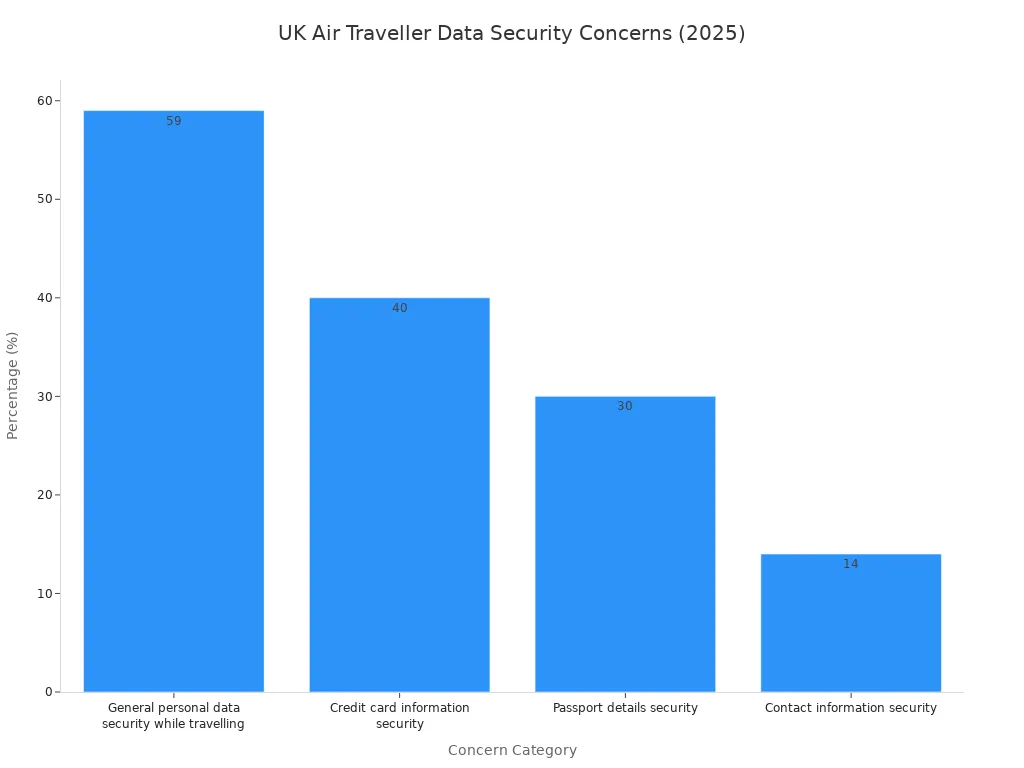
You cannot start frictionless checkout without dealing with privacy fears. A 2025 Getronics survey of 2,000 UK air passengers shows how big the problem is. General personal data security worries 59% of travelers. Credit card security concerns 40%, passport details concern 30%, and contact information concerns 14%. Only 23% strongly agree to storing passport or biometric identifiers on smartphones, while 43% are open to it.
Feelings also block people. Chi and colleagues found that worry slows biometric boarding adoption, especially among female and older travelers. Younger passengers care about convenience. Older travelers need to feel safe about security. Female passengers need information and emotional support. Communication made for each group helps everyone.
Strong governance builds trust. Follow these principles:
Collect only the biometric data you truly need for clear purposes.
Tell people plainly how you collect and use data, plus their rights.
Let people opt in and opt out of facial recognition when you can.
Run independent audits and delete images quickly.
Regulatory Compliance as a Competitive Edge
Cybersecurity is now a top investment priority. As airports grow more connected, biometric processing, IoT sensors, and passenger data platforms make the attack surface bigger.
As airports become increasingly connected and dependent on digital systems, cybersecurity has emerged as a critical investment priority. The integration of biometric processing, IoT sensor networks, operational control systems, and passenger data platforms creates expanded attack surfaces that require sophisticated defense strategies.
Legacy integration is the hardest barrier. Operators struggle to connect new biometric systems with old infrastructure. They must protect sensitive data and meet international standards. An airport coordinates many providers across check-in, security, retail, and transport. Each provider has its own technology and processes. A true frictionless experience requires one connected ecosystem, not dozens of disconnected touchpoints. Your frictionless checkout program succeeds when you unify these services. Compliance then becomes your advantage, not your burden.
Frictionless checkout lowers passenger stress and gives time back. It also creates one connected system for a smooth trip. Frictionless checkout needs measurement and staffing optimization to succeed over time.
In 2026, improving passenger experience with frictionless checkout is a promise, not just technology. You must remove friction at every touchpoint of the passenger journey.
Audit your airport journey. Pilot a frictionless checkout program. Use self-service kiosks. Measure customer satisfaction and staffing efficiency. Track each passenger experience and result at checkout. Then refine your checkout flow, checkout speed, and checkout design. Give passengers their time back, and they will reward you with loyalty.
FAQ
How does frictionless checkout change your trip?
You use your face or phone instead of paper. This makes your trip through the airport smooth all the way to your gate. Checkout takes less time and lowers your stress. You keep moving the whole time.
Is your data safe with this system?
Yes. Airports follow strict rules. They only collect what they need. You can say no to facial recognition. Outside audits check the system on a regular basis. Your personal data is deleted soon after it is used.
What if biometrics are not for you?
You can still use the old ways. Checkout works with or without your face scan. You pick how you want to travel. Many airports offer paper boarding passes as a backup.
How does the system handle busy travel days?
Live data changes staffing levels fast. Self-service kiosks handle the extra passengers. Checkout stays quick during the busiest hours. The checkout process keeps up even at rush times.
How do airports measure the system's success?
Watch wait times and satisfaction scores. Keep track of how often people buy things. The checkout data shows where your trip needs work. A frictionless checkout system makes your checkout experience better all the time.
See Also
Walmart Self Checkout Access And What Is Changing In 2025
How Self Checkout Technology Has Evolved Over The Years
Self Checkout Cash Errors Causes And Solutions For Smooth Transactions
Exploring Walgreens Self Checkout Convenience And Challenges In Retail
Cloudpick Self Checkout Availability Locations And Customer Experiences In 2025
